
The pixelated glow of a CRT screen. The satisfying click of an NES controller. The triumphant chiptune jingle of completing a level in Super Mario Bros. For millions, retro gaming isn’t just entertainment—it’s emotional time travel. In recent years, major players like Nintendo, Sega, and Sony have re-released classic consoles in miniature form, while third-party manufacturers flood the market with plug-and-play systems. But as prices climb—both for official releases and vintage hardware on the secondary market—a critical question emerges: Is the nostalgia worth the price tag?
Nostalgia has always been a powerful driver in consumer behavior, but when it comes to retro gaming, that emotional pull is being monetized like never before. Limited-edition consoles sell out within minutes, original cartridges from the 1980s fetch hundreds or even thousands of dollars, and companies are banking on the idea that reliving childhood memories is worth a premium. Yet beneath the surface of this revival lies a complex mix of authenticity, convenience, and value.
The Resurgence of Retro Gaming Hardware
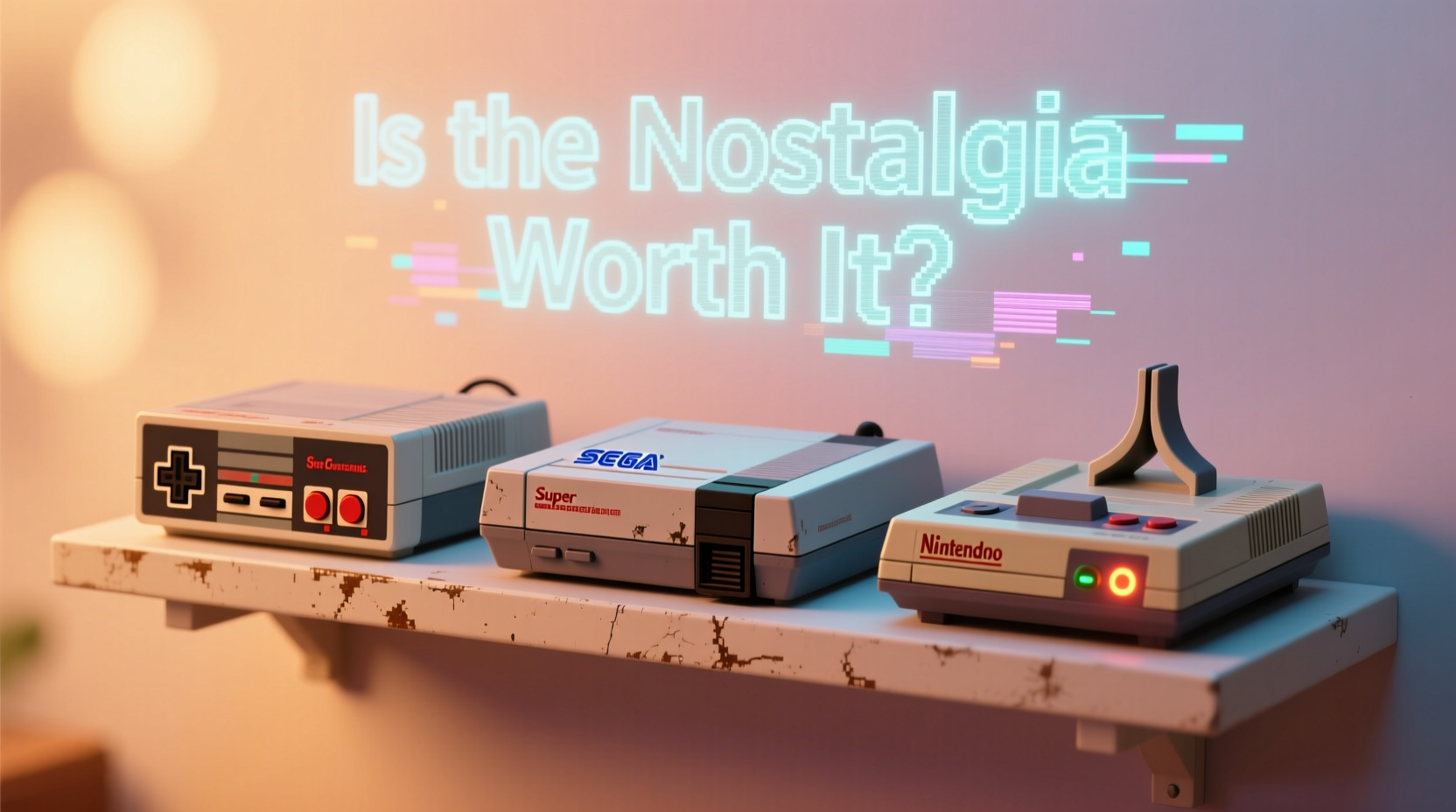
Retro gaming never truly disappeared, but its mainstream return began in earnest around 2016 with the release of the Nintendo Classic Mini: NES. This miniature replica of the original 1985 console came pre-loaded with 30 classic games and plugged directly into modern TVs via HDMI. Its success prompted a wave of similar releases: the SNES Classic, Sega Genesis Mini, PlayStation Classic, and more.
These new-old consoles offer several advantages over their vintage counterparts:
- Plug-and-play simplicity: No need to hunt down AV cables or deal with RF interference.
- Pre-installed games: Eliminates the hassle and expense of collecting original cartridges or discs.
- Save states: Modern features allow pausing and saving mid-game, something impossible on original hardware.
- Reliability: Unlike aging electronics, these units don’t suffer from cartridge corrosion or capacitor failure.
Yet despite these conveniences, many of these official mini consoles were criticized for short game libraries, questionable game selection, or limited availability. The NES Classic, for example, was discontinued just months after launch due to overwhelming demand, sending resale prices soaring above $300—nearly triple its retail price.
The Hidden Costs of Nostalgia
Official mini consoles may retail between $60 and $100, but the real financial commitment begins with collectors. On eBay and specialized marketplaces, original hardware and software often trade far above their original value. A sealed copy of *The Legend of Zelda* for the NES sold for over $870,000 in 2021. Even unsealed but complete-in-box copies regularly exceed $1,000.
This surge in value stems from a combination of factors:
- Scarcity: Many games had limited print runs, especially late in a console’s lifecycle.
- Condition obsession: Collectors prioritize mint-condition items, driving up prices for graded (graded by WATA or VGA) cartridges.
- Cultural revaluation: Games once dismissed as children’s toys are now seen as art and cultural artifacts.
But high prices don’t guarantee enjoyment. Some classic games haven’t aged well—clunky controls, punishing difficulty, and minimal save functionality can make them frustrating for modern players. As gaming journalist Patricia Hernandez noted:
“Nostalgia makes us remember the highs—the final boss victory, the secret level—but forgets the hours of grinding or confusing puzzles with no hints.” — Patricia Hernandez, Senior Culture Editor, Vice
The emotional memory of playing *Mega Man 2* may be fond, but revisiting it today might reveal a brutally difficult experience with little hand-holding. Is paying $200 for an original cartridge worth enduring six deaths before the second level?
Retro vs. Reproduction: What Are You Really Paying For?
To understand the true cost of retro gaming, it helps to distinguish between three types of experiences:
| Type | Examples | Pros | Cons |
|---|---|---|---|
| Original Hardware | NES, Sega Genesis, Game Boy | Authentic feel, collector's value | Aging components, hard to repair, expensive |
| Official Mini Consoles | NES Classic, PS Classic | Reliable, includes HDMI, curated library | Limited games, no expansion, often discontinued |
| Emulation & Reproduction | Raspberry Pi setups, Analogue consoles | High compatibility, modern features, customizable | Legal gray area, steep learning curve, costly |
The most controversial option is emulation—running old game code on modern devices. While technically illegal when ROMs are downloaded without owning the original, it remains widespread. Devices like the Raspberry Pi allow users to build custom retro gaming stations with thousands of titles across dozens of systems.
At the premium end, companies like Analogue produce FPGA-based consoles such as the Analogue Pocket and Analogue Super Nt, which recreate the original system behavior at the hardware level—offering pixel-perfect performance and support for original cartridges. These devices cost $200–$500, placing them firmly in the “luxury niche” category.
A Real Test: Can Nostalgia Survive Reality?
Consider Mark, a 38-year-old software developer who grew up playing the Sega Genesis. Fond memories of blasting through *Sonic the Hedgehog* led him to spend $180 on a sealed Genesis Mini. Excited to relive his youth, he connected it to his 4K TV and launched *Streets of Rage 2*.
Within 20 minutes, frustration set in. The two-button controller felt limiting compared to modern pads. The lack of a pause function during cutscenes annoyed him. And while the graphics were charming, they looked blurry even with upscaling. He finished one level and didn’t play again for weeks.
“I realized I wasn’t missing the game,” Mark said. “I was missing being 10 years old—having all day to figure things out, no responsibilities, that sense of discovery. The console couldn’t give that back.”
His story illustrates a broader truth: nostalgia sells an idealized past, not a functional product. The joy wasn’t in the pixels or sound effects; it was in the context—time, freedom, innocence. No amount of money can restore that.
Smart Strategies for Enjoying Retro Gaming Without Overspending
That doesn’t mean retro gaming is inherently overpriced or unworthy. It can still be deeply rewarding—if approached thoughtfully. Here’s how to engage with the trend without falling into the nostalgia trap:
- Define your goal: Are you collecting, playing, or decorating? Each purpose demands different investments.
- Start digital: Try official compilations like Sega Genesis Classics on Steam or Nintendo Switch Online’s retro libraries.
- Test before you invest: Use legal emulation options or rental services to sample games before buying hardware.
- Focus on usability: Prioritize systems with good controller ergonomics and save features.
- Buy used wisely: Original hardware can be affordable if tested and repaired—avoid “lot sales” of untested gear.
“The best retro setup is the one you actually use. Not the one in a display case.” — Alex Corvus, Vintage Tech Curator at the Museum of Digital Games
Checklist: Building a Practical Retro Gaming Experience
- ✅ Decide: Am I playing or collecting?
- ✅ Research game libraries before buying a mini console
- ✅ Try retro games via subscription services (e.g., Switch Online, Xbox backward compatibility)
- ✅ Consider multi-system emulation boxes (if comfortable with setup)
- ✅ Inspect used hardware for yellowed plastics, sticky buttons, or power issues
- ✅ Invest in quality controllers—original ones degrade over time
- ✅ Avoid sealed items unless serious about long-term collection value
Frequently Asked Questions
Are retro mini consoles worth buying?
They can be, if you value convenience and authenticity. However, their limited game selection and tendency to go out of production quickly reduce long-term value. Buy them for fun, not investment.
Is emulation legal?
Running emulators is legal, but downloading copyrighted ROMs without owning the original game is not. Some developers release games as “abandonware” or permit personal backups, but this varies by region and title.
Why are old games so expensive now?
Prices are driven by collector demand, condition grading, and perceived rarity. Cultural recognition of video games as art has also increased their perceived value, similar to vintage comics or records.
Conclusion: Reconnecting with the Past—Without Paying Too Much
Retro gaming consoles are back, and they’re more accessible than ever. But accessibility doesn’t mean affordability—and nostalgia can cloud judgment. The emotional weight of childhood memories makes it easy to justify spending hundreds on a piece of plastic and circuitry that may sit unused on a shelf.
The real value of retro gaming isn’t in the hardware or the price tag. It’s in the connection—to a simpler time, to personal history, to the evolution of interactive art. You don’t need an original NES or a $500 FPGA console to access that. Sometimes, booting up *Tetris* on a smartphone emulator delivers the same spark of joy as a CRT did decades ago.
If you choose to dive into retro gaming, do it with intention. Play the games. Share them with younger family members. Learn about the design and history behind them. But don’t let marketing or scarcity pressure you into overspending on sentimentality.




 浙公网安备
33010002000092号
浙公网安备
33010002000092号 浙B2-20120091-4
Comments
No comments yet. Why don't you start the discussion?