
In an age where handheld devices can render 4K graphics, stream live gameplay, and run triple-A titles with ray tracing, it might seem counterintuitive that pixelated sprites from the 1980s and 1990s are enjoying a resurgence. Yet, retro gaming is not just surviving—it’s thriving. From Nintendo’s re-releases of the NES Classic Edition to the booming market for modded Game Boys and FPGA-based clones like the Analogue Pocket, nostalgia has evolved into a full-blown cultural movement. But what exactly is driving this revival? And how do vintage consoles stack up against the sleek, powerful handhelds of today?
The answer lies in more than just sentimentality. While modern handhelds offer unmatched technical prowess—portable PlayStation Studios experiences on the Steam Deck, cloud gaming on the ROG Ally, or indie gems on the Nintendo Switch—retro consoles deliver something different: simplicity, authenticity, and tactile joy. This article explores the growing tension and harmony between retro gaming and modern handhelds, examining whether classic games are truly making a lasting comeback—or if they’re just riding a temporary wave of nostalgia.
The Emotional Resonance of Retro Gaming
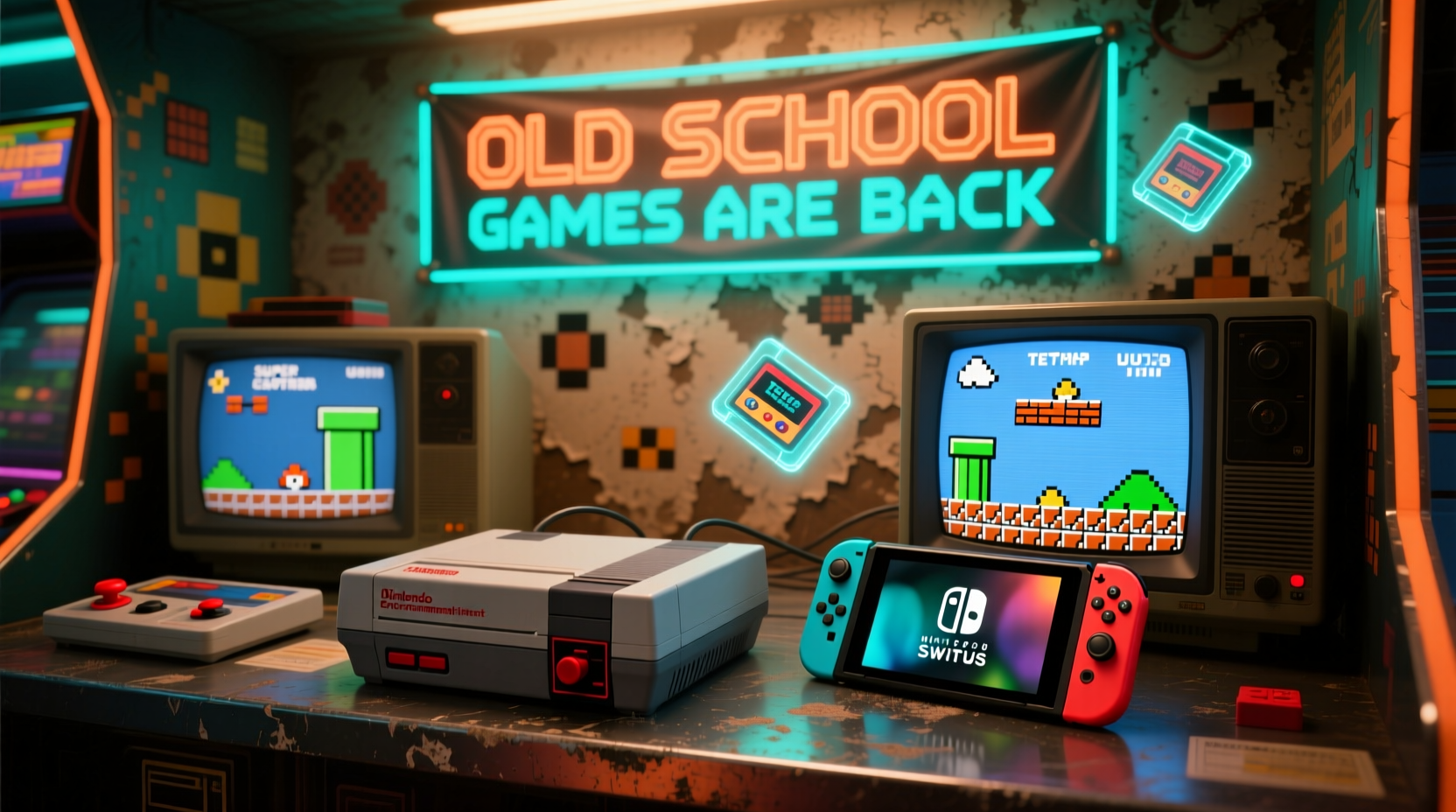
For many players, retro gaming isn’t about chasing high frame rates or expansive open worlds. It’s about reconnecting with formative experiences. The sound of the Super Mario Bros. warp pipe, the jingle of collecting 100 coins in Donkey Kong Country, or the tense silence before the final boss music in Mega Man 2—these sensory cues trigger deep emotional memories.
This psychological phenomenon, known as the \"reminiscence bump,\" explains why people tend to recall events from adolescence and early adulthood most vividly. For those who grew up with the Sega Genesis, Game Boy, or TurboGrafx-16, revisiting these systems isn’t merely entertainment; it’s emotional time travel.
“People don’t just play retro games for fun—they play them to remember who they were. That connection is timeless.” — Dr. Lena Peterson, Cognitive Psychologist & Digital Nostalgia Researcher
Beyond emotion, retro games often represent a design philosophy that contrasts sharply with modern trends. Limited lives, no checkpoints, and deliberate difficulty curves forced players to master mechanics through repetition. There were no tutorials, no tooltips—just trial, error, and eventual triumph. In a world saturated with hand-holding and instant gratification, this challenge feels refreshing.
Modern Handhelds: Power, Portability, and Performance
Today’s handhelds are technological marvels. Devices like the Steam Deck, ASUS ROG Ally, and even the upgraded OLED Nintendo Switch offer console-level performance in the palm of your hand. With SSD storage, customizable controls, and access to vast digital libraries, they represent the peak of portable convenience.
Modern handhelds excel in versatility. One device can house hundreds of games across genres—from sprawling RPGs like Elden Ring to precision platformers like Celeste. They support mods, emulators, streaming, and even desktop operating systems. The Steam Deck, for instance, functions as both a gaming rig and a Linux PC, allowing users to install software beyond gaming.
Yet, despite their capabilities, modern handhelds face criticism for complexity. Battery life varies drastically depending on settings. Software updates can introduce bugs. And the sheer volume of options can lead to decision fatigue. Some players report feeling overwhelmed by endless backlogs, sales, and notifications—so much so that they abandon games entirely.
In contrast, retro consoles offer constraints—and therein lies their appeal. A Game Boy cartridge holds one game. You play it until you beat it or move on. There’s no library of 500 unplayed titles whispering guilt from your dashboard.
Retro vs. Modern: A Feature-by-Feature Comparison
| Feature | Retro Consoles (e.g., SNES, Game Boy) | Modern Handhelds (e.g., Steam Deck, Switch) |
|---|---|---|
| Graphics & Audio | 8-bit/16-bit visuals; chiptune audio; limited color palettes | HD/4K rendering; surround sound; dynamic lighting |
| Battery Life | AA batteries last 10–30 hours (Game Boy); AC adapters common | 2–8 hours under load; longer in sleep mode |
| Game Library Size | One game per cartridge; physical collection required | Thousands of games via digital stores or sideloading |
| User Experience | Simple interface; immediate boot into gameplay | Operating systems with menus, updates, and multitasking |
| Durability | Plastic casings; prone to screen rot but mechanically simple | Complex internals; vulnerable to overheating and wear |
| Cost (New) | $50–$200 for reissues (e.g., NES Classic) | $300–$700 depending on model and storage |
| Emotional Appeal | High—nostalgic value, tactile buttons, authentic feel | Moderate—focused on utility and performance |
This table underscores a key insight: retro and modern handhelds serve different purposes. Retro consoles are experiential artifacts; modern ones are productivity tools for gamers. Neither is objectively better—it depends on what the player seeks.
The Comeback: How Retro Gaming Is More Than Just Nostalgia
While nostalgia fuels initial interest, the longevity of retro gaming suggests deeper currents. Independent developers now regularly adopt pixel art styles and 8-bit soundtracks, not out of limitation, but as a deliberate aesthetic choice. Games like *Shovel Knight*, *Celeste* (which began as a Game Boy-inspired prototype), and *Streets of Rage 4* blend retro presentation with modern design sensibilities—tight controls, accessibility options, and expanded narratives.
Hardware innovation is also keeping retro alive. The Analogue Pocket, for example, supports original Game Boy, Game Boy Color, and Game Boy Advance cartridges with near-perfect accuracy thanks to FPGA technology. Unlike software emulation, which can introduce lag or inaccuracies, FPGA replicates the original hardware at the circuit level. The result is a $200 device that honors the past while delivering modern conveniences like HDMI output and save states.
Likewise, companies like Evercade and Playdate have entered the market with new retro-style handhelds. Evercade focuses on curated cartridge releases of classic IPs, avoiding digital decay and licensing limbo. Playdate, with its black-and-white screen and crank controller, embraces absurdity and minimalism, proving that innovation doesn’t always mean more pixels or faster processors.
“The retro revival isn’t about rejecting progress. It’s about reclaiming intentionality in design.” — Marcus Lin, Indie Developer & Founder of Pixel Forge Studios
Mini Case Study: The Collector Who Found Balance
Diego Morales, a 38-year-old graphic designer from Austin, Texas, began collecting retro consoles during the pandemic. “I started with a used SNES I found at a thrift store,” he recalls. “Then I bought a modded Game Boy with a backlight. Before I knew it, I had six systems and a shelf full of cartridges.”
But after six months, Diego hit burnout. “I wasn’t actually playing anything. I was just acquiring.” He sold half his collection and invested in a Steam Deck. Now, he uses it to emulate his favorite retro titles—but only those he genuinely enjoys. “I keep my original NES and Game Boy for special sessions. When I want authenticity, I use the real hardware. For everything else, the Steam Deck gives me flexibility.”
Diego’s story reflects a growing trend: hybrid engagement. Players aren’t choosing retro *or* modern—they’re integrating both into a balanced gaming lifestyle.
Practical Tips for Embracing Both Worlds
- Start small: Don’t buy every retro console at once. Begin with one system—like the NES Classic or a modded Game Boy—and see how often you use it.
- Use modern tools wisely: Emulation on modern handhelds is convenient, but enable CRT filters and disable rewind features to preserve the original feel.
- Prioritize gameplay over collection: Owning rare cartridges won’t make you enjoy them more. Focus on games you’ll actually finish.
- Preserve originals: If you own vintage hardware, store it in a dry, temperature-controlled space. Use silica gel packs to prevent corrosion.
- Explore homebrew: Communities like itch.io host thousands of fan-made retro games. Many are free and capture the spirit of classic design.
Step-by-Step Guide: Building a Balanced Portable Setup
- Assess your goals: Do you want authenticity, variety, or convenience? Your answer will guide your choices.
- Select one retro device: Choose a system tied to meaningful memories—perhaps the first console you owned.
- Choose a modern handheld: Opt for one with strong emulation support (e.g., Steam Deck) or broad compatibility (e.g., Nintendo Switch).
- Curate your library: Load your modern device with retro titles you love, plus a few modern games to diversify your playtime.
- Create a rotation schedule: Dedicate certain days to retro play (e.g., “Retro Sundays”) to maintain balance.
- Maintain both systems: Clean cartridge contacts monthly; update firmware on modern devices; avoid extreme temperatures.
Frequently Asked Questions
Are retro games legally available today?
Yes, but availability varies. Nintendo offers retro titles through the Nintendo Switch Online service. Companies like Atari and SEGA sell official compilations. However, downloading ROMs for games you don’t own is generally illegal. Always verify licensing before using emulators.
Can modern handhelds accurately replicate retro gameplay?
Most can, especially with FPGA-based solutions or well-optimized emulators. Input lag, audio sync, and display scaling are common issues, but settings adjustments usually resolve them. For purists, original hardware still provides the most authentic experience.
Is retro gaming expensive?
It can be. Original cartridges and consoles in good condition often sell for hundreds or even thousands of dollars. However, budget-friendly alternatives exist—such as mini consoles, reproduction carts, or emulation on existing devices.
Conclusion: A Renaissance, Not a Fad
The return of retro gaming isn’t a fleeting trend. It’s a reevaluation of what makes games meaningful. In an era defined by constant updates, microtransactions, and algorithm-driven content, retro consoles offer a rare commodity: permanence. A Game Boy cartridge from 1992 plays the same today as it did three decades ago. No patches, no shutdowns, no paywalls.
Meanwhile, modern handhelds provide unprecedented freedom and power. They democratize access to gaming history while pushing the medium forward. The real story isn’t retro versus modern—it’s integration. The most fulfilling gaming lives today honor both: the raw charm of the past and the boundless potential of the present.
Whether you’re dusting off an old SNES or downloading *Super Metroid* on your Steam Deck, you’re participating in a broader cultural shift—one that values experience over specs, memory over metrics, and play over performance.




 浙公网安备
33010002000092号
浙公网安备
33010002000092号 浙B2-20120091-4
Comments
No comments yet. Why don't you start the discussion?