
For a generation raised on pixelated sprites and chiptune soundtracks, revisiting classic games is more than entertainment—it’s emotional archaeology. The quest for authenticity in retro gaming has sparked a quiet revolution: should you relive your youth through original console emulation on modern devices, or invest in dedicated retro gaming handhelds that replicate the hardware experience? This isn’t just about graphics or frame rates. It’s about how closely the experience mirrors the past—the tactile feedback, screen glow, loading times, and even the imperfections that once defined gameplay.
The answer depends on what “authenticity” means to you. Is it accuracy in software reproduction? Physical resemblance to vintage gear? Or the intangible feeling of holding history in your hands? Let’s dissect both paths with clarity and precision.
The Case for Original Console Emulation
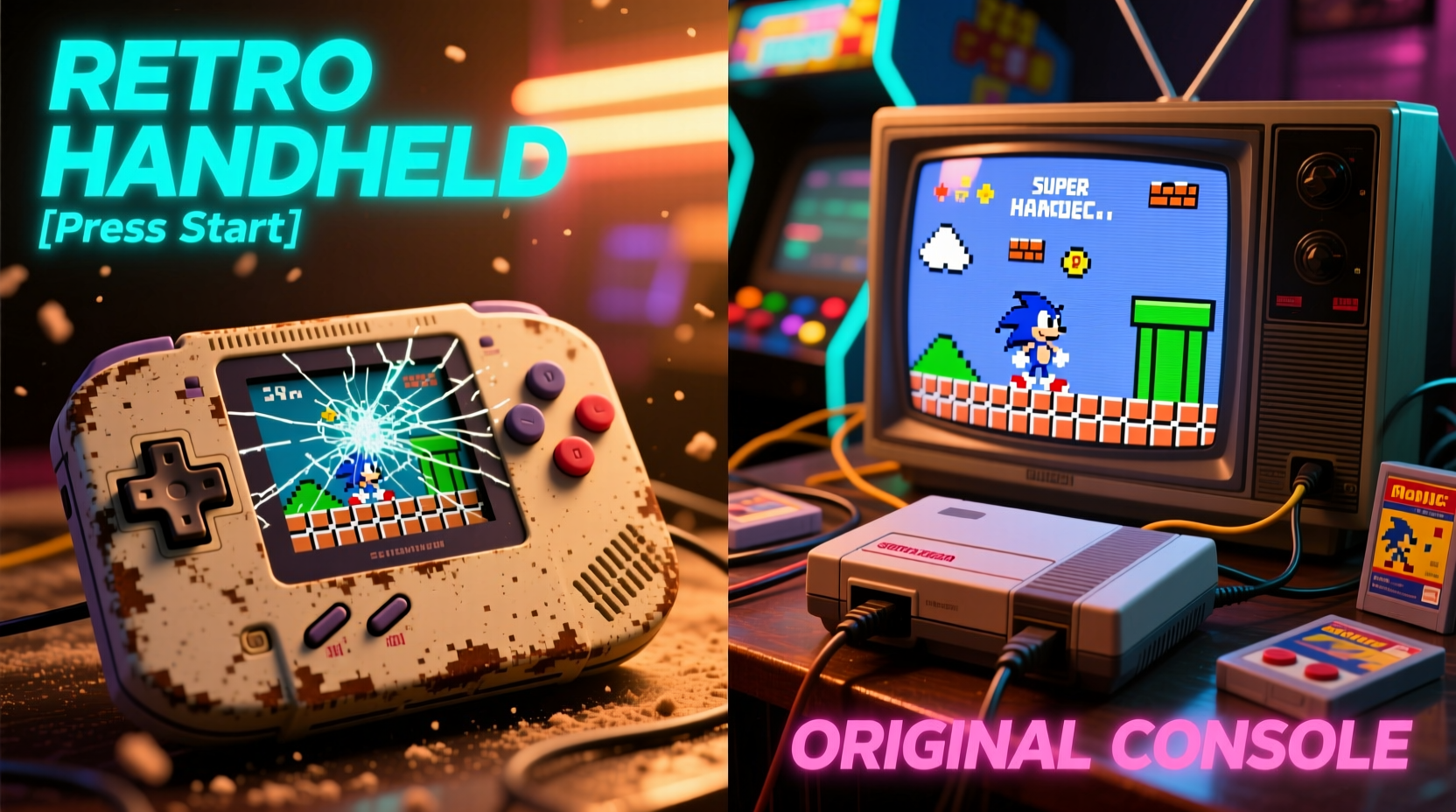
Emulation involves replicating the behavior of old gaming consoles—like the NES, SNES, Sega Genesis, or PlayStation 1—on modern computers, smartphones, or tablets using software. At its core, emulation prioritizes functional fidelity over physical resemblance. When done well, it can deliver near-perfect recreations of original game logic, timing, and audio processing.
High-end emulators like RetroArch, DuckStation (for PS1), or higan (now Bsnes) are engineered to mimic not just the output but the internal architecture of legacy systems. Cycle-accurate emulation ensures that every CPU instruction and video frame syncs as it did on original hardware. For purists, this level of technical precision represents the pinnacle of digital preservation.
Modern setups allow users to upscale games to 4K, apply dynamic lighting effects, or save states at any moment—features absent from original consoles. While these conveniences improve accessibility, they also distance the experience from its roots. Loading a saved state mid-boss fight wasn’t possible in 1995. Neither was playing *Super Metroid* at 60 frames per second on a widescreen display.
Yet, the flexibility of emulation cannot be overstated. Entire libraries of ROMs can be organized, indexed, and played across platforms. With proper legal compliance (using only ROMs from personally owned cartridges), emulation becomes a powerful archival tool—one embraced by institutions like the Internet Archive and the Video Game History Foundation.
Retro Gaming Handhelds: Hardware Nostalgia Rebuilt
Dedicated retro handhelds such as the Anbernic RG35XX, Retroid Pocket series, or the officially licensed Nintendo Classic Edition micro-consoles offer a different proposition: physical immersion. These devices are designed to evoke the look, feel, and operational rhythm of vintage systems.
Many models feature button layouts modeled after original controllers, low-resolution LCD screens that mimic the blur and color bleed of early TFT panels, and even faux cartridge slots. Some go further, integrating FPGA (Field-Programmable Gate Array) chips—hardware-level reconfigurable circuits—that replicate console processors more accurately than software-based emulation.
FPGA-based systems like the MiSTer project stand out for their ability to reproduce not just games, but the entire hardware environment—including quirks like sprite flickering or audio channel limitations. Unlike traditional emulation, which interprets code, FPGA physically mimics circuitry, resulting in millisecond-precise timing and analog signal behavior.
“FPGA brings us closer to true hardware resurrection. It's not simulating the past—it's rebuilding it.” — Dr. Lena Torres, Digital Preservation Researcher at UC Irvine
However, cost and complexity rise accordingly. A full MiSTer setup requires additional components—a DE10-Nano board, SD card, HDMI cable—and technical know-how to configure. Meanwhile, consumer-grade handhelds often use standard emulation under the hood, wrapped in nostalgic design.
Comparing the Experience: A Side-by-Side Analysis
| Feature | Retro Handhelds | Original Console Emulation |
|---|---|---|
| Tactile Feel | High – buttons, size, weight resemble originals | Low – depends on peripheral use (e.g., USB controller) |
| Visual Authenticity | Moderate – small screens, limited resolution | Adjustable – supports CRT filters, upscaling, aspect ratios |
| Audio Accuracy | Variable – depends on DAC quality and firmware | High – cycle-accurate audio cores available |
| Game Library Access | Limited by preloaded ROMs or user transfers | Extensive – cross-platform ROM compatibility |
| Portability | Excellent – built-in battery, self-contained | Depends on device – phone/tablet needed |
| Customization | Low to moderate – skinning, themes, firmware mods | High – shaders, netplay, save states, rewind |
| Authenticity Score* | 8/10 – strong sensory match | 9/10 – superior technical accuracy |
*Subjective scoring based on combined hardware/software fidelity and emotional resonance.
A Real-World Example: Reliving *The Legend of Zelda: A Link to the Past*
Consider Mark, a 38-year-old who first played *A Link to the Past* on a CRT television in his childhood basement. He recently revisited the game using two methods: first, on an Anbernic RG351P with a 3.5-inch IPS screen and physical D-pad; second, via bsnes emulator on his MacBook connected to a 4K OLED display with a replica SNES controller.
On the handheld, he felt immediate recognition—the snug fit of the controls, the slight resistance of the shoulder buttons, the constrained field of view that forced him to focus. The lower brightness and subtle input lag reminded him of playing under dim light, adding to the atmosphere. Yet, he noticed graphical glitches during mode-7 transitions, likely due to imperfect BIOS implementation.
In contrast, the emulated version ran flawlessly. Frame advance confirmed perfect timing. He used a rewind function to correct mistakes instantly. But something felt “too clean.” The lack of bezel, the crispness of sprites, and absence of TV hum stripped away layers of memory. As he put it: “It played better, but remembered worse.”
This dichotomy reveals a key insight: nostalgia isn’t solely about performance. It thrives on imperfection—on the fuzzy edges of recollection where emotion takes root.
How to Choose Based on Your Goals
Your ideal path depends on whether you value historical accuracy, convenience, or emotional resonance. Below is a checklist to guide your decision:
Choose Retro Handhelds If You:
- Want a portable, all-in-one retro experience
- Value physical interaction and design aesthetics
- Prefer playing offline without extra peripherals
- Enjoy tinkering with firmware or custom OS builds
- Seek a gift-like presentation (e.g., themed devices)
Choose Emulation If You:
- Prioritize game accuracy and bug-free performance
- Need advanced features like save states or fast-forward
- Already own a capable PC, tablet, or smartphone
- Want access to obscure titles or homebrew ROM hacks
- Plan to use large displays or multi-console setups
Building the Ideal Hybrid Setup
The most satisfying solution may lie in combining both approaches. Many enthusiasts maintain a dual-system strategy:
- Daily Play & Exploration: Use a retro handheld for casual sessions—commuting, relaxing on the couch, or introducing kids to classics.
- Deep Dives & Preservation: Fire up a cycle-accurate emulator when analyzing glitches, speedrunning, or studying game mechanics.
- Display & Collecting: Keep original consoles hooked to CRT TVs for showpiece authenticity, even if rarely used.
- Audio Enhancement: Route emulator audio through analog mixers or vintage amps to recreate living-room acoustics.
- Controller Syncing: Use Bluetooth adapters to connect original controllers to emulators, preserving muscle memory.
This layered approach acknowledges that no single method captures everything. Authenticity isn’t monolithic—it shifts depending on context, mood, and purpose.
Frequently Asked Questions
Is emulation legal?
Emulation software itself is legal. However, downloading copyrighted ROMs you don’t own is not. To stay compliant, extract ROMs from cartridges you physically possess. Several tools exist for this, such as the Retrode or EverDrive copiers.
Do retro handhelds damage original games?
No—if they’re using digital ROMs. Most handhelds play copied game data, not physical media. Only flash carts inserted into real consoles carry minimal wear risk. Always back up originals before transferring.
Can I get original console sound and visuals on a handheld?
Partially. High-end devices support accurate audio cores and CRT shader effects. But true composite video output or RF modulation requires external hardware. FPGA-based units come closest to matching original signal characteristics.
Conclusion: Nostalgia Isn't One Size Fits All
There is no definitive winner between retro gaming handhelds and original console emulation. Each serves distinct dimensions of nostalgia. Handhelds win on sensory recall—the way a game felt in your hands, the squint required to read a tiny screen, the portability that turned lunch breaks into adventures. Emulation wins on precision—the exact timing of a jump, the flawless replication of palette colors, the ability to pause time itself with a save state.
What matters most is intention. Are you seeking recreation or remembrance? Technical mastery or emotional return? The beauty of today’s retro landscape is that you don’t have to choose. You can honor the past through multiple lenses—each revealing new facets of why these games still matter.




 浙公网安备
33010002000092号
浙公网安备
33010002000092号 浙B2-20120091-4
Comments
No comments yet. Why don't you start the discussion?