
For many gamers, nostalgia isn’t just a feeling—it’s a full sensory experience. The click of a D-pad, the pixelated soundtrack crackling through composite audio, the weight of a controller in your hands after school. These memories are deeply tied to the hardware that first delivered them. Today, retro gaming has exploded in popularity, with two dominant paths to reliving the past: original consoles from the 80s and 90s, and modern retro handhelds designed to emulate those systems. But which truly delivers the most authentic nostalgia hit?
The answer depends on what you value most—authenticity, convenience, or emotional resonance. While both options celebrate classic games, they serve different purposes and evoke different feelings. This article breaks down the key differences, compares real-world experiences, and helps you decide which route offers the richest nostalgic journey.
The Allure of Original Consoles: Authenticity Above All
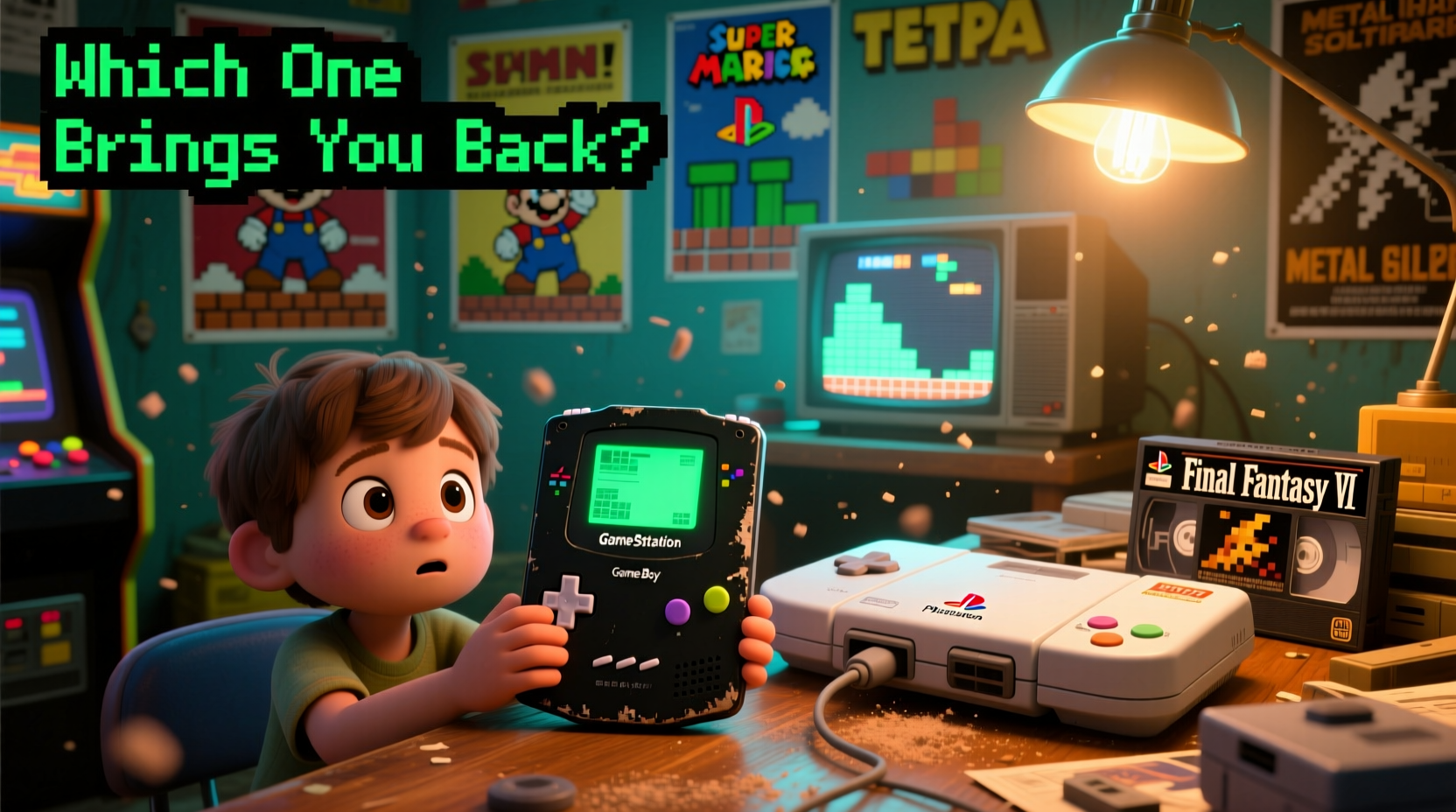
Original consoles—NES, SNES, Sega Genesis, PlayStation 1, and others—are time capsules. They represent not just the technology of their era but the cultural context in which they were used. Playing Super Mario Bros. on an actual NES connected to a CRT television isn't just about gameplay; it's about replicating the exact conditions under which millions experienced those moments for the first time.
There’s a tactile satisfaction in inserting a cartridge, hearing the mechanical thunk, and watching the system boot with its distinctive startup chime. The input lag, screen blur, and color bleed of a CRT monitor aren’t flaws—they’re part of the aesthetic. For purists, these imperfections are essential to the experience.
“Nostalgia isn’t about perfection. It’s about memory. And sometimes, the glitches and grain are what make it real.” — Marcus Reed, Retro Gaming Curator at The Pixel Archive Museum
However, maintaining original hardware comes with challenges. Cartridges degrade, AV ports corrode, and finding working CRTs is increasingly difficult. Even when functional, older systems lack features like save states or quick loading. Yet, for many collectors, overcoming these hurdles is part of the ritual—the effort deepens the connection.
Rise of the Retro Handheld: Portability Meets Modern Convenience
In contrast, modern retro handhelds like the Anbernic RG35XX, Retroid Pocket, or Analogue Pocket offer plug-and-play access to hundreds of classic games. These devices run emulators, often with pre-loaded ROMs or support for personal backups, and deliver crisp visuals on high-resolution screens.
The appeal lies in accessibility. You can play Game Boy Advance titles on a commute, switch between Genesis and Neo Geo games instantly, and even upscale output to modern TVs. Features like save states, rewind functionality, and customizable controls eliminate frustration—no more losing progress due to a dead battery or forgotten password.
But does convenience dilute the emotional impact? Some argue yes. Holding a sleek aluminum device doesn’t evoke the same childhood memories as gripping a chunky SNES controller. The silence of solid-state storage replaces the satisfying mechanical feedback of cartridge insertion. The immediacy of digital menus removes the anticipation of waiting for a console to boot.
Comparing the Experience: A Side-by-Side Breakdown
| Feature | Original Console | Retro Handheld |
|---|---|---|
| Authenticity | High – original hardware, sound, and visual output | Moderate – accurate emulation but modern presentation |
| Portability | Low – requires TV, power, and careful transport | High – pocket-sized, battery-powered, self-contained |
| Game Library Access | Limited to physical cartridges owned | Broad – hundreds of games via ROMs or SD card |
| Maintenance & Reliability | High effort – aging components, potential repairs | Low effort – durable, firmware updates available |
| Emotional Resonance | Strong – replicates original context and memory triggers | Variable – depends on user’s attachment to form factor |
| Modern Enhancements | None (unless modded) | Save states, rewind, upscaling, wireless play |
This comparison shows a clear trade-off: original consoles win in authenticity and emotional depth, while retro handhelds dominate in usability and flexibility. Neither is objectively better—it depends on how you define a “nostalgia hit.” Is it about recreating the past exactly as it was, or reliving the joy of the games regardless of format?
A Real Example: Two Gamers, Two Paths to Nostalgia
Consider two friends, both raised on 16-bit classics. Daniel, 38, spent months restoring his childhood SNES. He replaced capacitors, sourced a working CRT, and now hosts weekly retro game nights. “When I hear that startup beep,” he says, “I’m nine years old again. It’s not just gaming—it’s time travel.”
Jamie, also 38, bought a Retroid Pocket 3+. She loads her favorite PS1 and GBA games onto a microSD card and plays during lunch breaks. “I don’t have space for a full setup,” she explains. “But pulling up Final Fantasy Tactics on my desk feels like reconnecting with an old friend—even if the screen is tiny.”
Daniel’s experience is immersive and ritualistic. Jamie’s is practical and accessible. Both feel nostalgia, but in different forms—one rooted in environment, the other in memory of gameplay.
How to Maximize Your Nostalgia Experience: A Step-by-Step Guide
Whether you choose original hardware or a retro handheld, you can deepen the nostalgic impact with intentional choices. Follow this timeline to create a meaningful retro gaming experience:
- Identify Your Core Memories: Reflect on which games, consoles, or moments defined your youth. Was it playing Sonic at a friend’s house? Beating Zelda with a flashlight under the covers?
- Choose Your Platform: Based on those memories, decide whether authenticity (original console) or accessibility (handheld) aligns better with your lifestyle.
- Recreate the Environment: Use CRTs, period-appropriate furniture, or ambient lighting to mirror the original setting. For handheld users, try playing in the same locations where you once used a Game Boy.
- Curate Your Game List: Load only the titles that matter. Avoid overwhelming yourself with every ROM available. Focus on emotional resonance over quantity.
- Add Sensory Triggers: Play original soundtracks in the background, use controllers with similar weight and layout, or even wear clothing from the era while gaming.
- Share the Experience: Invite others who lived through the same era. Multiplayer sessions amplify nostalgia through shared memory.
This structured approach turns retro gaming from passive entertainment into active remembrance.
Checklist: Building Your Ideal Nostalgia Setup
- ✅ Define your top 3 nostalgic games or franchises
- ✅ Decide between original hardware or retro handheld
- ✅ Source necessary accessories (CRT, AV cables, batteries, etc.)
- ✅ Test audio/video output for authenticity
- ✅ Organize games by emotional significance, not rarity
- ✅ Create a dedicated play space (even if temporary)
- ✅ Incorporate non-gaming elements (snacks, music, decor from the era)
- ✅ Schedule regular retro gaming sessions to sustain the feeling
Frequently Asked Questions
Can retro handhelds truly replicate the feel of original consoles?
They can closely emulate the software and visuals, especially with firmware like Batocera or custom shaders. However, the physical interaction—button resistance, screen glow, audio output—is inherently different. Some high-end models like the Analogue Pocket come closer by supporting original cartridges, bridging the gap between old and new.
Are original consoles worth the maintenance hassle?
For collectors and purists, absolutely. There’s unmatched satisfaction in preserving and using historical tech. But if your goal is simply to enjoy classic games without technical headaches, a retro handheld may be more practical. Consider modding original consoles (e.g., installing HDMI outputs) to balance authenticity with usability.
Is using ROMs on retro handhelds legal?
It depends. Owning a ROM of a game you physically own is a legal gray area in many countries. Distributing or downloading ROMs you don’t own is generally copyright infringement. To stay compliant, back up your own cartridges or use homebrew/freeware games. Many retro handheld communities emphasize ethical usage.
Expert Insight: The Psychology of Nostalgia in Gaming
“Nostalgia functions as emotional comfort food. The brain associates certain stimuli—like chiptune music or sprite-based graphics—with safety, youth, and simpler times. The medium matters less than the consistency of the trigger.” — Dr. Lena Tran, Cognitive Psychologist specializing in media memory
This insight suggests that while original consoles provide stronger sensory fidelity, retro handhelds can still activate the same emotional pathways—if the right cues are present. A well-configured emulator with accurate audio emulation and CRT filters can be nearly as effective as vintage hardware in sparking nostalgia.
Conclusion: Which Delivers the Best Nostalgia Hit?
The truth is, neither retro gaming handhelds nor original consoles universally \"win\" the nostalgia contest. The best choice hinges on your personal relationship with the past. If your memories are tied to the living room couch, the flicker of a CRT, and the ritual of blowing into cartridges, then original hardware will always feel more genuine. The effort required to maintain it becomes part of the emotional payoff.
But if your nostalgia centers on the games themselves—the characters, stories, and challenges—then a retro handheld might deliver just as powerful a hit. The ability to play Chrono Trigger on a train, or revisit EarthBound before bed, keeps those connections alive in daily life. Convenience doesn’t erase emotion; it sustains it.
In the end, nostalgia isn’t about the device. It’s about reconnection. Whether through the hum of a Sega Genesis or the silent glow of a handheld screen, what matters is that the past remains within reach.




 浙公网安备
33010002000092号
浙公网安备
33010002000092号 浙B2-20120091-4
Comments
No comments yet. Why don't you start the discussion?