
There’s a quiet magic in powering up an old Game Boy and hearing that familiar startup chime—the pixelated logo fading in as the screen flickers to life. For many, it’s more than gaming; it’s memory, emotion, and identity wrapped in plastic and circuitry. Today, two paths lead back to that feeling: holding an original retro handheld or launching a meticulously coded emulator on a smartphone. But which one truly captures the essence of nostalgia? Is authenticity found in hardware, software, or something deeper?
Nostalgia isn’t just about reliving the past—it’s about reconnecting with the sensory and emotional textures of a moment. The weight of a brick-like Game Boy Advance SP in your hands, the tactile resistance of its buttons, the dim greenish screen under sunlight—these aren’t incidental details. They’re part of the experience. Yet modern emulation offers unparalleled convenience, visual enhancements, and access to libraries spanning decades. So where does genuine nostalgia reside?
The Tangible Appeal of Retro Handheld Consoles
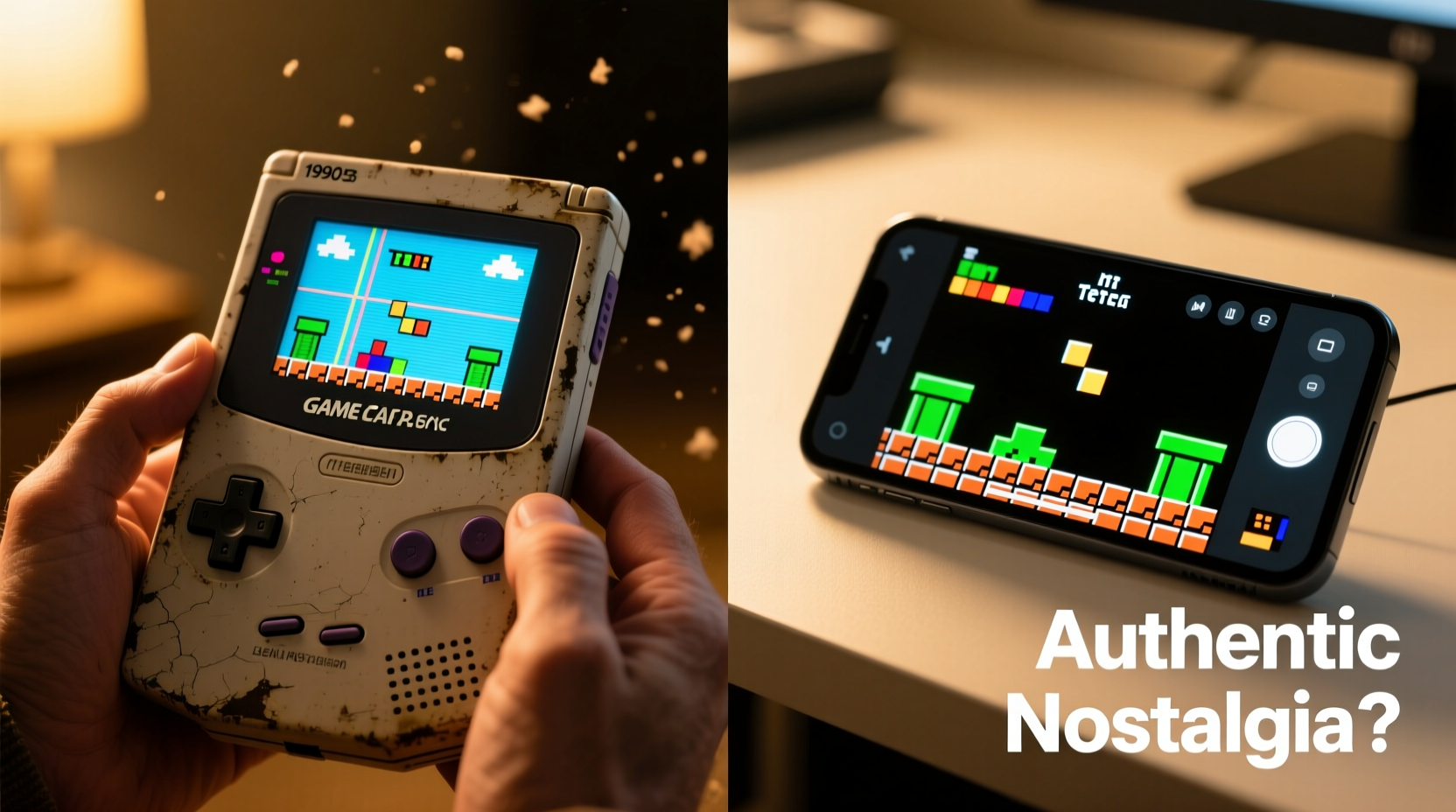
Original handhelds like the Nintendo Game Boy, Sega Game Gear, Atari Lynx, and Neo Geo Pocket offer a physicality no digital recreation can fully replicate. These devices were designed for portability, built to survive backpacks, long car rides, and clumsy fingers. Their limitations—low-resolution screens, limited color palettes, and battery-hungry designs—were accepted trade-offs for the freedom they provided.
Using a retro handheld today is not just about playing games; it’s engaging with history. The mechanical feedback from pressing a D-pad, the subtle hum of aging circuitry, even the smell of aged plastic—all contribute to an immersive time capsule. Collectors often speak of the “ritual” involved: inserting a cartridge, flipping the power switch, waiting for the boot screen. It’s deliberate, sometimes slow, but undeniably real.
Preservation Through Use
Museums display artifacts behind glass, but retro gaming thrives when used. Holding a Game Boy Color while replaying Pokémon Gold reactivates childhood memories tied to schoolyard trades and sleepovers. The device becomes a bridge between past and present. However, this comes at a cost: wear and tear. Buttons degrade, screens crack, and LCDs eventually fail. Unlike digital files, these machines are finite.
“Nostalgia isn’t just memory—it’s muscle memory. The way your thumb finds the A button without looking, how you tilt the device toward light… that’s embedded in the hardware.” — Marcus Tran, Vintage Gaming Curator at the Digital Heritage Archive
The Rise of Modern Emulation
Emulation—the process of mimicking older hardware on modern devices—has evolved from a niche hobby into mainstream accessibility. Apps like My Boy!, RetroArch, and DuckStation allow users to play thousands of retro games on smartphones, tablets, and PCs with features unimaginable in the 90s: save states, rewind functionality, high-resolution filters, and online multiplayer.
For many, emulation removes barriers. Not everyone can afford rare handhelds like the TurboExpress or collect sealed cartridges. Emulators democratize access, preserving titles that might otherwise be lost to time. ROMs, when sourced legally from personal backups, enable people to revisit games no longer commercially available.
Technical Superiority vs. Emotional Fidelity
Modern emulators often improve upon original hardware. Crisp HD upscaling, customizable controls, and audio smoothing eliminate the flicker and lag once tolerated. But perfection can dilute authenticity. Playing The Legend of Zelda: Oracle of Ages on a 6-inch OLED screen with perfect colors may look better—but does it *feel* right?
Some purists argue that removing limitations removes context. The challenge of managing battery life, dealing with ghosting on passive LCDs, or adjusting contrast dials weren’t bugs—they were part of the game’s ecosystem. Emulation streamlines the experience, but in doing so, risks sanitizing the very quirks that made it memorable.
Comparing the Experience: A Side-by-Side Analysis
| Aspect | Retro Handheld Consoles | Modern Emulation |
|---|---|---|
| Authenticity | High – Original hardware, input, and display | Variable – Depends on settings and device |
| Convenience | Low – Limited battery, single-game focus | High – Instant load, multitasking, cloud saves |
| Visual Quality | Low to moderate – Native resolution, screen degradation | High – Upscaling, shaders, anti-aliasing |
| Tactile Feedback | High – Physical buttons, switches, form factor | Low – Touchscreen or Bluetooth controller dependent |
| Game Library Access | Limited – Requires purchasing cartridges | Extensive – Thousands of titles accessible |
| Longevity & Preservation | Risky – Hardware degrades over time | Strong – Digital backups ensure survival |
A Real Example: Sarah’s Cross-Country Commute
Sarah, a 32-year-old graphic designer, grew up playing her cousin’s Game Boy Pocket during summer visits. Recently, she bought a refurbished unit online and loaded it with Tetris and Wario Land II. She brings it on her train commute, deliberately avoiding her phone.
“It forces me to slow down,” she says. “I have to charge it with AA batteries, adjust the contrast when it gets dark, and I can only play one game at a time. But somehow, that makes it more special. When I use an emulator, I end up scrolling Instagram halfway through.”
Her experience highlights a key insight: nostalgia isn’t just about what you play—it’s about how you engage. The friction of retro hardware creates intentionality. Emulation, while efficient, often blends into the background noise of modern digital life.
Building the Ideal Nostalgia Setup: A Step-by-Step Guide
Whether you lean toward originals or emulators, you can optimize your setup for maximum nostalgic impact. Follow this sequence to create a balanced, meaningful experience.
- Define Your Goal: Are you seeking historical accuracy, emotional resonance, or broad accessibility? This determines your primary tool.
- Source Hardware or Software Legally: Buy original consoles secondhand or back up your own cartridges. Avoid illegal ROM sites.
- Replicate the Environment: Play in similar conditions—on a bus, in bed, outdoors—to mirror original contexts.
- Use Authentic Controls: If emulating, pair your device with a physical controller that mimics the layout (e.g., 8BitDo).
- Limit Enhancements: Disable HD filters or rewind functions if aiming for purity. Stick to 1x or 2x scaling.
- Curate Your Library: Focus on 2–3 games you genuinely loved, not every title ever released.
- Document the Experience: Journal your thoughts or record gameplay clips to deepen reflection.
Expert Insight: The Psychology of Nostalgic Gaming
Dr. Lena Patel, a cognitive psychologist specializing in memory and technology, explains why the medium matters: “Our brains encode experiences multimodally—visual, auditory, tactile, and even olfactory cues all contribute to memory formation. When you reintroduce those same stimuli, you reactivate neural pathways associated with the original event.”
“Holding the same device, hearing the same startup sound, even smelling the old plastic—it’s not just recall; it’s re-experiencing. Emulation can trigger memory, but full sensory immersion requires the original vessel.” — Dr. Lena Patel, Cognitive Psychologist
This suggests that while emulation can evoke nostalgia, retro hardware provides a deeper neurological reconnection. It’s not merely preference—it’s neuroscience.
Checklist: How to Maximize Nostalgia in Either Format
- ✅ Play games from your childhood or teenage years
- ✅ Recreate original play environments (e.g., lying on the floor, riding in a car)
- ✅ Use headphones to hear authentic sound output
- ✅ Avoid modern distractions (notifications, multitasking)
- ✅ Pair gameplay with period-appropriate music or snacks
- ✅ Limit session length to match original stamina (e.g., one hour)
- ✅ Reflect afterward—write down memories triggered by the experience
Frequently Asked Questions
Is emulation legal?
Emulation itself is legal. However, downloading copyrighted ROMs without owning the original cartridge is a violation of intellectual property laws. To stay compliant, back up ROMs from games you physically own.
Can I make my emulator feel more like the original?
Yes. Use CRT shader filters, disable save states, limit frame rate to 60Hz, and pair your device with a retro-style controller. Some emulators even simulate screen ghosting and button resistance through haptic feedback.
Are original handhelds worth repairing?
If sentimental or collectible value is high, yes. Replacing capacitors, cleaning contacts, and refreshing LCDs can extend life significantly. However, for rare or fragile units, consult a specialist rather than attempting DIY fixes.
Conclusion: Nostalgia Is Personal, But Integrity Matters
In the debate between retro handheld consoles and modern emulation, there is no universal winner. Authentic nostalgia depends not on technology, but on intention. For some, the truest return to the past lies in the heft of a Game Boy Advance and the squint required to see its screen. For others, replaying Kirby's Dream Land on a crisp, portable screen while commuting feels just as meaningful—even if the pixels are smoother and the battery lasts longer.
What matters most is respect—for the history of gaming, for the creators who built these worlds, and for the self that once lived inside them. Whether through original hardware or carefully tuned emulation, the goal isn’t perfection. It’s presence. It’s remembering who you were when those games first mattered.




 浙公网安备
33010002000092号
浙公网安备
33010002000092号 浙B2-20120091-4
Comments
No comments yet. Why don't you start the discussion?