
For many who grew up in the 1990s and early 2000s, the Game Boy wasn’t just a toy—it was a portal to another world. The tactile click of the D-pad, the green-tinted screen flickering under fluorescent light, the weight of a cartridge sliding into place—these sensations are deeply embedded in memory. Today, that nostalgia can be relived in two primary ways: through an original Nintendo Game Boy or via a retro handheld emulator. But when budget is a factor, the real question becomes not just which option feels more authentic, but which delivers more nostalgia for every dollar spent.
The answer isn’t as simple as “original hardware wins.” While purists may swear by the genuine article, modern emulators have evolved into remarkably faithful recreations—some even enhancing the experience with features unimaginable in 1989. This article examines both paths from a cost-benefit perspective, focusing on emotional resonance, functionality, accessibility, and long-term value.
The Emotional Weight of Authentic Hardware
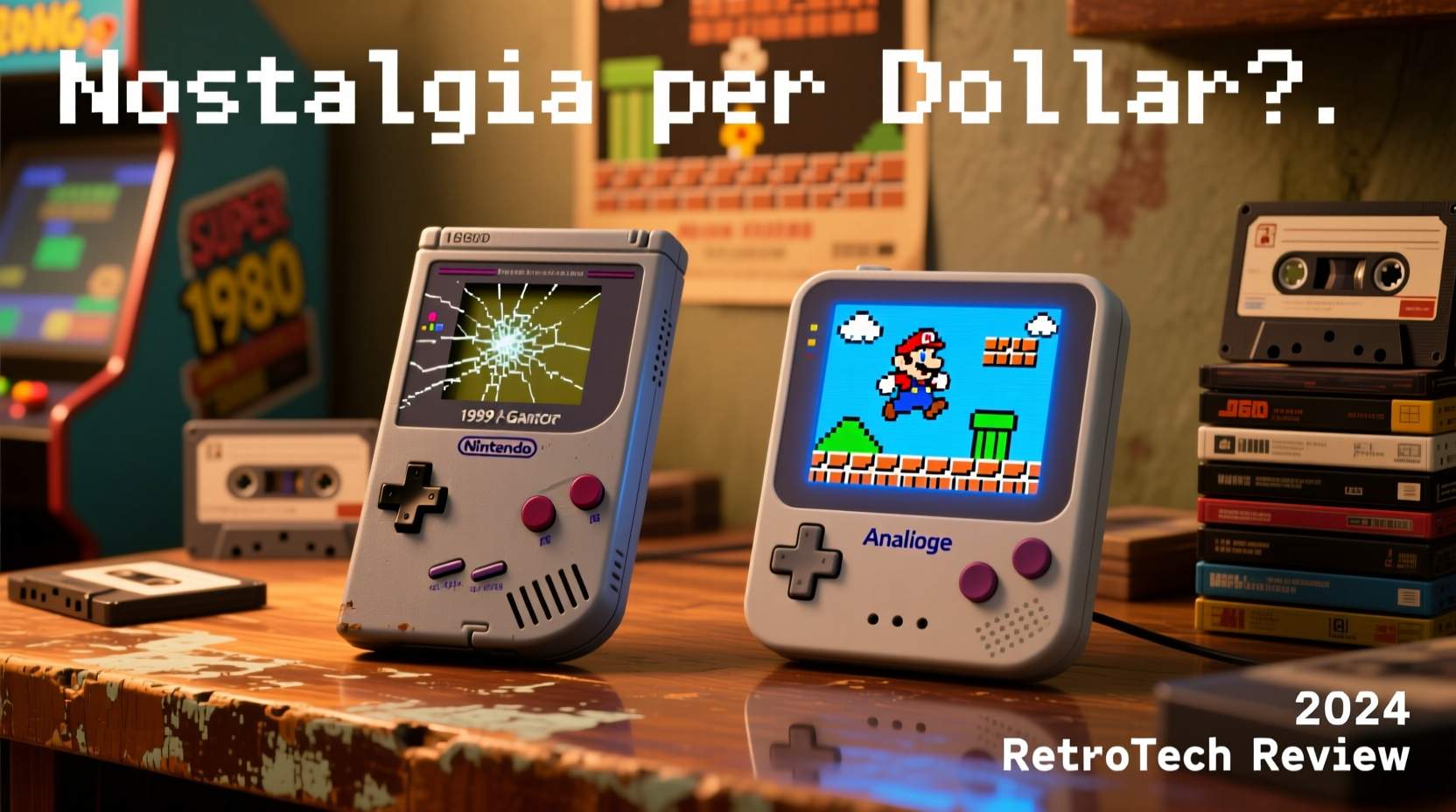
There’s no denying the visceral impact of holding an original Game Boy. Whether it’s the brick-like bulk of the Game Boy (DMG-01), the sleeker Game Boy Pocket, or the backlit Game Boy Advance SP, each model carries a unique physical presence. The sound of the power switch clicking into place, the rubbery texture of the buttons, and the grainy LCD screen all contribute to a multisensory experience that emulators simply cannot replicate.
For many, this authenticity is irreplaceable. As retro gaming historian Lucas Trent notes:
“Hardware is history you can hold. An original Game Boy isn’t just a device—it’s a time capsule. You’re not just playing a game; you’re interacting with the past in its original form.” — Lucas Trent, Curator at the Digital Retro Archive
This emotional dimension significantly amplifies the nostalgia factor. Holding the same device used during childhood road trips or rainy afternoons instantly triggers memories far beyond gameplay—like the smell of a friend’s basement or the excitement of blowing into cartridges to make them work.
Cost Breakdown: Original Game Boy vs Emulator Setup
To assess “nostalgia per dollar,” we must first understand the financial investment required for each option. Below is a detailed comparison of typical costs in 2024.
| Component | Original Game Boy (Used) | Retro Handheld Emulator (e.g., Anbernic RG35XX) |
|---|---|---|
| Base Device | $80–$150 (Game Boy Advance SP, functional) | $60–$90 |
| Games (5 titles) | $75–$200+ (original cartridges) | $0 (ROMs from personal backups) |
| Batteries / Power | $10–$20 (rechargeable AA or adapter) | Included rechargeable battery |
| Accessories (case, screen protector) | $20–$40 | $15–$30 |
| Maintenance & Repairs | Potential $30–$70 (cleaning, backlight mod) | Minimal; firmware updates free |
| Total Estimated Cost | $195–$420+ | $75–$140 |
While the upfront cost of a retro emulator is lower, the true savings come from game acquisition. Original Game Boy cartridges—especially popular titles like *Tetris*, *Pokémon Red/Blue*, or *The Legend of Zelda: Link’s Awakening*—can cost $30–$80 each in good condition. In contrast, emulators allow users to load ROMs from games they already own, avoiding repeated purchases while staying within legal ethical boundaries (provided backups are personal).
Nostalgia Through Gameplay: Fidelity vs Flexibility
Emulators excel in flexibility. Most retro handhelds support thousands of games across multiple systems—Game Boy, Game Boy Color, Game Gear, NES, SNES, Genesis, and even arcade titles. This means one device can recreate not just Game Boy memories, but entire childhood gaming libraries.
Modern emulators also offer enhancements: save states, rewind functions, customizable button mapping, and pixel-perfect display scaling. These features eliminate frustrations inherent to original hardware—like losing progress due to dead batteries or failed saves—but some argue they dilute the nostalgic challenge.
On the flip side, original hardware provides unaltered gameplay. There’s no save state to fall back on, no way to rewind a mistake in *Super Mario Land*. That tension—the knowledge that one wrong move could mean starting over—is part of the era’s charm. For purists, this difficulty is inseparable from the nostalgia.
Yet emulators can simulate this experience. Many allow users to disable save states, mimic screen flicker, and even apply CRT-style filters to recreate the look of a handheld played under a desk lamp. With careful configuration, an emulator can feel nearly identical to the original—while still offering the safety net of modern convenience when desired.
Real-World Example: Sarah’s Nostalgia Journey
Sarah, a 34-year-old graphic designer from Portland, recently revisited her childhood love of *Pokémon Blue* after her son received a Game Boy Advance SP for his birthday. She initially bought an original Game Boy Color and cartridge for $120, excited to relive her journey with Pikachu.
But after two weeks, she found herself frustrated. The screen was hard to see without perfect lighting, the cartridge failed to boot twice, and she lost hours of progress when the internal battery died. Disheartened, she sold the setup and purchased an Anbernic RG35XX for $85.
Using her old cartridge to create a personal backup (a legal gray area she approached ethically), she loaded *Pokémon Blue* onto the emulator. She enabled a green screen filter and disabled save states to preserve the original challenge. The result? A smoother, more reliable experience that still felt emotionally resonant.
“It’s not the exact same,” she admitted, “but it captures the spirit. And for less than half the price, I can play *Donkey Kong ’94* and *Kirby’s Dream Land* too. It’s like having my whole childhood handheld library in my pocket.”
Step-by-Step: Building Your Nostalgia-Optimized Setup
Whether you choose original hardware or emulation, follow this timeline to maximize nostalgia per dollar:
- Assess your priorities: Are you seeking pure authenticity, or do you value accessibility and variety?
- Set a budget: Decide how much you’re willing to spend—$100, $200, or more?
- Research models: For originals, consider Game Boy Pocket (cheaper, lighter) or GBA SP (backlit, rechargeable). For emulators, research devices like the Miyoo Mini, Retroid Pocket, or RG35XX.
- Source games legally: Use original cartridges to create personal ROM backups if opting for emulation. Never download copyrighted ROMs you don’t own.
- Customize settings: On emulators, adjust screen filters, disable save states, and use original aspect ratios to enhance authenticity.
- Maintain hardware: Clean cartridge contacts, store devices in dry places, and replace worn batteries promptly.
- Play intentionally: Recreate old rituals—play on the couch, take it on a trip, or share it with a younger family member.
Checklist: Maximizing Nostalgia Per Dollar
- ✅ Define your nostalgia goal: authenticity or broad access?
- ✅ Set a realistic budget (emulators typically cost less)
- ✅ Prioritize devices with good build quality and active firmware support
- ✅ Back up your own cartridges instead of downloading ROMs illegally
- ✅ Customize emulator settings to mimic original visuals and controls
- ✅ Invest in a protective case and screen protector for longevity
- ✅ Play in environments that mirror your childhood experiences
Frequently Asked Questions
Is it legal to use emulators with ROMs?
Emulators themselves are legal software. However, downloading ROMs of games you don’t own is a copyright violation. It is generally considered acceptable—and often legally defensible—to create backups of games you physically own for personal use, though enforcement varies by region.
Can emulators truly replicate the Game Boy experience?
With accurate firmware, screen filters, and input lag minimized, modern emulators can closely mimic the original experience. Some even surpass it in reliability and visual clarity. However, they cannot reproduce the physical sensation of pressing the original buttons or seeing the actual LCD screen.
Which option lasts longer?
Original Game Boys are aging hardware. Batteries degrade, screens dim, and components fail. Emulators, while newer, rely on smaller manufacturers and may lack long-term software support. However, their digital nature makes them easier to repair or replace without losing your game library.
The Verdict: Where Does Nostalgia Deliver the Best ROI?
If nostalgia were purely about emotional authenticity, the original Game Boy would win hands down. Its flaws—the dim screen, the stiff buttons, the need to blow into cartridges—are not bugs; they’re features of memory. For collectors and purists, nothing substitutes the real thing.
But when measured per dollar, retro handheld emulators deliver significantly more nostalgia value. They offer broader game access, greater reliability, and lower long-term costs—all while allowing users to tailor the experience to evoke the past. For someone wanting to revisit *Metroid II*, *Wario Land*, and *Final Fantasy Adventure* without spending hundreds on rare cartridges, emulation is not just practical—it’s economical nostalgia.
The smart approach lies in balance. Start with an affordable emulator to rediscover forgotten favorites. If a particular game reignites a powerful memory, consider investing in the original cartridge as a keepsake. This hybrid strategy lets you enjoy wide-ranging nostalgia now while preserving space for meaningful physical artifacts later.
Conclusion: Reconnect on Your Terms
Nostalgia isn’t a fixed destination—it’s a feeling shaped by context, cost, and personal connection. The original Game Boy offers unmatched authenticity, but at a premium. Retro handheld emulators provide accessible, flexible, and surprisingly faithful alternatives that stretch every dollar further.
Ultimately, the best choice depends on what kind of memory you want to relive. If it’s the weight of the device in your hand, the sound of the startup chime, and the pride of a curated cartridge collection, go original. But if you want to effortlessly wander through a lifetime of handheld classics—with clarity, convenience, and control—an emulator might just be the most nostalgic decision of all.




 浙公网安备
33010002000092号
浙公网安备
33010002000092号 浙B2-20120091-4
Comments
No comments yet. Why don't you start the discussion?