
For retro gaming enthusiasts, the question isn't just about reliving the past—it's about how best to experience it. Today, two paths dominate the landscape: building a custom retro gaming console using a Raspberry Pi or similar hardware (commonly called a \"Retro Switch build\"), or purchasing a ready-made prebuilt device like the Nintendo Classic Editions, Anbernic handhelds, or Analogue consoles. Each offers a distinct flavor of nostalgia, but they deliver fun in very different ways. The real challenge lies not in accessing old games, but in choosing the method that aligns with your values—whether that’s authenticity, convenience, creativity, or immersion.
The Allure of the Retro Switch Build
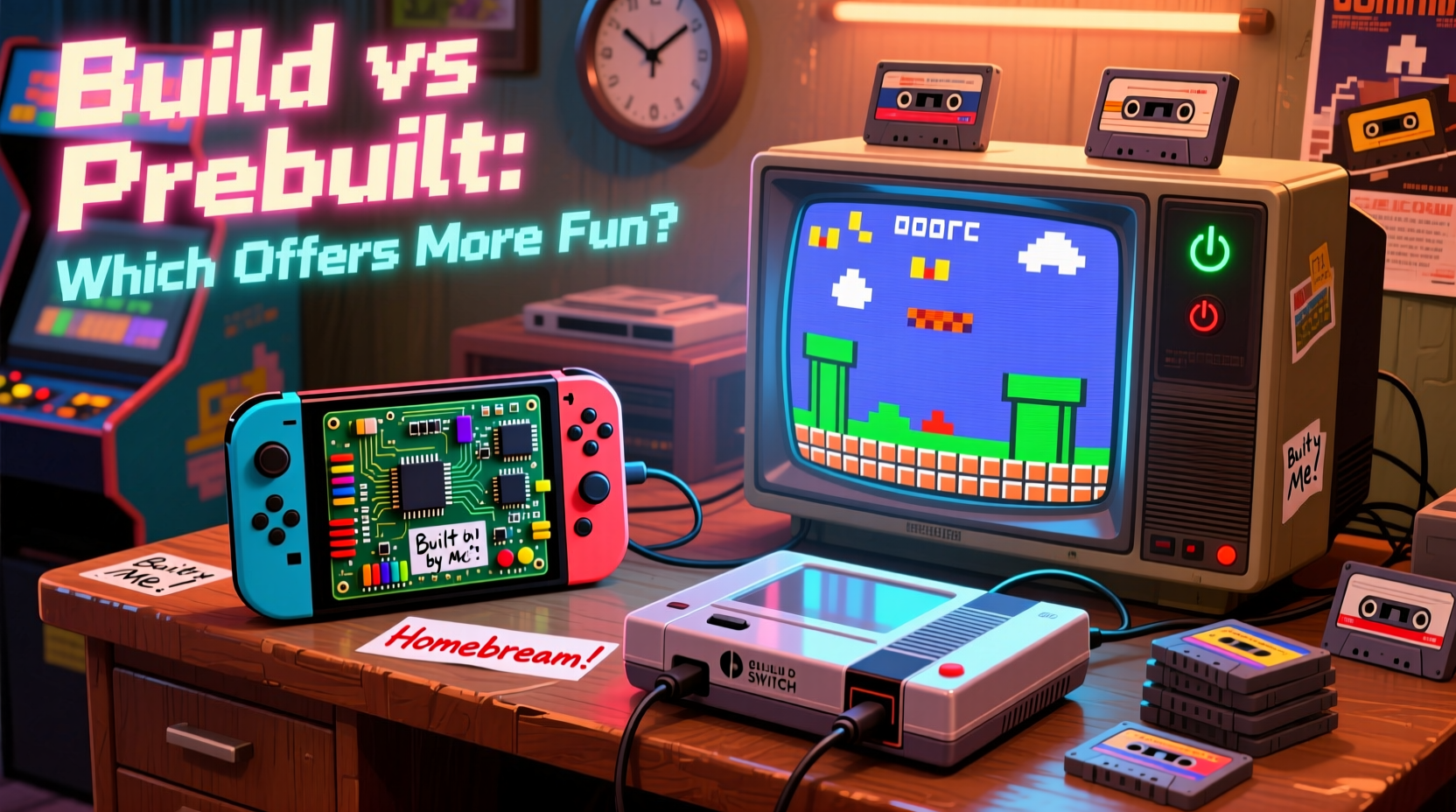
A Retro Switch build typically refers to a DIY project where users assemble a handheld or docked retro gaming system using components like a Raspberry Pi, FPGA chips, 3D-printed or laser-cut cases, screens, buttons, and batteries. These builds often emulate classic systems from the NES, SNES, Genesis, Game Boy, and beyond. The appeal isn’t just functional—it’s deeply emotional and creative.
Building your own retro console is akin to restoring a vintage car. You choose every part: the screen resolution, button layout, battery life, and even the shell design. This level of personalization fosters a strong connection between user and machine. Once completed, the device isn’t just a tool for playing games—it becomes a trophy of effort, patience, and technical curiosity.
Advantages of a Custom Build
- Full control over hardware: Choose high-quality screens, tactile buttons, and ergonomic designs tailored to your hands.
- Expandable library: Add new emulators and ROMs as you discover them, covering everything from arcade cabinets to obscure homebrew titles.
- Learning opportunity: Gain skills in Linux, electronics, soldering, and software configuration.
- Cost efficiency over time: While initial costs can be high, long-term access to thousands of games at no extra charge makes it economical.
- Unique aesthetic: Customize the case with engravings, colors, or themed designs—perfect for display or gifting.
The Case for Prebuilt Gaming Consoles
Prebuilt retro consoles are plug-and-play solutions designed for immediate enjoyment. Devices like the Nintendo Entertainment System: NES Classic Edition, Analogue Pocket, or Retroid Pocket 3+ come fully assembled, legally licensed (in some cases), and optimized for specific experiences. They require zero technical setup—just power on and play.
These devices cater to players who value simplicity, reliability, and polished presentation. Many official re-releases include features like save states, rewind functionality, and CRT-style filters—all built-in and seamlessly integrated. For casual fans or those wary of tinkering with code or circuitry, prebuilt units offer instant gratification without compromise.
“With Analogue consoles, we’re not emulating—we’re recreating the original hardware experience through FPGA technology. It’s pixel-perfect nostalgia.” — Christopher Garcia, Founder of Analogue Inc.
Benefits of Going Prebuilt
- No technical barrier: Ideal for non-tech-savvy users, children, or gift recipients.
- Legal compliance: Official products like Nintendo Classics include licensed games, avoiding gray-area issues.
- Superior build quality: Premium materials, precise manufacturing, and consistent performance out of the box.
- Time-saving: No assembly, debugging, or troubleshooting required.
- Better portability (in handhelds): Compact, lightweight, and often equipped with long-lasting batteries.
Side-by-Side Comparison: Build vs Buy
| Feature | Retro Switch Build | Prebuilt Console |
|---|---|---|
| Initial Cost | $80–$200 (depending on parts) | $50–$300 (based on brand/model) |
| Setup Time | 5–20 hours | Under 5 minutes |
| Game Library Size | Thousands (unlimited with ROMs) | Limited (e.g., 30–50 preloaded games) |
| Legality | Gray area (depends on ROM sourcing) | Fully legal (official devices) |
| Customization | Extensive (hardware + software) | Minimal (themes/skins only) |
| Performance Accuracy | Good (varies by emulator) | Excellent (FPGA-based = near-original) |
| Learning Curve | High (technical knowledge needed) | None |
| Long-Term Satisfaction | High (pride of ownership) | Moderate (convenience-focused) |
Real Example: Two Gamers, Two Paths
Consider Sarah and James, both lifelong fans of 16-bit era games.
Sarah, an electrical engineering student, spent three weekends building her Retro Switch using a Raspberry Pi 4, a 4-inch IPS screen, and a 3D-printed shell modeled after the original Game Boy Advance SP. She learned Python scripting to tweak the boot menu and added wireless controller support. When she finally powered it on and launched *Super Metroid*, the sense of accomplishment amplified the joy tenfold. To her, the game wasn’t just playable—it was earned.
James, a busy teacher, bought a Retroid Pocket 3+. He wanted to revisit *Chrono Trigger* during his commute but didn’t have time for DIY projects. Within minutes of unboxing, he downloaded the game via Lakka OS, adjusted the button mapping, and started playing. He appreciated the crisp OLED screen and smooth controls. Though he didn’t build it, the ease and polish made retro gaming accessible amid a hectic schedule.
Both had fun—but their definitions of “fun” diverged. For Sarah, fun was embedded in the process. For James, fun lived purely in the gameplay.
Step-by-Step Guide to Building Your Own Retro Switch
If you're considering a DIY route, here’s a realistic timeline and action plan:
- Week 1: Research & Planning
Select your base platform (Raspberry Pi, Odroid, etc.), decide on form factor (handheld or docked), and sketch a rough design. - Week 2: Purchase Components
Buy Pi board, microSD card, screen, battery, buttons, case, and wiring kit. Budget $100–$150 for mid-tier quality. - Week 3: Assemble Hardware
Solder GPIO connections, mount screen and controls, secure battery, and test power flow before final enclosure. - Week 4: Install Software
Flash RetroPie, Batocera, or Lakka OS onto the microSD card. Configure controllers, Wi-Fi, and BIOS files if needed. - Week 5: Load Games & Test
Add ROMs (legally backed up from owned cartridges), organize by system, and test performance across platforms. - Week 6: Finalize & Enjoy
Close the case, label buttons, apply protective film, and start your retro journey.
Which Offers More Fun?
The answer depends entirely on what kind of fun you seek.
If your idea of enjoyment includes problem-solving, craftsmanship, and deep engagement with technology, then a Retro Switch build will likely provide richer, longer-lasting satisfaction. The act of creation enhances the emotional weight of each game played. There’s pride in knowing every line of code and wire placement was chosen by you.
However, if you prioritize seamless access, reliability, and minimal friction between intention and action, a prebuilt console delivers unmatched convenience. You don’t need to debug HDMI output or troubleshoot audio drivers—you simply press start and return to Mushroom Kingdom.
Interestingly, many enthusiasts eventually adopt both. They keep a prebuilt unit for travel or quick sessions, while maintaining a custom build as a centerpiece of their hobby space. In this hybrid approach, fun isn’t exclusive—it’s layered.
FAQ
Is building a retro console legal?
Yes, building the hardware is completely legal. However, downloading ROMs for games you don’t physically own exists in a legal gray area. To stay compliant, back up ROMs from cartridges you already own.
Can a prebuilt console run homebrew or indie games?
Some can. Devices running open-source firmware like the Retroid Pocket or Anbernic RG series support homebrew. Closed systems like the NES Classic do not allow additional software unless jailbroken.
Which option gives the most authentic experience?
FPGA-based prebuilt consoles like the Analogue NT or Super Nt offer the most accurate reproduction of original hardware behavior. Emulation on DIY builds is excellent but may introduce minor timing discrepancies or input lag depending on configuration.
Final Thoughts: Fun Is Personal
In the end, the debate between a Retro Switch build and a prebuilt console isn’t about superiority—it’s about alignment with personal values. Fun isn’t a fixed metric; it evolves based on context, skill, and desire.
A child rediscovering *Sonic the Hedgehog* on a plug-and-play Sega Genesis Mini experiences joy untouched by technical complexity. Meanwhile, a tinkerer smiling as their self-coded splash screen appears on a handmade device feels a different, equally valid thrill.
Neither path diminishes the other. Both honor the legacy of classic gaming—one through preservation, the other through innovation.




 浙公网安备
33010002000092号
浙公网安备
33010002000092号 浙B2-20120091-4
Comments
No comments yet. Why don't you start the discussion?