
As holiday traditions evolve, so do our lighting choices. Many households still have boxes of vintage incandescent Christmas lights—strings that once dazzled windows and trees but now gather dust in garages or basements. With LED technology dominating modern light strings for its energy efficiency and longevity, a growing number of people are asking: Can I retrofit my old Christmas lights with LEDs instead of replacing them entirely?
The answer isn’t a simple yes or no. While technically feasible in some cases, retrofitting comes with technical challenges, safety risks, and cost-benefit trade-offs. This article explores whether converting your existing incandescent strands into LED-powered ones is practical—or if investing in new LED sets is the smarter long-term move.
Understanding the Differences Between Incandescent and LED Lights
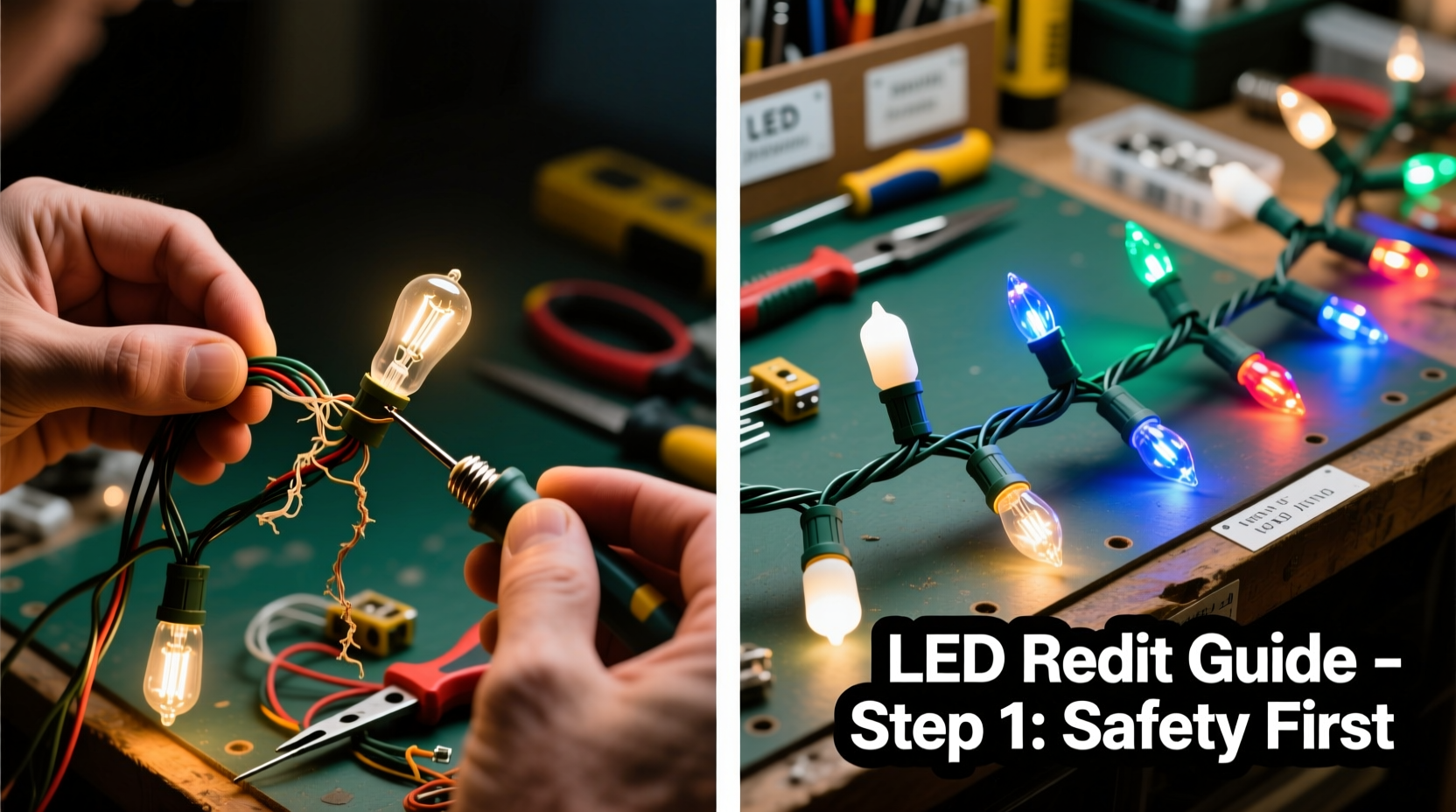
To assess retrofitting viability, it’s essential to understand how incandescent and LED Christmas lights operate differently.
Traditional incandescent mini-lights use a filament heated by electrical current to produce light. They consume more power (typically 0.4 to 0.5 watts per bulb), generate noticeable heat, and have shorter lifespans—often lasting only one to three seasons under heavy use. In contrast, LED bulbs use semiconductors to emit light, consuming as little as 0.04 to 0.1 watts per bulb. They remain cool to the touch, resist breakage, and can last 25,000 to 50,000 hours—equivalent to over ten holiday seasons at six hours per day.
Beyond efficiency, there's a critical electrical distinction: voltage compatibility. Most incandescent light strings are designed for 120V AC systems where multiple bulbs share the circuit voltage. Each bulb typically operates at around 2.5–3.5 volts depending on the number in the string (e.g., 50-bulb sets divide 120V across each). LEDs, however, require direct current (DC) and much lower voltages—usually between 2V and 3.6V per diode—but are often pre-wired with resistors and rectifiers in commercial LED strings.
This mismatch means dropping an individual LED into an incandescent socket without proper regulation will likely result in immediate burnout—or worse, create a fire hazard due to excessive current draw.
Is Retrofitting Technically Possible?
Yes—but only under very specific conditions and with significant technical know-how.
True retrofitting involves replacing each incandescent bulb base with an LED equivalent while maintaining safe operation within the original wiring framework. Some third-party suppliers sell “LED retrofits” marketed as plug-and-play replacements for common mini-light bulbs like E12 or C7 bases. These pre-assembled units contain miniature drivers or resistors built into the bulb housing, allowing them to function safely on standard AC mains when used in compatible strings.
However, success depends heavily on:
- The original string’s design (series vs. parallel wiring)
- Total load capacity of the wire gauge
- Voltage drop across the circuit
- Presence of shunts in dead bulbs (common in incandescents)
In series-wired strings—which make up most older sets—if one LED fails open-circuit, the entire strand goes dark unless the replacement bulb includes a bypass shunt. Few aftermarket LED retrofits include this feature reliably.
“While retrofit LEDs exist, they’re often inconsistent in quality. We’ve seen cases where users installed them only to face flickering, partial illumination, or overheating.” — Mark Reynolds, Electrical Safety Engineer at Holiday Lighting Institute
Step-by-Step Guide to Attempting a Safe Retrofit
If you're determined to try retrofitting, follow this cautious process:
- Inspect the Original String: Check for frayed wires, cracked sockets, or signs of moisture damage. Discard any compromised strand.
- Determine Wiring Type: Use a multimeter to test continuity. If removing one bulb kills the whole string, it’s wired in series. Parallel wiring is rare in consumer-grade sets but allows independent bulb operation.
- Select Compatible LED Bulbs: Purchase retrofit LEDs explicitly rated for AC mains operation and matching your base size (e.g., Miniature T1¾, C7, E12).
- Test One Bulb First: Insert a single LED into the middle of the string and power it briefly. Watch for abnormal brightness, flicker, or heat buildup.
- Replace All Bulbs Gradually: Swap all bulbs with matching LED retrofits. Mixing types causes uneven voltage distribution.
- Monitor Performance: Run the string for at least 30 minutes. Feel connectors and wires for warmth. Any hot spots indicate overcurrent issues.
- Label the Set Clearly: Mark it as \"LED Retrofit – Not Standard Voltage\" to prevent future misuse.
Note: Even after successful testing, these modified strings may not meet UL certification standards and could void home insurance coverage in case of fire.
Cost and Time Analysis: Is It Worth It?
Let’s compare the real-world costs of retrofitting versus buying new LED strings.
| Factor | Retrofitting Old Strings | Buying New LED Strings |
|---|---|---|
| Upfront Cost | $8–$15 per 50-pack of retrofit LEDs | $10–$25 per 100-count LED string |
| Labor Time | 2–4 hours per string (removal/replacement) | Negligible (plug and play) |
| Reliability | Moderate to low (depends on component match) | High (factory-tested, shunted circuits) |
| Safety Certification | Not certified; potential liability | UL/ETL listed; compliant with NEC |
| Expected Lifespan | 1–3 seasons (risk of early failure) | 10+ seasons with proper storage |
| Energy Consumption (per 100 lights) | ~5 watts (if fully converted) | ~4–6 watts |
At first glance, retrofitting appears slightly cheaper. But when factoring in labor, risk, and reduced reliability, the value diminishes. A single failed connection or short circuit could lead to costly repairs—or worse, property damage.
New LED strings also offer features unavailable through retrofitting: dimming options, color-changing modes, smart app control, and better weather resistance. For less than $20, you gain peace of mind and enhanced functionality.
Mini Case Study: The Johnson Family’s DIY Experiment
The Johnsons in Portland, Oregon, inherited a set of 1970s C7 incandescent lights from their grandparents. Attached emotionally to the warm glow and nostalgic feel, they resisted switching to modern LEDs. After learning about retrofit kits online, they purchased 24 replacement LED bulbs designed for C7 sockets.
They spent an entire weekend carefully replacing each bulb, testing sections incrementally. Initially, the lights worked—cooler to the touch and noticeably brighter. However, during their second season of use, half the string began flickering. Upon inspection, two non-shunted LEDs had failed open-circuit, breaking the flow.
They attempted soldering bypass wires but found inconsistent results. By year three, only one-third of the string remained functional. Ultimately, they donated the frame and bought a new pre-lit LED wreath.
“We learned that sentiment doesn’t override engineering,” said Sarah Johnson. “The time we invested wasn’t worth the outcome. Now we display the original empty socket board as wall art—keeping the memory alive without the hazard.”
Safer Alternatives to Full Retrofitting
If preserving vintage fixtures matters, consider hybrid approaches that maintain aesthetics without compromising safety:
- Reuse Sockets with New Internal Wiring: Replace internal wiring with a low-voltage DC strip connected to isolated LED modules. Requires full disassembly and electrical knowledge.
- Convert to Battery-Powered Operation: Power small sections via USB or AA battery packs with regulated 5V output—ideal for indoor displays.
- Keep Vintage Frames, Add Modern Strings: Mount new flexible LED rope lights behind original diffusers or housings to mimic the classic look.
- Display Non-Electrical Versions: Remove wiring entirely and repurpose the structure as a decorative piece lit by ambient or external lighting.
Checklist: Should You Retrofit Your Old Christmas Lights?
Use this decision-making checklist before proceeding:
- ☐ Are the original sockets intact and undamaged?
- ☐ Do I have access to AC-rated LED retrofit bulbs with correct base size?
- ☐ Am I comfortable working with household electrical systems?
- ☐ Will the modified string be used indoors only, away from children or pets?
- ☐ Have I tested one bulb successfully under controlled conditions?
- ☐ Am I prepared to accept the lack of safety certification?
- ☐ Would purchasing new LED lights provide better long-term value?
If you answered “no” to any of the first six questions, or “yes” to the last, replacement is strongly advised over modification.
Frequently Asked Questions
Can I just replace one broken incandescent bulb with an LED?
No. Mixing bulb types in a series circuit disrupts voltage balance. The LED will likely receive too much voltage and fail instantly, potentially damaging other bulbs or creating a short.
Are there UL-listed retrofit LED bulbs available?
A few specialty manufacturers produce UL-recognized retrofit LEDs for commercial signage, but these are rarely sold for residential holiday use. Most consumer-level retrofit bulbs are unlisted and considered experimental.
What’s the safest way to preserve old Christmas lights?
Retire them from active use. Clean gently, label clearly, and store in acid-free tissue paper inside ventilated containers. Consider photographing them lit for digital preservation or framing the socket board as décor.
Conclusion: Prioritize Safety Over Sentiment
Retrofitting old Christmas lights with LEDs is technically possible, but rarely advisable. The combination of electrical incompatibility, lack of standardized components, and absence of safety certifications makes such projects risky for average homeowners. While the desire to extend the life of beloved decorations is understandable, modern LED strings offer superior performance, safety, and economy.
Instead of modifying outdated systems, embrace the upgrade. Today’s LED lights replicate the warm tones of vintage incandescents while cutting energy use by up to 90%. Many even simulate the subtle flicker and soft diffusion that made older lights charming.
Preserve memories—not live wires. Let go of unsafe practices and invest in solutions that bring joy without compromise.




 浙公网安备
33010002000092号
浙公网安备
33010002000092号 浙B2-20120091-4
Comments
No comments yet. Why don't you start the discussion?