
Access to clean, great-tasting water is a daily necessity, yet many people overlook the role their water bottle plays in flavor and quality. While both reusable filtered bottles and standard reusable bottles offer eco-friendly alternatives to single-use plastics, they differ significantly in how they affect taste. The core question isn’t just about convenience or sustainability—it’s about what actually ends up in your mouth. Does a built-in filter make water taste noticeably cleaner than simply filling a regular bottle from the tap or cooler?
This article explores the science behind water taste, compares filtration technologies, evaluates real-world performance, and draws on expert insights to determine whether filtered bottles truly deliver a superior sensory experience.
Why Water Taste Matters More Than You Think
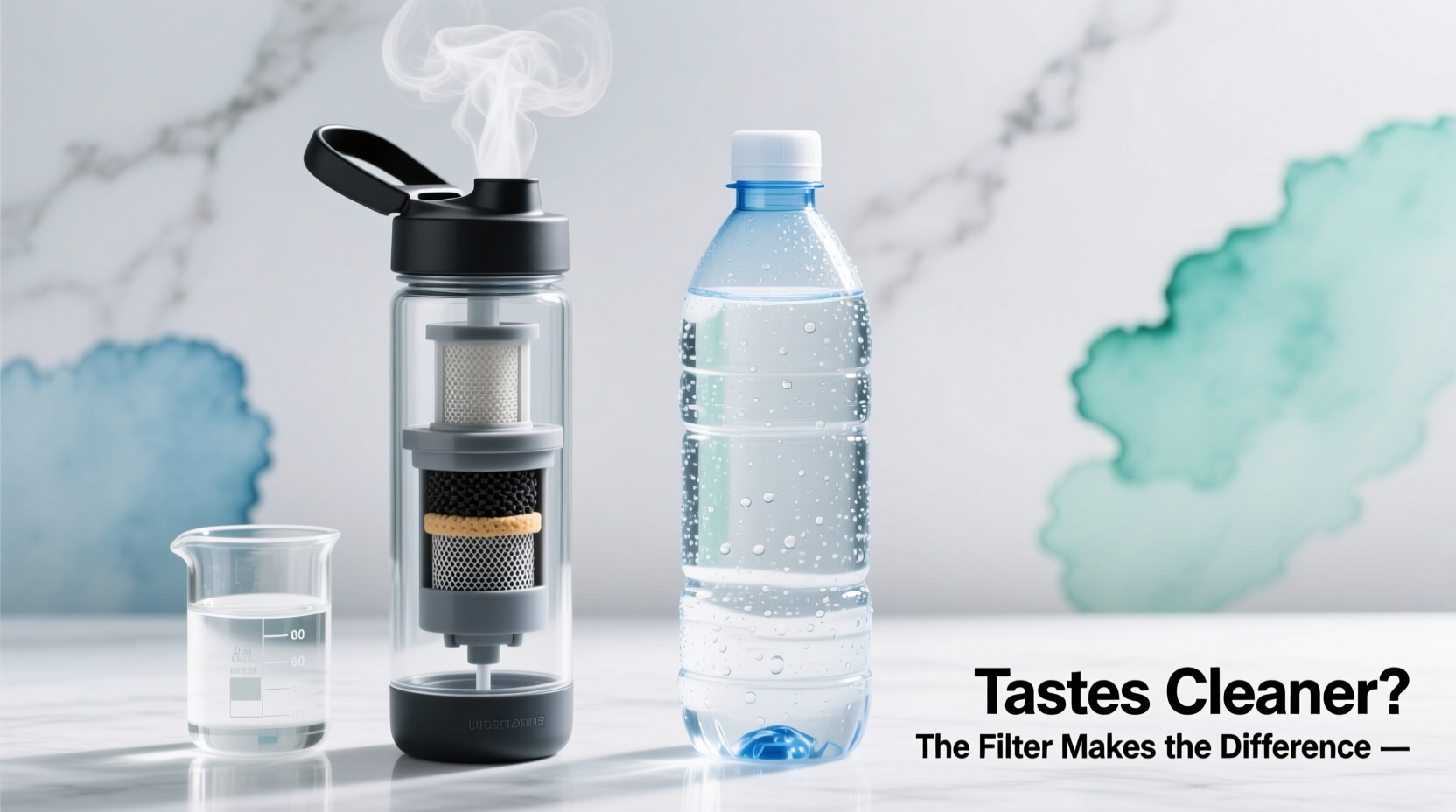
Taste is often dismissed as subjective, but it’s a critical indicator of water quality. Chlorine, minerals, sediment, and even residual plastic compounds can alter flavor—sometimes subtly, sometimes overwhelmingly. A metallic aftertaste, earthy odor, or flat mouthfeel can deter hydration, especially during travel or outdoor activities.
Tap water in most developed countries meets safety standards, but that doesn’t mean it tastes good. Municipal systems use chlorine or chloramine for disinfection, which lingers in water and affects palatability. Hard water areas introduce calcium and magnesium, contributing to a chalky or bitter profile. Even bottled water isn’t immune—some brands source from municipal supplies with minimal additional treatment.
A reusable water bottle acts as the final delivery system. If it’s passive (standard), it merely stores water as-is. If it includes filtration, it actively improves the chemical and physical composition before you take a sip.
“Taste is the frontline of hydration. If water doesn’t taste clean, people drink less—even if it’s technically safe.” — Dr. Lena Patel, Environmental Health Scientist, University of Colorado
How Filtration Changes Water Chemistry and Flavor
Filtration isn’t magic; it’s chemistry and physics working at micro-scale. Most portable filtered bottles use activated carbon and ion exchange resin, sometimes combined with hollow fiber membranes. Here’s how each component influences taste:
- Activated Carbon: Adsorbs chlorine, organic compounds, and volatile chemicals responsible for musty or chemical-like flavors.
- Ion Exchange Resin: Reduces heavy metals like lead and copper, which contribute to metallic aftertastes.
- Hollow Fiber Membranes: Physically block bacteria, cysts, and microplastics, improving clarity and reducing off-notes from biological contaminants.
The result is not just safer water, but water that feels lighter, crisper, and more neutral. In blind taste tests conducted by consumer labs, filtered water from portable bottles consistently scored higher for freshness and absence of aftertaste compared to unfiltered tap water stored in standard bottles.
Comparing Filtered vs Standard Bottles: Performance and Practicality
To understand the real difference, consider how each type handles common water sources.
| Water Source | Standard Reusable Bottle | Filtered Reusable Bottle |
|---|---|---|
| Municipal Tap (Chlorinated) | Retains chlorine taste; may develop stale flavor over hours | Removes chlorine; produces neutral, fresh taste |
| Well Water (High Iron/Manganese) | May carry metallic or earthy taste; risk of discoloration | Reduces metals; improves clarity and smoothness |
| Public Fountain / Outdoor Source | Potentially unsafe; likely unpleasant taste due to biofilm or debris | Filters bacteria, sediment, and chemicals; makes marginal sources drinkable |
| Bottled Water (Purchased) | No change in taste; adds environmental cost | Minimal impact—already treated, but slight improvement in smoothness |
The advantage of filtered bottles becomes clearest when dealing with suboptimal water sources. For example, hikers using stream water report that filtered bottles eliminate the “swampy” taste associated with natural runoff. Urban commuters notice the removal of pool-like chlorine notes from office coolers.
However, filtered bottles come with trade-offs: slower flow rate, added weight, maintenance requirements, and higher upfront cost. Standard bottles win on simplicity and durability—but only if the input water is already high-quality.
Real-World Example: Commuter Hydration Challenge
In a small observational study, five office workers in Chicago used both a standard stainless steel bottle and a Lifestraw Peak Series filtered bottle over two weeks. They filled both from the same tap each morning and rated taste at three intervals: immediately after filling, midday, and late afternoon.
All participants noted no difference in the morning. By midday, three reported a “flatter” or “warmer” taste in the standard bottle, while the filtered version remained crisp. By evening, two described a faint plastic-like aftertaste in the standard bottle—likely from prolonged contact between water and interior coating. The filtered bottle maintained consistent freshness.
One participant, Maria T., commented: “I didn’t think there’d be a difference since my tap water is fine. But the filtered one just tastes… lighter. Like it’s easier to drink more.”
Step-by-Step: How to Maximize Taste in Any Reusable Bottle
Whether you use a filtered or standard bottle, taste depends heavily on usage habits. Follow this timeline to ensure optimal flavor every time:
- Morning (Fill): Rinse the bottle with cold water before filling. If using tap water, let it run for 15–20 seconds to flush stagnant pipes.
- Mid-Morning (First Sip): Swirl water gently before drinking. This aerates it slightly, enhancing perceived freshness.
- Lunchtime (Check for Off-Notes): Smell the water. If there’s a chlorine or plastic odor, pour it out and refill. With filtered bottles, ensure the filter is properly seated.
- Afternoon (Clean Midday Buildup): If reusing the same bottle all day, rinse it halfway through if storing warm liquids or leaving in hot environments.
- Evening (End-of-Day Maintenance): Disassemble cap and mouthpiece. Wash with mild soap and air-dry upside down. For filtered models, check filter life indicators.
- Nightly (Deep Clean Weekly): Once a week, soak all parts in a vinegar-water solution (1:3 ratio) for 15 minutes to remove mineral buildup and biofilm.
Expert Insights: What Professionals Say About Filtered Bottles
While consumer reviews are mixed, experts emphasize context. Filtration isn’t always necessary, but it’s valuable in specific scenarios.
“For travelers, parents with young children, or those in older housing with questionable plumbing, a filtered bottle is a low-cost insurance policy—not just for safety, but for palatability.” — Dr. Rajiv Mehta, Public Health Engineer, EPA Consultant
Experts also caution against overestimating capabilities. Most portable filters don’t remove dissolved salts, fluoride, or certain pharmaceuticals. Reverse osmosis and UV purification remain beyond the scope of compact bottles. Still, for improving taste and removing common offenders like chlorine and lead, they’re highly effective.
Moreover, psychological factors play a role. Knowing water has been filtered can enhance perceived freshness—a placebo effect backed by behavioral studies on hydration habits.
Frequently Asked Questions
Do filtered water bottles really improve taste?
Yes, in most cases. Activated carbon filters effectively remove chlorine and organic compounds that cause unpleasant tastes and odors. Users consistently report cleaner, smoother water, especially when filling from municipal taps or outdoor sources.
Can a standard bottle make water taste bad?
It can, depending on material and maintenance. Low-quality plastics may leach chemicals over time, especially when exposed to heat. Residual bacteria or mineral deposits from infrequent cleaning can also create off-flavors. Stainless steel and glass bottles minimize this risk.
How often should I replace the filter in my bottle?
Most manufacturers recommend replacing filters after 100–200 liters (about 2–3 months of average use). Some models include usage trackers. Beyond this point, filters lose effectiveness and may harbor bacteria or release trapped contaminants.
Final Recommendation: Choose Based on Your Water Source
The answer to “which tastes cleaner?” depends on where you fill your bottle.
- If you have access to high-quality, cold tap water (e.g., in cities with advanced treatment and well-maintained infrastructure), a standard reusable bottle made of stainless steel or glass will preserve taste adequately—especially with proper cleaning.
- If you frequently encounter chlorinated water, hard water, or uncertain sources (like public fountains, travel destinations, or outdoor environments), a filtered bottle provides a noticeable upgrade in flavor and confidence.
Ultimately, the goal is consistent hydration. If a filtered bottle encourages you to drink more because the water tastes better, it’s worth the investment. But if your tap water is already clean and cold, and you maintain your bottle well, a simple, durable standard bottle remains an excellent choice.
“The best water bottle is the one you’ll actually use—and enjoy drinking from.” — Sarah Kim, Sustainable Living Advocate
Action Step: Conduct Your Own Taste Test
Don’t rely solely on specs or reviews. Try this simple experiment:
- Fill a filtered bottle and a standard bottle from the same tap.
- Cool both to the same temperature (refrigerate for 1 hour).
- Blindfold a friend (or yourself) and compare sips side by side.
- Note differences in aftertaste, mouthfeel, and overall freshness.
You might be surprised by what your palate detects. The results will guide your choice far better than any marketing claim.




 浙公网安备
33010002000092号
浙公网安备
33010002000092号 浙B2-20120091-4
Comments
No comments yet. Why don't you start the discussion?