
Water is essential, but the experience of drinking it—especially its taste—can vary dramatically depending on how it's delivered. With growing awareness around plastic waste and water quality, many people are turning to reusable water bottles. Among these, filtered reusable bottles have gained popularity for their promise of cleaner, better-tasting water on the go. But do they actually make water taste better than standard reusable or single-use plastic bottles? The answer isn't as simple as a yes or no—it depends on source water, filter technology, personal sensitivity to taste, and maintenance habits.
This article dives deep into the science and sensory experience behind filtered versus regular bottled water, comparing flavor profiles, user experiences, and practical considerations to help you decide which option delivers the best taste for your lifestyle.
The Role of Water Quality in Taste Perception
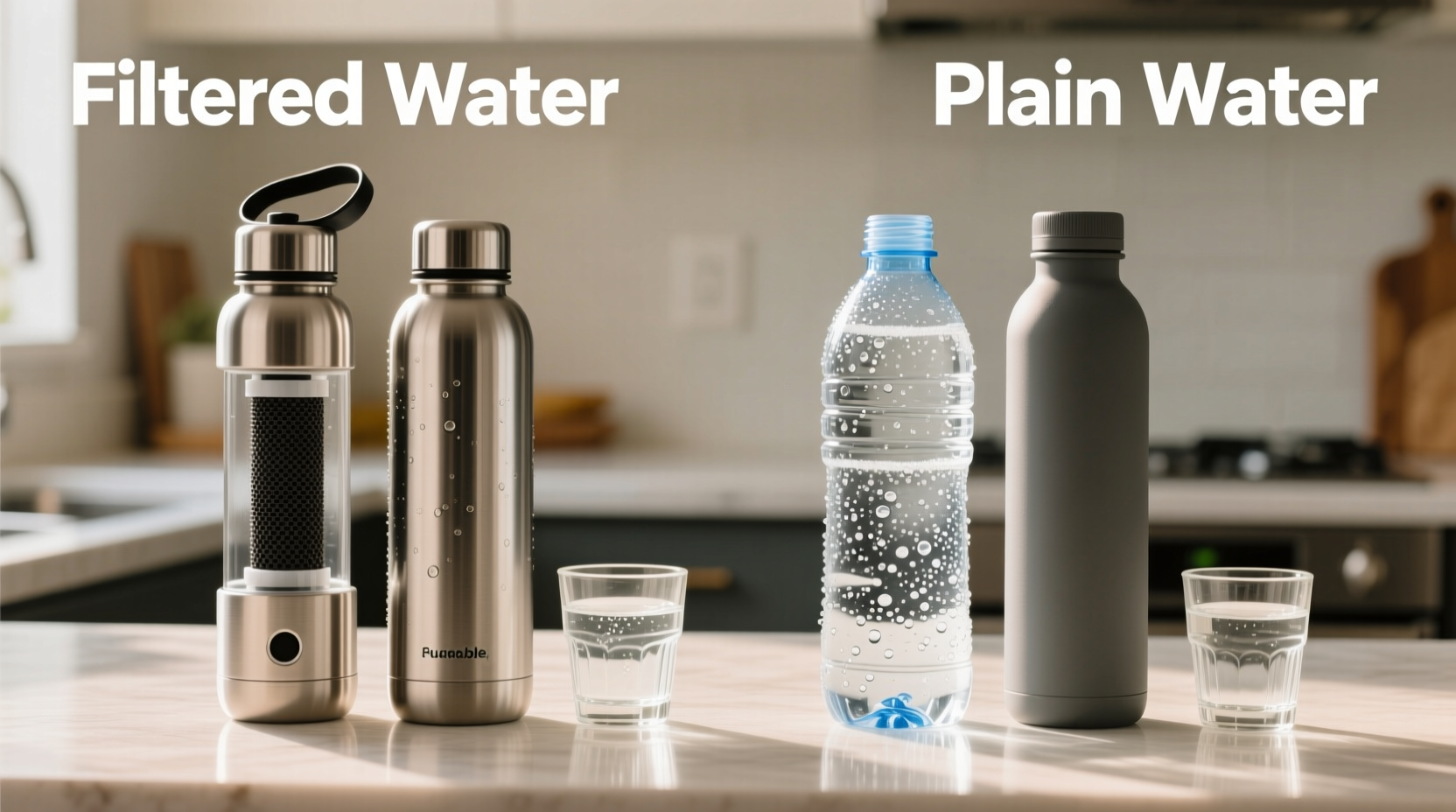
Taste is subjective, but it’s heavily influenced by objective factors such as mineral content, chlorine levels, pH, and presence of organic compounds. Municipal tap water, the most common source for filling reusable bottles, often contains chlorine or chloramine for disinfection. While effective at killing pathogens, these chemicals impart a sharp, chemical aftertaste that many find unpleasant.
Hard water, high in calcium and magnesium, can taste slightly bitter or metallic. Conversely, soft or overly purified water may feel “flat” due to low mineral content. Bottled spring water typically strikes a balance, offering a crisp, neutral profile. However, even premium bottled water varies by brand and region.
Filtered reusable bottles aim to bridge this gap by removing impurities while preserving or enhancing palatability. Standard reusable bottles—whether stainless steel, glass, or BPA-free plastic—do not alter water chemistry; they merely store it. Any improvement in taste comes from temperature control (e.g., keeping water cold) or psychological perception of freshness.
How Filters Improve Taste: Mechanisms and Technologies
Not all filters work the same way. The effectiveness—and therefore the impact on taste—depends on the filtration method used in the bottle. Common technologies include:
- Activated carbon: Adsorbs chlorine, organic compounds, and volatile chemicals responsible for musty or chemical tastes.
- Ion exchange resins: Reduce heavy metals like lead and copper, which can cause metallic notes.
- Mechanical microfiltration: Removes sediment, rust, and microplastics that can subtly affect mouthfeel.
- Reverse osmosis (rare in portable bottles): Strips nearly all dissolved solids, producing very pure—but sometimes flat-tasting—water.
Most portable filtered bottles use a combination of activated carbon and hollow fiber membranes. This dual approach removes both chemical contaminants and particulates, resulting in water that feels cleaner and smells fresher.
“Carbon filtration doesn’t just remove contaminants—it changes the sensory profile of water by eliminating odor-causing compounds. Since smell accounts for up to 80% of taste, this makes a significant difference.” — Dr. Lena Patel, Environmental Health Scientist, University of Colorado
In blind taste tests conducted by consumer labs, filtered tap water consistently outperforms unfiltered tap water in categories like “freshness,” “lack of aftertaste,” and “overall pleasantness.” When compared to commercially bottled water, filtered tap water from a good-quality bottle often scores similarly—sometimes even higher—particularly in regions with poor municipal water quality.
Comparative Analysis: Filtered Reusables vs Regular Bottles
To understand the real-world differences, we evaluated several key factors across three types of bottles:
- Filtered reusable bottles (e.g., Brita Fill & Flow, LifeStraw Go, Grayl Ultralight)
- Non-filtered reusable bottles (stainless steel, glass, Tritan plastic)
- Single-use plastic bottled water (e.g., Aquafina, Evian, Dasani)
| Factor | Filtered Reusable | Regular Reusable | Single-Use Plastic Bottle |
|---|---|---|---|
| Taste Improvement (vs tap) | High – removes chlorine, odors, metals | None – retains original water taste | Moderate – pre-treated but may leach plastic taste |
| Aftertaste Risk | Low (if filter maintained) | Medium (plastic/metal residue over time) | High (especially if stored in heat) |
| Mineral Retention | Selective – some preserve beneficial minerals | Full retention | Varies by brand – some stripped, others enhanced |
| Consistency Over Time | Declines as filter ages (~40–80 gallons) | Stable, unless poorly cleaned | Consistent per batch |
| Environmental Impact | Low (long-term use, replaceable filters) | Low (durable, no consumables) | High (plastic waste, transportation emissions) |
The data shows that filtered bottles offer the most consistent improvement in taste when starting with suboptimal tap water. However, their advantage diminishes if the filter is expired or if the user fills the bottle with already-purified water. In contrast, regular reusable bottles depend entirely on the quality of the input water. Single-use bottles provide convenience and predictable taste but come with environmental costs and potential flavor transfer from plastic, especially when exposed to heat.
Real-World Example: Commuter in Chicago vs Hiker in Colorado
Consider two users:
- Sarah, a daily commuter in Chicago, fills her LifeStraw bottle from office sinks and public fountains. Chicago’s water is treated with chlorine and contains moderate hardness. She notices a sharp improvement in taste—less chemical bite, smoother finish—after switching to a filtered bottle. Her colleagues using stainless steel bottles report no change, still tasting the city water’s distinct edge.
- Mark, a backpacker in Colorado, uses a Grayl filter bottle on trails. He draws from mountain streams containing silt, algae, and occasional animal runoff. His filtered water tastes clean and neutral, whereas his friend’s regular bottle, filled from the same source, carries an earthy, muddy aftertaste despite boiling. In this case, filtration isn’t just about taste—it’s about safety and palatability in remote environments.
These scenarios highlight that the value of a filter depends on context. For urban users with decent tap water, the taste benefit may be subtle. For those in areas with poor water infrastructure or outdoor enthusiasts, the improvement is dramatic.
Factors That Undermine Taste—Even with Filters
A filtered bottle is only as good as its maintenance. Several common mistakes can negate taste benefits:
- Using an expired filter: Once the carbon is saturated, it stops removing chlorine and may even leach trapped contaminants back into the water.
- Poor cleaning habits: Biofilm buildup inside the bottle or lid can introduce musty or sour flavors, regardless of filtration.
- Pre-filling with old water: Leaving water in the bottle for days promotes bacterial growth and stale taste.
- Exposure to heat or sunlight: High temperatures degrade filter media and accelerate plastic leaching in reusable containers.
Step-by-Step Guide to Maximizing Taste with a Filtered Bottle
- Test your tap water: Use a home test kit or check your local water quality report (available via EPA’s Consumer Confidence Report). Knowing what’s in your water helps choose the right filter.
- Select a bottle with appropriate filtration: For chlorine taste, prioritize activated carbon. For heavy metals or rural sources, look for NSF/ANSI certifications (e.g., Standard 42 for aesthetics, 53 for health contaminants).
- Prime and flush the filter: Before first use, soak and flush the filter as instructed—this removes loose carbon particles that could cloud water.
- Clean the bottle weekly: Use warm water and mild dish soap. Remove the filter before washing. For stubborn odors, soak in a vinegar-water solution (1:3 ratio) for 15 minutes.
- Replace the filter on schedule: Track volume used or set calendar reminders. Most filters last 40–100 gallons.
- Store properly: Keep the bottle dry and cool when not in use. Never leave it in a hot car.
Frequently Asked Questions
Do filtered water bottles remove fluoride?
Most portable filters do not remove fluoride. Activated carbon and mechanical filters generally leave fluoride intact. Only specialized systems like reverse osmosis or activated alumina do so effectively. If fluoride removal is desired, verify the product specifications or consider a dedicated home system.
Can a filtered bottle make tap water taste better than bottled water?
Yes—especially if your tap water has strong chlorine or sulfur notes. In side-by-side tastings, many users report filtered tap water as crisper and less “plasticky” than mass-market bottled brands. Premium bottled waters like Fiji or Voss may still win in mineral balance, but filtered tap often beats budget brands in freshness.
Why does my filtered water taste funny sometimes?
Off-flavors usually indicate a problem: an expired filter, residual biofilm in the bottle, or improper rinsing after cleaning. Try replacing the filter and doing a deep clean. If the issue persists, test your source water for unexpected contaminants.
Final Verdict: Which Tastes Better?
The answer hinges on your starting point. If you live in an area with high-chlorine, hard, or otherwise unpalatable tap water, a filtered reusable bottle will almost certainly deliver better-tasting water than a regular reusable or cheaply bottled alternative. The removal of chlorine alone transforms the drinking experience, making water more refreshing and easier to consume in larger quantities—a key factor in staying hydrated.
However, if your tap water is already soft, low in chlorine, and free of odd odors, the taste difference may be negligible. In such cases, a high-quality non-filtered reusable bottle—especially one made of glass or medical-grade stainless steel—can preserve taste without added complexity or recurring filter costs.
Single-use plastic bottles occupy a middle ground: they offer consistency but risk introducing their own taste, particularly when stored improperly. Environmentally, they fall short, contributing to pollution and resource depletion.
“The best-tasting water is the one you’ll actually drink. For many, that means removing the barriers—like bad taste—that discourage hydration. A filter can be that gateway.” — Dr. Alan Torres, Hydration Researcher, Stanford Medicine
Take Action: Choose What Works for Your Water
Rather than declaring a universal winner, the smarter approach is alignment: match your bottle choice to your water source and lifestyle. Start by assessing your tap water. Install a home filter if needed. Then, choose a portable solution that complements it.
If taste is your priority and your water needs improvement, invest in a reputable filtered bottle and maintain it diligently. If you’re already happy with your tap or prefer minimalism, a durable, well-cleaned reusable bottle is perfectly sufficient.




 浙公网安备
33010002000092号
浙公网安备
33010002000092号 浙B2-20120091-4
Comments
No comments yet. Why don't you start the discussion?