
In an age where digital theft is on the rise, consumers are increasingly concerned about protecting their personal data. One product that has gained attention in recent years is the RFID blocking wallet. Marketed as a shield against wireless skimming, these wallets promise enhanced security over traditional models. But how much of a difference do they actually make? For many, the question isn't just about technology—it's about practicality, cost, and whether the added layer of protection is necessary or simply a marketing ploy.
This article dives deep into the mechanics of RFID technology, examines real-world risks, and compares RFID blocking wallets with standard cardholders to determine if the upgrade is worth it.
Understanding RFID Technology and How It Works
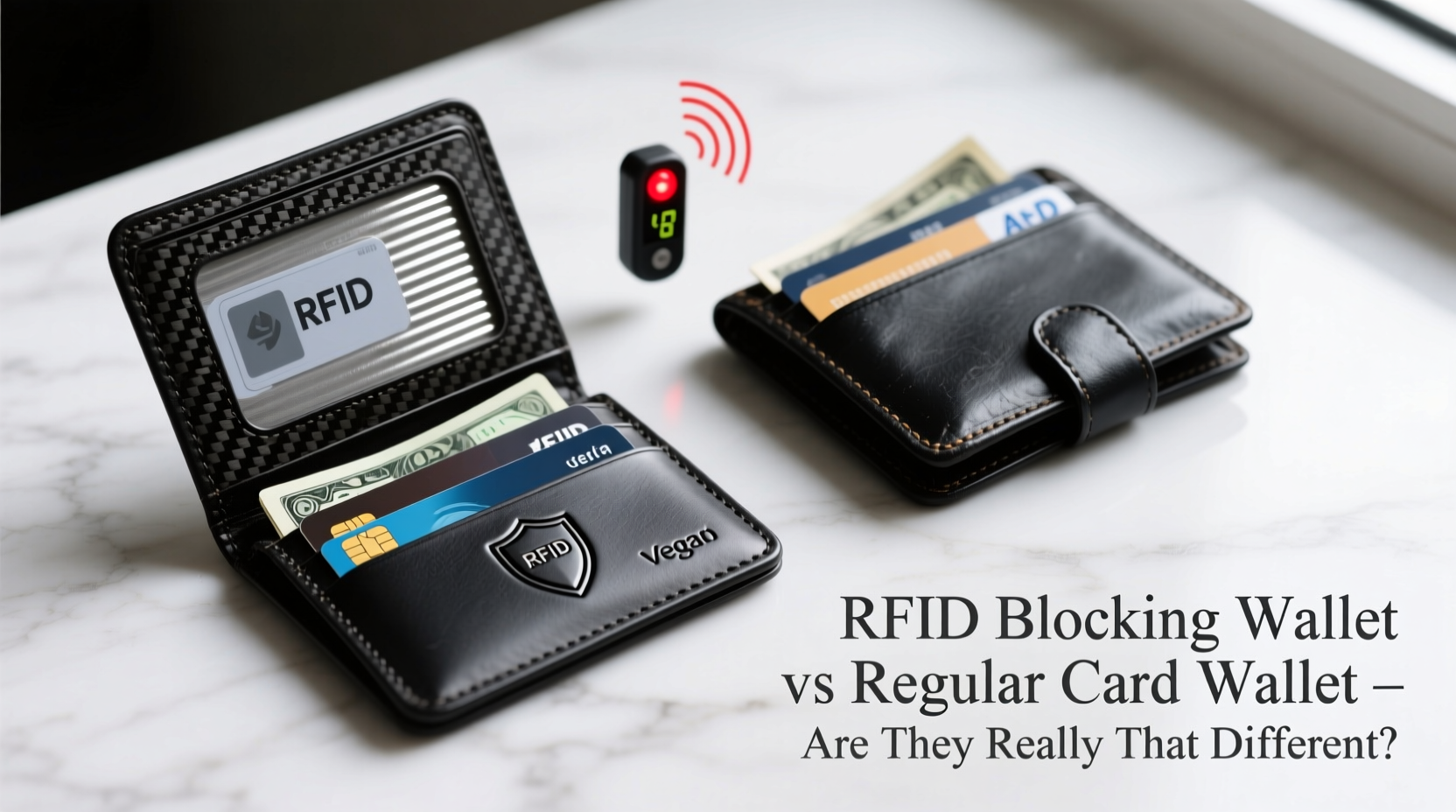
RFID stands for Radio-Frequency Identification. It’s a technology used in contactless credit cards, passports, key fobs, and access badges. These devices contain tiny microchips and antennas that transmit data when activated by a nearby reader. When you tap your card at a payment terminal, the reader emits a radio signal that powers the chip and retrieves account information—no physical contact required.
The convenience of RFID-enabled cards comes with a potential vulnerability: unauthorized scanning. In theory, a criminal equipped with a portable RFID reader could stand close to you in a crowded area—like a subway or airport—and intercept your card details without your knowledge. This act is known as \"electronic pickpocketing.\"
“While RFID skimming is technically possible, widespread incidents remain rare. The real threat lies more in perception than in actual breach statistics.” — Dr. Lena Torres, Cybersecurity Researcher at MIT
Despite low incident rates, the fear of invisible theft has fueled demand for protective solutions like RFID blocking wallets.
How RFID Blocking Wallets Work
RFID blocking wallets incorporate materials that create a Faraday cage around your cards. A Faraday cage is an enclosure made of conductive material—often metal mesh or carbon fiber—that blocks electromagnetic fields. When your card is inside such a wallet, incoming radio signals cannot reach the chip, rendering it unreadable to external scanners.
These materials are typically embedded in the lining of the wallet. Some manufacturers use aluminum foil layers; others integrate specialized fabrics woven with metallic threads. The effectiveness depends on the quality of construction and full coverage—if there are gaps or thin spots, signals may still penetrate.
RFID Blocking vs Regular Wallets: A Direct Comparison
To assess whether RFID blocking wallets offer meaningful advantages, consider the following comparison across key categories:
| Feature | RFID Blocking Wallet | Regular Card Wallet |
|---|---|---|
| Data Protection | Blocks unauthorized RFID scans using shielding materials | No built-in protection; cards are exposed to potential scanning |
| Security Level | Moderate to high (depends on build quality) | Low (relies solely on physical possession) |
| Cost | Average $25–$70; premium models exceed $100 | Average $10–$40; wide range of budget options |
| Durability | May degrade over time if shielding layer is damaged | Durable based on material (leather, fabric, etc.) |
| Convenience | Slight delay when accessing contactless payments; must remove card | Immediate tap-to-pay functionality |
| Design Options | Growing variety, but often limited by technical constraints | Extensive styles, sizes, and materials available |
Real-World Risk Assessment: Is Skimming a Genuine Threat?
The core question remains: Are people actually falling victim to RFID skimming?
Law enforcement agencies and financial institutions report minimal cases of confirmed RFID theft. According to the U.S. Federal Trade Commission (FTC), identity theft complaints overwhelmingly stem from phishing, data breaches, and lost/stolen wallets—not wireless interception. Banks also implement safeguards such as tokenization, where actual card numbers aren’t transmitted during contactless transactions. Instead, a one-time-use code is generated, making stolen data useless for future purchases.
Still, isolated demonstrations show that RFID skimming is technically feasible under controlled conditions. Security researchers have successfully read unshielded cards from distances of up to three feet using modified equipment. However, doing so in public without detection requires skill, proximity, and luck—factors that deter most would-be thieves.
Mini Case Study: The Commuter Experiment
In 2022, a cybersecurity journalist conducted an experiment during rush hour in downtown Chicago. Equipped with a concealed RFID reader, he walked through crowded train stations while monitoring for readable signals. Over five days, his device detected approximately 120 contactless cards—but only two transmitted full cardholder names and numbers. Most used encrypted tokens. No fraudulent transactions were attempted, and no victims reported losses.
The takeaway? While exposure exists, the risk of actionable harm appears low for the average consumer.
When an RFID Blocking Wallet Makes Sense
Despite limited evidence of widespread skimming, certain individuals benefit from extra protection:
- Frequent international travelers – Countries with less secure payment infrastructures may pose higher risks.
- Professionals carrying sensitive credentials – Government IDs, access badges, or corporate cards can be targets.
- Privacy-conscious users – Those who prefer minimizing digital footprints, regardless of statistical likelihood.
- Owners of older RFID cards – Cards issued before 2016 may lack modern encryption standards.
If you fall into any of these categories, investing in an RFID blocking wallet adds a reasonable layer of defense.
Checklist: Choosing the Right Wallet for Your Needs
- Evaluate your daily environment: Do you commute through dense urban areas?
- Inventory your cards: How many are contactless? Are any linked to high-limit accounts?
- Assess your comfort with risk: Would peace of mind justify the added cost?
- Test existing protection: Try scanning your current wallet with an RFID reader app (available for NFC-capable phones).
- Research brands: Look for third-party tested products with durable shielding.
Common Misconceptions About RFID Theft
Marketing campaigns often exaggerate the dangers of RFID skimming, leading to misconceptions:
- Myth: Thieves can drain your bank account remotely.
Reality: Even if scanned, card data alone rarely allows direct fund withdrawal due to authentication protocols. - Myth: All contactless cards are equally vulnerable.
Reality: Modern EMV chips use dynamic encryption, making captured data non-reusable. - Myth: RFID blocking wallets prevent all forms of digital theft.
Reality: They don’t protect against phishing, malware, or online data leaks—the far more common threats.
FAQ
Can my phone be used to scan someone else’s RFID card?
Most smartphones have NFC (Near Field Communication), which operates similarly to RFID but requires intentional pairing. While some apps claim to read nearby tags, they generally cannot harvest usable credit card data due to encryption and authentication barriers.
Do I need RFID protection for my passport?
U.S. e-passports include RFID chips containing biometric data. While theoretically scannable, the information is digitally signed and encrypted. Unauthorized reading is difficult, but frequent travelers may still prefer shielded passport holders for added reassurance.
Will an RFID blocking wallet damage my cards?
No. The shielding materials do not emit signals or interfere with card function. Cards remain fully operational when removed from the wallet.
Conclusion: Making an Informed Decision
RFID blocking wallets and regular card wallets serve the same fundamental purpose—carrying your essentials securely. The primary difference lies in the added technological barrier against wireless scanning. While the actual risk of RFID theft remains low for most people, the decision ultimately hinges on personal preference, lifestyle, and tolerance for risk.
For those who value proactive privacy measures, an RFID blocking wallet offers tangible peace of mind. For others, especially those relying heavily on tap-to-pay convenience, a well-designed regular wallet may suffice—especially given the robust encryption already built into modern payment systems.




 浙公网安备
33010002000092号
浙公网安备
33010002000092号 浙B2-20120091-4
Comments
No comments yet. Why don't you start the discussion?