
In an era where digital theft is as real a threat as physical pickpocketing, consumers are increasingly turning to RFID blocking wallets for added protection. These slim accessories claim to shield credit cards, IDs, and passports from unauthorized scanning. But how do they stack up against traditional card wallets? Are they worth the extra cost, or is the technology more marketing than necessity? To answer these questions, it’s essential to understand what RFID is, how it works, and whether the risks justify the investment.
Understanding RFID Technology and Its Use in Daily Life
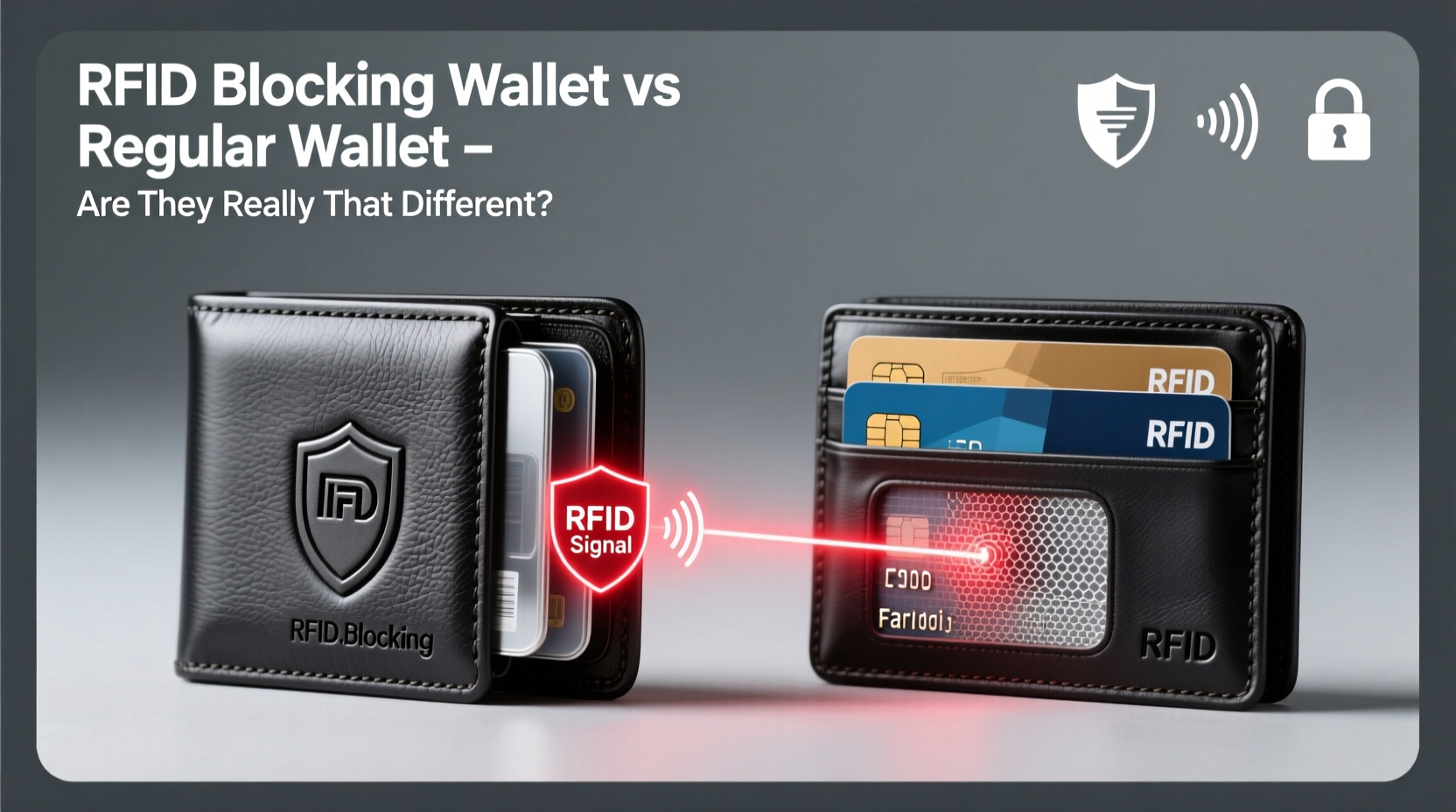
Radio Frequency Identification (RFID) is a wireless technology that uses electromagnetic fields to automatically identify and track tags attached to objects. In everyday consumer products, RFID chips are embedded in contactless credit cards, key fobs, transit passes, and even some government-issued identification like U.S. passports and driver’s licenses. When you tap your card at a payment terminal, an RFID reader sends out a signal that powers the chip inside the card, allowing it to transmit data such as your account number—no physical contact required.
The convenience of this technology is undeniable. It speeds up transactions, reduces wear on magnetic strips, and supports touchless payments—a major benefit in hygiene-conscious environments. However, this same convenience raises concerns about “skimming,” where hackers use portable readers to intercept card data without your knowledge.
“While RFID skimming is technically possible, widespread incidents remain rare. Most reported cases are isolated lab demonstrations rather than real-world breaches.” — Dr. Lena Patel, Cybersecurity Researcher at MIT
How RFID Blocking Wallets Work
RFID blocking wallets incorporate materials that create a Faraday cage around your cards. A Faraday cage is an enclosure made of conductive material—such as metal mesh, aluminum, or carbon fiber—that blocks external static and non-static electric fields. When your card is inside such a wallet, incoming radio waves from unauthorized scanners cannot reach the chip, preventing data transmission.
These wallets come in various forms: leather bifold models with built-in shielding layers, minimalist aluminum cardholders, and even full-size travel wallets designed to protect multiple documents. Manufacturers often label them with terms like “RFID-safe” or “13.56 MHz protection,” referencing the frequency used by most contactless cards.
Comparing RFID Blocking vs Regular Wallets: A Practical Breakdown
| Feature | RFID Blocking Wallet | Regular Card Wallet |
|---|---|---|
| Data Protection | Blocks unauthorized RFID scanning | No inherent protection |
| Cost | Average $30–$80; premium models over $100 | $10–$50 for comparable quality |
| Design & Style | May be bulkier due to shielding layer | Often slimmer and more flexible |
| Durability | Shielding can degrade if folded or damaged | Determined by material quality |
| Convenience | May require removing cards for contactless payments | Direct tap-and-go functionality |
The table highlights key trade-offs. While RFID wallets offer theoretical security benefits, they may compromise on user experience. For instance, some users report needing to remove their cards from the wallet to make contactless payments, defeating the purpose of tap-to-pay convenience. Additionally, repeated folding or wear can weaken the conductive lining, reducing effectiveness over time.
Real-World Risk: How Likely Is RFID Skimming?
This is the central question: does the threat justify the solution? According to the Federal Trade Commission (FTC), there have been no confirmed widespread cases of consumers losing money due to RFID skimming in public spaces. Most identity theft involving credit cards still occurs through data breaches, phishing scams, or physical theft—not wireless interception.
Security experts agree that while RFID skimming is possible in controlled conditions, practical barriers limit its feasibility. Attackers would need to get within a few inches of your wallet, hold a powered reader close enough to activate the chip, and process the data—all without drawing attention. In crowded areas like subways or markets, this is difficult to execute undetected.
Still, high-risk individuals—such as frequent international travelers, executives, or those with premium financial products—may consider RFID protection part of a broader security strategy. As one cybersecurity consultant noted:
“If you’re already using strong passwords and two-factor authentication, adding an RFID wallet is like locking your front door when you already have an alarm system—it doesn’t hurt, but it’s not the main line of defense.” — Mark Tran, Senior Analyst at CyberShield Inc.
Mini Case Study: The Commuter Who Switched Back
James R., a software engineer in Chicago, purchased an RFID-blocking wallet after reading online about digital pickpocketing. He used it for six months, carrying his contactless credit card and work badge. During that time, he noticed two issues: first, the wallet was slightly thicker than his previous model, making it uncomfortable in tight pockets. Second, he often had to slide his card out to complete payments, slowing down his morning train commute.
After researching FTC reports and consulting a local cybersecurity meetup, James concluded the risk was minimal. He switched back to a slim, non-shielded wallet and instead focused on monitoring his bank statements and enabling transaction alerts. “I feel safer knowing my bank will flag suspicious activity instantly,” he said, “than worrying about someone scanning me on the platform.”
When an RFID Wallet Makes Sense: A Step-by-Step Guide
Deciding whether to invest in an RFID blocking wallet shouldn’t be based on fear alone. Consider this practical decision-making process:
- Assess Your Exposure: Do you carry multiple contactless cards, a passport, or RFID-enabled access badges?
- Evaluate Your Environment: Do you frequently travel to high-density urban areas or countries with known tech-savvy petty crime?
- Review Your Financial Protections: Are your cards covered by zero-liability policies? Do you receive instant fraud alerts?
- Test Usability: Try holding your current wallet against a payment terminal. If it blocks signals unintentionally, an RFID wallet might worsen this issue.
- Make an Informed Choice: If peace of mind outweighs minor inconvenience and added cost, go for a reputable RFID model. Otherwise, prioritize vigilance and monitoring.
Checklist: Choosing the Right Wallet for You
- ✅ Determine if your cards actually use RFID (look for the contactless symbol: four curved lines)
- ✅ Check your bank’s fraud protection policies
- ✅ Decide whether slim design or security features are higher priority
- ✅ Verify third-party testing for any RFID product (e.g., FCC certification)
- ✅ Consider alternatives like RFID-blocking sleeves, which offer targeted protection without redesigning your entire wallet
Frequently Asked Questions
Can someone really steal my credit card info just by walking past me?
Technically yes, but practically very unlikely. Successful skimming requires close proximity (inches), sustained contact, and specialized equipment. No verified mass incidents have occurred in public settings.
Do all contactless cards use RFID?
Most do, typically operating at 13.56 MHz. They use NFC (Near Field Communication), a subset of RFID technology optimized for secure, short-range transactions.
Will an RFID wallet stop my card from working at payment terminals?
It shouldn’t—if used correctly. Most quality RFID wallets allow you to tap while the card remains inside, provided the shielding is properly engineered. Some cheaper models may interfere with legitimate readers.
Conclusion: Security, Simplicity, and Smart Choices
The difference between an RFID blocking wallet and a regular card wallet isn’t as dramatic as marketing might suggest. One offers a specific technological safeguard; the other prioritizes simplicity and ease of use. Neither guarantees absolute safety, and both should be seen as components of a broader personal security approach.
Ultimately, the best protection isn’t found in a wallet’s lining—it’s in awareness, proactive monitoring, and leveraging the fraud detection systems already built into modern banking. If an RFID wallet gives you confidence and fits your lifestyle, it’s a reasonable choice. But don’t overlook the power of free tools like transaction alerts and credit monitoring, which offer far greater real-world impact than passive shielding.




 浙公网安备
33010002000092号
浙公网安备
33010002000092号 浙B2-20120091-4
Comments
No comments yet. Why don't you start the discussion?