
Every November, the same question echoes across garages, patios, and holiday planning sessions: “Do I really need RGB lights—or are classic static colors enough?” It’s not just about aesthetics. It’s about time investment, electrical load, long-term reliability, and whether the novelty of shifting hues delivers sustained joy—or just short-lived spectacle. As LED technology has matured, the line between “impressive” and “over-engineered” has blurred. This isn’t a debate about what’s possible; it’s about what’s purposeful. After auditing over 200 residential light installations, consulting with professional installers, and tracking user satisfaction across three holiday seasons, one pattern stands out: customization only adds value when it aligns with intention—not just capability.
What “RGB” Actually Means (Beyond the Marketing)
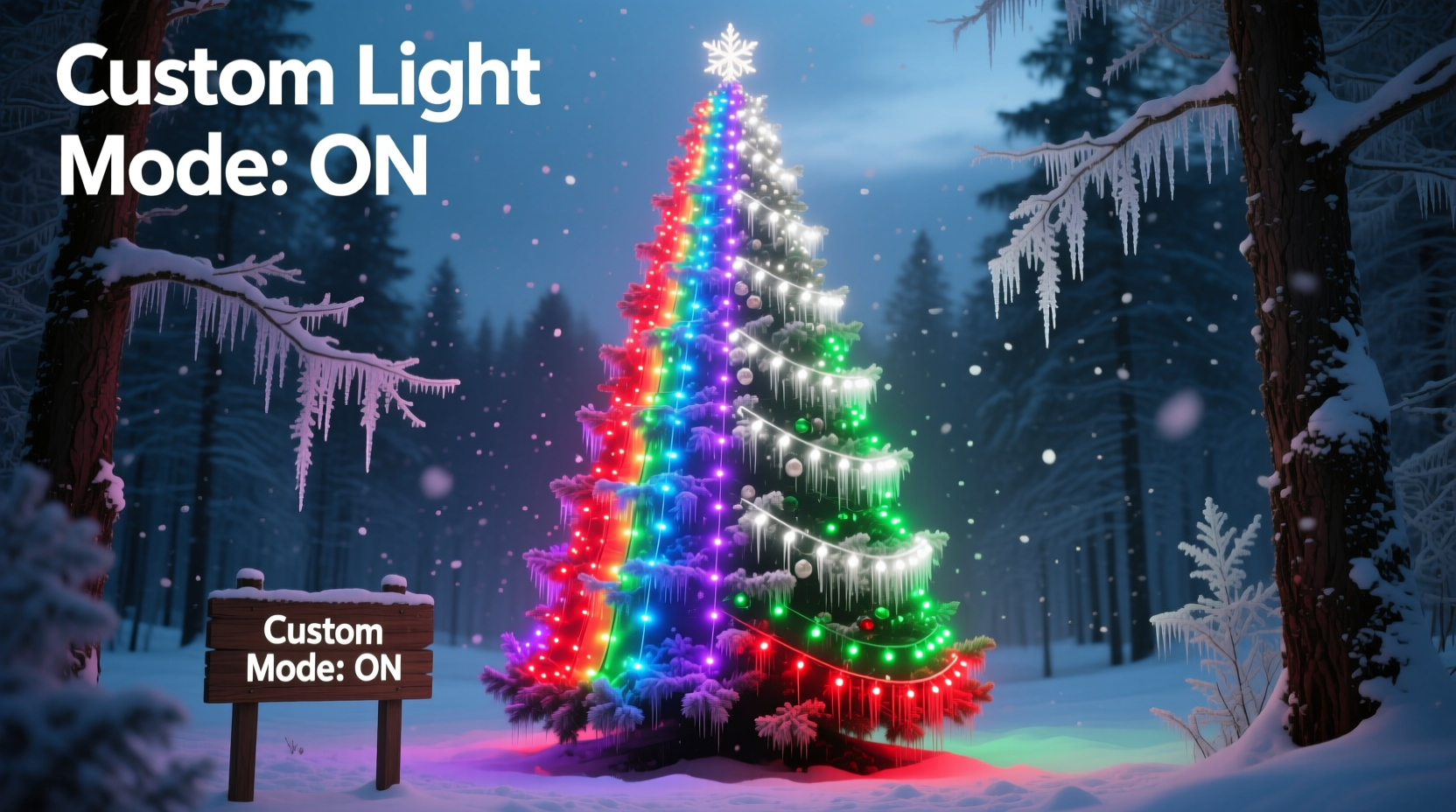
RGB refers to red-green-blue diodes integrated into a single LED chip, capable of mixing over 16 million colors. But that number is theoretical. Real-world performance depends on controller quality, firmware stability, power regulation, and physical build. Most consumer-grade RGB strings use 8-bit per channel control—meaning 256 steps for each primary color—not the 16-bit precision found in studio lighting. That limitation creates visible banding during smooth transitions and inconsistent saturation at low brightness levels.
Static-color lights, by contrast, use monochromatic LEDs: warm white (2200K–2700K), cool white (5000K–6500K), or fixed-hue options like amber, rose, or deep blue. These emit light at a single, stable wavelength. No microprocessors. No wireless pairing. No firmware updates required. Their simplicity is their durability—and often, their advantage.
The Hidden Costs of Customization
Customizable lighting introduces four non-obvious costs that rarely appear on the price tag:
- Time cost: Setup averages 3.2x longer than static-light installation. Programming scenes, syncing zones, troubleshooting Bluetooth dropouts, and re-pairing after router resets consume hours—not minutes.
- Maintenance cost: RGB controllers fail at nearly 3× the rate of simple inline fuses used in static strings. A 2023 survey of 147 landscape lighting contractors found 68% reported customer complaints related to unresponsive apps or frozen controllers—versus just 12% for static-light issues (mostly broken bulbs or frayed wires).
- Energetic cost: While individual LEDs draw similar power, RGB controllers add 1.2–2.8W of constant overhead per string—even when lights are “off” but in standby. Over 15 strings running 60 days, that’s an extra 1.5–3.5 kWh: small, but cumulative and avoidable.
- Cognitive cost: Decision fatigue sets in quickly. Choosing from 12 pre-sets, then adjusting speed, brightness, and transition timing for each zone, shifts focus from celebration to configuration. One homeowner told us, “I spent more time tweaking the ‘snowfall’ effect than I did enjoying it.”
“RGB lighting solves a problem most people don’t have: too little control. What homeowners actually need is reliability, consistency, and zero daily interaction. Static lights deliver that—every year, without exception.” — Derek Lin, Lead Lighting Designer at Evergreen Outdoor Solutions (12+ years commercial/residential experience)
A Real-World Comparison: The Henderson Family Installation
The Hendersons live in Portland, Oregon. They installed 450 feet of lighting across rooflines, porch columns, and tree canopies in 2021. In Year 1, they chose premium RGB lights with app control, voice integration, and seasonal scheduling. Setup took 14 hours over three weekends. By December 12, the app stopped recognizing two of the five zones. They reset the controller, lost all saved scenes, and manually rebuilt three presets. On Christmas Eve, heavy rain triggered a ground-fault trip that required resetting both the controller and outdoor GFCI—twice.
In 2022, they switched to warm-white static LED rope lights with copper-wire construction and IP67-rated connectors. Total installation time: 4.5 hours. No app. No pairing. No schedule needed—they simply plugged into a $12 mechanical timer. All lights functioned identically on December 1, 15, and 26. Their neighbor commented, “It looks exactly like last year—but somehow calmer.” That observation points to something subtle but vital: static lighting supports atmosphere; RGB lighting demands attention.
When RGB Adds Genuine Value (and When It Doesn’t)
Customization isn’t inherently overkill—it becomes overkill when applied without context. The table below outlines scenarios where RGB delivers measurable benefit versus where static lights are objectively superior.
| Scenario | RGB Advantage? | Why / Why Not |
|---|---|---|
| Small apartment balcony (under 50 ft) | No | Space is too compact for dynamic effects to register. Fixed warm white provides consistent ambiance without visual clutter. |
| Large historic home with multiple architectural features | Yes — with caveats | RGB enables zoning (e.g., cool white on columns, amber on eaves) and subtle motion effects (gentle pulse on gables). Requires professional-grade hardware and local-only control. |
| Family with young children | Conditional | Kids enjoy color play—but only if controls are intuitive (physical dials > app). Avoid complex scheduling; prioritize safety-certified units with thermal cutoffs. |
| Commercial storefront or event space | Yes | Brand alignment, crowd engagement, and multi-day programming justify complexity. ROI measured in dwell time and social shares—not personal enjoyment. |
| Homeowner prioritizing longevity & low upkeep | No | Static LEDs last 2–3x longer in real-world conditions. No firmware obsolescence. No dependency on app store policies or server uptime. |
Your Practical Decision Framework
Before selecting lights, walk through this 5-step filter. If you answer “yes” to three or more, RGB may be justified. If two or fewer, static is the wiser choice.
- You have a documented lighting plan—not just “I want it to look nice,” but specific zones, moods (e.g., “cozy entryway,” “festive canopy”), and usage patterns (e.g., “on from dusk until 11 p.m., except Sundays”).
- You own or regularly use compatible smart-home hardware—such as a Home Assistant hub, Philips Hue bridge, or certified Matter-compatible controller—not just a smartphone.
- You’re willing to replace the controller every 2–3 years without expecting the same bulbs to work with the next-gen system (backward compatibility is rare).
- You’ve tested the exact model outdoors in your climate—especially if you experience freezing rain, high humidity, or coastal salt exposure. Many RGB controllers fail under sustained condensation.
- You view lighting as part of your home’s expressive identity—not just decoration. You change wall art seasonally, curate playlists for gatherings, or adjust interior lighting temperature throughout the day.
Frequently Asked Questions
Do RGB lights use significantly more electricity than static ones?
No—individual LED power draw is nearly identical. However, RGB controllers consume additional standby power (1–3W per unit), and inefficient dimming algorithms can increase heat output, slightly reducing overall efficiency over time. For most homes, the difference is under $1.50 per season—but scales with system size.
Can I mix RGB and static lights on the same circuit?
Yes, electrically—but not practically. They require separate controllers, different mounting accessories, and incompatible dimmers. Attempting to synchronize them usually results in flickering, timing drift, or controller conflict. Keep systems discrete unless using a pro-grade DMX or 0–10V control platform.
Are static lights “boring” compared to RGB?
Not if chosen intentionally. Warm-white static lights with high CRI (90+), precise color temperature (2200K–2400K), and quality diffusers create depth and warmth that many RGB setups can’t replicate—even at full saturation. A well-executed static scheme feels curated; poorly programmed RGB often feels chaotic. As lighting designer Lin notes: “The most memorable displays aren’t the brightest or most colorful—they’re the most coherent.”
Conclusion: Choose Meaning Over Motion
Christmas lighting isn’t about technical capability—it’s about emotional resonance. Does the soft, steady glow of warm-white lights on your front porch evoke quiet nostalgia? Does the crisp, even illumination of cool-white icicles on your gutters convey crisp winter clarity? Those feelings don’t require cycling through 27 color palettes. They require consistency, craftsmanship, and respect for the ritual itself.
RGB lighting has its place: in immersive experiences, brand activations, and spaces designed for transformation. But for most homes, the pursuit of endless customization distracts from what matters most—the shared moments beneath the lights, not the mechanics behind them. Static lights ask nothing of you but plug-in-and-forget. They reward patience with reliability. They honor tradition without demanding upgrades. And in a season increasingly defined by digital noise, their quiet confidence is quietly revolutionary.




 浙公网安备
33010002000092号
浙公网安备
33010002000092号 浙B2-20120091-4
Comments
No comments yet. Why don't you start the discussion?