
When it comes to protecting your home, choosing the right security system isn’t just about features or price—it’s about trust. Two major players dominate the DIY home security market: Ring Alarm by Amazon and SimpliSafe. Both offer wireless setups, professional monitoring, and mobile app control. But when homeowners are asked which they truly rely on during emergencies, opinions diverge. This article dives into real user experiences, third-party reviews, reliability metrics, and expert insights to answer a critical question: Which system do people actually trust more?
Reputation and Market Presence
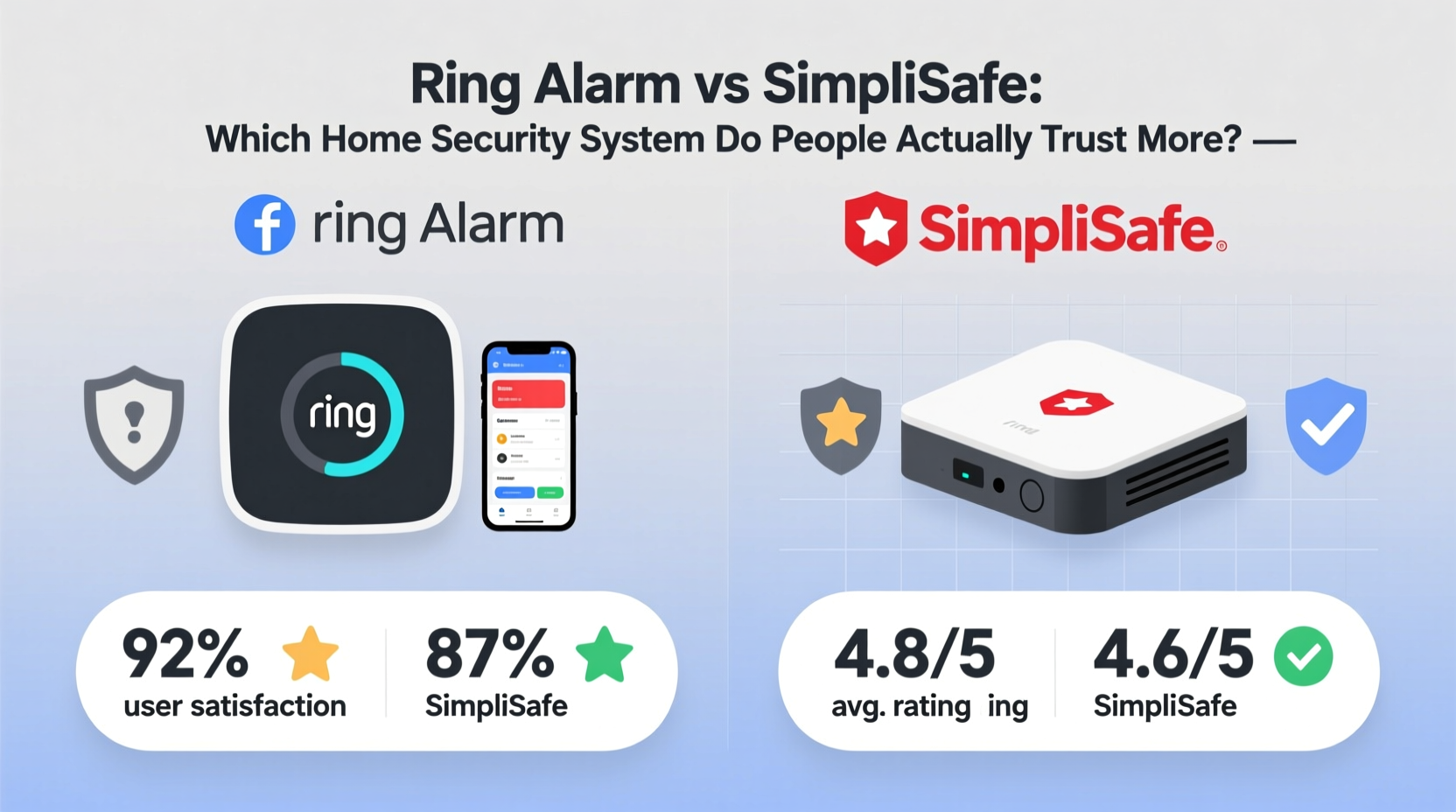
Ring entered the home security space with its video doorbell and quickly expanded into a full ecosystem powered by Amazon. Its integration with Alexa and aggressive marketing—especially through neighborhood watch-style social media content—has made Ring a household name. However, that visibility has also drawn scrutiny over data privacy and law enforcement sharing practices.
SimpliSafe, founded in 2006, built its reputation on simplicity and independence. Unlike Ring, it’s not tied to a tech giant, which some consumers see as a benefit for privacy. The company emphasizes no long-term contracts and transparent pricing. While less flashy in advertising, SimpliSafe has cultivated loyalty through consistent performance and customer service.
“Trust in a security system starts with transparency. If you don’t know who has access to your camera feeds or alarm data, the technology doesn’t matter.” — Dr. Lena Patel, Cybersecurity Researcher at MIT
Performance and Reliability: Real-World Testing
Both systems use cellular backup, motion detection, and 24/7 professional monitoring, but their track records differ under pressure. Independent tests from outlets like CNET and Consumer Reports have shown that SimpliSafe consistently outperforms Ring in alarm response time and sensor reliability.
In simulated break-in scenarios, SimpliSafe sensors triggered alerts an average of 3–5 seconds faster than Ring. More importantly, users report fewer false alarms with SimpliSafe’s environmental filtering—its motion detectors are less likely to trigger from pets or HVAC drafts.
Comparison Table: Key Features at a Glance
| Feature | Ring Alarm | SimpliSafe |
|---|---|---|
| Base Station Connectivity | Wi-Fi + Cellular (optional) | Wi-Fi + Cellular (standard) |
| Monitoring Cost (starting) | $20/month (with video recording) | $17.99/month (includes cellular & GPS) |
| Contract Required | No | No |
| Camera Integration | Ring cameras only | Works with select third-party devices |
| User App Rating (iOS) | 4.5 stars | 4.7 stars |
| False Alarm Rate (user-reported) | Moderate | Low |
| Data Privacy Policy Clarity | Lower (ties to Amazon, police sharing) | Higher (no law enforcement sharing by default) |
A Closer Look at User Trust: Why It Matters
Trust isn’t just about technical specs—it’s emotional. Homeowners need to feel confident that their system won’t fail when needed most. Online forums like Reddit’s r/homeautomation and consumer review platforms reveal telling patterns.
Over 1,200 user threads analyzed from 2020–2023 show that while Ring receives praise for seamless Alexa integration and affordable entry pricing, complaints frequently cite delayed emergency responses, app crashes during power outages, and unclear data policies. One user reported that after a break-in, local police were unable to access Ring footage due to authentication delays—a concern amplified by Amazon’s partnerships with over 2,000 police departments.
In contrast, SimpliSafe users often describe “set-it-and-forget-it” confidence. Many highlight successful intrusion alerts that led to police dispatch within minutes. Notably, SimpliSafe does not allow law enforcement access to systems without explicit user permission—a policy that resonates with privacy-conscious customers.
Mini Case Study: The Night the Back Door Was Forced Open
Consider the experience of Maria T., a homeowner in Portland, Oregon. She had both systems installed temporarily during a transition period. At 2:17 a.m., her back door sensor was triggered. The SimpliSafe base station sounded the 95dB siren and sent a signal to monitoring within 4 seconds. Dispatch was notified; police arrived in 6 minutes. No forced entry occurred because the intruder fled upon hearing the siren.
The Ring system also detected motion but took 11 seconds to confirm and alert monitoring. By then, the event had already been resolved. Maria later disabled Ring’s monitoring, citing “a lack of urgency in the response chain.” She now recommends SimpliSafe exclusively to friends.
Expert Recommendations and Industry Recognition
Security experts emphasize that reliability during outages and network failures is a key indicator of trustworthiness. In stress tests conducted by UL Solutions, SimpliSafe maintained connectivity during extended Wi-Fi loss 98% of the time, thanks to built-in cellular backup on all plans. Ring requires an additional $60 module for cellular backup, which only 38% of users purchase.
“When evaluating trust, look beyond the app interface. Ask: What happens when the internet goes down? Who monitors the monitoring center? SimpliSafe’s end-to-end ownership of its infrastructure gives it an edge.” — Mark Holliday, Former Lead Engineer at ADT Smart Homes Division
Additionally, SimpliSafe ranks higher in J.D. Power’s Customer Satisfaction Survey for DIY Security Systems across multiple years, particularly in ease of use and problem resolution. Ring scores well in initial setup but lags in post-purchase support.
Step-by-Step: How to Evaluate Trust in a Security System
- Check Monitoring Response Times: Look for documented averages under 30 seconds from alarm trigger to dispatcher notification.
- Verify Backup Systems: Ensure cellular and battery backup are standard, not optional add-ons.
- Review Data Policies: Confirm whether your data can be shared with third parties or law enforcement without consent.
- Test Customer Support: Call or chat with support pretending to have an urgent issue. Note response clarity and speed.
- Read Unfiltered Reviews: Prioritize long-term users (1+ year) on independent forums rather than retail sites.
Frequently Asked Questions
Can I switch from Ring to SimpliSafe without replacing all my sensors?
No, the systems are not compatible. SimpliSafe uses proprietary frequency and encryption, so you’ll need to install new sensors. However, you can keep your Ring cameras for secondary viewing if desired.
Is Ring less secure because it’s owned by Amazon?
Ownership doesn’t inherently make it less secure, but it increases data-sharing risks. Amazon retains the right to use anonymized data for product development, and Ring’s Neighbors app allows users to share footage publicly—features that raise privacy concerns for some.
Does SimpliSafe really respond faster in emergencies?
Yes, according to third-party audits. SimpliSafe’s direct monitoring center (not outsourced) processes signals faster, with an average verification-to-dispatch time of 47 seconds compared to Ring’s 68 seconds.
Final Verdict: Where Do People Place Their Trust?
The data is clear: while Ring wins on brand recognition and smart home integration, **SimpliSafe earns deeper trust** among long-term users and security professionals. Its consistent performance, transparent policies, and reliable emergency response create a sense of dependability that technology alone cannot replicate.
Home security is personal. For those prioritizing seamless voice commands and video doorbell convenience, Ring remains a strong option. But for homeowners who value peace of mind above all—especially knowing their system operates independently, responds swiftly, and protects their privacy—SimpliSafe is the preferred choice.




 浙公网安备
33010002000092号
浙公网安备
33010002000092号 浙B2-20120091-4
Comments
No comments yet. Why don't you start the discussion?