
Cockroaches have been around for over 300 million years—long before humans walked the Earth. They’ve survived mass extinctions, drastic climate shifts, and even the most aggressive pest control efforts. Today, they remain a persistent problem in homes, restaurants, and urban environments worldwide. Despite our best attempts with sprays, traps, and poisons, these insects keep coming back. The reason? Roach resilience is rooted in biology, behavior, and evolution. Understanding why cockroaches are so difficult to eliminate isn’t just fascinating—it’s essential for effective pest management.
Evolutionary Survivors: Built to Last
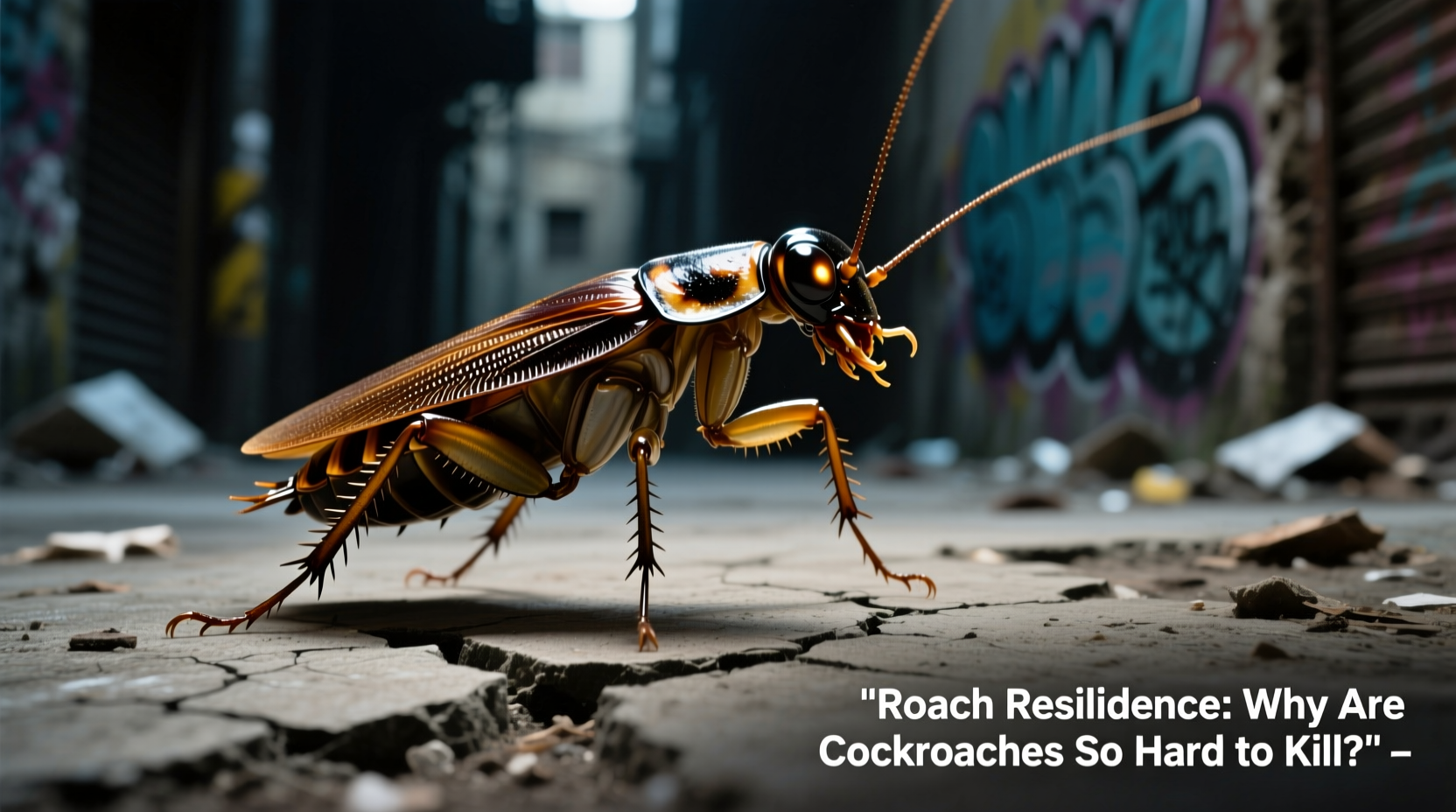
Cockroaches belong to an ancient lineage of insects that has changed very little over millions of years. This evolutionary stability is a testament to their adaptability. Their body structure, metabolism, and reproductive strategies are finely tuned for survival in unpredictable environments.
One key factor in their durability is their exoskeleton. Made of chitin, it provides excellent protection against physical damage and helps retain moisture—critical for survival in dry conditions. Unlike mammals, roaches don’t lose water easily through skin, allowing them to endure long periods without hydration.
They’re also cold-tolerant to a degree. While most species prefer warmth, some can survive near-freezing temperatures by slowing their metabolism. This adaptability allows them to inhabit basements, drains, and even refrigeration units where other pests would perish.
“Cockroaches are among the most resilient organisms on the planet. Their ability to withstand radiation, starvation, and chemical exposure makes them a model for studying extreme survival.” — Dr. Elena Torres, Entomologist at the National Pest Research Institute
Biological Superpowers That Defy Death
Their reputation as indestructible pests isn’t exaggerated. Cockroaches possess several biological traits that make them exceptionally hard to kill:
- Decentralized nervous system: Unlike humans, roaches don’t rely solely on their heads to control movement. They have ganglia (nerve clusters) throughout their bodies, enabling them to move, react, and even live for weeks without a head—though they eventually die from dehydration or starvation.
- Rapid regeneration: Young roaches can regenerate lost limbs during molting cycles, improving mobility after injury.
- High radiation resistance: Studies show cockroaches can withstand up to 15 times more radiation than humans. This infamous trait contributed to myths about them surviving nuclear war.
- Efficient respiration: Roaches breathe through spiracles along their body. They can close these openings to resist insecticides and survive underwater for up to 40 minutes by lowering their metabolic rate.
Behavioral Adaptability: Smart Survivors
It’s not just biology—cockroach behavior plays a major role in their persistence. These insects are nocturnal, elusive, and highly responsive to danger. They use antennae to detect vibrations, chemicals, and air currents, allowing them to flee seconds before a shoe comes down.
Roaches also exhibit social learning. Research shows they can follow pheromone trails left by others to locate food, shelter, and avoid poisoned bait if previous individuals died after consuming it. This “collective intelligence” means infestations can become resistant to certain poisons over time.
They thrive in cluttered, undisturbed areas—behind walls, under appliances, inside cabinets—making detection and eradication difficult. A single female can produce dozens of offspring per year, and many species reproduce rapidly under favorable conditions.
Common Cockroach Species and Their Survival Traits
| Species | Lifespan | Reproduction Rate | Survival Strengths |
|---|---|---|---|
| German Cockroach | 100–200 days | 4–6 egg cases/female; 30–40 eggs each | Fast breeding, indoor adaptation, pesticide resistance |
| American Cockroach | 1–2 years | 1 egg case/female; ~15 eggs each | Large size, flight capability, high mobility |
| Oriental Cockroach | 6–12 months | 1 egg case/female; ~16 eggs each | Cold tolerance, thrives in damp areas |
| Brown-banded Cockroach | Up to 1 year | 2–3 egg cases/female; ~14 eggs each | Prefers warm, dry spaces; hides in furniture |
Why Pesticides Often Fail
Many homeowners spray insecticides only to see roaches return within days. There are several reasons conventional treatments fall short:
- Pesticide resistance: Decades of chemical use have led to genetic mutations in roach populations. German cockroaches, in particular, have developed resistance to multiple classes of insecticides, including pyrethroids.
- Surface-only impact: Sprays may kill visible roaches but fail to reach hidden nests or egg cases (oothecae), which are often tucked in cracks and crevices.
- Survival of the fittest: When a colony is exposed to poison, the most resistant individuals survive and pass on those genes, making future generations harder to kill.
Gel baits have proven more effective because they exploit roach feeding behavior. Workers consume the bait and return to the nest, spreading the toxin through feces and cannibalism. However, misuse—such as applying too much or placing it incorrectly—can reduce effectiveness.
Step-by-Step Guide to Effective Roach Control
- Inspect thoroughly: Check kitchens, bathrooms, basements, and behind appliances for droppings, shed skins, and live specimens.
- Seal entry points: Use caulk to close cracks around pipes, windows, and baseboards.
- Eliminate food sources: Store food in sealed containers, clean crumbs immediately, and avoid leaving pet food out overnight.
- Reduce moisture: Fix leaks, use dehumidifiers, and ensure proper ventilation in damp areas.
- Apply gel bait strategically: Place small dabs near roach activity zones—but not where children or pets can access them.
- Monitor progress: Use sticky traps to track population changes over 2–4 weeks.
- Repeat or call professionals: If activity persists, consider integrated pest management (IPM) services.
Mini Case Study: The Apartment Complex Turnaround
In a 120-unit apartment building in Chicago, residents repeatedly complained about cockroach infestations despite monthly spraying. A pest control specialist was brought in for assessment. Initial inspection revealed that while maintenance staff were using broad-spectrum sprays, they weren’t addressing root causes: shared wall voids, unsealed plumbing entries, and poor tenant sanitation habits.
The new strategy focused on IPM: sealing entry points, educating tenants on food storage, deploying gel baits in kitchen cabinets, and installing monitoring traps. Within six weeks, roach sightings dropped by 85%. By month three, the building was nearly roach-free. The key wasn’t stronger chemicals—it was smarter, sustained intervention.
FAQ
Can cockroaches really live without their heads?
Yes. Thanks to their open circulatory system and ability to clot at the neck, a headless roach can live for up to a week. It moves, reacts to touch, and even tries to escape. However, it cannot eat or drink, so it eventually dies of dehydration or starvation.
Do cockroaches die in the washing machine?
Most do—if the cycle includes hot water and detergent. Roaches can survive cold water for up to 40 minutes, but temperatures above 125°F (52°C) are lethal. Always use a hot wash cycle and dry on high heat to ensure elimination.
Are there any natural ways to repel cockroaches?
Some essential oils like peppermint, eucalyptus, and tea tree oil may temporarily deter roaches due to their strong scent. However, these are not long-term solutions. Diatomaceous earth can dehydrate and kill roaches on contact but must be applied carefully to avoid inhalation risks.
Conclusion: Respecting the Enemy to Win the Battle
Cockroaches aren’t invincible—but they are extraordinarily well-equipped to survive. Their resilience stems from millions of years of evolution, biological ingenuity, and behavioral smarts. To effectively manage them, we must shift from reactive spraying to proactive, informed strategies that address both the pests and their environment.
Successful roach control isn’t about finding a magic bullet. It’s about consistency, precision, and understanding the enemy. Whether you’re dealing with a few stragglers or a full-blown infestation, the principles remain the same: eliminate resources, seal access, use targeted treatments, and monitor results.




 浙公网安备
33010002000092号
浙公网安备
33010002000092号 浙B2-20120091-4
Comments
No comments yet. Why don't you start the discussion?