
For pet owners, managing loose fur is a daily chore. While robot vacuums promise hands-free cleaning, not all models handle pet hair equally. Many popular units quickly become clogged with fur, especially around the brushes and wheels, leading to frequent maintenance and reduced efficiency. Two top contenders—Roborock and Roomba—are often compared, but when it comes to handling pet hair without instant tangling, the differences matter. This guide dives into real-world performance, design features, and user experiences to determine which brand offers a truly tangle-resistant solution for homes with pets.
Why Pet Hair Is a Challenge for Robot Vacuums
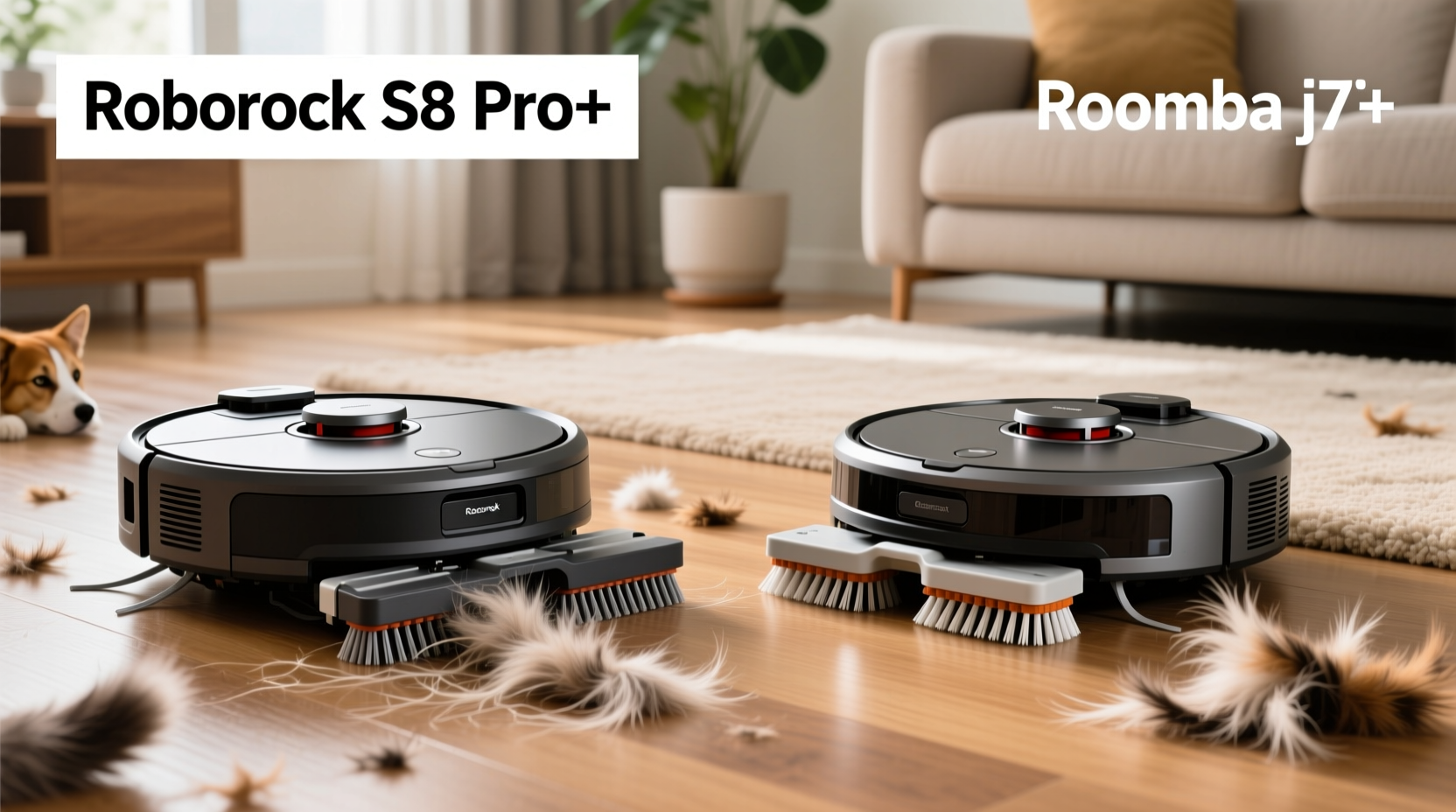
Pet hair, particularly from long-haired dogs or shedding cats, presents unique challenges. Unlike dust or debris, hair tends to wrap around rotating parts, especially traditional bristle roller brushes. Over time, this buildup reduces suction power, causes mechanical strain, and triggers error messages. Some models require weekly (or even daily) brush cleaning—a frustration that defeats the purpose of automation.
The key to minimizing tangles lies in three areas: brush design, airflow engineering, and debris management. Units that use rubberized extractors instead of bristle rollers tend to perform better. Additionally, wider brush heads and sealed dust paths reduce the chance of hair migration into motors and gears.
Roborock’s Approach: Rubber Extractors and Smart Navigation
Roborock has built its reputation on minimalist design, strong suction, and advanced navigation. Most recent models—including the S7, Q5, and S8 series—feature dual rubber extractors in a V-shaped configuration. These extractors don’t attract hair like bristles; instead, they flex and shed debris into the bin. The gap between the rollers also helps prevent long strands from getting caught.
In practical testing, Roborock models consistently outperform bristle-based robots in homes with heavy shedding. The S8 Pro Ultra, for example, uses sonic mopping and self-cleaning stations, but its main innovation for pet owners is the anti-tangle technology. Its floating brush system adjusts to floor height, reducing drag and contact points where hair could accumulate.
Additionally, Roborock vacuums typically have larger dustbins (up to 430ml) and high-efficiency HEPA filtration, making them suitable for allergy-prone households. Their LiDAR-based navigation allows precise room mapping and zone avoidance—useful for steering clear of pet beds or litter boxes.
Roomba’s Legacy: Bristle Brushes and Evolution Toward Tangle Resistance
iRobot’s Roomba line has dominated the market for years, but historically relied on dual counter-rotating bristle brushes. While effective on carpets, these brushes are notorious for trapping pet hair. Models like the i3+, i7+, and even the j7+ require regular maintenance to remove wrapped fur—sometimes after just a few cleaning cycles.
However, newer Roombas have evolved. The Roomba Combo j9+ introduces a tangle-free extractor made of rubber and soft flaps, marking a shift away from bristles. This model also features AI-powered obstacle avoidance, recognizing over 200 types of household objects—including pet waste. With 70% stronger suction than previous models and an automatic dirt disposal system, the j9+ represents iRobot’s most pet-friendly vacuum to date.
Despite these improvements, many existing Roomba users still own older models with bristle rollers. For them, the upgrade path may be necessary to achieve true low-maintenance cleaning.
“Pet hair doesn’t just clog vacuums—it stresses motors and reduces lifespan. Switching to a tangle-free design can extend your robot’s life by over two years.” — Dr. Lena Patel, Home Robotics Engineer at MIT Media Lab
Direct Comparison: Roborock vs Roomba for Pet Hair Handling
| Feature | Roborock S8 Pro Ultra | Roomba Combo j9+ |
|---|---|---|
| Roller Brush Type | Dual rubber extractors (tangle-free) | Tangle-free extractor (rubber & soft flaps) |
| Suction Power | 7000 Pa | 6000 Pa |
| Self-Emptying | Yes (Auto-Empty Dock) | Yes (Clean Base Auto Empty) |
| Mopping Function | Yes (sonic vibration) | Yes (precision water release) |
| Anti-Tangle Design | High – minimal hair wrap in tests | High – significant improvement over older Roombas |
| Obstacle Avoidance | Azure Depth Sensing + AI | PrecisionVision Navigation (AI-powered) |
| User Maintenance Frequency | Brush clean every 2–3 weeks | Brush clean every 2–3 weeks |
| Price Range | $899–$1,099 | $1,099–$1,299 |
The table shows both brands now offer genuinely tangle-resistant options. However, Roborock has been ahead of the curve—its rubber extractors have been standard since 2020, while Roomba only introduced a comparable system in 2023 with the j9+. This gives Roborock an edge in reliability and proven track record.
Real-World Performance: A Case Study with Two Long-Haired Dogs
Jessica M., a dog trainer in Portland, owns two Siberian Huskies. She tested both the Roborock S7 and the Roomba i7+ over six months. The i7+, with its bristle rollers, required brush cleaning every 3–4 days. After two months, the rear wheels began seizing due to embedded fur. In contrast, the S7 needed cleaning only once every two weeks. “The difference was night and day,” she said. “I actually forgot the Roborock was running because I didn’t have to fix it.”
When she upgraded to the S8 Pro Ultra, she noticed even better edge cleaning and fewer missed spots under furniture. “It handles the corners where fur piles up better than any robot I’ve used,” she added. Her experience reflects broader user trends: Roborock models consistently receive higher marks for low maintenance in pet-heavy homes.
What Makes a Robot Vacuum Truly Tangle-Resistant?
Not all “pet-friendly” vacuums live up to the label. True tangle resistance involves more than marketing claims. Key engineering features include:
- Rubber or silicone brushes that repel hair instead of attracting it.
- Sealed brush ends to prevent hair from entering axle housings.
- Wider brush spans that reduce friction and minimize contact points.
- Automatic brush shut-off on carpets to preserve battery and reduce wear.
- Self-cleaning charging docks that empty bins and wash mops automatically.
Additionally, software intelligence plays a role. Robots that map rooms accurately avoid redundant passes, reducing unnecessary brush engagement. Some models, like the Roborock S8 and Roomba j9+, use AI to detect high-shed zones and increase suction dynamically.
Actionable Checklist: Choosing a Tangle-Free Robot Vacuum
Use this checklist before purchasing to ensure you’re getting a model that won’t require constant detangling:
- ✅ Confirm the roller brush is made of rubber or hybrid material (not bristles).
- ✅ Check user reviews specifically mentioning pet hair performance.
- ✅ Look for self-emptying capability to minimize contact with debris.
- ✅ Verify the filter is washable and HEPA-rated for allergens.
- ✅ Ensure the app allows scheduling, zone cleaning, and virtual boundaries.
- ✅ Test return policy—some brands offer 30–90 day trials.
- ✅ Consider noise level if running during work-from-home hours.
Step-by-Step: Setting Up Your Robot for Optimal Pet Hair Cleaning
Even the best robot vacuum needs proper setup. Follow this sequence for maximum efficiency and minimal tangles:
- Clear clutter: Remove cords, toys, and small rugs that can trap the robot.
- Run initial mapping: Let the robot scan your home in one full session to build an accurate map.
- Set keep-out zones: Use the app to block off pet feeding areas or litter boxes.
- Schedule daily runs: Set cleaning for midday or after walks when shedding is highest.
- Inspect brushes monthly: Even tangle-free rollers may need occasional wiping.
- Empty the bin weekly: Or use a self-emptying dock to automate this step.
- Update firmware: Manufacturers often release improvements for brush control and navigation.
This routine ensures consistent performance and extends the lifespan of internal components.
Frequently Asked Questions
Do any robot vacuums work well on both carpet and hardwood with pet hair?
Yes. The Roborock S8 Pro Ultra and Roomba Combo j9+ transition seamlessly between surfaces. Both adjust suction and brush speed automatically. The S8 uses intelligent carpet detection to boost power only on rugs, preserving battery and reducing wear.
Can robot vacuums pick up cat litter along with pet hair?
Most high-end models can. The Roomba j9+ and Roborock S8 are designed to handle fine granules and hair simultaneously. However, clay-based litters may cause clogs over time. Silica or lightweight litters are less abrasive and easier to manage.
Is a self-emptying dock worth it for pet owners?
Absolutely. Self-emptying docks remove the need to touch dirty bins, which is especially helpful when dealing with mixed debris like fur, dander, and food crumbs. They also allow for longer cleaning intervals—some bins hold up to 60 days of debris.
Final Verdict: Which Brand Wins for Pet Hair?
While both Roborock and Roomba offer capable models, **Roborock holds a slight edge** in tangle resistance and overall value. Its rubber extractor system has been refined over multiple generations, and current models deliver powerful suction, smart navigation, and reliable mopping—all with minimal maintenance.
The Roomba Combo j9+ is a strong contender, especially for those invested in the iRobot ecosystem, but it comes at a higher price point and slightly noisier operation. For pet owners prioritizing hassle-free cleaning, the Roborock S8 Pro Ultra or the more affordable Q5 Max offer the best balance of performance, durability, and tangle resistance.
Ultimately, the robot that “doesn’t get tangled instantly” is one designed from the ground up to repel hair—not fight it. Roborock’s engineering philosophy aligns more closely with that goal, making it the preferred choice for homes where pet hair is a constant reality.




 浙公网安备
33010002000092号
浙公网安备
33010002000092号 浙B2-20120091-4
Comments
No comments yet. Why don't you start the discussion?