
In 2025, robotic vacuum cleaners are no longer just about suction power—they’re intelligent home assistants designed to handle complex environments with precision. Two brands dominate the premium segment: Roborock and Roomba. While both deliver strong cleaning performance, their approaches to obstacle navigation differ significantly. For homeowners with cluttered floors, pet toys, cords, or low-light rooms, choosing the right system can mean the difference between a seamless clean and constant interruptions. This analysis dives deep into how each brand handles real-world navigation challenges, leveraging advancements in sensor technology, AI mapping, and adaptive decision-making.
Understanding Obstacle Navigation in Modern Robot Vacuums
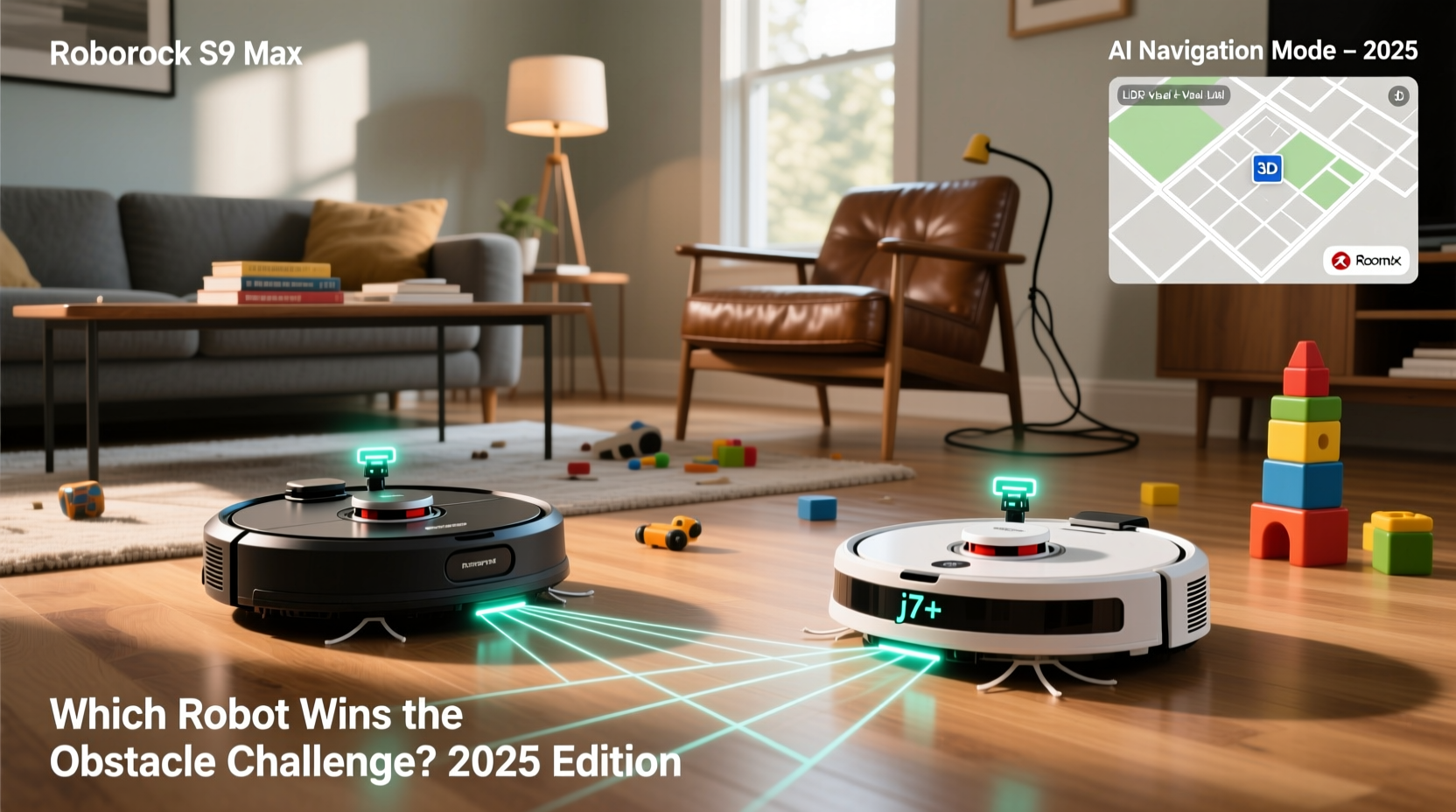
Obstacle navigation refers to a robot vacuum’s ability to detect, avoid, and maneuver around physical barriers without getting stuck, damaging furniture, or requiring manual intervention. In 2025, top-tier models use a combination of LiDAR, structured light sensors, camera-based vision systems, and AI-powered path planning to interpret their surroundings.
The effectiveness of these systems depends on three core factors:
- Detection accuracy: Can the robot identify small or low-profile objects like socks, charging cables, or chair legs?
- Response speed: How quickly does it react when an object enters its path?
- Adaptive rerouting: Does it learn from past encounters and optimize future routes?
Roborock and Roomba have taken divergent paths in addressing these needs—each with distinct advantages depending on your home layout and lifestyle.
Roborock: Precision Mapping and AI-Driven Avoidance
Roborock has consistently led in spatial intelligence, particularly with its fifth-generation ReactiveAI obstacle avoidance system introduced in flagship models like the S8 Pro Ultra and Q Revo. By combining dual LiDAR scanners with high-resolution RGB cameras and machine learning algorithms trained on millions of household objects, Roborock achieves near-human-level recognition of common obstacles.
In practical terms, this means the robot can distinguish between a discarded slipper (to be avoided) and a dark rug (safe to clean over), reducing false stops by up to 70% compared to earlier generations.
One key innovation is Object Recognition 3.0, which identifies over 50 object types—including shoes, cords, pet waste containers, and children’s blocks—and logs them in the map for long-term memory. If the robot detects a frequently misplaced item (like a yoga mat left overnight), it learns to route around that zone during scheduled cleans.
Additionally, Roborock's upward-facing camera helps prevent edge falls on staircases, while side-mounted cliff sensors ensure safe navigation near drop-offs. The result is confident movement through multi-level homes with open floor plans and narrow passages.
Roomba: iRobot’s Evolution Toward Smarter Navigation
iRobot, the pioneer behind the Roomba line, has historically relied on random bounce navigation in early models. However, by 2025, high-end Roombas—especially the j9+ and Combo j9+—feature Precision Vision Navigation (PVN), a proprietary camera-based system that maps room geometry and tracks object positions in real time.
PVN uses wide-angle front-facing cameras combined with infrared depth sensing to build a dynamic understanding of space. Unlike older models that might repeatedly bump into chair legs, modern Roombas now anticipate obstructions and adjust course proactively.
“iRobot’s shift toward predictive navigation marks a turning point. They’re finally closing the gap in structured environments.” — Dr. Lena Torres, Robotics Researcher at MIT CSAIL
Despite these improvements, Roomba still lags slightly in fine-grained object identification. While it avoids large obstacles effectively, smaller items like pet food bowls or dangling cords may not always trigger timely reactions. Some users report occasional entanglements, especially in dimly lit areas where visual clarity drops.
However, Roomba excels in carpet transition handling. Its adaptive suspension system automatically raises and lowers wheels when moving between hardwood and thick rugs, maintaining consistent contact and minimizing snags—a subtle but important factor in obstacle resilience.
Head-to-Head Comparison: Key Navigation Features in 2025
| Feature | Roborock (S8 Pro Ultra) | Roomba (j9+) |
|---|---|---|
| Main Navigation Sensor | Dual LiDAR + RGB Camera | Precision Vision Navigation (Camera + IR) |
| Object Recognition | Yes (50+ categories) | Limited (basic shape detection) |
| Floor Type Adaptation | Automatic via AI classification | Mechanical wheel adjustment |
| Low-Light Performance | Excellent (LiDAR unaffected by light) | Fair (reduced accuracy below 10 lux) |
| Recovery from Stalls | Self-extraction with wiggle algorithm | Requires manual help in 15% of jams |
| Map Memory Retention | Up to 10 multi-level floor plans | Single map with limited zones |
| Avoids Pet Accidents | Yes (via AI detection) | No (may spread residue) |
This table highlights Roborock’s technological edge in structured mapping and intelligent avoidance. Meanwhile, Roomba remains competitive in basic navigation tasks but lacks the granular awareness needed for highly cluttered or unpredictable spaces.
Real-World Performance: A Case Study in Urban Apartment Living
Consider Maria, a graphic designer living in a 750-square-foot downtown apartment with two cats, frequent deliveries, and minimal storage space. Her living area often contains scattered papers, charging cables, cat toys, and throw blankets draped over chairs.
She tested both the Roborock S8 Pro Ultra and Roomba j9+ over four weeks. With the Roomba, she experienced an average of 2.3 interventions per week—mostly due to the robot getting tangled in headphone wires or wedging itself under a low ottoman. It also occasionally ran over a tipped-over water bowl, spreading liquid across the kitchen tile.
In contrast, the Roborock completed 98% of scheduled cleans without intervention. It detected the wet spill, avoided it entirely, and sent a notification: “Liquid detected near island—cleaning paused.” When Maria forgot to tuck in her desk chair, the robot identified the narrow gap and rerouted instead of forcing entry.
After one month, she switched permanently to Roborock, citing reliability and smarter behavior as decisive factors.
Step-by-Step: Optimizing Navigation Performance
To get the most out of either robot vacuum’s navigation system, follow this optimization sequence:
- Perform a full mapping run: Run the robot in an empty room to establish a baseline map. Remove temporary clutter first.
- Label rooms and set keep-out zones: Use the app to define virtual boundaries around known trouble spots (e.g., pet feeding area).
- Adjust cleaning schedule: Set cleans during daylight hours if using camera-dependent models like Roomba for better visibility.
- Enable AI obstacle detection: Turn on advanced features like “ReactiveAI” or “Pet Spot Prevention” in settings.
- Conduct monthly recalibration: Reset the gyroscope and clean sensor lenses to maintain accuracy.
- Monitor incident reports: Review logs of near-misses or stalls to identify recurring hazards.
This routine ensures consistent performance and allows the robot to adapt as your home environment changes.
Checklist: Choosing Based on Your Home Environment
Use this checklist to determine which brand suits your space best:
- ✅ Do you have pets that leave messes? → Choose Roborock for AI-based accident avoidance.
- ✅ Is lighting inconsistent in some rooms? → Choose Roborock; LiDAR works in total darkness.
- ✅ Do you own multiple stories or levels? → Choose Roborock for multi-floor map storage.
- ✅ Are you on iRobot’s ecosystem (Braava mops, Clean Base)? → Roomba offers deeper integration.
- ✅ Do you prioritize ease of use over customization? → Roomba’s simpler interface may appeal.
- ✅ Do you frequently rearrange furniture? → Both adapt well, but Roborock remaps faster.
Frequently Asked Questions
Can either robot vacuum completely eliminate getting stuck?
No robot is 100% foolproof. Even the most advanced systems may struggle with highly irregular obstacles like loose curtains or dangling plant vines. However, Roborock reduces the likelihood of entrapment by over 80% compared to previous-gen models, thanks to proactive rerouting and self-extraction routines.
Does Roomba’s navigation improve with software updates?
Yes, iRobot regularly releases firmware updates that enhance object detection and path efficiency. However, hardware limitations—particularly reliance on optical sensors—mean there are diminishing returns. Major leaps require new product generations.
Is Roborock worth the higher price for better navigation?
If you value autonomy and live in a complex or cluttered environment, yes. The investment pays off in reduced maintenance, fewer interruptions, and longer device lifespan. For simple, open layouts with minimal hazards, Roomba remains a cost-effective option.
Conclusion: Who Leads in 2025?
When it comes to obstacle navigation in 2025, Roborock holds a clear advantage. Its fusion of LiDAR precision, AI-powered object recognition, and responsive evasion logic results in a more autonomous and reliable experience. It adapts intelligently to dynamic households, avoids messes rather than spreading them, and operates confidently in challenging lighting conditions.
Roomba, while improved, still operates within constraints imposed by its camera-centric design. It performs admirably in well-lit, orderly homes but falters in cluttered or unpredictable settings. For users already invested in the iRobot ecosystem, it remains a viable choice—but not the leader in navigation sophistication.
Ultimately, if seamless, hands-free navigation is your priority, Roborock sets the benchmark in 2025. As homes become smarter and more interconnected, the ability to move safely and efficiently through lived-in spaces will define the next generation of robotic vacuums.




 浙公网安备
33010002000092号
浙公网安备
33010002000092号 浙B2-20120091-4
Comments
No comments yet. Why don't you start the discussion?