
Maintaining a healthy, well-groomed lawn is a point of pride for many homeowners. But the method chosen—robot lawn mower or manual push mower—can significantly impact both time and money over the years. While traditional push mowers have been the go-to for decades, robotic models are gaining popularity for their convenience and automation. The real question isn’t just about preference; it’s about value. How do these two options stack up when you break down the actual costs and time investment? This article provides a comprehensive, data-driven comparison to help you make an informed decision based on your lifestyle, budget, and yard size.
Initial Purchase and Setup Costs
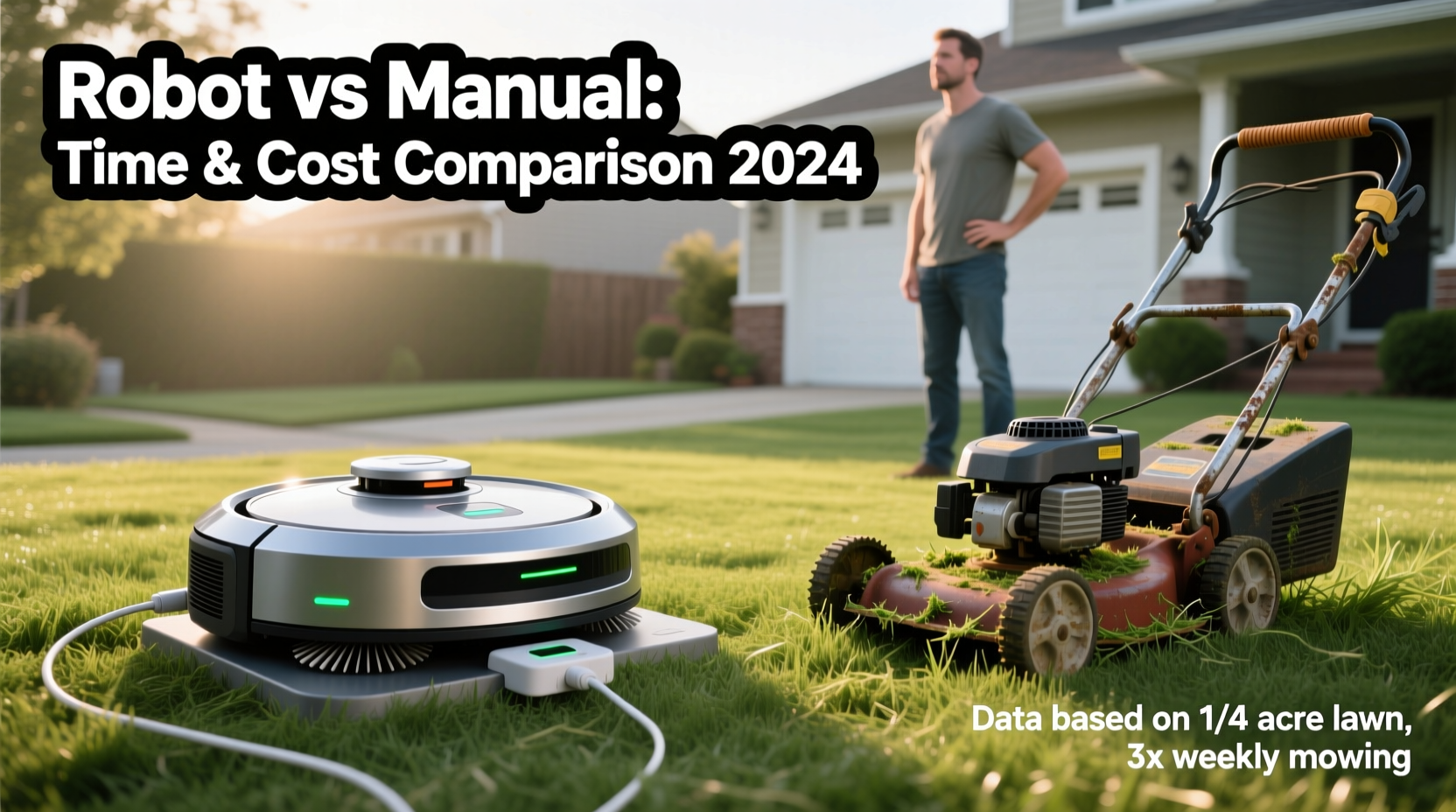
The most immediate difference between robot and manual mowers lies in the upfront price. Manual push mowers, especially non-powered reel types, can cost as little as $70. Gas-powered or self-propelled models range from $150 to $400, depending on brand, engine power, and features like mulching or bagging capabilities. These mowers require no complex setup—simply assemble, fill with fuel (if gas), and start cutting.
In contrast, robot mowers represent a significant initial investment. Entry-level models begin around $600, while high-end versions with advanced navigation, larger cutting capacity, and smart features can exceed $2,500. Installation involves laying a boundary wire around the perimeter of your lawn, which guides the mower and prevents it from wandering. Though some models now use GPS or virtual boundaries, most still require physical wiring, adding 3–6 hours of labor unless professionally installed for an additional $200–$400.
Despite the steep entry cost, robot mowers are designed for longevity. Most come with warranties of 2–3 years and are built with durable components meant to last 5–7 years with proper care. Push mowers, particularly gas models, may need engine maintenance or replacement parts within 3–5 years, depending on usage.
Long-Term Operating and Maintenance Expenses
When evaluating total ownership cost, ongoing expenses matter just as much as the purchase price. For manual push mowers, operating costs depend on the type. Reel mowers require only blade sharpening every 1–2 years ($15–$30) and occasional cleaning. Gas-powered models add fuel, oil changes, air filter replacements, and spark plug servicing—averaging $100–$150 annually in supplies and maintenance.
Robot mowers run on rechargeable lithium-ion batteries, consuming minimal electricity—typically less than $10 per year in added energy costs. However, battery lifespan is usually 3–5 years, after which replacement costs range from $100 to $250. Blades need replacing every 1–2 months depending on grass type and frequency, but individual blades are inexpensive ($10–$20 per set). Most robot mowers also include software updates at no extra charge, enhancing performance over time.
One often-overlooked factor is downtime. A malfunctioning robot mower may require troubleshooting via app diagnostics or customer support, potentially halting mowing for days. In contrast, minor issues with push mowers—like clogged decks or dull blades—are typically resolved quickly with basic tools.
“Automation reduces physical strain, but it doesn’t eliminate maintenance. Owners must stay proactive with blade care and weather protection.” — Dr. Alan Prescott, Landscape Technology Researcher, University of Vermont
Time Investment and Labor Comparison
Time is one of the most valuable resources for modern homeowners. A standard 1/4-acre lawn (about 10,000 square feet) takes approximately 45–60 minutes to mow with a manual push mower, assuming average terrain and no obstacles. At a weekly frequency, that totals 39–52 hours per year spent pushing a mower under sun or summer heat.
Robot mowers operate autonomously, typically mowing multiple short sessions throughout the week—often during daylight or early evening hours. Because they cut incrementally, they maintain consistent grass height without clumping. For the same 1/4-acre lawn, a mid-range robot mower completes all mowing tasks without any user involvement beyond occasional emptying of clippings (not required, as they mulch) and seasonal cleanup.
The net time saved is substantial: upwards of 40+ hours annually. That’s nearly a full workweek reclaimed for family, hobbies, or rest. Over a five-year period, this adds up to more than 200 hours of freed-up personal time. Even factoring in 1–2 hours per year for maintenance checks and winter storage, the labor reduction is dramatic.
Real Example: The Thompson Family’s Experience
The Thompsons, a family of four in suburban Ohio, replaced their aging gas-powered push mower with a $1,200 robot model in spring 2021. Their half-acre yard previously took Jeff, the homeowner, 90 minutes each weekend to mow. After installing the boundary wire himself over a weekend, the robot handled all mowing automatically.
Within the first year, Jeff reported saving roughly 70 hours. He redirected that time toward coaching his son’s soccer team and weekend hikes. Although he initially struggled with rainy-day navigation glitches, firmware updates resolved the issue by year two. By the third season, the family considered the robot “invisible infrastructure”—always working, never demanding attention. Their only regret? Not switching sooner.
Detailed Cost and Time Comparison Table
| Factor | Manual Push Mower (Gas) | Robot Lawn Mower (Mid-Range) |
|---|---|---|
| Initial Cost | $250–$400 | $800–$1,500 |
| Installation | None (ready to use) | 3–6 hours DIY or $200–$400 professional |
| Annual Operating Cost | $100–$150 (fuel, oil, parts) | $10–$20 (electricity + blade sets) |
| Battery Replacement (every 4 yrs) | N/A | $150 |
| Blade Replacement | $20 every 1–2 years | $15 every 1–2 months (~$90/yr) |
| Time Spent Per Year | 78–104 hours (1/2 acre) | 1–2 hours (maintenance only) |
| Lifespan | 5–7 years | 5–7 years |
| Total 5-Year Cost Estimate | $800–$1,100 | $1,200–$1,800 |
Note: The robot mower’s higher total cost is offset by massive time savings. When valuing time at even $15/hour, the 350+ hours saved over five years equate to $5,250 in personal time value—far exceeding the equipment cost difference.
Choosing the Right Option: A Step-by-Step Decision Guide
Selecting between a robot and manual mower shouldn’t be based on novelty or price alone. Consider your specific situation using this practical sequence:
- Measure your lawn size. Under 0.25 acres? Robot mowers excel here. Over 0.5 acres with slopes or obstacles? High-end models are needed, increasing cost.
- Evaluate terrain complexity. Multiple flower beds, tight corners, or steep slopes may challenge robot navigation. Simpler layouts suit automation better.
- Assess your available time. If you dread weekend mowing or travel frequently, automation offers peace of mind. If you enjoy outdoor exercise, a push mower may suffice.
- Calculate your hourly time value. Are you willing to trade $1,000 upfront for 40+ hours of free time yearly? For busy professionals or retirees seeking convenience, the math often favors robots.
- Review long-term plans. Planning to stay in your home for 5+ years? A robot mower’s benefits compound over time. Renters or short-term owners may prefer lower upfront costs.
- Check local incentives. Some utility companies offer rebates for energy-efficient lawn equipment, including certain robot models.
Frequently Asked Questions
Can a robot mower handle large or irregularly shaped lawns?
Yes, but with caveats. High-end models like Husqvarna Automower or Robomow RS can manage up to 1.25 acres with multiple zones and complex layouts. However, installation becomes more involved, requiring careful boundary wire routing and possibly additional accessories like guide wires. Smaller or simpler yards yield the best return on investment.
Are robot mowers safe around children and pets?
Modern robot mowers include multiple safety features: lift sensors that stop the blades if lifted, motion detection to halt operation when approached, and pinching guards near wheels. While not toys, they are far safer than traditional mowers, which pose serious injury risks. Still, supervision is recommended, especially with curious pets or toddlers.
Do robot mowers really save money in the long run?
Direct monetary savings are modest—robot mowers often cost more over 5–7 years when only counting hardware and supplies. However, when factoring in the value of time, reduced physical strain, and increased property appeal from consistently groomed lawns, many users find them financially and personally worthwhile.
Final Recommendations and Key Takeaways
The choice between a robot lawn mower and a manual push mower ultimately hinges on priorities. If minimizing expense is the sole goal, a basic push mower wins on paper. But for those who value time, consistency, and ease of use, robot mowers deliver tangible quality-of-life improvements.
Homeowners with small to medium yards, busy schedules, or physical limitations will benefit most from automation. The technology has matured to the point where reliability and precision are no longer concerns for mainstream models. Meanwhile, enthusiasts who enjoy mowing as exercise or hands-on yard work may find robot mowers unnecessary—or even disappointing in their lack of engagement.
Regardless of your choice, regular maintenance extends the life of any mower. Keep blades sharp, decks clean, and moving parts lubricated. For robot owners, seasonal inspections and timely blade swaps ensure peak performance.
“The future of lawn care isn’t about bigger engines—it’s about smarter systems that fit seamlessly into modern life.” — Sarah Lin, Urban Horticulture Specialist, Cornell Cooperative Extension
Take Action Today
Don’t let indecision keep you stuck in the mowing rut. Assess your lawn, calculate your time value, and determine what kind of ownership experience you want. Whether you choose the simplicity of a push mower or the autonomy of a robot, making an intentional choice puts you in control. Share your mowing journey, ask questions in forums, or comment below with your own cost-saving strategies. The perfect lawn isn’t just about appearance—it’s about designing a yard routine that works for your life.




 浙公网安备
33010002000092号
浙公网安备
33010002000092号 浙B2-20120091-4
Comments
No comments yet. Why don't you start the discussion?