
Maintaining a small yard might seem like a minor chore, but over time, even 500 to 2,000 square feet of grass can become a weekly burden. The debate between using a robot lawn mower and a traditional manual push mower is no longer just about convenience—it’s about long-term effort reduction, time efficiency, and personal lifestyle alignment. While both options have their place, understanding how they differ in real-world use can help homeowners make smarter decisions. For small yards, the choice isn’t always obvious, but when effort savings are the priority, one option stands out.
The Effort Equation: Defining What “Saves More Effort” Really Means
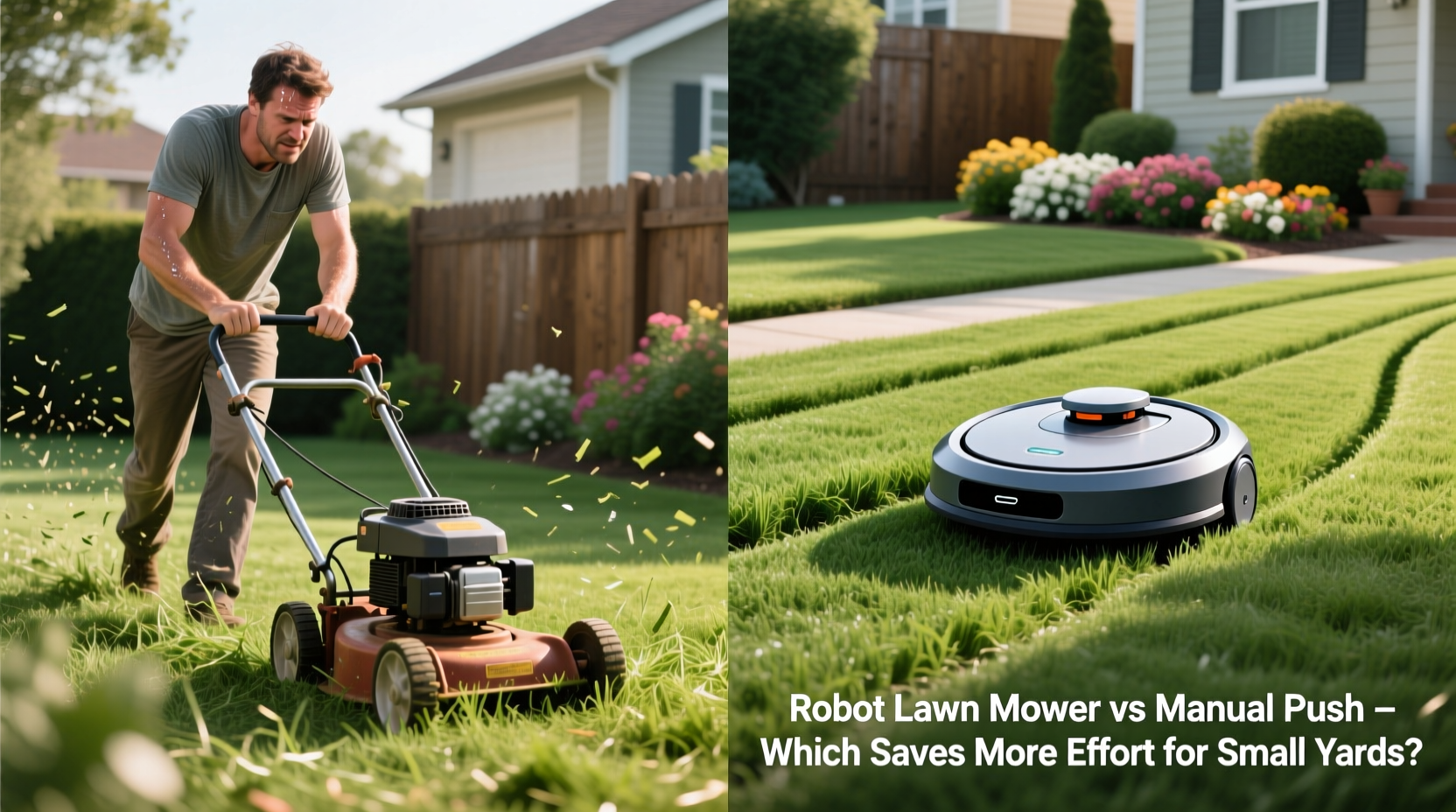
When we talk about saving effort, it’s not just about physical exertion. True effort reduction includes time spent, frequency of tasks, mental load, setup complexity, and long-term maintenance. A manual push mower may require less upfront investment, but its ongoing demands add up. A robot mower reduces active labor dramatically—but introduces new considerations like programming, boundary wires, and occasional troubleshooting.
In small yards (under 0.1 acre), mowing frequency is typically every 5–7 days during growing season. Each session with a push mower takes 15 to 30 minutes including setup, mowing, cleanup, and storage. Over a 6-month mowing season, that accumulates to 40–70 hours annually. In contrast, a robot mower operates autonomously, often running multiple short cycles per week with zero human presence required.
Manual Push Mowers: Simplicity with Hidden Labor Costs
Manual push mowers—especially self-propelled gas or electric models—are familiar, reliable, and inexpensive to purchase. They offer immediate control and require no setup beyond starting the engine or charging the battery. However, their simplicity masks recurring effort.
- Physical demand: Even lightweight models require pushing, turning, and maneuvering around obstacles. On uneven terrain or thick grass, this becomes tiring.
- Time commitment: You must schedule mowing into your weekend or weekday routine. Delays lead to overgrown grass, increasing effort next time.
- Maintenance: Gas models need oil changes, air filter cleaning, blade sharpening, and fuel storage. Electric versions avoid fuel but still require blade care and battery management.
- Storage: These machines are bulky and often stored in garages or sheds, requiring space and protection from moisture.
For someone who enjoys light outdoor activity, a push mower can feel therapeutic. But if your goal is minimal disruption and maximum automation, the manual approach falls short despite its low price tag.
Robot Lawn Mowers: Automation That Redefines Yard Work
Robot mowers operate on a “frequent cutting” principle—mowing every day or every other day in short sessions. This keeps grass consistently short, promoting healthier lawns through mulching and reducing stress on the turf. For small yards, this model is ideal.
Once installed, a robot mower handles all mowing tasks without supervision. It returns to its charging station automatically, recharges, and resumes work as needed. Most models connect to smartphone apps, allowing remote scheduling, monitoring, and alerts.
Installation involves laying a boundary wire around the perimeter and any obstacles. While this takes a few hours initially, it’s a one-time task. Afterward, operation is nearly hands-free. Rain sensors prevent mowing in wet conditions, and anti-theft features like PIN codes and alarms enhance security.
“Homeowners with small to medium yards see the greatest return on effort with robotic mowers. The daily micro-mowing approach reduces total labor by over 90%.” — Dr. Alan Prescott, Landscape Automation Researcher, University of Vermont Extension
Comparative Analysis: Robot vs Manual for Small Yards
| Factor | Manual Push Mower | Robot Lawn Mower |
|---|---|---|
| Initial Cost | $150–$400 | $600–$2,000 |
| Effort Per Mow | High (physical labor, time) | Negligible (after setup) |
| Time Commitment | 30–60 min/week | 10 min/month (maintenance) |
| Maintenance | Blade sharpening, fuel/oil, cleaning | Blade replacement, wire inspection |
| Lifespan | 5–10 years | 6–10 years |
| Safety Risk | Moderate (moving parts, noise) | Low (sensors stop blades on lift) |
| Environmental Impact | Gas models emit CO₂; electric better | Electric, quiet, mulching reduces waste |
| Learning Curve | Minimal | Moderate (setup, app use) |
The data shows a clear trade-off: higher initial cost for the robot mower pays off in dramatically reduced effort over time. For those prioritizing time and physical ease, the robot is superior. For budget-first buyers or those who enjoy mowing as exercise, the manual option remains viable.
Real-World Example: Sarah’s Suburban Backyard Transformation
Sarah Thompson, a software engineer in Portland, Oregon, has a 1,200 sq ft backyard. She used a corded electric push mower for three years, spending Saturday mornings cutting grass. “It wasn’t hard,” she said, “but it was always something I had to remember. If I forgot, the grass got too tall, and it took twice as long.”
Last spring, she invested $950 in a mid-range robot mower. Installation took a Saturday morning with her partner. They laid the boundary wire, set up the charging dock, and programmed the schedule via the app. Since then, Sarah hasn’t manually mowed once.
“I don’t even notice it running,” she said. “It’s so quiet. My lawn looks better than ever—always even, never scalped. And I’ve gotten back at least 40 hours a year. That’s almost a full workweek saved.”
Her only maintenance so far? Replacing the blades twice a season and clearing leaves from the dock area after storms. For her, the effort savings were immediate and lasting.
Step-by-Step Guide to Transitioning from Manual to Robot Mower
- Measure your yard: Confirm size and shape. Most robot mowers handle up to 0.25 acres; smaller models suit 0.1 acre or less.
- Assess terrain: Ensure slopes are under 20 degrees (varies by model) and pathways are clear of tripping hazards.
- Choose a model: Look for Wi-Fi connectivity, rain sensors, theft protection, and customer support reputation.
- Install the boundary wire: Follow manufacturer instructions. Use钉s or staples to secure wire along edges and around islands.
- Set up the charging station: Place on flat, sheltered ground near an outdoor GFCI outlet.
- Pair with app: Download the brand’s app, connect via Bluetooth or Wi-Fi, and program mowing zones and schedules.
- Run test cycles: Monitor first few runs to ensure navigation accuracy and edge coverage.
- Maintain regularly: Clean deck monthly, replace blades every 1–2 months, check wire integrity seasonally.
Common Misconceptions About Robot Mowers
Despite growing popularity, several myths persist:
- “They don’t cut well.” Modern robots use high-speed rotating blades and precise path algorithms. Many leave a cleaner cut than push mowers due to consistent height and mulching.
- “They get stuck easily.” Advanced models use GPS, obstacle detection, and adaptive drive systems to navigate tight spaces and recover from minor jams.
- “They’re unsafe.” Safety standards require automatic blade shutoff when lifted or tilted. Most also have child locks and alarm systems.
- “They’re too expensive to justify.” When factoring in 5+ years of use and 40+ hours saved annually, many users break even within 2–3 seasons.
Frequently Asked Questions
Can a robot mower handle irregularly shaped small yards?
Yes. Most models excel in complex layouts. With proper boundary wire placement, they navigate curves, narrow passages, and multiple zones effectively. Some even support virtual boundaries via GPS mapping.
Do I still need to edge or trim with a robot mower?
Occasionally. Robots cut close to borders but may leave slight gaps along sidewalks or fences. A handheld trimmer every few weeks maintains a polished look. Some advanced models include edging functions or follow boundary wires tightly.
What happens if the robot hits a toy or pet?
Robots are designed to detect resistance. Upon contact, they reverse direction and resume mowing. While not intended to hit objects, their low weight and responsive sensors minimize risk. Still, it’s best practice to clear the yard before activation—even though most runs occur when you're not outside.
Actionable Checklist Before Making Your Decision
- ☐ Measure total lawn area and note slope percentage
- ☐ Check electrical access near yard for charging station
- ☐ Evaluate current time spent mowing monthly
- ☐ Research top robot mower brands (e.g., Husqvarna, Worx, Robomow)
- ☐ Read user reviews focusing on small-yard performance
- ☐ Consider noise tolerance—robots operate quietly (~60 dB)
- ☐ Budget for accessories: extra blades, replacement wheels, garage storage
- ☐ Decide whether effort reduction outweighs upfront cost
Final Verdict: Which Saves More Effort?
For small yards, the robot lawn mower is the clear winner when effort savings are the primary goal. It eliminates the need to schedule, push, sweat, or store heavy equipment. While the manual push mower wins on upfront affordability and mechanical simplicity, it demands consistent time and energy—resources many homeowners value more than money.
The robot mower transforms lawn care from a chore into a background function, like running a dishwasher or setting a thermostat. It doesn’t just save minutes; it removes decision fatigue and calendar pressure. For working parents, elderly individuals, or anyone seeking a lower-effort lifestyle, this shift is transformative.
Of course, no tool fits every situation. If you love being outdoors, enjoy the rhythm of pushing a mower, or live in a rental where long-term investment doesn’t make sense, sticking with manual mowing is perfectly reasonable. But if your aim is to reduce physical and mental load while maintaining a pristine lawn, automation offers undeniable advantages.




 浙公网安备
33010002000092号
浙公网安备
33010002000092号 浙B2-20120091-4
Comments
No comments yet. Why don't you start the discussion?