
Maintaining a neat, healthy lawn on hilly terrain presents unique challenges. The incline affects not just how you mow, but also the tools best suited for the job. As homeowners increasingly weigh automation against tradition, the question arises: when it comes to hills, does a robot lawn mower outperform a push mower? The answer isn't always straightforward—it depends on slope severity, grass type, terrain consistency, and user priorities like convenience, safety, and long-term maintenance.
This article dives deep into how each mower type performs on slopes, comparing traction, maneuverability, cutting quality, and overall efficiency. Whether you're managing a gentle backyard incline or a steep hillside, understanding the strengths and limitations of both options will help you make an informed decision that balances effort, results, and investment.
Understanding Lawn Slope and Its Impact on Mowing
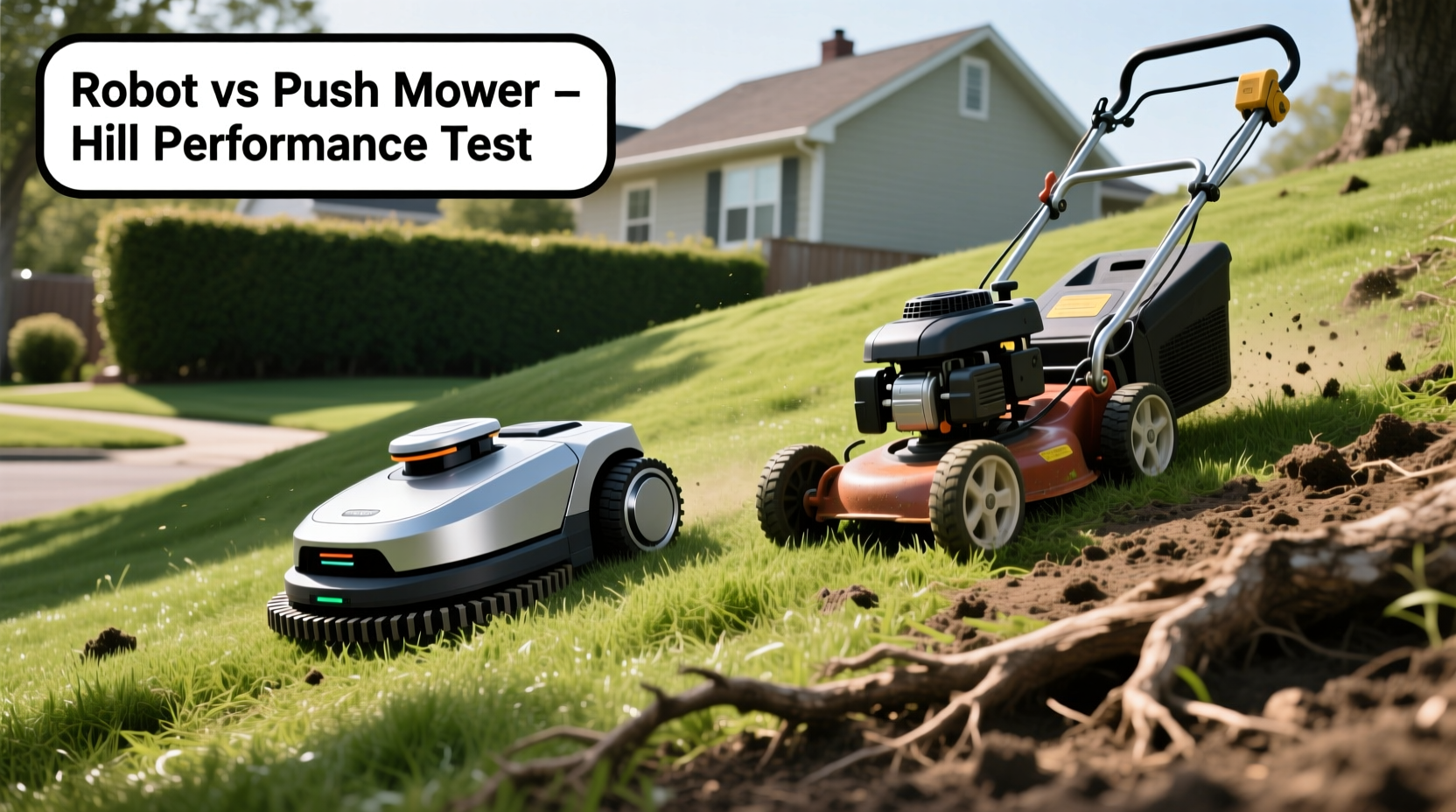
The degree of incline in your yard plays a critical role in determining which mower is appropriate. Most manufacturers rate their equipment based on maximum safe operating angles, typically measured in degrees or percentage grade. For context:
- A 5-degree slope equals about an 8.7% grade.
- A 15-degree slope is roughly a 26.8% grade—often considered the upper limit for safe manual mowing.
On steeper ground, balance becomes harder, pushing a mower uphill requires significant physical effort, and descending increases the risk of losing control. Wet grass or loose soil compounds these dangers. Additionally, uneven terrain can lead to inconsistent cuts, scalping, or missed patches if the mower doesn’t maintain proper contact with the ground.
For robot mowers, traction and stability are equally important. While they don’t pose the same risk of operator injury from tipping, poor grip or inadequate motor power can result in stalled units, inefficient navigation, or even damage to the machine.
“Slopes over 20 degrees demand specialized equipment. Standard push mowers aren’t designed for such conditions, and attempting to use them increases both personal risk and mechanical strain.” — David Langston, Landscape Safety Consultant
Push Mowers on Hills: Strengths and Limitations
Push mowers—whether gas-powered, electric, or manual reel types—have been the standard for residential lawns for decades. When used on moderate slopes, they can deliver excellent cutting results, especially in hands of an experienced operator.
Advantages:
- Precise control: Operators can adjust speed, direction, and blade height in real time based on terrain changes.
- Powerful motors: Gas and high-end electric models provide enough torque to climb moderate inclines (up to 15 degrees).
- No boundary wires or setup required: They’re ready to use immediately after startup.
Drawbacks on hills:
- Physical exertion: Pushing a 60–100 lb mower uphill is strenuous and fatiguing, particularly over large or repeated inclines.
- Safety concerns: Descending with a running mower increases the chance of slipping or losing control, especially on wet or uneven ground.
- Inconsistent cutting: Wheels may lift or bounce on irregular surfaces, leading to patchy results.
Many modern self-propelled push mowers feature rear-wheel drive or all-wheel drive systems that improve hill climbing ability. These models often include ergonomic handlebars and variable speed controls, making them better suited for sloped lawns than basic walk-behind units.
Robot Lawn Mowers: How They Handle Inclines
Robot lawn mowers have evolved significantly in recent years, with many models now engineered specifically for sloped terrain. High-end brands like Husqvarna, Worx, and Ambrogio design their units to navigate gradients up to 35 degrees (about 70% grade), far exceeding what most users would consider safe for manual operation.
These machines rely on several key technologies to maintain stability and traction:
- All-wheel drive (AWD): Some premium models use dual motors to power both front and rear wheels independently, improving grip and directional control.
- Low center of gravity: Heavy components like batteries are positioned low in the chassis to prevent tipping.
- Traction-enhanced tires: Rubber treads or grooved wheels provide better grip on damp or loose soil.
- Smart navigation algorithms: Instead of trying to plow straight up a hill, robots often follow a zigzag or spiral path to reduce effective incline stress.
Unlike humans, robot mowers don’t tire. They can work incrementally throughout the week, tackling small sections of a hill daily. This frequent mowing approach—known as \"mulch mowing\"—not only reduces strain on the machine but also promotes healthier grass by returning fine clippings as natural fertilizer.
However, robot mowers require installation of a perimeter wire buried along the edge of the lawn. On complex, multi-level yards, laying this wire correctly around drop-offs, retaining walls, or terraces demands careful planning. Improper setup can lead to the mower straying into unsafe zones or avoiding usable areas altogether.
Real Example: Managing a Tiered Backyard in Oregon
A homeowner in Portland, Oregon, with a 0.6-acre property featuring three distinct terraced levels struggled for years with a self-propelled gas mower. Each terrace ranged between 12 and 22 degrees in slope, requiring multiple passes and posing a slip hazard during spring rains.
After researching automated solutions, they installed a Husqvarna Automower 450X, rated for inclines up to 35%. The perimeter wire was laid along retaining wall edges and secured with landscape staples. Over six weeks, the robot learned the layout, adjusting its route to avoid dead spots near steps and planters.
Within two months, the lawn showed noticeably more uniform growth, and the owner reported saving nearly four hours per week. More importantly, the risk of injury during mowing season dropped to zero. The only ongoing maintenance was clearing debris after storms and occasional wire repositioning due to soil settling.
Comparative Analysis: Robot vs Push Mower on Hills
| Feature | Robot Lawn Mower | Push Mower |
|---|---|---|
| Max Recommended Slope | Up to 35° (model-dependent) | Up to 15°–20° (self-propelled models) |
| Traction & Stability | High (AWD, low CG, smart routing) | Moderate (depends on wheel drive) |
| Operator Effort | Minimal (after setup) | High (especially on steep grades) |
| Cutting Consistency | High (frequent mowing, even coverage) | Variable (operator skill and fatigue) |
| Safety Risk | Very Low | Moderate to High |
| Initial Cost | $1,200–$3,500 | $200–$800 |
| Maintenance Complexity | Moderate (blades, battery, software) | Low to Moderate (engine, blades) |
| Setup Time | Several hours (wire installation) | Negligible |
While robot mowers command a higher upfront cost and longer initial setup, their long-term value shines on challenging terrain. For users prioritizing safety, consistency, and reduced labor, automation offers compelling benefits. Conversely, those with smaller, less severe slopes may find a reliable self-propelled push mower sufficient and more cost-effective.
Choosing the Right Option: A Step-by-Step Guide
Selecting between a robot and a push mower for hilly lawns involves evaluating several factors. Follow this process to determine the best fit for your property:
- Measure your lawn’s steepest slope. Use a smartphone app with an inclinometer or a physical level gauge. Record readings at multiple points.
- Assess total area and complexity. Larger or multi-zone yards benefit more from automation. Small, simple slopes may not justify a robot’s cost.
- Evaluate your physical ability. If pushing a mower uphill causes discomfort or poses health risks, automation becomes a strong consideration.
- Determine budget and long-term goals. Factor in not just purchase price, but expected lifespan (robots last 5–8 years) and time savings.
- Check local regulations and HOA rules. Some communities restrict autonomous devices or require visible signage.
- Test models if possible. Rent or demo a robot mower for a weekend, or try a push mower on your steepest section before buying.
Essential Checklist Before Buying
- ✅ Measure maximum slope angle on your property
- ✅ Confirm mower model’s rated incline capacity
- ✅ Ensure perimeter wire can be safely installed
- ✅ Check battery life relative to lawn size
- ✅ Verify availability of replacement parts and service
- ✅ Consider theft protection (GPS tracking, PIN lock)
Frequently Asked Questions
Can robot mowers flip over on steep hills?
Modern robot mowers are engineered with stability in mind. Their low center of gravity and wide wheelbase make tipping rare, even on slopes up to 35 degrees. Most units automatically stop or reverse if they detect instability, and advanced models use gyroscopic sensors to monitor orientation in real time.
Do push mowers cut better than robot mowers on uneven ground?
Not necessarily. While push mowers allow direct operator control, robot mowers excel at consistent, frequent trimming. Because they mow every few days, they maintain a uniform height and reduce stress on grass. On highly irregular terrain, however, some robots may struggle with sudden drops or hidden obstacles unless properly programmed.
Are robot mowers worth the investment for hilly lawns?
For properties with slopes exceeding 15 degrees, or where physical mowing poses difficulty or danger, yes. The combination of safety, precision, and labor savings often justifies the higher initial cost within 2–3 seasons. For gentler inclines under 10 degrees, a high-quality self-propelled push mower may remain the more economical choice.
Final Recommendation: Match Tool to Terrain
There is no universal winner in the robot lawn mower vs push mower debate when it comes to hills. Efficiency must be defined not just by cutting speed, but by safety, sustainability, and user well-being.
If your yard includes moderate, manageable slopes and you enjoy hands-on yard work, a durable self-propelled push mower remains a practical, affordable option. But if your property features steep inclines, uneven elevation changes, or if physical exertion is a concern, a robot mower offers unmatched advantages in performance and peace of mind.
The future of lawn care leans toward automation—not because robots replace human effort entirely, but because they enable smarter, safer stewardship of difficult landscapes. As technology improves and prices stabilize, automated mowers are becoming not just a luxury, but a logical upgrade for homes built on hills.




 浙公网安备
33010002000092号
浙公网安备
33010002000092号 浙B2-20120091-4
Comments
No comments yet. Why don't you start the discussion?