
In recent years, robot vacuums have transformed from novelty gadgets into sophisticated home-cleaning tools. With features like self-emptying dustbins, app-controlled navigation, and advanced obstacle detection, they’ve earned their place in many modern households. But despite their growing capabilities, a pressing question remains: Can a robot vacuum truly replace the deep cleaning that traditional stick vacuums provide?
The short answer is no—not entirely. While robot vacuums excel at daily maintenance and surface-level cleaning, they still fall short in several areas where stick vacuums deliver superior performance. This article breaks down the key differences between these two types of vacuums, examines real-world use cases, and helps you decide whether relying solely on a robot is practical for your home.
How Robot Vacuums Work: Strengths and Limitations
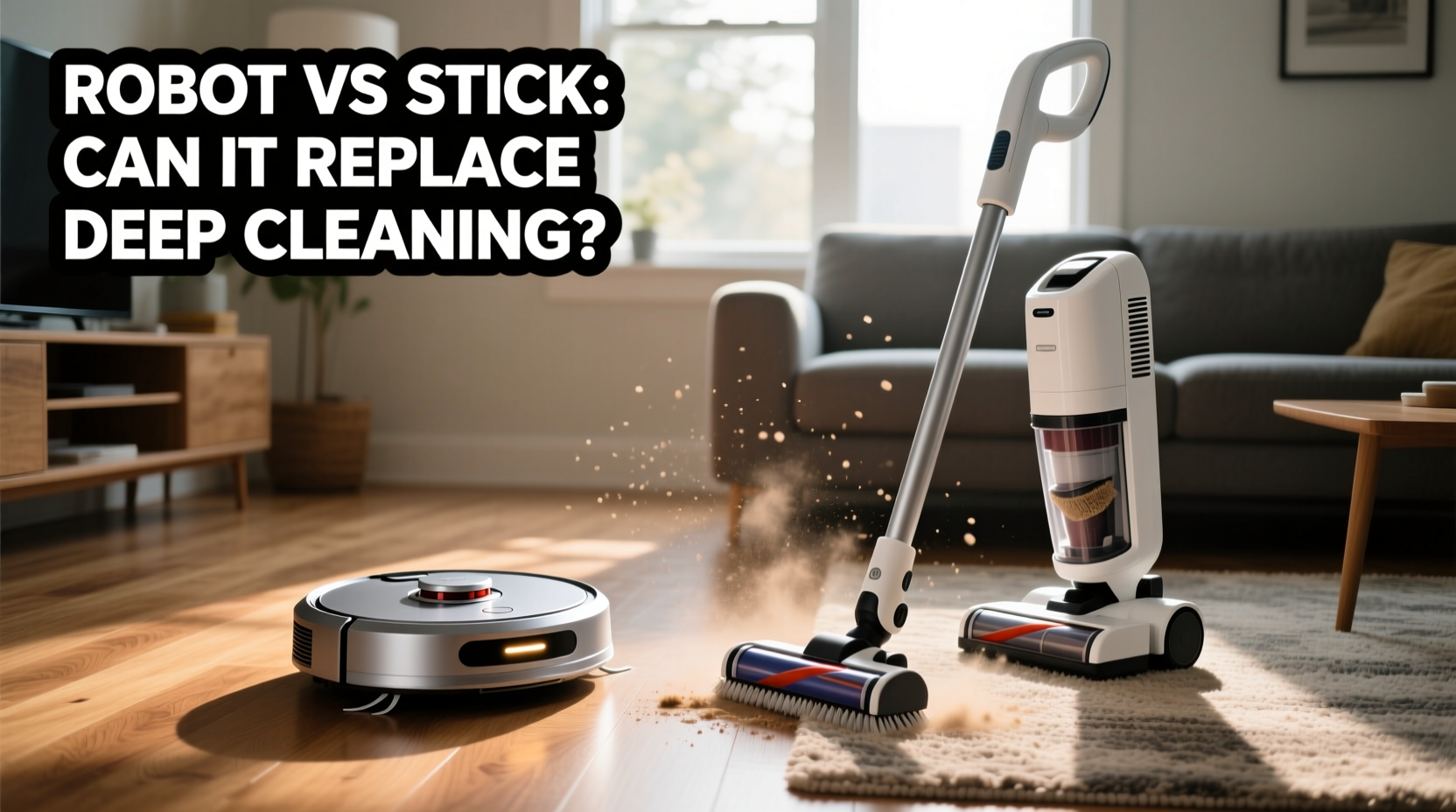
Robot vacuums are designed to automate routine floor maintenance. Using sensors and mapping technology, most high-end models can navigate around furniture, avoid stairs, and return to their charging docks autonomously. They’re ideal for picking up light debris—dust, pet hair, crumbs—on hard floors and low-pile carpets.
Many modern robots, such as those from iRobot, Roborock, and Ecovacs, now offer strong suction (up to 6,000 Pa), mopping functions, and compatibility with smart home systems. Some even detect carpeted areas and boost suction automatically. These advancements make them impressively capable for day-to-day upkeep.
However, their design imposes physical limitations. Their low profile restricts motor size and airflow, which directly impacts suction power. Most robot vacuums operate between 1,500 and 3,500 Pa, while premium stick vacuums often exceed 15,000 Pa. That’s a significant gap when dealing with embedded dirt or thick rugs.
Stick Vacuums: Power and Precision for Deep Cleaning
Stick vacuums bridge the gap between corded uprights and compact handhelds. Lightweight, maneuverable, and often cordless, they deliver concentrated suction exactly where you need it. Brands like Dyson, Shark, and Tineco dominate this space with models that combine powerful motors, versatile attachments, and long battery life.
What sets stick vacuums apart is their ability to handle deep-cleaning tasks efficiently. Whether it's pulling pet hair from high-pile carpets, reaching under sofas, or tackling spills behind appliances, stick vacuums offer precision and control robots simply can’t match. Attachments like crevice tools, upholstery brushes, and motorized mini rollers extend their utility beyond flooring.
They also allow immediate response. If you spill coffee or track in mud, you grab a stick vacuum and clean it up—no waiting for a scheduled run or repositioning virtual boundaries. For homes with pets, children, or frequent messes, this responsiveness is invaluable.
“While robot vacuums reduce the frequency of manual cleaning, they don’t eliminate the need for it. Deep pile rugs, corners, and cluttered spaces still require human-directed attention.” — Dr. Lena Patel, Home Appliance Researcher at Consumer Dynamics Lab
Head-to-Head Comparison: Robot vs Stick Vacuum
| Feature | Robot Vacuum | Stick Vacuum |
|---|---|---|
| Suction Power | 1,500–6,000 Pa (varies by model) | 10,000–22,000+ Pa |
| Cleaning Frequency | Daily (automated) | As needed (manual) |
| Floor Type Effectiveness | Hard floors, low-pile carpets | All floor types, including thick rugs |
| Reach & Maneuverability | Limited under furniture; avoids obstacles | Full access with attachments |
| Maintenance Level | Low (self-emptying models reduce effort) | Moderate (empty bin, clean filter after each use) |
| Time Investment | Near-zero during operation | 10–30 minutes per session |
| Best For | Daily upkeep, pet hair, open layouts | Deep cleaning, spot treatment, cluttered spaces |
This comparison highlights a fundamental truth: robot and stick vacuums serve different roles. The robot excels at consistency and convenience; the stick vacuum delivers intensity and versatility. One maintains, the other transforms.
When Robots Fall Short: Real-World Scenarios
Consider a family of four with two dogs and wall-to-wall carpeting. They invest in a top-tier robot vacuum with self-emptying and strong suction. It runs every evening, keeping visible surfaces tidy. But over time, they notice lingering odors and flattened carpet fibers in high-traffic areas. A professional carpet cleaner later reveals that years of tracked-in dirt and pet dander remain deeply embedded—despite regular robot runs.
This isn’t a failure of the robot. It’s a mismatch of expectations. Robot vacuums lack the agitation, suction depth, and direct contact needed to extract deeply embedded particles. Carpets require mechanical brushing and high airflow to lift soil from base fibers—a job suited to upright or stick vacuums with powered brushrolls.
Another common issue: edge cleaning. While many robots have side brushes, they often miss tight corners or leave a thin line of dust along baseboards. In kitchens, this can mean flour buildup near cabinets or grease residue behind the stove—areas only accessible with a precise nozzle and human guidance.
A Mini Case Study: The Urban Apartment Dilemma
Sophia lives in a 700-square-foot apartment in downtown Seattle. She works remotely and values a clean but low-maintenance space. She owns a Roborock S8 Pro Ultra and uses it daily. Her hardwood floors stay mostly dust-free, and she appreciates the hands-off operation.
But every six weeks, she notices a film on her floors and increased allergy symptoms. Upon inspection, she realizes fine particles have accumulated in grout lines and under her bookshelf. She pulls out her old Dyson V11 and spends 45 minutes doing a thorough clean. Afterward, the air feels fresher, and her allergies subside.
Sophia’s experience reflects a broader trend: automation improves hygiene but doesn’t guarantee deep sanitation. Regular robotic cleaning reduces workload, but periodic manual intervention remains essential for true cleanliness.
Building a Hybrid Cleaning Strategy
The most effective approach isn’t choosing one over the other—it’s integrating both. A hybrid system leverages the strengths of each tool to create a sustainable, high-standard cleaning routine.
Start by programming your robot vacuum to run daily or every other day, focusing on main living areas and hallways. Set it to avoid dining zones during meals and pause during active hours if noise is an issue. Use no-go zones in the app to protect delicate objects or pet feeding areas.
Then, schedule a weekly or biweekly deep clean with your stick vacuum. Target high-impact zones: under furniture, along baseboards, beneath curtains, and around entryways. Use attachments to clean upholstery, stairs, and ceiling corners. This focused effort takes less time because the robot has already handled surface debris.
- Day 1: Robot runs nightly; stick vacuum stored and ready.
- Day 7: Perform a 20-minute deep clean with stick vacuum.
- Day 8–14: Resume robot-only cycles.
- Repeat based on household activity, pet presence, or seasonal changes (e.g., spring cleaning).
Expert Checklist: When to Use Each Vacuum
- Use a robot vacuum when:
- You want daily maintenance without effort.
- Your floors are mostly hard surfaces or low-pile rugs.
- You’re away from home often and want consistent cleaning.
- You have pets shedding regularly.
- Use a stick vacuum when:
- You need to remove deeply embedded dirt or allergens.
- You’re dealing with spills, tracked-in mud, or food crumbs.
- You’re cleaning stairs, furniture, or tight corners.
- You’re preparing for guests or seasonal deep cleaning.
- Use both when:
- You want maximum cleanliness with minimal daily effort.
- You live in a high-traffic household or have allergies.
- You own multiple floor types and need adaptability.
Frequently Asked Questions
Can I rely solely on a robot vacuum if I don’t have pets or kids?
Possibly—but with caveats. In a minimalist, low-traffic home with hard flooring, a high-end robot may suffice for months. However, even in these environments, dust accumulates in corners and under furniture. Occasional manual cleaning ensures air quality and prevents long-term buildup.
Do robot vacuums help people with allergies?
Yes, but conditionally. Daily robot runs reduce airborne allergens like dust and pet dander. However, their small filters (often HEPA-rated) require frequent cleaning, and their inability to deep-clean carpets limits their impact on trapped allergens. Pairing a robot with a HEPA-equipped stick vacuum offers the best allergy protection.
Are self-emptying robot vacuums worth it?
For many, yes. Models with auto-empty bases store up to 60 days of debris, reducing contact with dust and extending cleaning intervals. This feature enhances convenience and makes robots more viable as primary cleaners—though they still don’t replace deep cleaning.
Final Verdict: Complement, Don’t Replace
The idea that a robot vacuum can fully replace deep cleaning is appealing but unrealistic with current technology. While robots have made remarkable progress, physics and design constraints prevent them from matching the suction, reach, and precision of a good stick vacuum.
Instead of viewing them as competitors, treat robot and stick vacuums as partners in a layered cleaning strategy. Let the robot handle the grind—daily dust, hair, and crumbs—while reserving the stick vacuum for transformational cleans that restore freshness and hygiene.
Technology continues to evolve. Future robots may integrate stronger motors, smarter navigation, or even modular attachments. Until then, the smartest choice isn’t choosing one tool over the other. It’s using both wisely.




 浙公网安备
33010002000092号
浙公网安备
33010002000092号 浙B2-20120091-4
Comments
No comments yet. Why don't you start the discussion?