
In recent years, robot vacuums have become a staple in modern homes, promising hands-free cleaning with the push of a button. Equipped with smart navigation, app control, and self-emptying bases, they’ve redefined convenience. But as their popularity grows, so does the question: Can these compact machines truly replace traditional upright or canister vacuums when it comes to deep cleaning? While robot vacuums excel at daily maintenance, their ability to tackle embedded dirt, pet hair, and high-pile carpets remains under scrutiny. This article breaks down the strengths and limitations of both types, evaluates real-world performance, and helps you determine whether a robot vacuum is enough—or if your home still needs the power of a traditional model.
How Robot Vacuums Work: Efficiency vs. Power
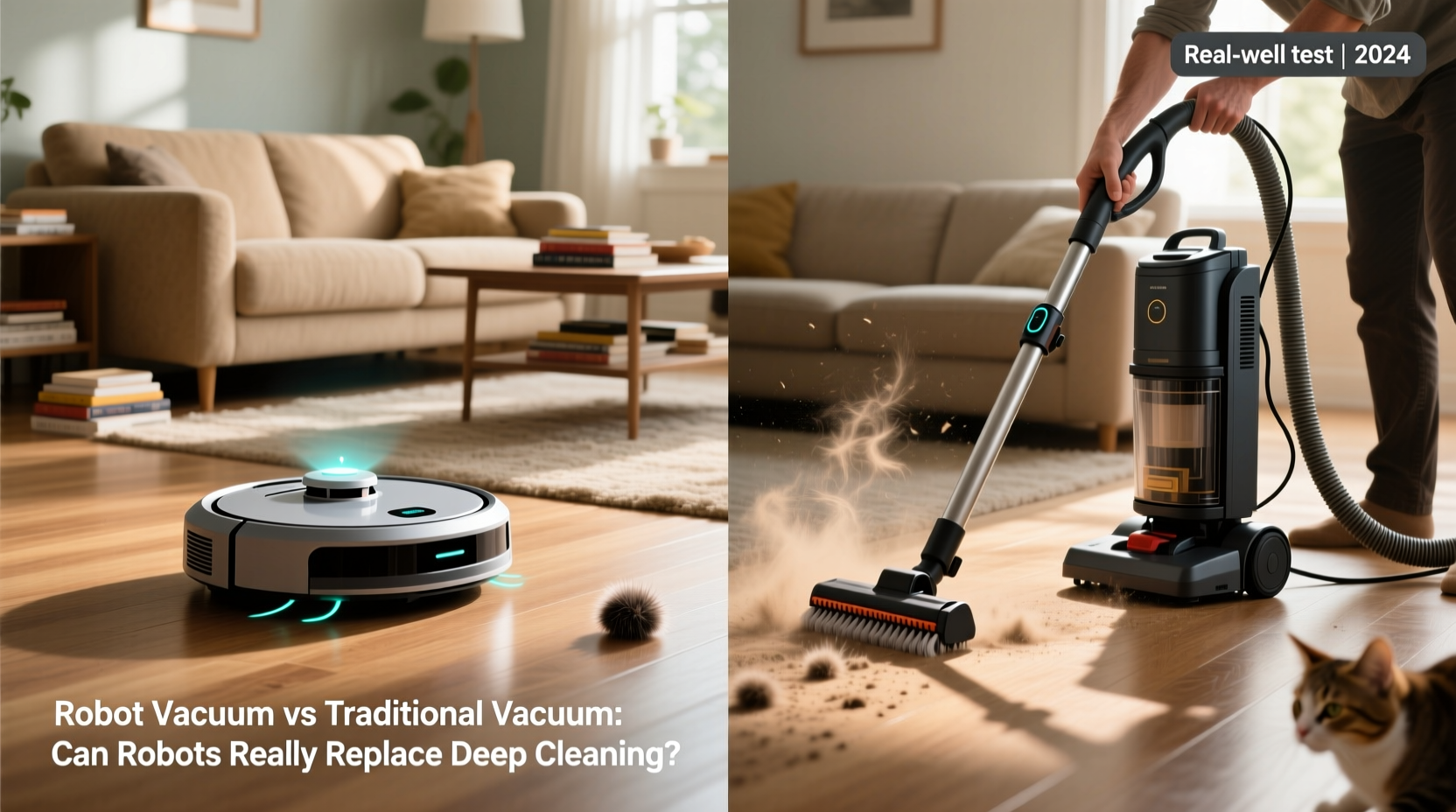
Robot vacuums operate autonomously using sensors, cameras, or LiDAR to map rooms and navigate around obstacles. Most models use dual brushes—a side brush to sweep debris toward the center and a main roller brush—paired with a suction motor to pull in dust and debris. Advanced versions include features like automatic dirt disposal, mopping functions, and voice assistant integration.
Despite their intelligence, robot vacuums are limited by size and battery life. Their compact design means smaller dustbins, less powerful motors, and lower suction strength compared to full-sized vacuums. While adequate for light debris and surface-level dust, they often struggle with deeply embedded particles, especially on thick carpets or textured flooring.
Most robot vacuums perform best on hard floors and low-pile rugs. High-pile carpets reduce airflow and limit brush contact, diminishing cleaning efficiency. Additionally, their low-profile bodies prevent them from reaching under furniture with tight clearances unless specifically designed for it.
Traditional Vacuums: The Gold Standard for Deep Cleaning
Traditional vacuums—whether upright, canister, or stick models—have long been the benchmark for thorough floor care. They offer higher suction power (measured in air watts or water lift), larger dust capacity, and specialized attachments for stairs, upholstery, and crevices. These tools allow users to target specific areas with precision, something robot vacuums cannot replicate.
For homes with pets, allergies, or heavy foot traffic, traditional vacuums provide unmatched performance. Models with HEPA filtration capture microscopic allergens, while motorized brush rolls agitate carpet fibers to dislodge trapped dust and dander. In clinical testing, traditional vacuums consistently remove 20–30% more particulate matter from medium-to-high pile carpets than even premium robot models.
However, their effectiveness comes at the cost of effort. Manual operation requires time and physical engagement, making consistent use less likely for busy households. Many people end up vacuuming only once a week or less, allowing dust and allergens to accumulate.
“While robot vacuums improve cleaning frequency, they don’t match the extraction power needed for true deep cleaning, especially in homes with allergy sufferers.” — Dr. Linda Chen, Indoor Air Quality Researcher, National Institute of Environmental Health
Performance Comparison: Where Each Shines
To understand how these two types stack up, consider their roles not as replacements but as complementary tools. The following table outlines key differences across critical categories:
| Feature | Robot Vacuum | Traditional Vacuum |
|---|---|---|
| Suction Power | Moderate (1,500–3,000 Pa typical) | High (up to 20,000+ Pa on premium models) |
| Cleaning Frequency | Daily automation possible | Depends on user schedule |
| Carpets (High-Pile) | Limited effectiveness | Excellent penetration and agitation |
| Hard Floors | Very good for dust and crumbs | Excellent, especially with soft rollers |
| Pet Hair Handling | Fair to good (tangles common) | Superior with tangle-free brush designs |
| Under-Furniture Reach | Excellent (low profile) | Limited by hose length and nozzle size |
| Stairs & Upholstery | No capability | Standard with attachments |
| Maintenance Effort | Low (empty bin weekly) | Moderate (bag changes, filter cleaning) |
The data shows that robot vacuums win in consistency and accessibility, while traditional vacuums dominate in raw cleaning power and versatility. For optimal results, many experts recommend using both: robots for daily upkeep and traditional vacuums for weekly or biweekly deep cleans.
Real-World Case: A Pet Owner’s Experience
Sarah Thompson, a dog owner in Austin, TX, replaced her corded vacuum with a high-end robot model after seeing positive reviews online. She has two shedding dogs and hardwood floors throughout most of her home. Initially impressed by the robot’s ability to run daily without effort, she noticed after three months that dark fur still clung to baseboards and corners. Her allergies also worsened during spring pollen season.
After consulting a home hygiene specialist, she reintroduced her old upright vacuum into her routine—using it every Saturday morning. Within weeks, she reported visible improvement in air quality and reduced pet dander on furniture. “The robot keeps things tidy,” she said, “but only the real vacuum makes my house feel truly clean.”
This scenario reflects a growing trend: consumers who adopt robot vacuums often find they still need traditional models for comprehensive sanitation, particularly in homes with pets, children, or respiratory sensitivities.
When Robots Fall Short: Limitations You Should Know
Despite technological advances, robot vacuums face inherent design constraints:
- Low Suction Relative to Size: Physics limits how much airflow a small motor can generate. Even flagship models rarely exceed 3,000 Pa, whereas traditional vacuums often deliver over 10,000 Pa.
- Limited Bin Capacity: Small bins fill quickly, especially on large homes or homes with pets. Some units stop mid-clean when full.
- Navigation Errors: Despite mapping tech, robots occasionally get stuck, miss spots, or scatter debris instead of collecting it.
- No Attachments: Cannot clean stairs, ceilings, curtains, or car interiors—tasks easily handled by traditional vacuums.
- Maintenance Blind Spots: Brushes require frequent cleaning to prevent hair wrap, and filters need regular washing—tasks users often overlook.
Moreover, robot vacuums do not scrub stains or sanitize surfaces. Wet-mopping models exist, but they lack the pressure and absorbency of manual mops or steam cleaners. For spills, tracked-in mud, or sticky messes, human intervention remains essential.
Step-by-Step: Building a Hybrid Cleaning Routine
Instead of choosing one over the other, the most effective strategy combines both technologies. Follow this six-step plan to maximize cleanliness with minimal effort:
- Assess Your Flooring: Identify high-traffic zones, carpeted areas, and pet-prone spaces. This determines where deep cleaning is most needed.
- Deploy the Robot Daily: Schedule short runs (e.g., 30 minutes) each morning or evening to capture loose dust and debris.
- Empty the Dustbin Weekly: Check and clean the filter and brushes every 7–10 days to maintain suction efficiency.
- Deep Clean Weekly: Use a traditional vacuum with a motorized brush roll on carpets and edges. Focus on thresholds, under furniture, and along walls.
- Use Attachments Monthly: Clean vents, blinds, upholstery, and stairs with crevice and upholstery tools to eliminate hidden allergens.
- Seasonal Reset: Every three months, inspect seals, belts (if applicable), and hoses on your traditional vacuum. Replace filters and perform a whole-home pass.
Checklist: Is a Robot Vacuum Enough for Your Home?
Answer the following to determine if you can rely solely on a robot vacuum—or if a traditional model is still necessary:
- ✅ Do you have mostly hard floors (tile, wood, vinyl)?
- ✅ Is your home small to medium-sized (under 2,000 sq ft)?
- ✅ Do you vacuum frequently already (or want automated daily cleaning)?
- ✅ Are there no pets or minimal shedding?
- ✅ Do you prioritize convenience over maximum cleanliness?
If you answered yes to all, a robot vacuum may suffice. If any answer was no, pairing it with a traditional vacuum will yield better long-term results.
Frequently Asked Questions
Can robot vacuums clean carpets effectively?
They can handle low-to-medium pile carpets reasonably well, especially models with rubberized brush rolls. However, they lack the agitation and suction depth to extract deeply embedded dirt from high-pile or shag carpets. For thorough carpet cleaning, a traditional vacuum with a powered beater bar is superior.
Do I need to vacuum before using a robot?
Yes. Large debris like cereal, paper clips, or pet waste should be picked up first. Robot vacuums can clog or damage internal components when attempting to ingest bulky items. A quick pre-sweep ensures smooth operation and extends the machine’s lifespan.
Are self-emptying robot vacuums worth it?
For many users, yes. Self-emptying bases allow the robot to operate for weeks without manual intervention, maintaining hygiene and reducing exposure to dust. While they add $100–$200 to the initial cost, they enhance convenience significantly—especially for allergy sufferers or those with mobility challenges.
Conclusion: Complement, Don’t Replace
Robot vacuums represent a leap forward in home automation, offering unmatched convenience and consistent surface maintenance. They excel at preventing dust buildup and keeping floors visually tidy. However, they are not engineered to replace the deep-cleaning capabilities of traditional vacuums. True sanitation—removing allergens, embedded pet hair, and ground-in grime—requires stronger suction, targeted attachments, and human oversight.
The future of home cleaning isn’t about choosing one over the other. It’s about integrating both: letting robots handle the daily grind while reserving traditional vacuums for the heavy lifting. By adopting a hybrid approach, homeowners gain the best of both worlds—cleanliness without compromise.




 浙公网安备
33010002000092号
浙公网安备
33010002000092号 浙B2-20120091-4
Comments
No comments yet. Why don't you start the discussion?