
Hardwood floors bring warmth, elegance, and value to any home. But they also demand consistent care to maintain their finish and prevent damage from dust, grit, and spills. Two dominant cleaning methods—robot vacuums with mopping functions and traditional mops—offer different approaches to this challenge. While both aim for cleanliness, their execution, efficiency, and long-term impact on hardwood vary significantly. Understanding these differences helps homeowners make informed decisions about preserving their investment.
The Evolution of Floor Cleaning: From Bucket to Bot
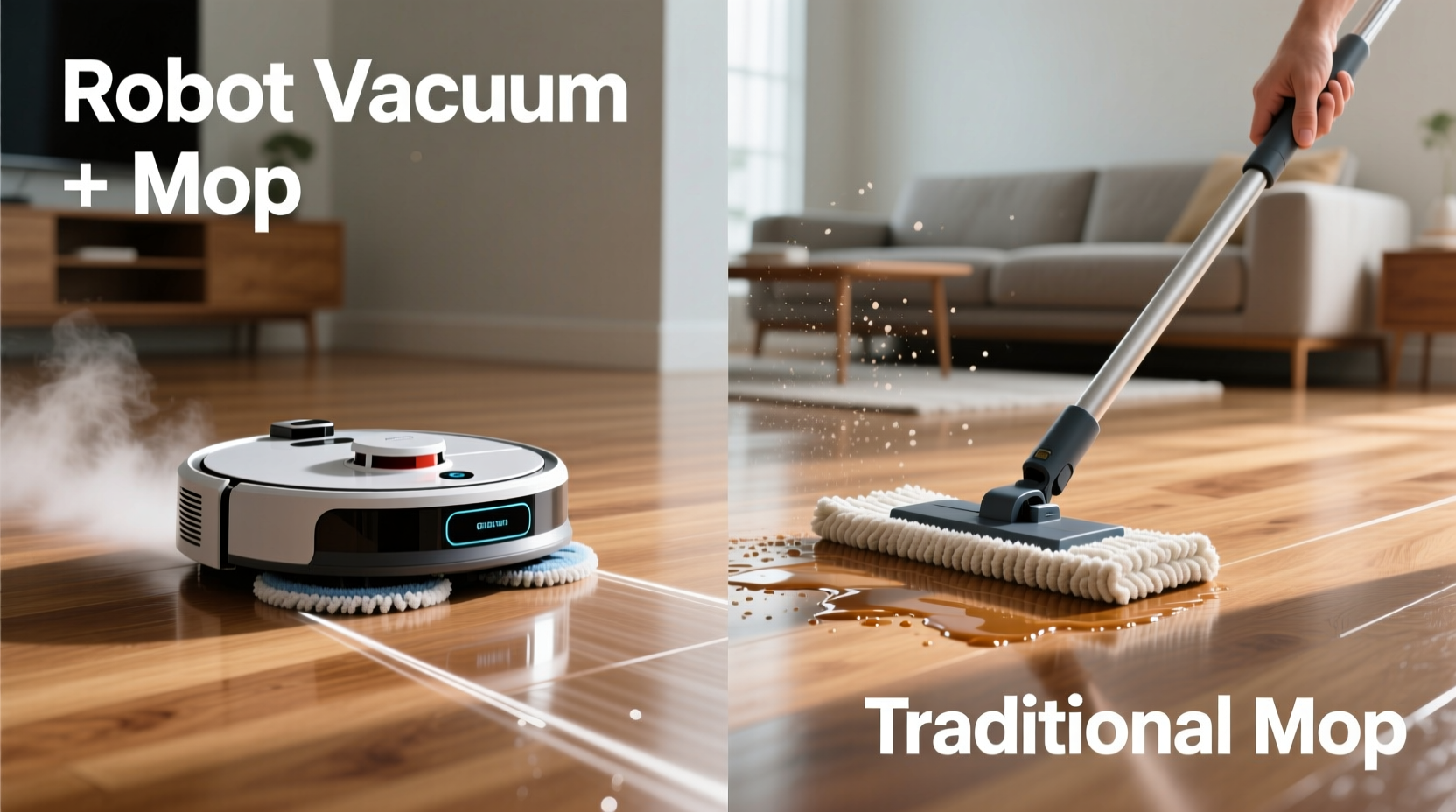
Floor cleaning has evolved dramatically over the past two decades. The traditional mop and bucket, once the gold standard, now competes with smart, automated alternatives. Robot vacuums with mopping capabilities have surged in popularity, especially among busy households seeking convenience without sacrificing cleanliness. These devices combine vacuuming and light mopping in a single autonomous cycle, promising spotless floors with minimal effort.
Yet, despite technological advancements, traditional mopping remains a staple in many homes. Its simplicity, low cost, and deep-cleaning potential give it enduring appeal. For hardwood floors—which are sensitive to moisture, scratches, and abrasive cleaners—the method of cleaning can directly affect longevity and appearance.
How Each Method Works on Hardwood Floors
Robot Vacuums with Mopping Functions: These units typically use a small water tank and a microfiber pad that attaches to the bottom. After vacuuming debris, the robot glides over the floor with a damp (not wet) pad, designed to capture fine dust and light stains. Most models allow control over water flow, ensuring minimal saturation—a critical factor for hardwood safety.
Advanced versions feature smart navigation, mapping rooms, avoiding obstacles, and even lifting the mop pad when transitioning from hard floors to carpets. Brands like Roborock, iRobot (with Braava Jet), and Ecovacs lead the market with precision-engineered systems tailored for sealed hardwood surfaces.
Traditional Mopping: This method involves a mop head—often cotton, sponge, or microfiber—attached to a handle, dipped in a bucket of water mixed with cleaning solution. The user manually applies pressure and movement across the floor, scrubbing dirt away. While highly effective for sticky spills or built-up grime, it carries risks if too much water is used or if the wrong cleaner damages the wood’s sealant.
When done correctly—with a slightly damp mop and pH-neutral hardwood cleaner—traditional mopping provides thorough cleaning. However, inconsistency in pressure, water volume, and coverage can leave streaks or cause warping over time.
Performance Comparison: Effectiveness on Different Types of Dirt
Cleaning efficacy depends heavily on the type of mess. Here's how each method performs across common scenarios:
| Type of Mess | Robot Vacuum + Mop | Traditional Mop |
|---|---|---|
| Daily dust & foot traffic | Excellent – consistently removes fine particles | Good – but may redistribute dust if not changed frequently |
| Spilled coffee or juice | Fair – handles fresh spills if detected early; struggles with dried residue | Excellent – manual scrubbing removes dried liquids effectively |
| Pet accidents | Limited – may spread odor if not cleaned immediately by human intervention | Superior – allows targeted disinfection and blotting |
| Kitchen grease or oil spots | Poor – lacks scrubbing power and proper detergent application | Very Good – especially with degreasing solutions and elbow grease |
| Footprint marks (shoe polish, scuffs) | Fair – microfiber pads lift some scuffs but lack pressure | Excellent – direct pressure and targeted wiping remove most marks |
While robot moppers excel at daily maintenance, they fall short in deep-cleaning tasks. Traditional mopping offers superior control and cleaning power but requires more time and physical effort.
“Automated mopping is ideal for upkeep between deep cleanings, but nothing replaces a well-executed manual mop for restoring shine and removing stubborn residues.” — Dr. Lena Patel, Indoor Surface Care Specialist, National Flooring Institute
Impact on Hardwood Floor Longevity
Hardwood floors are vulnerable to three primary threats: excess moisture, abrasive materials, and inconsistent cleaning. Both methods must be evaluated against these risks.
Moisture Control: Excessive water is the enemy of hardwood. Prolonged exposure leads to cupping, warping, and delamination. Robot mops generally release water slowly and evenly, minimizing pooling. Many high-end models use ultrasonic sensors to detect carpet edges and avoid them entirely. In contrast, traditional mops often drip or oversaturate, especially sponge types, increasing the risk of moisture damage.
Surface Abrasion: Grit trapped in mop pads or cloths can scratch finishes. Robot vacuums typically vacuum first, reducing debris before mopping. Traditional methods risk dragging sand or pet claws across the floor if pre-sweeping is skipped.
Cleaning Consistency: Robots follow programmed paths, ensuring even coverage. Humans may miss spots or apply uneven pressure. On the flip side, robots cannot adapt to sudden messes unless manually reprogrammed.
Practical Step-by-Step Guide: Maximizing Results with Either Method
Regardless of your choice, optimal results depend on proper technique. Follow this timeline to ensure safe and effective hardwood floor cleaning:
- Clear the Floor (5 min): Remove rugs, toys, and obstacles. Pick up large debris.
- Dry Clean First (10 min): Sweep or vacuum thoroughly. This prevents scratching during wet cleaning.
- Prepare Cleaning Solution: Use only cleaners approved for hardwood. Avoid vinegar-water mixes, which degrade polyurethane finishes over time.
- Apply Mop Safely:
- For robots: Fill tank with recommended solution, attach clean pad, start scheduled run.
- For traditional mops: Wring thoroughly—mop should be damp, not dripping.
- Mop in Direction of Grain (15–30 min): Work in sections, overlapping strokes slightly. Never flood the floor.
- Dry Immediately: Use a dry microfiber cloth to buff the surface and prevent water marks.
- Inspect and Re-treat Stains (if needed): Address missed spots with a soft cloth and appropriate cleaner.
This process ensures protection and shine, whether you're pressing a button or pushing a mop.
Real-World Example: The Johnson Family’s Cleaning Routine
The Johnsons live in a suburban home with two kids, a dog, and wide-plank oak flooring throughout the main level. They initially relied solely on a traditional mop, spending 45 minutes every weekend cleaning. Over time, they noticed faint water rings near the kitchen entrance and minor scratches near high-traffic areas.
After researching, they invested in a mid-tier robot vacuum-mop hybrid. They now run it every evening after dinner, set to vacuum-only mode on weekdays and light mopping on Fridays. Once a month, they perform a deeper clean with a traditional microfiber mop and Bona Hardwood Cleaner.
The result? Fewer visible scuffs, no new water damage, and significantly less time spent on routine cleaning. “It’s not perfect,” says Sarah Johnson, “but it keeps the floors looking cared for between deep cleans. We still mop manually for spills or sticky messes, but the robot does 80% of the work.”
Checklist: Choosing the Right Method for Your Home
Use this checklist to determine which approach best fits your lifestyle and flooring needs:
- ✅ Do you have pets or children who track in dirt daily? → Robot mop helpful for maintenance.
- ✅ Are your hardwood floors finished with polyurethane or aluminum oxide? → Both methods safe if moisture-controlled.
- ✅ Do you travel frequently or have a tight schedule? → Automation saves time and maintains consistency.
- ✅ Are there frequent spills or sticky residues? → Traditional mop better for immediate, thorough cleanup.
- ✅ Is your budget under $200? → Traditional mopping is far more economical.
- ✅ Do you own multiple floor types (e.g., hardwood, tile, carpet)? → Robot with smart detection adapts seamlessly.
- ✅ Are your floors unsealed or antique? → Avoid robot mops; use dry methods only.
Frequently Asked Questions
Can robot mops damage hardwood floors?
Most modern robot mops are safe for sealed hardwood when used correctly. However, cheap models with poor water regulation or stiff pads may cause streaking or moisture absorption. Always verify compatibility with your floor type and use distilled water to minimize residue.
How often should I mop hardwood floors?
Light cleaning should occur weekly. High-traffic homes may benefit from 2–3 sessions per week. Deep cleaning with a traditional mop is recommended monthly. Robot mops can run daily if configured properly, but excessive moisture exposure—even in small amounts—should be avoided over time.
Is vinegar and water safe for hardwood floors?
No. Despite its popularity, vinegar is acidic and gradually breaks down the protective finish on hardwood, leading to dullness and vulnerability to moisture. Use only pH-neutral cleaners specifically formulated for hardwood surfaces.
Final Verdict: Which Cleans Better?
When evaluating overall cleaning performance on hardwood floors, neither method universally outperforms the other. Instead, they serve complementary roles.
Robot vacuums with mopping functions excel at **daily maintenance**, efficiently capturing dust, pet hair, and light debris while applying a gentle wipe-down. Their consistency, automation, and smart features make them ideal for preventing buildup and preserving floor appearance over time.
Traditional mops, however, remain superior for **deep cleaning**. They offer unmatched control, scrubbing power, and the ability to address tough messes. When used correctly, they restore luster and remove contaminants that robots simply can’t handle.
The best strategy for most households is integration: use a robot mop for routine upkeep and reserve traditional mopping for weekly or biweekly deep cleans. This hybrid approach maximizes convenience without compromising cleanliness or floor health.
“The future of floor care isn’t about choosing between old and new—it’s about using both wisely.” — Mark Tran, Smart Home Integration Consultant
Take Action: Optimize Your Hardwood Cleaning Today
Your hardwood floors deserve care that balances effectiveness, safety, and sustainability. Whether you lean toward technology or tradition, the key is consistency and method. Start by assessing your current routine: are you over-wetting the floor? Skipping dry sweeps? Letting spills linger?
Upgrade one element today—swap your vinegar mix for a proper hardwood cleaner, schedule nightly robot runs, or invest in a high-quality microfiber mop. Small changes compound into lasting protection.




 浙公网安备
33010002000092号
浙公网安备
33010002000092号 浙B2-20120091-4
Comments
No comments yet. Why don't you start the discussion?