
Maintaining a lush, healthy lawn has long been a point of pride for homeowners. But as technology evolves, so do the tools we use to care for our yards. The traditional push mower—once the gold standard for suburban lawns—is now facing serious competition from robotic mowers. These autonomous devices promise hands-free cutting, consistent results, and more free time. But with prices that can exceed $1,000, many homeowners are left wondering: Is the switch from a reliable push mower to a robotic model truly worth the investment?
The answer isn’t straightforward. It depends on your lifestyle, yard size, terrain, budget, and how much value you place on convenience. To help you decide, let’s break down the real differences between robotic and push mowers, analyze their long-term costs, and explore who benefits most from automation.
How Robotic and Push Mowers Work
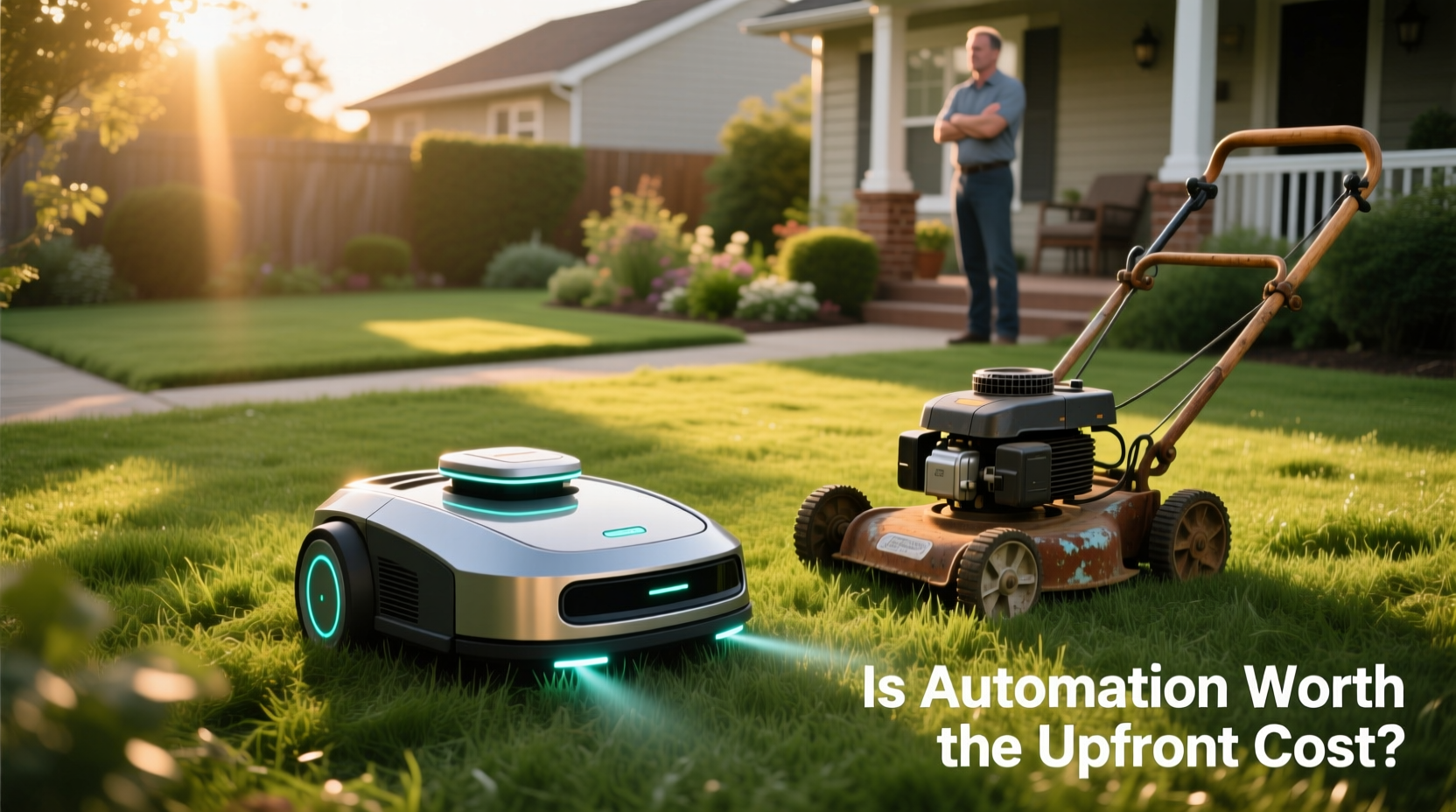
Understanding the mechanics behind each type of mower is essential before comparing them. While both cut grass, their operation, maintenance, and user involvement differ significantly.
Push mowers are manually operated machines that require physical effort to guide across the lawn. They come in two main types: gas-powered and electric (corded or battery). Gas models offer greater power and range but require fuel, oil changes, and seasonal maintenance. Electric variants are quieter, cleaner, and easier to start, though they may lack power on thicker grass or uneven terrain.
Robotic mowers, on the other hand, operate autonomously. After initial setup—including installing a boundary wire around your lawn’s perimeter—the mower navigates using sensors and pre-programmed patterns. It cuts small amounts of grass frequently, returning to its charging station when needed. Most models connect to smartphone apps, allowing scheduling, monitoring, and adjustments remotely.
This fundamental difference in operation sets the stage for broader trade-offs in cost, effort, and performance.
Cost Comparison: Upfront vs Long-Term
One of the biggest hurdles for robotic mower adoption is the high initial price. A quality robotic mower typically ranges from $800 to $2,500, depending on features and yard capacity. In contrast, a reliable push mower costs between $150 and $400.
However, focusing only on sticker price misses the full financial picture. Consider long-term ownership costs:
| Cost Factor | Push Mower (Gas) | Push Mower (Electric) | Robotic Mower |
|---|---|---|---|
| Initial Purchase | $200–$400 | $150–$350 | $800–$2,500 |
| Fuel/Oil (Annual) | $100–$150 | $10–$20 (electricity) | $20–$40 (electricity) |
| Maintenance (Annual) | $50–$100 (oil, spark plugs, blade sharpening) | $20–$40 (blade, battery replacement every 2–3 yrs) | $50–$100 (blade replacement yearly, occasional wheel/service kit) |
| Lifespan | 7–10 years | 5–8 years | 6–10 years |
| Total 10-Year Cost Estimate | $950–$1,550 | $420–$830 | $1,000–$1,800 |
While robotic mowers have a steeper entry cost, their operating expenses are lower than gas mowers. Over a decade, the total cost gap narrows significantly—especially when factoring in rising fuel prices and labor value. For electric push mowers, the gap remains wider, making them the most budget-friendly option overall.
Performance and Lawn Health
Automation doesn’t just save time—it can improve lawn quality. Robotic mowers follow a “little and often” mowing strategy, trimming just the tips of grass blades daily or every other day. This mimics professional turf management practices, promoting denser growth, reduced weed competition, and healthier root systems.
Because they mulch clippings finely and return them to the soil, robotic mowers act as natural fertilizers, reducing the need for synthetic products. This frequent cutting also avoids the stress caused by removing more than one-third of the blade length at once—a common issue with weekly push mowing.
Push mowers, particularly gas models, are better suited for tall or overgrown grass. They deliver a clean, single-pass cut and handle rough terrain more effectively. However, infrequent mowing leads to clumping, scalping, and uneven appearance—issues that detract from lawn health and aesthetics.
“Frequent, light mowing is the secret to a golf-course-quality lawn. Robotic mowers make this practical for homeowners.” — Dr. Alan Prescott, Turfgrass Specialist, University of Maryland Extension
Limitations Based on Yard Characteristics
Not all lawns are ideal for robotic mowers. Key factors include:
- Size: Most robotic mowers handle up to 0.5 acres. Larger properties may require multiple units or higher-end models.
- Terrain: Steep slopes (over 25–35% grade) can challenge navigation and traction.
- Obstacles: Gardens, play equipment, and narrow passages may require careful programming or physical barriers.
- Boundary Setup: Installing perimeter wire takes time and precision. Complex layouts increase installation difficulty.
Push mowers, by comparison, adapt instantly to changing conditions. No setup is required beyond starting the engine or charging the battery.
Time and Lifestyle Impact
The true value of a robotic mower lies in reclaimed time and reduced physical burden. Consider a typical homeowner who mows weekly during a 6-month growing season. That’s 24 sessions per year, each taking 30–60 minutes—including startup, mowing, cleanup, and storage.
Over five years, that adds up to 20–50 hours of labor. For busy professionals, parents, or those with mobility issues, this time is not just inconvenient—it’s a genuine burden.
Robotic mowers eliminate this entirely. Once programmed, they work while you’re at work, asleep, or on vacation. Rain sensors pause operations during storms, and anti-theft features (PIN codes, alarms) provide security.
A realistic example illustrates this benefit:
Mini Case Study: The Thompson Family
The Thompsons live in a mid-sized suburb with a 0.3-acre yard. Both parents work full-time, and they have two young children. Mowing used to fall on weekends, eating into family time. When Mr. Thompson injured his back lifting the mower onto the trailer, they decided to invest in a $1,400 robotic model.
After a weekend of installing the boundary wire, the mower was fully operational. It now runs three times a week for 45 minutes each session. The lawn looks consistently neat, and clippings have reduced fertilizer needs by half. Though the upfront cost was high, they estimate they’ve saved over 30 hours annually—and avoided medical bills from strain injuries.
“It’s not just about the grass,” Mrs. Thompson said. “It’s about having our weekends back.”
Step-by-Step Guide to Deciding Which Mower Suits You
Choosing between a robotic and push mower shouldn’t be impulsive. Follow this logical process to make an informed decision:
- Assess Your Lawn Size and Layout: Measure your yard. If it’s under 0.5 acres with minimal obstacles, a robotic mower is feasible.
- Evaluate Your Time Commitment: Track how many hours per year you currently spend mowing. Multiply by your hourly wage to estimate labor value.
- Consider Physical Limitations: Do you or a household member struggle with pushing heavy equipment? Automation removes physical strain.
- Calculate Total Ownership Costs: Use the table above to project 5- or 10-year expenses for both options.
- Test Drive Options: Rent or demo a robotic mower for a month. Many brands offer trial periods.
- Check for Incentives: Search local utility rebates or eco-grants that reduce robotic mower costs.
- Make Your Decision: If convenience, time savings, and lawn quality matter more than upfront cost, automation likely pays off.
FAQ: Common Questions About Robotic vs Push Mowers
Can a robotic mower handle thick or wet grass?
Most robotic mowers struggle with tall or wet grass. They’re designed for frequent, light cuts. Letting grass grow too long before activation can overload the blades. For overgrown lawns, use a push mower first, then transition to robotic maintenance.
Are robotic mowers safe around pets and children?
Yes, modern models have multiple safety features: lift sensors stop the blades if lifted, tilt sensors shut down if tipped, and contact sensors reverse direction upon hitting an obstacle. Still, supervise young children and train pets to avoid the mower during operation.
Do I need to winterize a robotic mower?
Yes. Remove the unit before the first frost, clean it thoroughly, remove the battery, and store it indoors in a dry, temperature-stable location. Reinstall in spring after checking wires and blades.
Checklist: Is a Robotic Mower Right for You?
Answer “yes” to three or more of these to consider automation a smart investment:
- My lawn is under 0.5 acres.
- I mow at least once a week during growing season.
- I value free time more than upfront savings.
- I or someone in my household has physical limitations.
- I want a consistently manicured lawn without effort.
- I’m comfortable with basic tech setup and smartphone apps.
- I plan to stay in my home for at least 5 years.
Final Verdict: Is Automation Worth It?
The robotic mower isn’t a one-size-fits-all solution. For budget-conscious homeowners with small, simple lawns and ample time, a push mower—especially an electric one—remains a practical, low-cost choice.
But for those seeking long-term convenience, improved lawn health, and freedom from a recurring chore, the robotic mower delivers tangible value. The upfront cost is significant, but spread over several years, it often compares favorably with the combined expense and effort of traditional mowing.
Technology is redefining what we expect from home maintenance. Just as dishwashers and washing machines became standard despite their initial cost, robotic lawn care is following a similar trajectory. It’s not just about laziness—it’s about optimizing time, reducing strain, and investing in quality of life.




 浙公网安备
33010002000092号
浙公网安备
33010002000092号 浙B2-20120091-4
Comments
No comments yet. Why don't you start the discussion?