
For parents navigating the back-to-school season or preparing their child for a new academic year, choosing the right backpack is more than just a fashion decision—it’s about comfort, safety, and long-term usability. In recent years, rolling backpacks have gained popularity as a solution to heavy school loads. But are they truly better than traditional backpacks? Or do they come with trade-offs that outweigh the benefits? This guide dives into real-world usage, ergonomic research, and parental experiences to help you decide whether a rolling backpack is worth the investment for your child.
Ergonomic Concerns and the Weight Problem
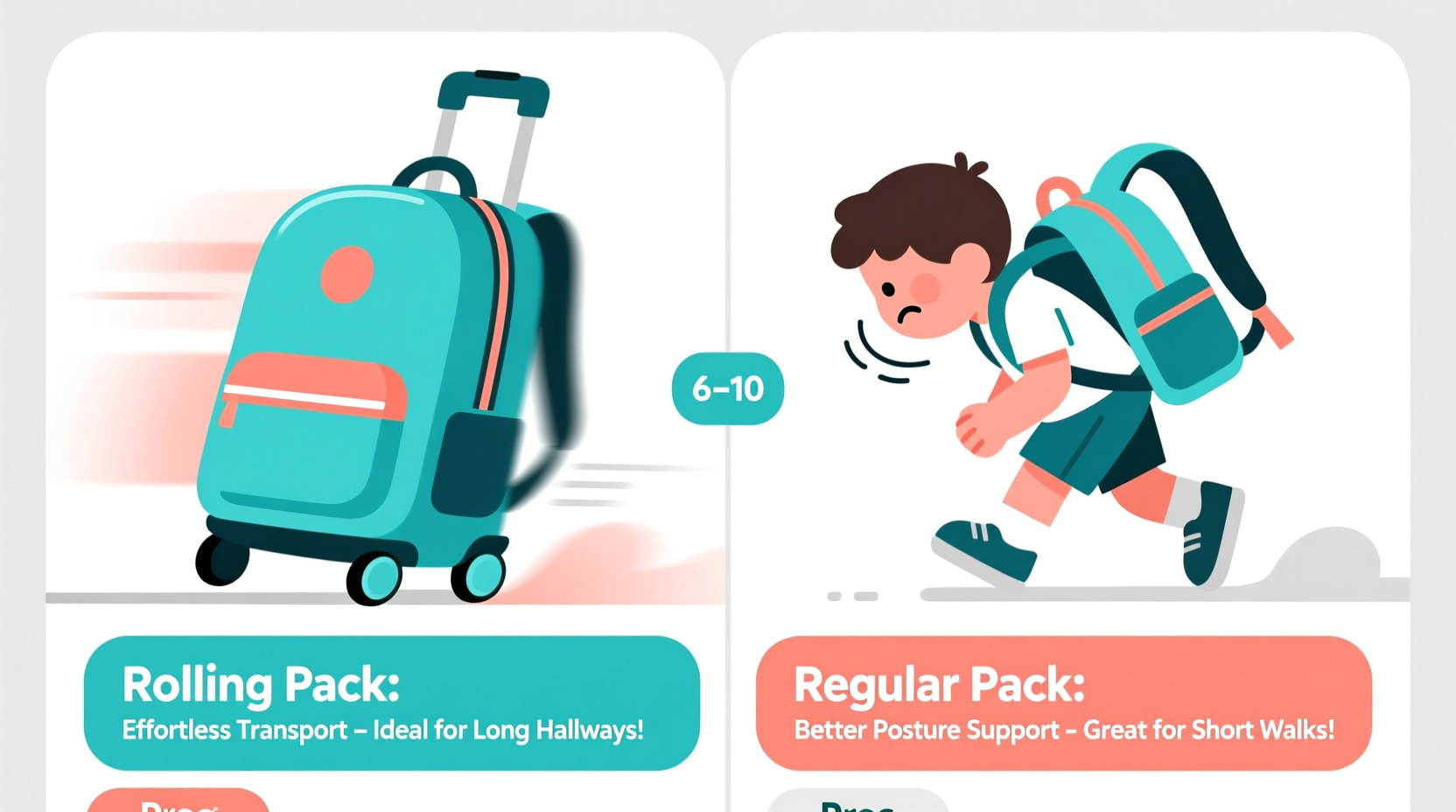
Children today carry increasingly heavier loads between textbooks, laptops, notebooks, and lunchboxes. The American Academy of Pediatrics recommends that a child’s backpack should weigh no more than 10% to 20% of their body weight. Yet studies show many students exceed this limit, sometimes carrying up to 30% or more. Over time, this can lead to chronic back, neck, and shoulder pain, poor posture, and even spinal misalignment.
Traditional backpacks, when worn correctly—with both straps over the shoulders and the bag snug against the back—distribute weight across the torso. However, many kids sling them over one shoulder or wear them too low, negating any ergonomic benefit. Rolling backpacks eliminate much of this strain by shifting the load from the spine to the arm, allowing children to pull their belongings like luggage.
“Carrying excessive weight in a standard backpack can lead to musculoskeletal issues in developing children. Wheeled options may reduce immediate strain, but they aren’t a universal fix.” — Dr. Linda Chen, Pediatric Orthopedic Specialist
Comparing Features: Rolling vs Regular Backpacks
To make an informed choice, it's essential to compare key features side by side. Below is a detailed breakdown of the most important factors parents should consider.
| Feature | Rolling Backpack | Regular Backpack |
|---|---|---|
| Weight Distribution | Transfers load to arm; reduces back strain | Distributes weight across shoulders and hips (if fitted properly) |
| Mobility | Limited on stairs, uneven terrain, crowded hallways | Highly mobile; works anywhere |
| Durability | Wheels and handles add failure points; higher repair risk | Fewer mechanical parts; generally longer lifespan |
| Storage Capacity | Often larger due to structural base for wheels | Varies; compact models available |
| Cost | Typically $50–$120 | Typically $20–$70 |
| School Suitability | May be restricted in schools with narrow halls or multiple floors | Universally accepted |
When a Rolling Backpack Makes Sense
Despite their limitations, rolling backpacks serve a clear purpose in specific situations. They are particularly beneficial for:
- Older elementary or middle school students who carry multiple hardcover textbooks and devices.
- Children with physical conditions such as scoliosis, joint disorders, or chronic back pain.
- Schools with minimal stair use and wide hallways where maneuverability isn’t an issue.
- Commuter students who walk short distances or travel via bus or car.
A Real-World Example: The Thompson Family’s Experience
The Thompsons, a family from Portland, Oregon, switched their 11-year-old daughter Emma to a rolling backpack during sixth grade after she began complaining of shoulder pain. Emma attends a three-story middle school with no elevators. Initially excited about her new pack, she quickly found it difficult to manage the stairs. She often had to carry it up and down, defeating the purpose. After two months, she asked to switch back.
Instead, the family invested in a high-quality regular backpack with padded lumbar support, chest and hip straps, and lightweight materials. They also worked with her teachers to reduce unnecessary book-carrying by leaving some texts at school. Within weeks, Emma reported less discomfort. Her experience highlights a crucial point: the backpack is only one part of the solution. Load management and proper fit matter just as much as design.
Key Considerations Before Buying
Before deciding, evaluate your child’s daily routine and school environment. Ask these questions:
- How many flights of stairs does your child climb each day?
- Are the school hallways wide and busy, making pulling a bag disruptive?
- Does the child have a locker or cubby to store items during the day?
- Is the total backpack weight consistently above 10–15% of their body weight?
- Will the backpack need to be carried long distances outside school?
If most answers lean toward mobility challenges and heavy loads, a rolling backpack might be worth trying. But if stairs, crowds, or outdoor walking are common, a well-designed traditional backpack could be the smarter choice.
Expert Tips for Maximizing Comfort—Regardless of Type
No backpack is effective if used incorrectly. Follow these best practices to ensure your child stays comfortable and safe:
- Use all available straps: chest, hip, and sternum straps stabilize the load and improve balance.
- Pack heaviest items closest to the back to maintain center of gravity.
- Encourage your child to unpack nightly and only bring essentials the next day.
- Look for lightweight materials—some packs save pounds simply by using ripstop nylon instead of polyester.
- Inspect regularly for wear, especially on rolling models: check wheel alignment, handle stability, and fabric tears.
Frequently Asked Questions
Can rolling backpacks damage school floors or hallways?
Yes, especially in older schools. Hard plastic or metal wheels can scratch linoleum, tile, or wooden floors. Some schools ban wheeled bags for this reason. Look for models with soft rubber wheels to minimize noise and surface damage.
Are rolling backpacks allowed on airplanes?
Many meet carry-on size requirements and can be pulled through airports. However, once onboard, they must fit in overhead bins or under seats. Be aware that rough airport surfaces can damage wheels faster than sidewalks.
Do rolling backpacks encourage laziness or reduce physical activity?
Not necessarily. While they reduce upper-body strain, children still walk the same distance. The goal is injury prevention, not eliminating movement. In fact, reducing pain may increase overall activity by preventing discomfort-related avoidance.
Final Checklist: Choosing the Right Backpack
Before purchasing, go through this checklist to ensure you're making the best choice for your child:
- ✅ Measure your child’s height and torso to find the correct backpack size.
- ✅ Confirm school policies on rolling backpacks.
- ✅ Weigh your child’s typical load to assess necessity.
- ✅ Test the backpack in real conditions: stairs, sidewalks, crowded areas.
- ✅ Prioritize adjustable straps, padding, and organizational compartments.
- ✅ Check return policies in case the model doesn’t work out.
Conclusion: Is It Worth the Hype and Hassle?
Rolling backpacks offer real benefits for children burdened with heavy loads, particularly those with physical vulnerabilities or limited walking distances. However, their practicality depends heavily on the school environment and daily routine. For many families, the added cost, reduced mobility, and maintenance issues outweigh the ergonomic advantages.
A better approach may be combining a well-fitted traditional backpack with smart packing habits and school collaboration to lighten the load. Technology, such as digital textbooks, can further reduce physical burden. Ultimately, the best backpack isn’t defined by wheels or straps—it’s the one that supports your child’s health, fits their lifestyle, and lasts through the school year without causing pain or inconvenience.




 浙公网安备
33010002000092号
浙公网安备
33010002000092号 浙B2-20120091-4
Comments
No comments yet. Why don't you start the discussion?