
When it comes to securing your keys, the choice between a rope keychain and a chain keychain might seem trivial. But for those who value durability, portability, and personal style, the decision carries more weight—literally and functionally. While metal chains have long been seen as the default choice for strength, modern rope keychains made from high-performance fibers challenge that assumption. So, are chain keychains really that much stronger? The answer isn’t as straightforward as it seems.
Durability: What Does “Stronger” Actually Mean?
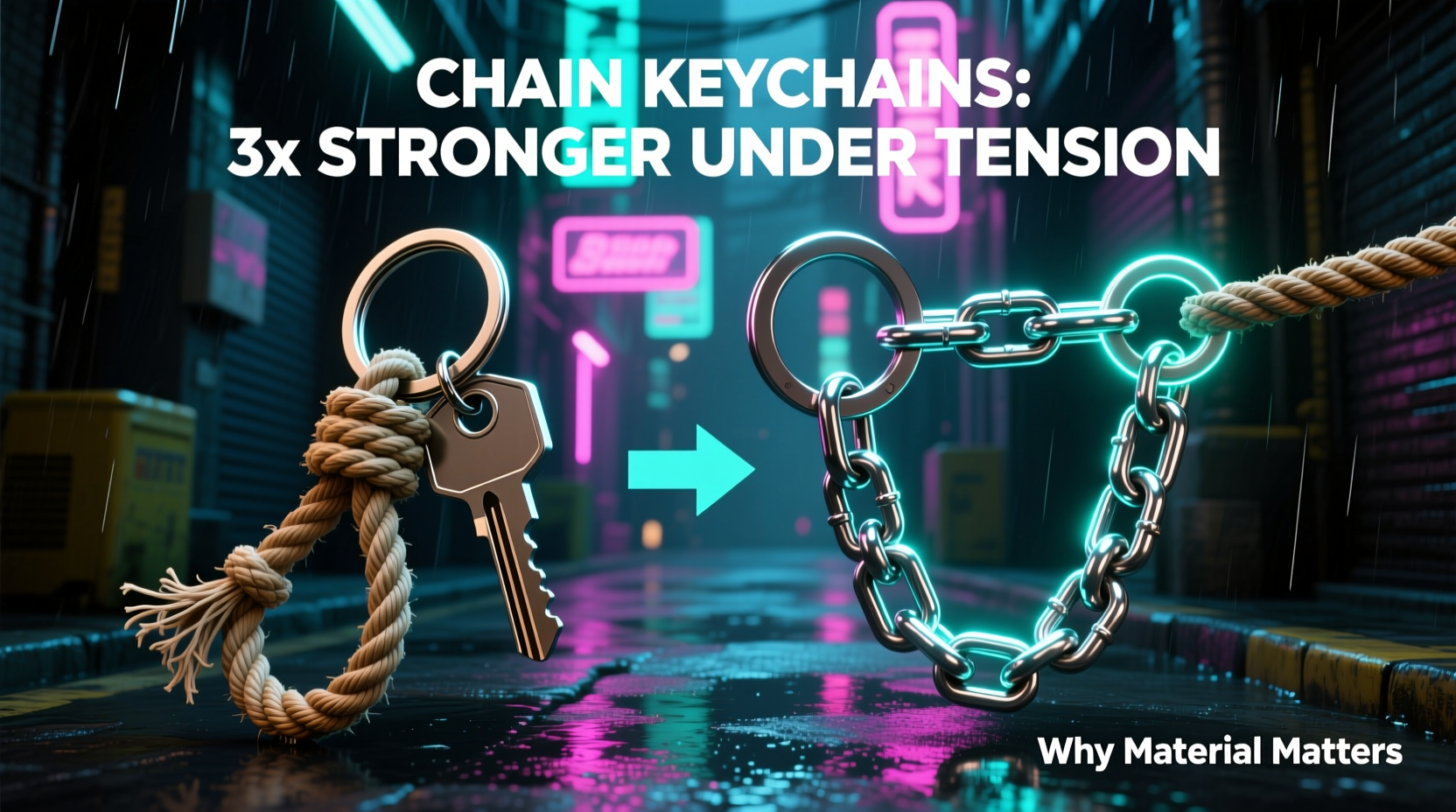
Strength in keychains can be measured in several ways: tensile strength (resistance to breaking under tension), abrasion resistance, corrosion resistance, and impact resilience. Metal chains typically score high on tensile strength due to their rigid structure and material composition—usually stainless steel or nickel alloy. However, rigidity can also be a weakness when subjected to sudden shocks or bending stress.
Rope keychains, often made from materials like paracord, Dyneema, or Kevlar blends, offer exceptional tensile strength relative to their weight. For example, military-grade paracord has a minimum breaking strength of 550 pounds—earning it the nickname “550 cord.” High-end synthetic ropes can exceed 3,000 pounds of tensile strength per square inch, rivaling some metals on a pound-for-pound basis.
Weight and Comfort: Practical Trade-offs
One of the most overlooked factors is daily usability. Chain keychains, while robust, add noticeable heft to your pocket or bag. A typical 6-inch stainless steel split-ring chain can weigh between 1.5 to 2.5 ounces. Over time, this extra weight contributes to wear on pockets, bags, and even belt loops.
In contrast, a comparable length of braided nylon rope keychain weighs less than half an ounce. This makes rope versions ideal for travelers, runners, or anyone carrying multiple keys or tools. Lighter weight also reduces strain on key rings and attachment points, minimizing the risk of bent keys or broken fobs.
Comfort plays a role too. Metal chains can dig into skin or snag on fabric, especially with sharp edges or rough welds. Rope, being soft and flexible, conforms to movement and rarely causes irritation—even when carried bare-handed.
Material Comparison Table
| Feature | Chain Keychain (Stainless Steel) | Rope Keychain (Paracord/Dyneema) |
|---|---|---|
| Tensile Strength | High (up to 1,000+ lbs depending on gauge) | Very High (550–3,000+ lbs based on material) |
| Weight (per 6 inches) | 1.5–2.5 oz | 0.2–0.5 oz |
| Abrasion Resistance | Moderate (can scratch surfaces) | High (especially coated synthetics) |
| Corrosion Resistance | Good (if stainless) | Excellent (non-metallic) |
| Noise Level | Loud (clinking) | Silent |
| Pocket Friendliness | Poor (bulky, cold, noisy) | Excellent (light, quiet, soft) |
Real-World Performance: A Mini Case Study
Consider Mark, a bike courier in Portland who switched from a heavy chrome-plated chain to a custom-woven Dyneema rope key fob after losing keys mid-delivery. His old chain had snapped—not from pulling force, but because repeated flexing at a weak link caused metal fatigue. The replacement rope keychain weighed one-fifth as much, stayed silent during rides, and survived being run over by a delivery van without fraying.
“I used to think only metal could handle my lifestyle,” Mark said. “But after my chain failed me during a downpour, I tried a tactical rope model. It’s survived mud, rain, being stepped on, and even a brief dunk in a puddle. And it doesn’t clank against my water bottle every time I reach for my keys.”
This scenario illustrates a critical point: real-world durability isn’t just about maximum load capacity—it’s about resilience under unpredictable conditions.
“Strength isn’t just about how much weight a keychain holds—it’s about how well it performs under dynamic stress, environmental exposure, and daily abuse.” — Lena Patel, Product Engineer at Urban Gear Labs
Security and Theft Deterrence
Metal chains are often perceived as more secure, partly due to their visual heft and perceived difficulty to cut. While standard bolt cutters can slice through most keychains in seconds, thicker chains (over 5mm diameter) do present a minor deterrent to opportunistic theft.
Rope keychains, particularly those using ultra-high-molecular-weight polyethylene (UHMWPE) fibers like Dyneema, are surprisingly resistant to cutting. These materials are used in body armor and marine rigging precisely because they resist slicing better than steel by weight. Some tactical rope keychains include internal wire cores or layered weaves specifically designed to thwart blades.
However, neither type offers true anti-theft protection. If security is a primary concern, pairing either keychain with a locking carabiner or magnetic clip adds meaningful defense.
Style, Customization, and Longevity
Chains project a classic, industrial aesthetic—popular among motorcycle riders, tradespeople, and minimalist fashion enthusiasts. They maintain their look well over time, though cheaper plated versions may tarnish or flake.
Rope keychains excel in customization. Available in dozens of colors, patterns, and braid styles (cobra stitch, snake knot, fishtail), they allow personal expression. Many users appreciate the ability to reweave or shorten them as needed. However, prolonged exposure to UV light or dirt can degrade color and texture unless cleaned regularly.
In terms of lifespan, both types last years with proper care. Stainless steel resists rust but can develop micro-cracks from constant flexing. Quality rope resists rot and mildew but may fray if dragged across concrete or exposed to solvents.
Step-by-Step Guide: Choosing the Right Keychain for Your Lifestyle
- Assess your daily routine: Do you carry keys in a backpack, pocket, or on a lanyard?
- Evaluate weight sensitivity: Are you active, traveling, or carrying many items?
- Consider noise level: Is silence important (e.g., office, stealth carry)?
- Determine environmental exposure: Will it face rain, saltwater, or extreme temperatures?
- Decide on aesthetics: Do you prefer sleek metal or colorful, textured rope?
- Test for security needs: Are you in a high-theft area requiring tamper resistance?
- Choose material accordingly: Opt for chain if formality or rigidity matters; choose rope for comfort, silence, and versatility.
Frequently Asked Questions
Can rope keychains really hold up over time?
Yes, especially those made from modern synthetic fibers. Paracord and Dyneema are engineered for long-term durability in demanding applications—from parachute lines to rescue gear. With minimal maintenance, a quality rope keychain can last five years or more.
Do metal chains break easily?
Not under normal use, but they’re prone to failure at welded joints or thin links when repeatedly bent or twisted. Corrosion in low-quality alloys can also weaken them over time. Regular inspection helps prevent sudden breakage.
Are rope keychains safe around water?
Most synthetic ropes are water-resistant and quick-drying. Unlike metal, they won’t rust or corrode. However, prolonged submersion in chlorinated or salt water may degrade certain coatings, so rinsing afterward is recommended.
Checklist: Keychain Selection Criteria
- ✅ Lightweight for everyday carry
- ✅ Resistant to abrasion and weather
- ✅ Silent operation
- ✅ Secure attachment mechanism (snap hook, screw gate, etc.)
- ✅ Easy to clean and maintain
- ✅ Matches personal style and usage context
- ✅ Replacements or repairs available
Conclusion: Strength Isn’t Just About Material—It’s About Suitability
The idea that chain keychains are inherently “stronger” is outdated. While metal offers undeniable rigidity and tradition, modern rope keychains match or surpass it in tensile strength, corrosion resistance, and adaptability—all while being lighter, quieter, and more comfortable. True strength lies in suitability: choosing a keychain that aligns with your environment, habits, and priorities.
Whether you lean toward the polished reliability of stainless steel or the innovative resilience of synthetic fiber, the best keychain is the one that survives your daily grind without compromising convenience. Reevaluate what “strong” means to you—and don’t let assumptions dictate your choice.




 浙公网安备
33010002000092号
浙公网安备
33010002000092号 浙B2-20120091-4
Comments
No comments yet. Why don't you start the discussion?