
Curtain tiebacks do more than just hold fabric in place—they contribute to room aesthetics, light control, and even airflow. Traditionally, rope or fabric tiebacks have been the go-to solution. But with the rise of magnetic hardware, a new contender has entered the space. Are magnetic curtain tiebacks actually strong enough for real-world use, or are they just a clever gimmick? This article compares rope and magnetic tiebacks across durability, ease of use, design flexibility, and practical performance to help you decide what works best for your home.
How Rope Tiebacks Work—and Where They Fall Short
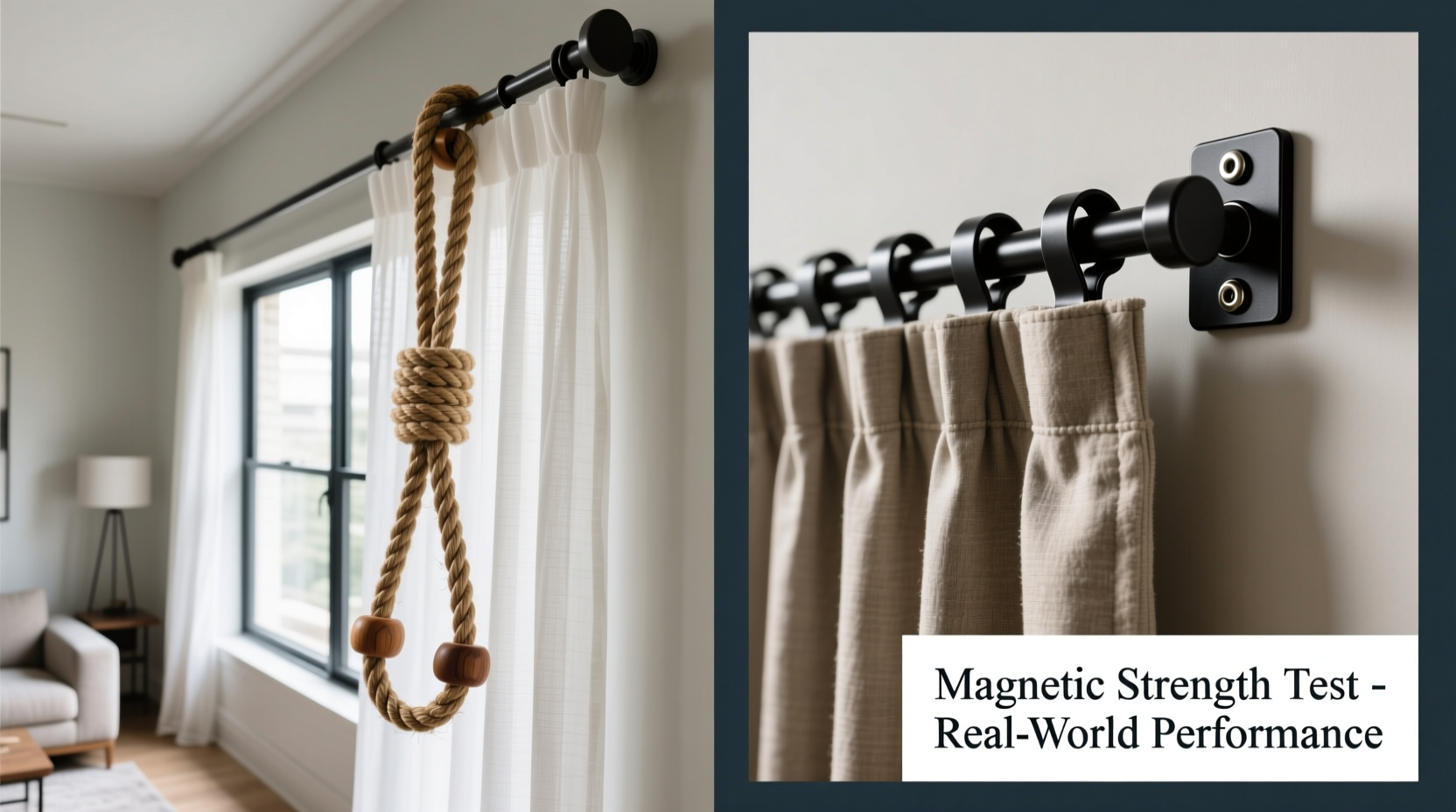
Rope tiebacks are classic, functional, and widely available. Typically made from braided cotton, jute, velvet, or synthetic blends, they loop around the curtain and attach to a wall-mounted hook or knob. Their strength depends on the thickness of the material, the weight of the curtain, and how securely the anchor point is installed.
For lightweight sheers or café curtains, rope tiebacks perform admirably. However, heavier drapes—especially blackout or thermal-lined panels—can strain thinner ropes over time. Slippage, fraying, and inconsistent positioning are common complaints. Adjusting them daily can also be tedious, particularly when trying to achieve symmetrical folds.
The Rise of Magnetic Curtain Tiebacks
Magnetic tiebacks consist of two small metal discs connected by a decorative cord, chain, or fabric strip. One disc attaches to the curtain, the other to the wall or window frame. When brought close, the magnets snap together, holding the curtain in place. Installation is usually tool-free, relying on adhesive backing or small screws.
Modern neodymium magnets—rare-earth magnets known for their exceptional strength relative to size—are commonly used. These can generate pull forces ranging from 2 to 8 pounds per pair, depending on grade and size. That’s more than enough to hold most medium-weight curtains without slipping.
But strength isn’t the only factor. The real advantage lies in convenience. Magnetic tiebacks open and close effortlessly, making them ideal for households with children, elderly individuals, or anyone seeking low-effort solutions. There’s no knotting, looping, or precise alignment needed.
“Magnetic hardware has evolved beyond novelty. In controlled environments, high-grade neodymium magnets offer reliable, repeatable performance for light to medium-duty applications like curtains.” — Dr. Alan Zhou, Materials Engineer at SmartHome Dynamics Lab
Comparative Analysis: Rope vs Magnetic Tiebacks
| Feature | Rope Tiebacks | Magnetic Tiebacks |
|---|---|---|
| Installation | Requires hooks/screws; must be mounted precisely | Adhesive or screw-in; magnet pairs self-align |
| Strength & Holding Power | High if properly secured; depends on rope thickness | Medium to high (2–8 lbs); consistent but limited by magnet size |
| Durability | Prone to fraying; degrades with sun exposure | Metal components last years; adhesive may weaken over time |
| Ease of Use | Moderate; requires manual tying/untying | High; one-handed operation, no knots |
| Aesthetic Flexibility | Wide range of materials and colors | Decorative cords/chains available; minimalistic look |
| Best For | Heavy drapes, traditional decor, permanent setups | Medium-weight curtains, modern interiors, frequent adjustments |
Real-World Performance: A Case Study
Sarah M., a homeowner in Portland, OR, replaced her linen rope tiebacks with magnetic ones after struggling with uneven draping in her living room. Her curtains are medium-weight polyester-linen blend panels, about 84 inches long. She previously used thin cotton ropes that slipped down during breezy afternoons.
She installed magnetic tiebacks using adhesive mounts—one on the wall beside each window, the other sewn into the curtain hem. “I was skeptical at first,” she said. “But they’ve held up through six months of daily use. Even when my dog brushes past them, they don’t come undone unless I pull directly.”
The only limitation she noted was slight misalignment when closing the curtains at night. Because the magnets attract within a small radius, perfect symmetry takes minor adjustment. Still, she considers the trade-off worth the daily convenience.
When Magnets Fall Short—and How to Avoid Failure
Magnets aren’t foolproof. Their effectiveness diminishes under certain conditions:
- Excessive curtain weight: Panels over 5 lbs may exceed the pull force of standard magnetic pairs.
- Thick curtain stacks: If multiple layers are pulled back, the distance between magnets increases, reducing grip.
- Poor mounting surfaces: Adhesives fail on textured paint, tile grout, or dusty walls.
- Environmental factors: High humidity or temperature swings can degrade adhesives over time.
To maximize success:
- Choose tiebacks with industrial-grade neodymium magnets (N35 or higher).
- Use screw anchors instead of adhesive when mounting on drywall or wood.
- Test the magnet strength before final installation by holding a similar weight.
- Position magnets closer to the bottom of the drape to reduce leverage and strain.
Step-by-Step Guide: Installing Magnetic Tiebacks
Follow this sequence for secure, lasting results:
- Measure and mark: Determine where you want the curtain held open. Mark the wall and corresponding spot on the curtain.
- Attach curtain-side magnet: Sew or clip the magnet onto the fabric. Ensure it’s flat and won’t snag.
- Prepare the wall mount: Clean the surface with alcohol. Let dry completely.
- Apply adhesive or drill: Press adhesive-backed magnets firmly for 30 seconds. For screws, pre-drill pilot holes.
- Test alignment: Pull the curtain back and bring magnets together. Adjust position if needed.
- Allow curing time: Wait 24 hours before regular use if using adhesive.
Frequently Asked Questions
Can magnetic tiebacks work on blackout curtains?
Yes, but only if the total weight pulled back doesn’t exceed the magnet’s rated strength. For heavy blackout panels, use dual magnetic sets per side or opt for reinforced models with stronger pull force (7+ lbs). Alternatively, combine magnets with a secondary loop for added security.
Do magnets damage walls or windows?
No. Unlike nails or screws, magnetic tiebacks (especially adhesive types) are non-invasive. Most leave no residue when removed, and neodymium magnets themselves don’t affect wall integrity. Just avoid placing them near pacemakers or sensitive electronics.
Are rope tiebacks more stylish than magnetic ones?
Style is subjective. Rope offers a rustic, organic feel ideal for farmhouse or cottage decor. Magnetic versions lean modern and minimalist, often featuring sleek chains or woven cords. Many magnetic kits now include interchangeable covers or decorative sleeves to match any interior.
Final Verdict: Which Should You Choose?
Rope tiebacks remain a solid choice for traditional homes, heavy drapes, and those who value texture and craftsmanship. They’re inexpensive, customizable, and timeless. But they demand precision and maintenance.
Magnetic tiebacks shine in usability, consistency, and accessibility. With today’s advanced magnets, they are absolutely strong enough for real use—provided you select the right product for your curtain weight and install it correctly. They’re especially effective in high-traffic areas, rental units, or homes where ease matters.
The future of curtain hardware is leaning toward smart, user-friendly solutions. Magnetic tiebacks aren’t replacing ropes entirely, but they’ve proven their worth as a durable, practical alternative.




 浙公网安备
33010002000092号
浙公网安备
33010002000092号 浙B2-20120091-4
Comments
No comments yet. Why don't you start the discussion?