
Summer brings warmth, sunlight, and increased humidity—conditions that can amplify skin sensitivity. For those with reactive or delicate complexions, choosing the right toner becomes more than a skincare step; it’s a protective ritual. Among the most popular natural toners, rosewater and witch hazel stand out. Both are plant-derived, widely available, and celebrated in beauty circles. But when it comes to soothing sensitive skin during hot months, which one truly delivers?
The answer isn’t universal. It depends on your skin type, specific concerns, and how each ingredient interacts with environmental stressors like sweat, UV exposure, and pollution. This article breaks down the science, benefits, and potential drawbacks of rosewater and witch hazel toners, helping you make an informed decision tailored to your summer skincare needs.
Understanding Sensitive Skin in Summer
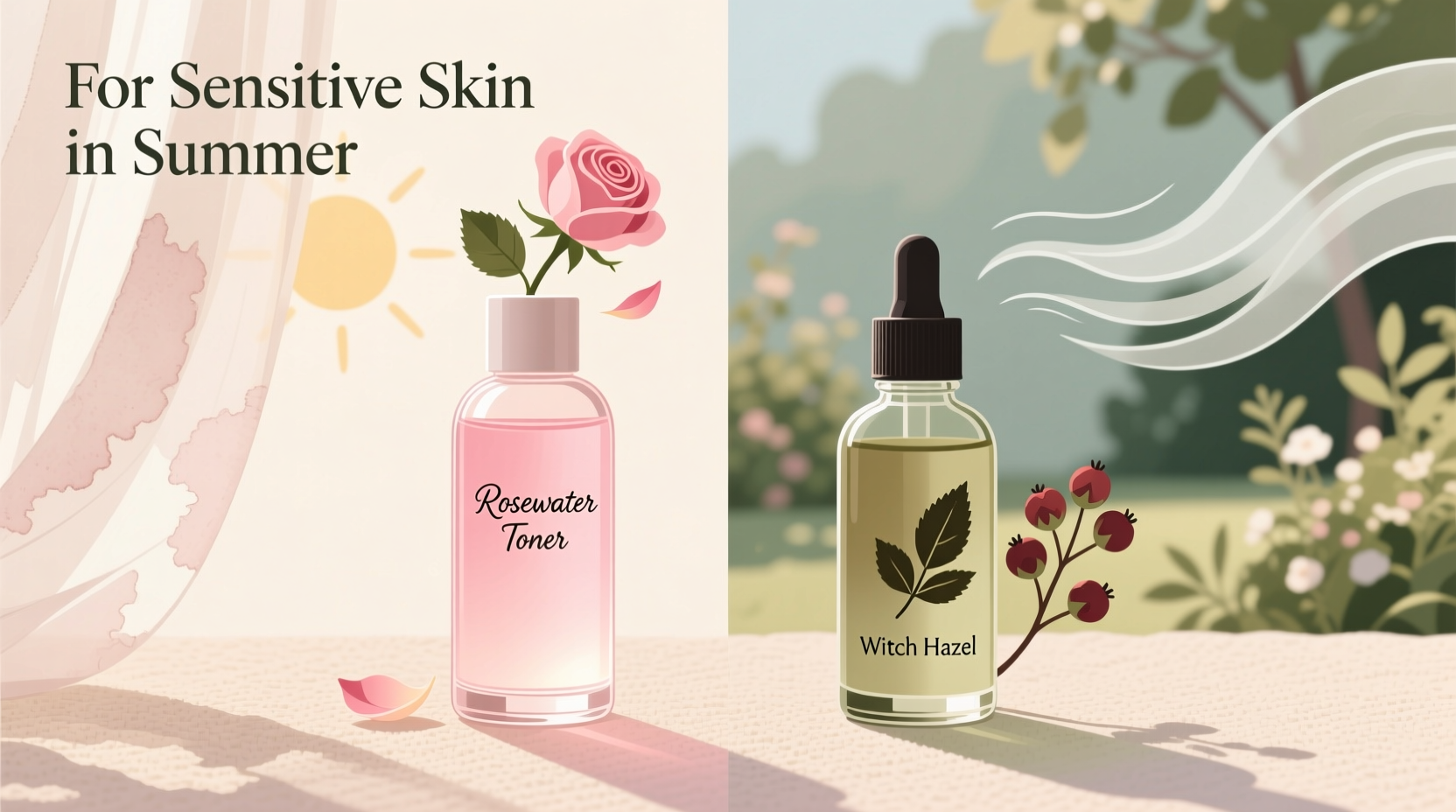
Sensitive skin reacts easily to external stimuli. In summer, this reactivity intensifies due to several factors:
- Increased perspiration – Sweat mixes with sunscreen and pollutants, potentially clogging pores and irritating the skin barrier.
- UV exposure – Even with protection, sun rays weaken the skin’s lipid layer, making it more vulnerable.
- Higher temperatures – Heat dilates blood vessels, often leading to redness and flushing, especially in rosacea-prone individuals.
- Humidity shifts – Alternating between air-conditioned interiors and humid outdoors stresses skin’s moisture balance.
Given these challenges, toners used in summer should be calming, non-drying, and free from harsh additives. The ideal formula supports hydration, reduces inflammation, and avoids stripping the skin’s natural oils.
Rosewater Toner: Gentle Hydration and Soothing Relief
Rosewater is steam-distilled from rose petals, typically Rosa damascena. Its use dates back centuries in Persian, Ayurvedic, and Mediterranean traditions. Today, it remains a staple in clean beauty routines for its mild, floral scent and gentle efficacy.
For sensitive skin types, rosewater offers multiple benefits:
- pH-balancing properties – Rosewater naturally sits around pH 5.5, closely matching the skin’s acid mantle, which helps maintain barrier integrity.
- Anti-inflammatory effects – Rich in polyphenols and antioxidants like quercetin and kaempferol, rosewater helps reduce redness and irritation.
- Hydration boost – Acts as a humectant, drawing moisture into the upper layers of the skin without clogging pores.
- Cooling sensation – When stored in the fridge, rosewater provides instant relief from heat-induced discomfort.
A 2017 study published in *Dermatology Research and Practice* found that rosewater significantly reduced erythema (redness) and improved skin tolerance in participants with sensitive skin after four weeks of twice-daily use.
“Rosewater is one of the few botanicals that delivers real results without risk. It’s particularly valuable in summer when skin needs calming, not stimulating.” — Dr. Lena Morena, Board-Certified Dermatologist
Best for These Skin Concerns
- Dry, tight skin in air-conditioned environments
- Redness or rosacea flare-ups triggered by heat
- Mild dehydration from sun exposure
- Post-shave irritation (for facial hair removal)
Witch Hazel: Astringent Powerhouse with Caveats
Witch hazel is derived from the leaves and bark of the Hamamelis virginiana shrub. Known for its astringent qualities, it’s commonly used in acne treatments, pore minimizers, and post-sun care products.
The active compounds—tannins, flavonoids, and essential oils—give witch hazel its tightening and antimicrobial effects. However, these same components can be problematic for sensitive skin, especially in summer.
Here’s what makes witch hazel effective—and potentially risky:
- Pore refinement – Tannins temporarily tighten pores, giving skin a smoother appearance.
- Oil control – Helps manage sebum production, beneficial for oily or acne-prone types.
- Antioxidant protection – Neutralizes free radicals generated by UV exposure.
- Anti-inflammatory action – Can soothe insect bites or minor sunburns when used correctly.
But here’s the catch: many commercial witch hazel products contain alcohol (often listed as “denatured alcohol” or “ethanol”), added to enhance extraction and preservation. Alcohol concentrations above 10% can severely compromise the skin barrier, leading to dryness, stinging, and increased sensitivity—exactly what summer skincare aims to prevent.
Even alcohol-free versions may still irritate due to high tannin content, which can be overly constricting for already-stressed skin.
When Witch Hazel May Be Appropriate
- Oily or combination skin with visible shine in humid weather
- Infrequent breakouts triggered by sweat and sunscreen buildup
- Spot treatment diluted with water or aloe vera juice
Direct Comparison: Rosewater vs Witch Hazel
To clarify the differences, here's a side-by-side comparison based on key criteria relevant to sensitive skin in summer:
| Feature | Rosewater Toner | Witch Hazel Toner |
|---|---|---|
| Natural pH | ~5.5 (skin-friendly) | ~3.5–4.5 (more acidic) |
| Primary Effect | Hydrating, soothing | Astringent, oil-controlling |
| Alcohol Content | Typically none | Often high (unless specified) |
| Ideal for Skin Type | Sensitive, dry, reactive | Oily, acne-prone (non-sensitive) |
| Summer Suitability | Excellent – cooling and hydrating | Limited – risk of over-drying |
| Anti-inflammatory Action | Yes – clinically supported | Moderate – but may cause irritation |
| Best Use Case | Daily mist, post-cleansing prep | Occasional spot treatment, oily zones only |
This table highlights a crucial point: while both toners originate from plants, their mechanisms and outcomes differ significantly. Rosewater nurtures and protects, whereas witch hazel—despite its popularity—can disrupt delicate balance if misused.
Mini Case Study: Choosing the Right Toner in Humid Conditions
Maya, a 32-year-old teacher in Miami, has combination skin with a history of seasonal rosacea. Each summer, her cheeks flush easily after walking between classrooms, and she noticed increased stinging when using her usual witch hazel toner.
After switching to a pure, additive-free rosewater toner stored in the refrigerator, she began spritzing her face midday. Within two weeks, her redness decreased, and she no longer experienced tightness after cleansing. She occasionally uses a diluted witch hazel solution (1 part witch hazel to 3 parts aloe) only on her T-zone once a week—but avoids daily use.
Her experience reflects a broader trend: individuals with sensitivity often benefit more from hydration-focused botanicals than from traditional astringents during hot months.
Step-by-Step Guide: How to Incorporate the Right Toner Into Your Summer Routine
Follow this sequence to safely integrate a toner into your summer skincare regimen:
- Cleanse gently – Use a sulfate-free, low-foaming cleanser to avoid stripping natural oils.
- Apply toner immediately – While skin is damp, mist or pat on your chosen toner to lock in moisture.
- Layer wisely – Follow with a lightweight serum (e.g., hyaluronic acid) and a non-comedogenic moisturizer.
- Reapply as needed – Keep a travel-sized rosewater spray in your bag for refreshing throughout the day.
- Monitor reactions – If you notice increased redness, burning, or dry patches, discontinue use and reassess.
For those experimenting with witch hazel, start with a patch test and limit frequency to 1–2 times per week. Never apply undiluted to the entire face if you have known sensitivities.
Checklist: Choosing the Safest Toner for Sensitive Skin in Summer
Use this checklist to evaluate any toner before adding it to your routine:
- ✅ Free from alcohol, synthetic fragrances, and parabens
- ✅ Contains minimal ingredients (ideally under 5)
- ✅ pH-balanced (between 4.5 and 6.0)
- ✅ Non-comedogenic (won’t clog pores)
- ✅ Packaged in opaque, air-tight container (protects from light and oxidation)
- ✅ Dermatologist-tested or clinically studied for sensitive skin
- ✅ No tingling or stinging upon application (a sign of irritation)
Frequently Asked Questions
Can I use both rosewater and witch hazel together?
Yes, but with caution. Mixing them directly may destabilize the formulation. Instead, apply rosewater first as a hydrating base, then lightly dab diluted witch hazel only on oily areas. Avoid layering if your skin feels tight or reactive.
Does rosewater expire?
Yes. Pure rosewater lasts 6–12 months unopened, and 3–6 months after opening, especially if refrigerated. Discard if it develops cloudiness, odor changes, or particles appear.
Is witch hazel safe for rosacea?
Generally, no. Most dermatologists advise against using witch hazel on rosacea-prone skin due to its astringency and frequent alcohol content. Stick to anti-inflammatory alternatives like rosewater, chamomile, or centella asiatica.
Conclusion: Prioritize Calm Over Constriction
In the debate between rosewater toner and witch hazel for sensitive skin in summer, rosewater emerges as the safer, more universally beneficial option. Its ability to hydrate, cool, and soothe aligns perfectly with the season’s demands. Witch hazel, while effective for oil control, carries too high a risk of compromising the skin barrier—particularly when formulated with alcohol.
Your skin doesn’t need aggressive toning in summer. It needs resilience, balance, and protection. By choosing gentler, evidence-backed ingredients like rosewater, you support long-term health over short-term effects.




 浙公网安备
33010002000092号
浙公网安备
33010002000092号 浙B2-20120091-4
Comments
No comments yet. Why don't you start the discussion?