
In the world of small accessories with big personality, plush keychains have long been a favorite. Whether clipped to backpacks, purses, or keys, they serve as tiny expressions of identity, mood, and style. Recently, one variant has surged in popularity: the rougamo plush keychain. Originating from Chinese internet culture, these squishy, dough-like characters—often shaped like buns, animals, or mythical creatures—have captivated collectors and casual buyers alike. But how do they truly stack up against traditional stuffed animal keychains? Are they just a passing trend, or is there something genuinely distinct—and perhaps even cuter—about them?
The Rise of Rougamo: More Than Just a Meme
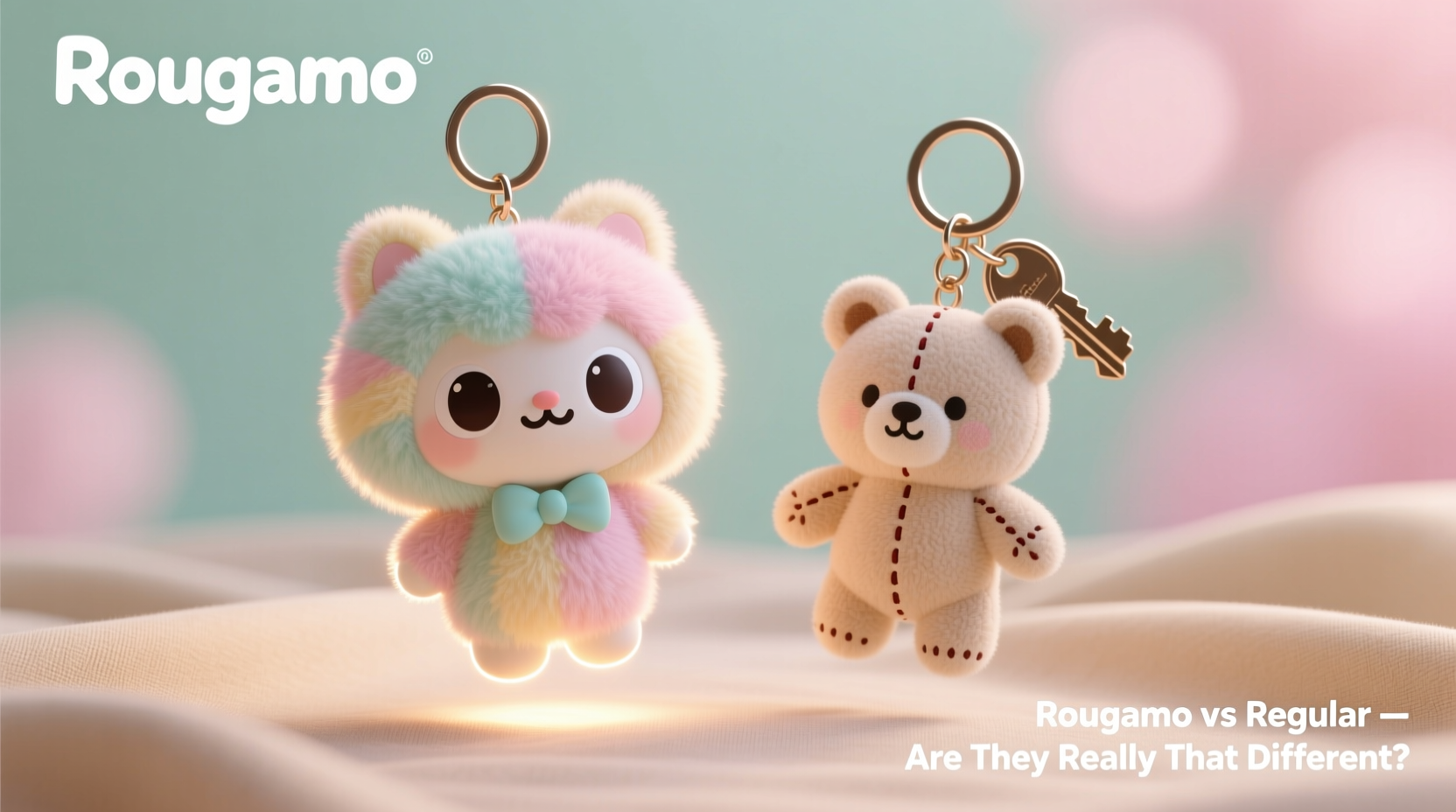
Rougamo (肉膜), literally translating to \"meat bun skin,\" refers to a soft, slightly translucent, jelly-like aesthetic popularized in East Asian digital art and merchandise. The term evolved from online communities describing characters with a plump, squeezable appearance reminiscent of steamed buns or gummy candies. What began as an artistic descriptor quickly materialized into physical products—most notably, plush keychains made from ultra-soft TPU or silicone blends that mimic the sensation of touching warm dough.
Unlike conventional plush toys made from fabric and polyester stuffing, rougamo keychains prioritize tactile experience. Their surfaces are smooth, their interiors slightly squishy, and their shapes often exaggerated—big heads, tiny limbs, wide eyes. This design philosophy leans heavily into kawaii (cuteness) culture but with a surreal twist. Think less “cute bunny” and more “sentient dumpling with feelings.”
“Rougamo taps into a deeper emotional response—people don’t just find them cute; they want to squeeze them, protect them, even talk to them.” — Lin Mei, Product Designer at Tokyo Lifestyle Studio
Material & Texture: A Fundamental Difference
The most immediate distinction between rougamo and standard plush keychains lies in their construction. Traditional stuffed animal keychains use woven fabric exteriors filled with fluffy polyfill. They’re soft, yes, but also prone to flattening, shedding, and losing shape over time. In contrast, rougamo versions are typically crafted from food-grade silicone or thermoplastic polyurethane (TPU), giving them a unique elasticity and durability.
This difference isn't just functional—it's sensory. Rougamo keychains offer a satisfying squish when pressed, then slowly return to form. That slow rebound mimics memory foam and triggers what psychologists call autonomous sensory meridian response (ASMR), contributing to their stress-relieving reputation. Regular plush keychains, while cozy, don’t provide this kind of interactive feedback.
Design Philosophy: Cuteness Redefined
Cuteness isn’t universal—it evolves with culture and context. Classic stuffed animal keychains follow predictable patterns: kittens, pandas, bears, all rendered in safe, symmetrical proportions. Their charm comes from familiarity. Rougamo keychains, however, embrace imperfection. Lopsided eyes, melting smiles, uneven coloring—these aren’t flaws; they’re features. This \"wabi-sabi\" approach to cuteness celebrates transience and irregularity, making each piece feel uniquely alive.
Moreover, many rougamo designs incorporate food-animal hybrids—a cat wrapped in a noodle scarf, a fox shaped like a steamed bun, a rabbit with mochi ears. These imaginative mashups resonate particularly with younger consumers who value whimsy and storytelling in their accessories.
Comparison Table: Rougamo vs Regular Plush Keychains
| Feature | Rougamo Plush Keychains | Regular Stuffed Animal Keychains |
|---|---|---|
| Material | Silicone or TPU gel | Fabric + polyester stuffing |
| Texture | Squishy, smooth, slightly sticky | Fluffy, fibrous, compressible |
| Durability | High (resists crushing, water-resistant) | Moderate (can flatten, stain easily) |
| Cuteness Factor | Exaggerated, surreal, expressive | Traditional, familiar, gentle |
| Emotional Appeal | Tactile comfort, novelty, humor | Nostalgia, companionship |
| Maintenance | Easy to wipe clean | Spot cleaning only; may require hand washing |
Real-World Example: The Case of Yuna’s Lunchbox Chain
Yuna, a university student in Seoul, started using a rougamo keychain after seeing one in a K-pop merchandise bundle. She chose a small pink raccoon-shaped one with droopy eyes and a jelly-like tail. Within weeks, classmates were asking where she got it. “It’s not just cute,” she said. “I press it when I’m nervous before exams. It feels like holding something alive.”
When her older sister gifted her a traditional embroidered panda keychain, Yuna appreciated the gesture—but found herself reaching for the rougamo one daily. “The panda is sweet, but it doesn’t *do* anything. The raccoon? It calms me down.”
This anecdote illustrates a broader shift: accessories are no longer just decorative. For many users, especially Gen Z and younger millennials, they serve as emotional tools—miniature stress relievers, conversation starters, and personal talismans.
Are Rougamo Keychains Really Cutier?
\"Cuter\" is subjective, but certain psychological principles suggest why rougamo designs might trigger stronger reactions. Researchers in affective neuroscience point to the \"kindchenschema\" (baby schema)—large eyes, round faces, soft edges—that instinctively elicit caregiving responses. Rougamo keychains amplify these traits to near-cartoonish levels, often exceeding biological realism to maximize emotional impact.
Additionally, their slight unpredictability—the way they jiggle, the subtle translucence, the occasional wobble—activates curiosity centers in the brain. A 2023 study by the Osaka Institute of Emotional Design found that participants rated silicone-based plush items as “more comforting” and “more playful” than fabric counterparts, even when shapes were identical.
That said, traditional plush keychains hold enduring appeal. There’s warmth in fabric, a homely familiarity that silicone can’t replicate. For some, the softness of fur evokes childhood security blankets or beloved toys. So while rougamo may win on novelty and tactile innovation, classic plush retains its emotional grounding.
Checklist: Choosing the Right Keychain for You
- Evaluate your needs: Do you want stress relief, decoration, or both?
- Consider durability: Will it be exposed to moisture, heat, or heavy use?
- Think about maintenance: Can you easily clean it if it gets dirty?
- Assess sensory preferences: Do you prefer soft fabric or squishy gel?
- Reflect on style: Are you drawn to whimsical surrealism or timeless cuteness?
Frequently Asked Questions
Can rougamo keychains be washed?
Yes. Most are water-resistant and can be cleaned with a damp cloth and mild soap. Avoid soaking them or using alcohol-based cleaners, which may damage the surface finish.
Do they last longer than regular plush keychains?
In terms of structural integrity, yes. Rougamo keychains resist compression, don’t shed fibers, and maintain shape better over time. However, they can accumulate dust due to their slightly tacky surface, so regular wiping is recommended.
Are rougamo keychains safe for children?
Most are made from non-toxic, BPA-free materials and are safe for ages 6+. However, due to small parts and the chewy appearance, supervision is advised for young kids to prevent accidental biting or choking.
Final Thoughts: Beyond Cuteness, Toward Connection
The debate between rougamo and regular plush keychains isn’t just about aesthetics—it’s about how we interact with small objects in an increasingly digital world. Rougamo keychains represent a fusion of internet culture, sensory design, and emotional utility. They’re not merely cuter; they’re designed to engage more deeply with human instincts: touch, care, play.
Yet tradition still holds value. There’s comfort in the familiar, in the worn softness of a well-loved plush bear. The best choice depends not on trends, but on what resonates personally. Some may prefer the nostalgic hug of fabric; others crave the surreal squish of a sentient-looking bun.
Ultimately, both types fulfill a quiet need: to carry a little joy, one keychain at a time.




 浙公网安备
33010002000092号
浙公网安备
33010002000092号 浙B2-20120091-4
Comments
No comments yet. Why don't you start the discussion?