
Choosing the right pair of sunglasses isn’t just about fashion—it’s about harmony. The shape of your face plays a crucial role in determining which frames will enhance your features rather than clash with them. For individuals with square face shapes, characterized by strong jawlines, broad foreheads, and nearly equal width and length, selecting the right eyewear can soften angularity and bring balance to facial proportions.
Two of the most iconic sunglass styles—round sunglasses and aviators—are often at the top of shoppers’ lists. But when it comes to square faces, which one truly wins? This article dives deep into the nuances of facial geometry, lens design, and style function to help you make an informed decision that flatters your face and elevates your look.
Understanding the Square Face Shape
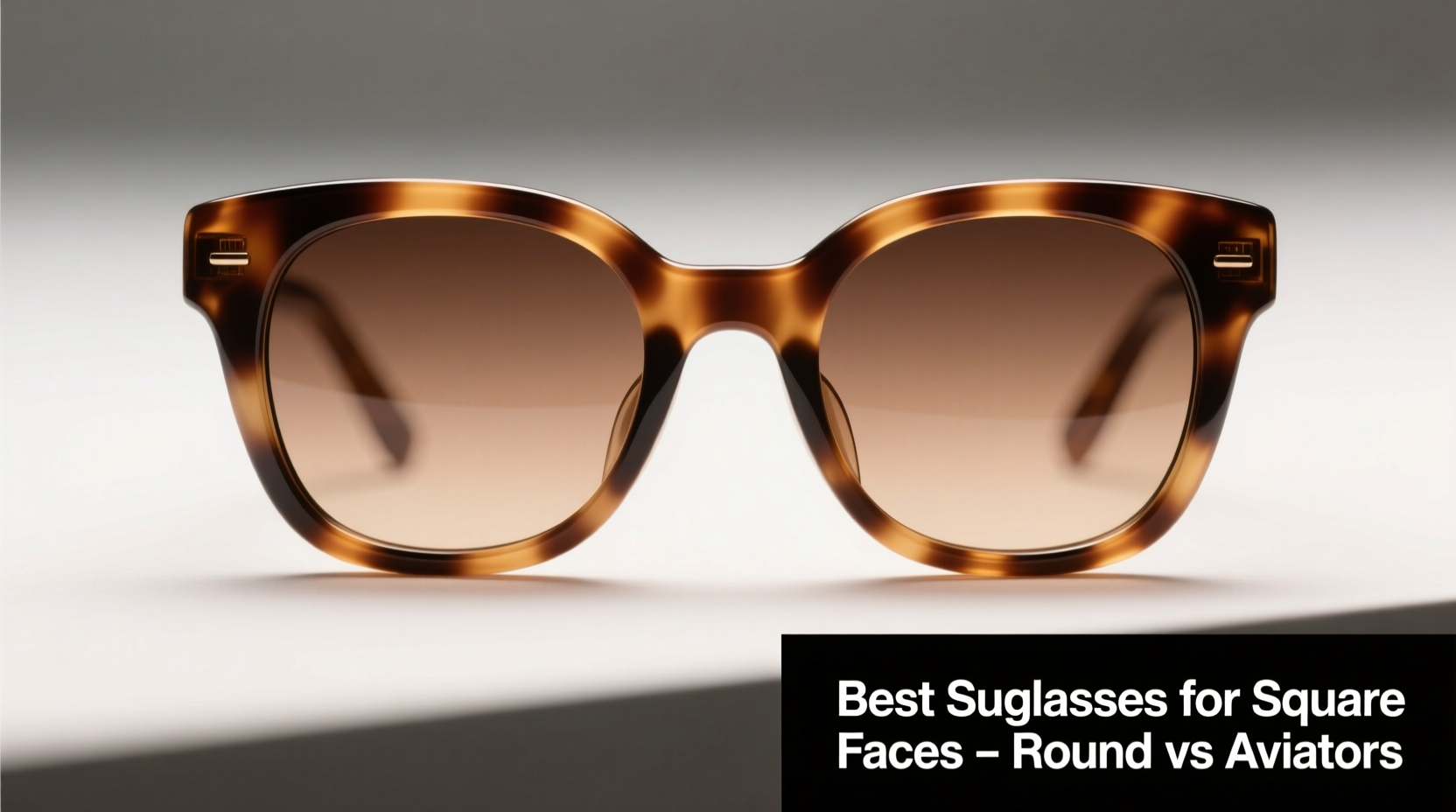
A square face is defined by its strong, defined angles. The forehead, cheekbones, and jawline are typically similar in width, creating a balanced but boxy appearance. While this structure conveys strength and confidence, it also benefits from accessories that introduce softness and contrast.
The goal when selecting sunglasses for a square face is to counteract sharp lines with curves, elongate the face slightly, and reduce the visual weight of the jaw. Frames that are wider at the top or feature rounded edges help achieve this balance. Avoiding boxy, geometric, or overly angular frames—unless intentionally styled—is generally recommended.
“Facial symmetry is powerful, but proportion is what creates visual appeal. The right frame can shift perception without altering a single feature.” — Marcus Lang, Eyewear Stylist & Fashion Consultant
Round Sunglasses: Softening Angular Features
Rounded frames have long been celebrated for their ability to contrast angular facial structures. With smooth, circular lenses and curved temples, they create a yin-yang effect—softness against strength—that complements square faces exceptionally well.
Round sunglasses, popularized by icons like John Lennon and later embraced in modern minimalist fashion, offer more than nostalgia. Their curvature draws attention inward and upward, subtly elongating the face. When properly sized, they sit comfortably across the cheekbones without extending beyond the widest part of the face—a key rule in proportion balancing.
For square-faced wearers, the ideal round frame should:
- Have noticeable curvature (not semi-round or hexagonal)
- Be slightly wider than the face to prevent crowding
- Feature thinner metal or acetate borders to avoid adding bulk
- Position the center of the lens just below the eyebrow line
When Round Sunglasses Work Best
Round sunglasses shine in casual, artistic, or bohemian settings. They pair effortlessly with unstructured clothing, softer hairstyles, and minimal makeup. Their retro-modern aesthetic works particularly well for those aiming to project approachability and creativity.
However, not all round frames are created equal. Thick-rimmed versions in dark acetate can add heaviness to the lower face, counteracting the desired softening effect. Metal wire frames with delicate detailing tend to perform better for square face types.
Aviators: Sleek Lines and Strategic Angles
Originally designed for pilots in the 1930s, aviator sunglasses feature teardrop-shaped lenses, thin metal frames, and double bridges. Their upper rim is broader than the bottom, creating a subtle widening at the top of the face—an advantage for square face shapes.
Aviators work by drawing the eye upward toward the temples and away from the jawline. The downward taper of the lens mimics an inverted triangle, introducing visual flow that offsets blockiness. Additionally, the reflective lenses often used in aviators add dimension and mystery, further distracting from angular contours.
High-quality aviators maintain structural lightness despite their bold presence. Because they don’t extend widely at the sides, they preserve facial symmetry without overwhelming the cheekbones.
Variations That Matter
Not all aviators deliver the same effect. Key distinctions include:
- Classic Large Aviators: Best for taller square faces; provide maximum upper-face emphasis.
- Browline Aviators: Combine a strong top bar with teardrop lenses—ideal for adding definition without harshness.
- Oversized Aviators: Can balance broader jaws if carefully proportioned; risk looking bulky if too wide.
- Shield Aviators: Single-lens designs may flatten depth perception on angular faces—use cautiously.
“Aviators are timeless because they follow the face’s natural elevation. On a square face, they act like architectural arches—framing without confining.” — Lena Patel, Optical Designer at VistaForm Eyewear
Direct Comparison: Round vs Aviator for Square Faces
| Feature | Round Sunglasses | Aviators |
|---|---|---|
| Face Softening Effect | High – curves directly oppose angular jawlines | Moderate – relies on lens shape and upward focus |
| Proportion Balancing | Excellent – adds vertical elongation | Good – widens forehead area visually |
| Frame Weight | Light to medium (especially metal) | Typically lightweight metal construction |
| Versatility | Best for casual, creative, vintage looks | Suits professional, classic, military-inspired styles |
| Durability | Depends on material; acetate may crack over time | Generally high due to metal hinges and frames |
| UV Protection Options | Wide range available | Industry-leading options, especially in polarized models |
While both styles have merit, the choice ultimately depends on lifestyle, personal expression, and specific facial measurements. For those seeking maximum softening, round sunglasses hold a slight edge. For individuals wanting a polished, universally accepted look with tactical balance, aviators remain a powerful contender.
Mini Case Study: James’ Style Transformation
James, a 34-year-old architect with a pronounced square face, had always avoided sunglasses, feeling they made him look “too stern” or “like a bouncer.” After a consultation with a personal stylist, he tried two pairs: classic round wire-framed sunglasses and standard silver aviators.
During a photo test under natural light, the round frames softened his jaw dramatically, giving his appearance a more approachable, intellectual vibe—perfect for client meetings and weekend outings. However, he found the aviators easier to wear daily. They matched his existing wardrobe (leather jackets, neutral tones) and provided superior glare reduction during morning commutes.
His solution? A dual-strategy. He keeps the round sunglasses for social events and creative projects, and wears aviators for work and driving. By understanding context-specific advantages, James now uses eyewear as a tool—not just an accessory.
Step-by-Step Guide to Choosing Your Ideal Frame
Follow this practical sequence to determine which style suits your square face best:
- Measure Your Face: Use a flexible tape to record the width of your forehead, cheekbones, and jaw. If they’re within 0.5 inches of each other, you likely have a square shape.
- Analyze Jaw Prominence: Stand in front of a mirror. Does your jaw create a clear horizontal line? If yes, prioritize frames with curves or downward tapers.
- Try Round Frames First: Put on a medium-large round pair. Do they create visual balance? Look for how the curve interacts with your chin line.
- Test Aviators Next: Switch to a classic teardrop aviator. Check if the upper rim aligns with or sits just above your eyebrows. The lens should narrow below the cheekbone.
- Assess Proportions: Take selfies from multiple angles. Does the frame make your face appear longer or wider?
- Consider Lifestyle Needs: Do you need polarized lenses for driving? Are you dressing for formal environments? Let function guide final selection.
- Seek Feedback: Ask trusted friends or use virtual try-on tools to validate your impression.
Checklist: Finding the Perfect Fit for Square Faces
Use this concise checklist before purchasing:
- ✅ Frame is wider than the broadest part of my face
- ✅ Top edge of the frame aligns with or sits just below my eyebrows
- ✅ Temple arms don’t press against my head or slip down
- ✅ Nose bridge fits snugly without pinching
- ✅ Lenses provide 100% UV protection
- ✅ Shape introduces curves or diagonal lines (avoid square or rectangular frames)
- ✅ Color complements skin tone (e.g., tortoiseshell for warmth, silver for cool tones)
- ✅ Frame doesn’t rest on cheeks when smiling
Frequently Asked Questions
Can square-faced people wear square sunglasses?
Generally, no. Wearing square frames on a square face amplifies angularity and can make the face appear heavier or more rigid. Exceptions exist in high-fashion contexts where intentional symmetry is part of the aesthetic, but for everyday wear, contrasting shapes are preferred.
Are cat-eye sunglasses a good alternative?
Yes. Cat-eye frames, with their upward-sweeping outer edges, mimic the widening effect of aviators and add femininity and lift. They’re especially effective for square faces with softer jawlines and work well in both professional and social settings.
Do lens color affect face shape perception?
Indirectly, yes. Darker lenses (like gray or black) recede visually, minimizing facial width. Mirrored or metallic finishes draw attention and can highlight structure. Light or translucent frames distribute visual weight more evenly, enhancing balance.
Final Verdict: Which Frame Wins for Square Faces?
After thorough analysis, **round sunglasses** hold a slight advantage for square face shapes due to their inherent ability to soften strong jawlines and introduce organic curvature. Their design directly counteracts the dominant angles of a square face, creating a more harmonious profile.
That said, **aviators** are a close second—and often the more practical choice. Their widespread acceptance, durability, and functional benefits (like polarization and glare reduction) make them a staple for daily wear. When sized correctly, they offer sufficient softening through strategic lens shaping and upward visual flow.
The ideal approach? Own both. Use round sunglasses when aiming for a distinctive, artistic, or relaxed look. Reach for aviators when professionalism, comfort, and performance matter most. Having both in rotation allows you to adapt to different environments while maintaining facial balance.
Conclusion: Own Your Look with Confidence
Your face shape isn’t a limitation—it’s a canvas. Whether you choose the poetic curves of round sunglasses or the sleek functionality of aviators, the power lies in intentionality. Understanding how frame design interacts with your natural structure empowers you to make choices that reflect both style and self-awareness.
Don’t settle for what’s trendy. Choose what’s true to your face, your life, and your vision. Try on both styles, apply the principles in this guide, and discover which frame doesn’t just sit on your face—but completes it.




 浙公网安备
33010002000092号
浙公网安备
33010002000092号 浙B2-20120091-4
Comments
No comments yet. Why don't you start the discussion?