
In the quiet ritual of tea preparation, every object carries meaning—none more quietly significant than the tea tray. Often overlooked, this humble platform serves as the foundation of the ceremony, catching spills, grounding the arrangement, and subtly influencing both flow and focus. Yet one question lingers among practitioners and enthusiasts alike: does the shape of a tea tray—round or rectangular—truly affect the experience?
The answer is not merely aesthetic. While personal preference plays a role, the choice between round and rectangular trays touches on tradition, ergonomics, spatial dynamics, and even philosophical undertones embedded in tea culture. From Chinese gongfu cha to Japanese chadō, form follows function—and sometimes, function follows form.
The Role of the Tea Tray in Ceremony
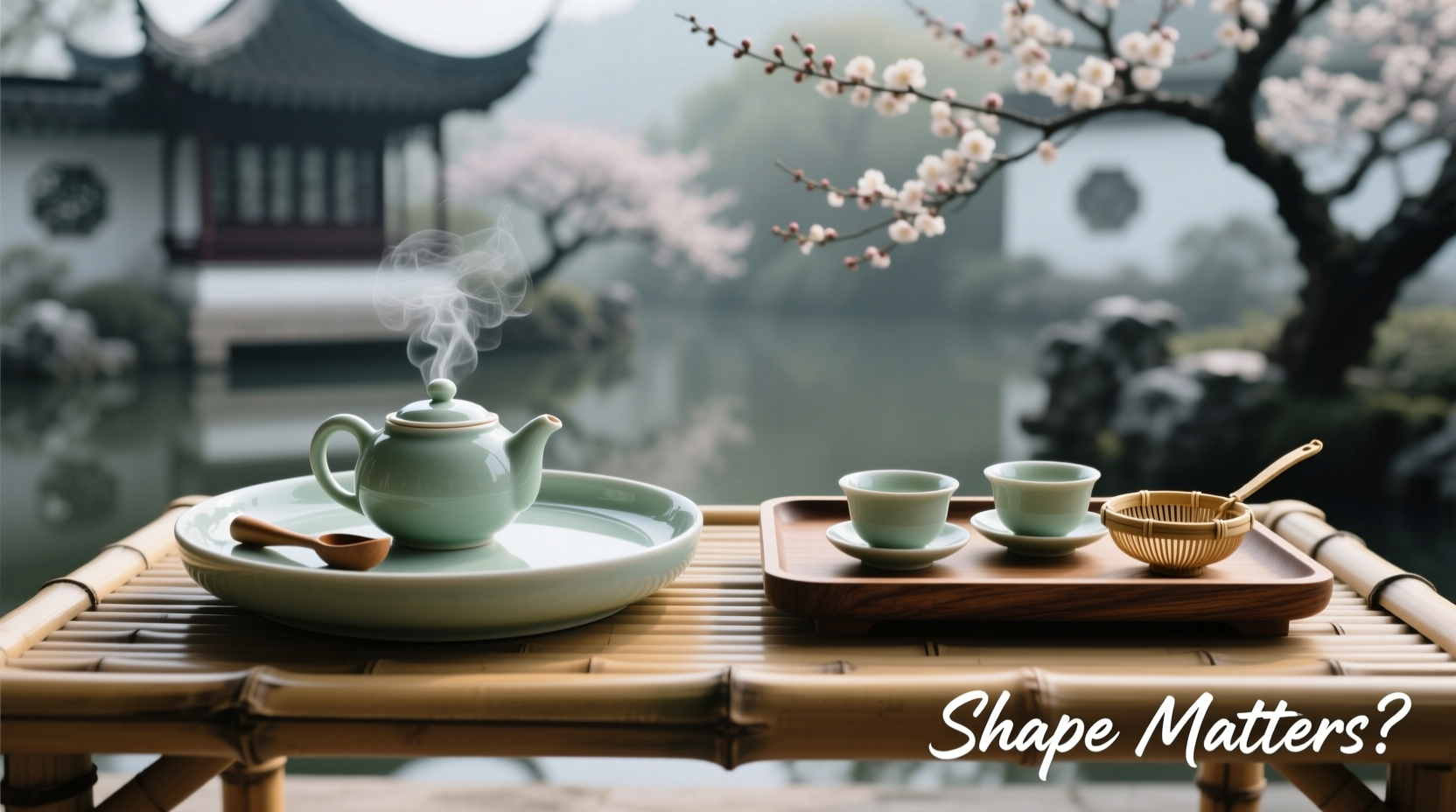
A tea tray is more than a spill catcher. It acts as a micro-environment where water, heat, and attention converge. Its primary functions include:
- Collecting wastewater from rinsing teaware and brewing
- Providing a stable, level surface for delicate vessels
- Enhancing visual harmony through proportion and material
- Supporting mindfulness by containing the ritual within defined boundaries
Traditionally made from wood, bamboo, ceramic, or stone, tea trays vary widely in design. But the most fundamental divergence lies in their shape—circular versus angular. Each brings distinct advantages and symbolic weight to the practice.
Round Tea Trays: Flow, Harmony, and Naturalism
Round trays are often associated with fluidity and continuity. In Chinese tea culture, the circle symbolizes unity, wholeness, and the cyclical nature of life. This symbolism extends into the gongfu cha ritual, where movement is circular, deliberate, and meditative.
A round tray naturally guides motion inward. Pouring water, transferring leaves, and decanting tea become rotational gestures that echo the tray’s form. There are no sharp corners to interrupt the eye or hand, creating a sense of unbroken rhythm.
Functionally, round trays tend to pair well with traditional Yixing clay pots and small porcelain gaiwans. Their symmetry complements circular teapots and fairness pitchers, contributing to balanced composition. However, they can be less space-efficient on square tables and may leave unused gaps at the edges.
“Tea is not about control, but surrender to the moment. The round tray teaches us there are no corners to hide in.” — Li Wenbo, Master of Gongfu Cha, Fuzhou
Rectangular Tea Trays: Order, Precision, and Practicality
Rectangular trays, in contrast, reflect structure and intentionality. Common in both Japanese chanoyu and modern minimalist tea setups, they emphasize straight lines, alignment, and efficient use of space.
In formal tea rooms, especially those following the Japanese wabi-sabi aesthetic, rectangular trays—often lacquered wood or slate—are aligned precisely with tatami mats. Every item has its designated place, reinforcing discipline and clarity of mind. The right angles serve as visual anchors, helping practitioners maintain posture and presence.
From a practical standpoint, rectangular trays offer several advantages:
- Better edge utilization—spills are directed predictably toward drainage points
- Easier integration with built-in drainage systems or pump units
- More compatible with flat surfaces like desks or low tables
- Greater capacity for multiple brewing stations or guest service
They also allow for modular expansion. Nested trays or sliding panels can extend functionality without disrupting the ritual’s integrity.
Functional Comparison: Round vs Rectangular Tea Trays
| Feature | Round Tray | Rectangular Tray |
|---|---|---|
| Symbolism | Harmony, continuity, natural cycles | Order, precision, discipline |
| Space Efficiency | Lower—edges waste space on square surfaces | Higher—fits neatly on tables and mats |
| Drainage Design | Often central hole; requires careful pouring | Edge channels or rear drain; more forgiving |
| Aesthetic Compatibility | Best with organic shapes and rustic ware | Matches minimalist, modern, or formal styles |
| User Experience | Encourages slow, flowing movements | Supports structured, repeatable actions |
Mini Case Study: A Tokyo Tea House Adapts Tradition
In a small tea house tucked behind Yanaka Ginza, master brewer Akari Sato transitioned from a traditional round lacquered tray to a custom rectangular hinoki wood model after relocating her studio. The new space was narrow, with limited floor area. Her original round tray, while beautiful, left awkward gaps and made it difficult to position guests symmetrically.
She commissioned a low-profile rectangular tray with a hidden rear reservoir and subtle grooves guiding water toward a silent pump. The change transformed her workflow. “I didn’t realize how much mental energy I spent adjusting my posture to avoid the curved edges,” she said. “Now, everything aligns—the kettle, the chawan, even my breath feels more grounded.”
Yet she retained one round element: a small circular mat beneath the main tray, symbolizing the enduring center amidst structural change. “The rectangle holds the practice,” she explained. “But the circle holds the spirit.”
Step-by-Step Guide: Choosing the Right Shape for Your Practice
- Assess your space. Measure your table or floor area. Rectangular trays suit confined or angular environments; round ones thrive in open, centered layouts.
- Consider your brewing style. Gongfu cha with continuous pours favors round trays; formal matcha preparation often pairs better with rectangular ones.
- Evaluate drainage needs. If using a pump or external reservoir, rectangular trays typically integrate more seamlessly.
- Reflect on intention. Do you seek fluidity and introspection (round), or clarity and repetition (rectangular)?
- Test both forms. Borrow or rent different trays before investing. Notice how your hands move, where your eyes rest, and how interruptions occur.
Checklist: Key Considerations Before Buying a Tea Tray
- ✔️ Dimensions relative to your primary brewing area
- ✔️ Material compatibility with humidity and temperature
- ✔️ Presence of drainage hole or channel system
- ✔️ Ease of cleaning and maintenance
- ✔️ Visual harmony with existing teaware
- ✔️ Portability and weight
- ✔️ Symbolic resonance with your personal practice
Frequently Asked Questions
Can I use a round tray with a pump system?
Yes, though it requires careful placement. Most round trays have a central drainage hole, which works with submersible pumps. However, overflow management is less predictable than with edge-channel rectangular designs.
Is one shape more traditional than the other?
Both are traditional, but in different contexts. Round trays are deeply rooted in Southern Chinese gongfu cha, while rectangular trays dominate Japanese chanoyu and Northern Chinese court-style ceremonies.
Does the shape affect tea flavor?
Not directly. However, indirect effects exist—such as improved temperature control due to better lid sealing when pouring is more controlled on a well-matched tray. The psychological impact of a harmonious setup may also enhance perceived taste.
Conclusion: Shape Matters—But Not How You Might Think
The debate between round and rectangular tea trays is not about superiority, but suitability. Shape influences movement, mindset, and the silent language of ritual. A round tray invites you to turn inward, to spiral through repetitions with grace. A rectangular tray offers scaffolding—structure that supports consistency and precision.
In the end, the best tray is the one that disappears into the act. When form and function align, the shape ceases to be a question and becomes an extension of the self. Whether curved or angular, the true purpose of the tea tray remains unchanged: to hold the moment, catch the overflow, and let nothing go to waste.




 浙公网安备
33010002000092号
浙公网安备
33010002000092号 浙B2-20120091-4
Comments
No comments yet. Why don't you start the discussion?