
When choosing between a ruffle dress and a pleated one, many shoppers pause at the mirror wondering: Is that extra volume doing anything besides using more material? At first glance, both styles introduce texture and movement to a garment, but their construction, effect on silhouette, and stylistic intent differ significantly. Understanding these differences goes beyond aesthetics—it touches on fit, fabric efficiency, body perception, and even sustainability. Ruffles aren’t merely decorative excess; they serve functional and expressive roles that pleats often don’t replicate. The real question isn’t whether ruffles “add anything,” but rather what kind of value—visual, emotional, or structural—they bring to your wardrobe.
The Anatomy of Ruffles and Pleats
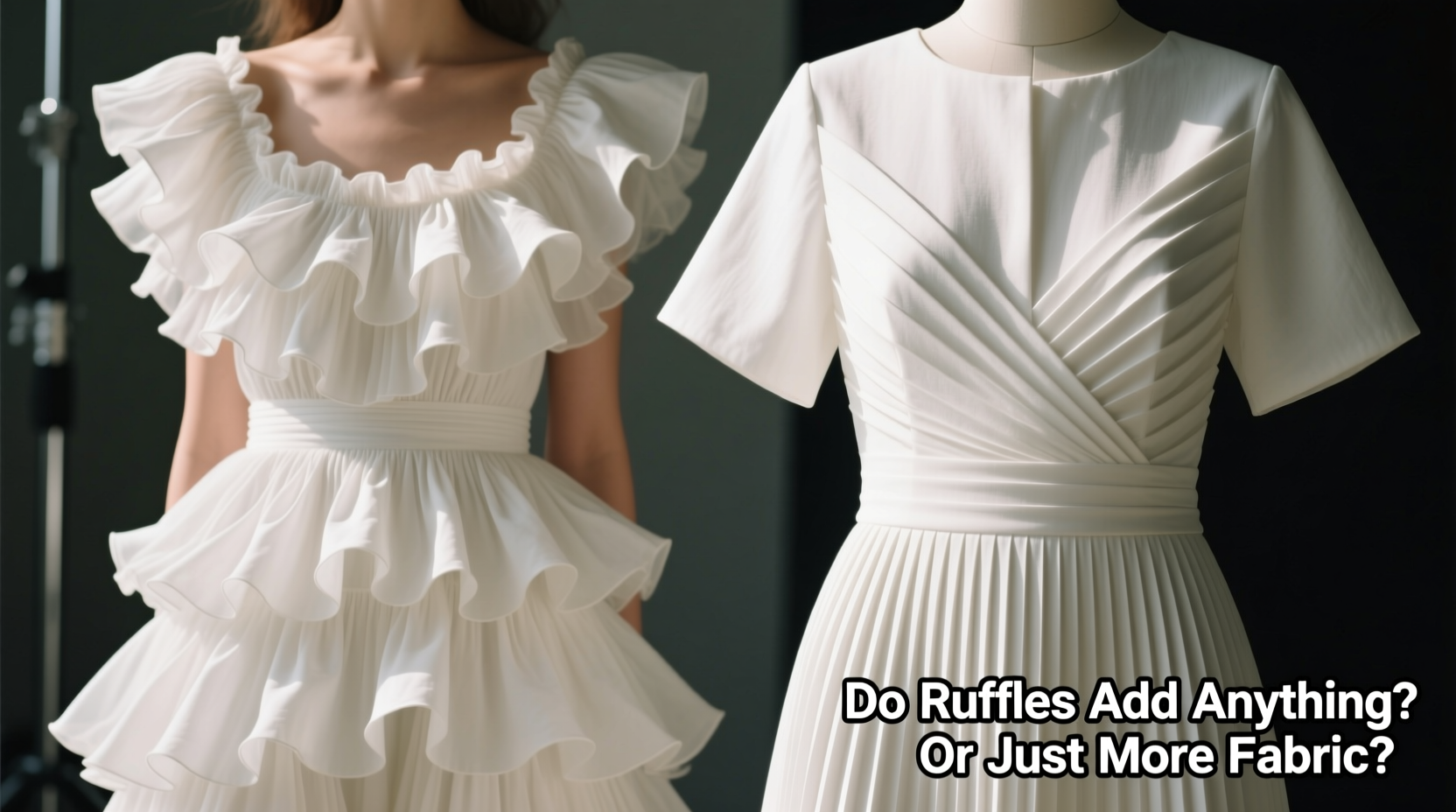
Ruffles and pleats are both fabric manipulations, but their formation tells two different stories. A ruffle is created by gathering or fluting excess fabric into soft, wavy folds that radiate outward. This technique requires more yardage than the base garment, which is why ruffles are often associated with abundance and drama. In contrast, pleats are structured folds pressed or stitched into place, typically using less added fabric. Box pleats, knife pleats, and accordion pleats are engineered for precision, offering controlled volume without the organic flair of ruffles.
The key distinction lies in intentionality. Pleats are architectural—they shape the garment with minimal waste and maximum repeatability. Ruffles are expressive. They introduce motion, softness, and unpredictability. While a pleated skirt swings with crisp regularity, a ruffled hem dances with every step. This difference in behavior affects not only how a dress moves but also how it’s perceived in social and cultural contexts.
Do Ruffles Add Visual Weight? The Psychology of Volume
A common concern about ruffles is that they add visual bulk, potentially overwhelming smaller frames or accentuating areas the wearer might prefer to minimize. But volume doesn’t always equate to heaviness. Strategically placed ruffles can create balance and draw attention where desired. For example, a tiered ruffle on the shoulder line can enhance narrow shoulders, while cascading ruffles down one side of a dress can create asymmetry that elongates the torso.
Fashion psychologists note that ruffles trigger associations with playfulness, romance, and youth. Unlike structured pleats—which signal formality, order, or minimalism—ruffles evoke emotion. This emotional resonance is part of their functional value. A woman wearing a ruffled midi dress to a garden party isn’t just dressed appropriately; she’s communicating openness, approachability, and a touch of whimsy.
“Ruffles are not filler—they’re language. They say, ‘I’m here, and I don’t take myself too seriously.’ That’s powerful in an era of minimalist fatigue.” — Lila Nguyen, Fashion Anthropologist, Parsons School of Design
Ruffle vs Pleated Dresses: A Comparative Breakdown
| Feature | Ruffle Dresses | Pleated Dresses |
|---|---|---|
| Fabric Usage | High (typically 1.5–3x more fabric) | Moderate (fabric folded, not added) |
| Movement Quality | Soft, flowing, unpredictable | Structured, crisp, controlled |
| Care & Maintenance | Delicate; prone to snagging and misshaping | Easier; holds shape well after washing |
| Versatility | Best for casual, romantic, or statement looks | Suited for office, formal, or transitional wear |
| Silhouette Impact | Adds volume outward from the body | Expands evenly; maintains clean lines |
| Sustainability Factor | Lower (higher fabric waste) | Higher (efficient use of material) |
This comparison reveals that ruffles trade efficiency for expressiveness. While pleated designs align better with sustainable production models, ruffles offer irreplaceable aesthetic and emotional benefits. Neither is inherently superior—the choice depends on context, occasion, and personal style philosophy.
Real-World Example: The Summer Wedding Dilemma
Consider Maya, attending her sister’s outdoor wedding. She has two options: a navy pleated shift dress and a blush pink ruffled tiered midi. The pleated dress is polished, wrinkle-resistant, and easy to pack. But when she tries it on, it feels too severe for the vineyard setting. The ruffled dress, though requiring more careful handling, creates softness around her hips and adds graceful movement as she walks down the aisle. Guests later comment on how “light” and “joyful” she looked. The ruffles didn’t just add fabric—they added tone. In this case, the emotional and situational value of the ruffles outweighed concerns about practicality.
How to Choose: A Practical Checklist
Selecting between ruffle and pleated styles shouldn’t be arbitrary. Use this checklist to make an intentional decision:
- Occasion: Is the event formal (favor pleats) or relaxed/romantic (favor ruffles)?
- Body Shape: Do you want to soften angles (ruffles) or maintain clean lines (pleats)?
- Climate: Ruffles can trap heat; pleats allow better airflow in structured fabrics.
- Care Routine: Will you hand-wash delicate ruffles, or do you need machine-washable ease?
- Style Identity: Are you drawn to bold femininity or understated elegance?
- Sustainability Priority: Are you minimizing fabric waste in your wardrobe choices?
Debunking the “Just More Fabric” Myth
Critics argue that ruffles are inefficient—that they exist solely to disguise cheap materials or inflate price through labor and yardage. While poorly executed ruffles can appear gratuitous, well-designed ones serve multiple purposes:
- Distraction and Proportion: A ruffled neckline can divert attention from a fuller bust or midsection by introducing competing visual interest.
- Texture Contrast: Pairing smooth bodices with ruffled skirts creates dimension, preventing a flat, one-note look.
- Dynamic Movement: Ruffles respond to wind, walking, and sitting in ways that static pleats cannot, enhancing the wearer’s presence.
- Emotional Signaling: In branding and personal style, ruffles communicate warmth and accessibility—qualities difficult to achieve with rigid pleating.
Even in high fashion, designers like Molly Goddard and Simone Rocha have built entire collections around ruffles, proving their artistic and commercial viability. These aren’t frivolous additions; they’re central to the design language.
FAQ: Common Questions About Ruffles and Pleats
Do ruffles make you look bigger?
Not necessarily. Ruffles add volume, but strategic placement—such as vertical ruffles down the side seams or small-tiered hems—can actually elongate the figure. Avoid large horizontal ruffles at the widest part of your body if minimizing width is a goal.
Are pleated dresses more professional than ruffled ones?
Generally, yes. Pleats convey polish and structure, making them suitable for offices and formal events. However, subtle ruffles—like a single frill at the cuff or neckline—can add personality to workwear without sacrificing professionalism.
Can ruffles be sustainable?
Yes, but it requires intention. Look for brands using deadstock fabric, zero-waste pattern cutting, or modular designs where ruffles can be removed or replaced. Some labels now offer “ruffle attachments” sold separately, allowing one dress to transform across seasons.
Conclusion: Beyond Fabric, Into Expression
Ruffles are more than surplus material—they are tools of expression, movement, and proportion. While pleated dresses excel in efficiency and structure, ruffles answer a deeper human desire for softness, surprise, and individuality. Dismissing them as “just more fabric” overlooks their role in shaping identity, mood, and memory. The next time you stand before two dresses—one ruffled, one pleated—ask not which uses less material, but which allows you to feel more like yourself. Fashion’s purpose isn’t only utility; it’s resonance. And sometimes, that resonance comes in waves.




 浙公网安备
33010002000092号
浙公网安备
33010002000092号 浙B2-20120091-4
Comments
No comments yet. Why don't you start the discussion?