
When it comes to indoor running, many athletes assume that any running shoe will do—after all, the surface is flat, predictable, and free of roots or rocks. But choosing between running shoes and trail shoes for treadmill use involves more than just comfort. The design differences, especially in tread pattern, midsole cushioning, and outsole materials, can significantly affect your biomechanics, joint stress, and even long-term injury risk. While trail shoes are built for rugged terrain, their aggressive lugs and reinforced uppers may not translate well to the smooth belt of a treadmill. Understanding how tread pattern influences grip, energy return, and foot strike mechanics indoors is essential for making an informed decision.
Key Differences Between Running Shoes and Trail Shoes
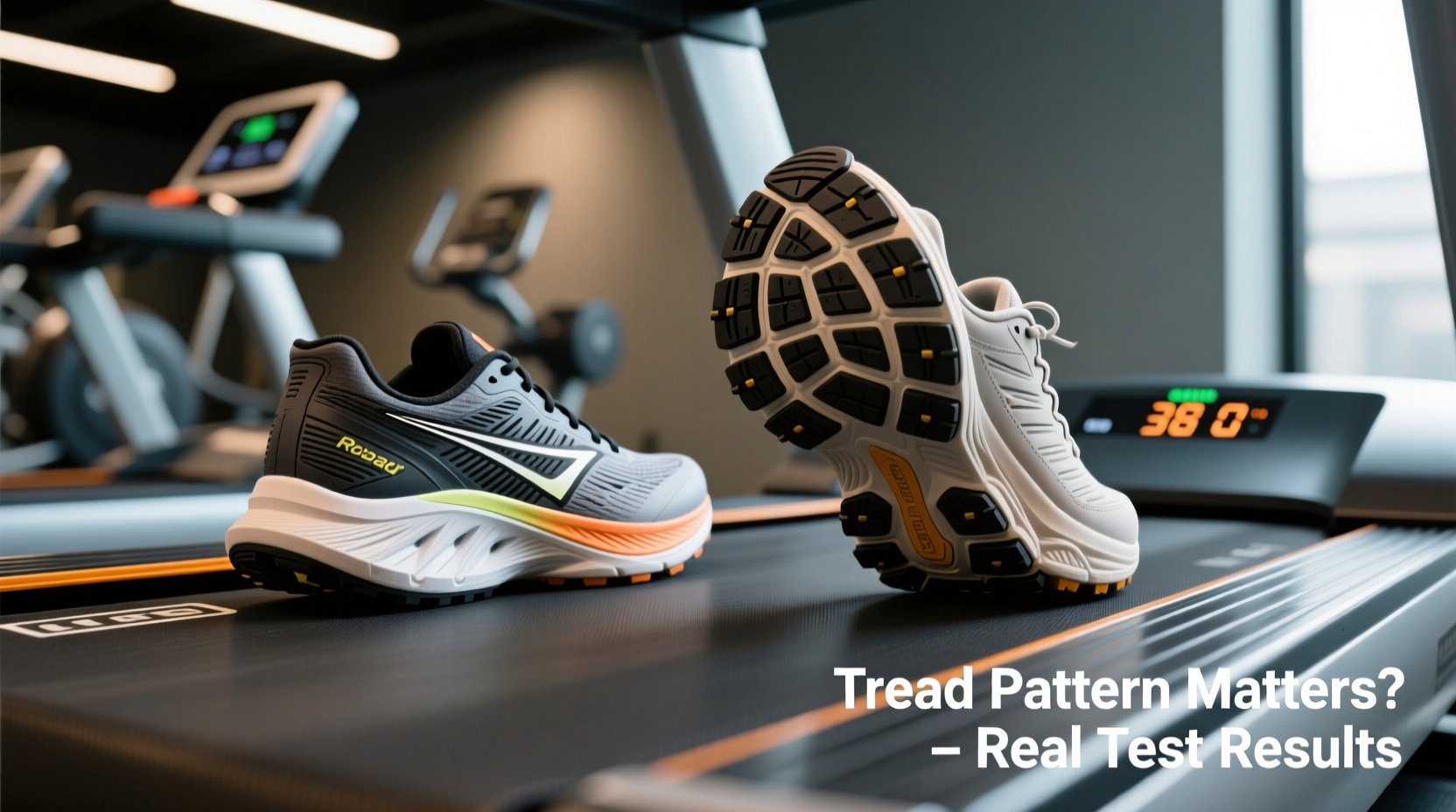
At first glance, the distinction seems simple: road shoes are sleek and lightweight; trail shoes are rugged and protective. But the engineering behind each reflects fundamentally different priorities. Road running shoes are optimized for efficiency, flexibility, and consistent surfaces. They typically feature thinner, high-density rubber outsoles with shallow, multidirectional tread patterns designed to disperse water and maintain contact on pavement. Cushioning is tuned for repetitive impact absorption over long distances.
In contrast, trail shoes prioritize traction, protection, and stability. Their outsoles boast deep, widely spaced lugs (often 4–6mm) made from sticky rubber compounds like Vibram®. These lugs bite into loose soil, mud, and gravel, preventing slippage during lateral movements or steep ascents. The midfoot wrap and rock plate shield the sole from sharp debris. However, this same aggressive tread becomes functionally redundant—and potentially counterproductive—on a treadmill’s uniform belt.
Tread Pattern Mechanics on Flat Surfaces
The primary purpose of tread is to channel away moisture and increase friction on uneven or slippery ground. On dry, flat surfaces like asphalt or a treadmill belt, excessive tread offers diminishing returns. In fact, studies in sports biomechanics show that overly aggressive lug patterns can create micro-slippage during toe-off, where the leading edge of a lug catches slightly before releasing. This inconsistency disrupts smooth propulsion and increases muscular fatigue over time.
A treadmill’s continuous moving surface already reduces ground reaction forces by approximately 10–15% compared to outdoor running. When paired with a soft, responsive deck, the machine mimics shock absorption similar to quality asphalt. Under these conditions, a low-profile, evenly distributed tread provides optimal contact without introducing instability. Deep lugs, however, compress unevenly against the belt, creating small pressure variances beneath the foot. Over thousands of strides, this can lead to altered gait patterns, particularly in runners prone to overpronation or supination.
“On controlled surfaces, minimal tread maximizes energy transfer. Aggressive lugs are useful off-road but introduce inefficiencies indoors.” — Dr. Lena Torres, Biomechanist at Sports Performance Lab, University of Colorado
Durability and Wear Patterns Indoors
One might assume that tougher shoes last longer, regardless of environment. Yet real-world wear data tells a different story. Trail shoe outsoles, while durable, suffer accelerated degradation when used exclusively on treadmills. The constant friction between thick rubber lugs and the polyurethane or cotton-polyester blend belts generates more heat and abrasion than natural terrain. As a result, lugs shear off prematurely, especially along the medial heel and forefoot—areas that experience the most repeated impact.
Road running shoes, with their flatter, denser rubber configurations, distribute wear more evenly across the outsole. Many models use carbon rubber in high-impact zones (like the heel), which resists abrasion better than the softer, stickier compounds found in trail footwear. Consequently, using trail shoes on a treadmill often leads to faster deterioration without any functional benefit.
Real Example: A Runner’s Experience
Consider Sarah M., a marathon runner who trained primarily indoors during winter months. She rotated between her favorite trail shoes and a pair of lightweight road racers. After six weeks, she noticed discomfort in her left Achilles tendon. Upon inspection, her podiatrist observed asymmetrical wear on the trail shoe outsoles—specifically, flattened and chipped lugs on the right forefoot. The irregular contact surface was subtly altering her push-off mechanics, contributing to posterior chain strain. Switching exclusively to road shoes eliminated the issue within two weeks, despite no change in mileage or intensity.
This case illustrates how subtle design mismatches can manifest as physical discomfort—even without obvious symptoms at first.
Performance Implications: Efficiency and Comfort
Efficiency in running is measured by how much energy is converted into forward motion versus wasted through instability or resistance. Trail shoes typically weigh 10–20% more than comparable road models. That extra mass, concentrated in the outsole and upper reinforcement, increases rotational inertia with every stride. Over a 5K run on a treadmill, this translates to hundreds of additional calories burned—not because of increased effort, but due to inefficient mechanics.
Additionally, the stiffness of trail shoe midsoles, designed to handle rocky descents, limits natural foot flexion on a forgiving treadmill belt. This reduced compliance forces muscles and tendons to compensate, increasing fatigue in the calves and plantar fascia. Runners accustomed to plush road shoes often report a “harsh” or “jarring” sensation when switching to trail footwear indoors, even if both pairs have similar stated cushioning levels.
| Feature | Road Running Shoes | Trail Running Shoes |
|---|---|---|
| Outsole Tread Depth | 2–3 mm, shallow grooves | 4–6 mm, deep lugs |
| Typical Weight (Men's Size 9) | 240–280g | 300–360g |
| Midsole Flexibility | High | Low to moderate |
| Belt Friction on Treadmill | Low, consistent | Higher, variable |
| Energy Return Efficiency | Optimized for flat surfaces | Reduced due to lug compression |
| Lifespan on Treadmill | 300–500 miles | 200–350 miles (accelerated wear) |
When Might Trail Shoes Be Acceptable on a Treadmill?
There are limited scenarios where using trail shoes indoors makes sense. For instance, runners rehabbing from ankle instability or those training for mountain races may benefit from the added lateral support and proprioceptive feedback of a stiffer, higher-walled shoe. Similarly, some advanced treadmills simulate incline trails or uneven terrain via adjustable decks. In such cases, the enhanced grip and foot protection of trail footwear could be advantageous.
However, these are exceptions rather than norms. For standard level running, interval training, or endurance workouts, road shoes remain the superior choice in terms of comfort, efficiency, and longevity.
Checklist: Choosing the Right Shoe for Treadmill Running
- ✅ Prioritize lightweight construction (under 300g for men, under 250g for women)
- ✅ Look for flat, evenly patterned outsoles with minimal lug depth
- ✅ Ensure flexible forefoot for natural toe-off
- ✅ Verify adequate cushioning matched to your body weight and strike pattern
- ❌ Avoid oversized lugs or sticky rubber compounds unless simulating off-road conditions
- ❌ Don’t use trail shoes daily on a treadmill—they wear faster and impair form
Frequently Asked Questions
Can I damage my treadmill with trail shoes?
Yes. The deep lugs of trail shoes can catch on the belt’s seams or edges, especially on older or poorly maintained machines. Over time, this increases friction and may contribute to premature belt wear or motor strain. Some gym policies explicitly prohibit trail shoes for this reason.
Do trail shoes provide better grip on wet or sweaty treadmill belts?
Not necessarily. While sticky rubber performs well on damp rock, sweat on a treadmill belt creates a thin film that reduces traction regardless of tread depth. Most modern treadmills have textured belts designed to manage moisture. A flat, grippy road shoe outsole usually maintains better contact than one with deep channels that trap fluid.
Should I rotate between road and trail shoes for indoor training?
Rotation can extend shoe life and vary muscle engagement, but only if both shoes match the surface. Using trail shoes occasionally for short sessions (e.g., hill intervals) is acceptable, but they shouldn't replace dedicated road trainers for regular treadmill use.
Step-by-Step Guide: Transitioning from Trail to Road Shoes for Indoor Use
- Evaluate your current usage: Track how many weekly miles you log on the treadmill. If more than 50%, consider investing in a dedicated road model.
- Assess fit and feel: Try on several road shoes later in the day when feet are slightly swollen. Walk and jog briefly in-store or on a treadmill.
- Match cushioning to your needs: Heavier runners or heel strikers benefit from maximalist shoes; lighter or forefoot strikers may prefer neutral or responsive models.
- Test on the treadmill: Run 1–2 miles to assess comfort, grip, and breathability. Pay attention to any hot spots or instability.
- Retire trail shoes for outdoor use: Designate them strictly for off-road runs to maximize lifespan and performance where they excel.
“The best shoe for the job isn’t always the most rugged one. Match your footwear to the surface, not just your personal preference.” — Mark Chen, Certified Pedorthist and Running Coach
Final Thoughts: Function Over Form
Selecting the right footwear for treadmill running isn’t about brand loyalty or aesthetics—it’s about aligning design with function. While trail shoes offer undeniable advantages in muddy forests or on rocky switchbacks, their features become liabilities on a smooth, moving belt. The tread pattern, though impressive outdoors, introduces inefficiencies indoors. Excess weight, reduced flexibility, and accelerated wear further diminish their value in a gym setting.
Road running shoes, engineered for consistency and speed on flat terrain, deliver superior comfort, energy return, and durability when used as intended. Recognizing this distinction empowers runners to train smarter, reduce injury risk, and get the most out of both their equipment and workouts.




 浙公网安备
33010002000092号
浙公网安备
33010002000092号 浙B2-20120091-4
Comments
No comments yet. Why don't you start the discussion?