
When it comes to running footwear, few decisions impact performance as directly as traction. Whether you're racing on a cinder track or navigating a muddy mountain trail, the right grip can mean the difference between a personal best and a misstep that costs time—or safety. But with so many options available, how do you know whether to choose running spikes or trail shoes? The answer lies in understanding where and how grip matters most.
Grip isn’t just about preventing slips. It’s about energy transfer, foot stability, and biomechanical efficiency. While both running spikes and trail shoes are engineered for high-traction environments, their design philosophies diverge sharply based on intended use. Choosing between them isn't arbitrary—it's strategic.
Understanding the Core Differences
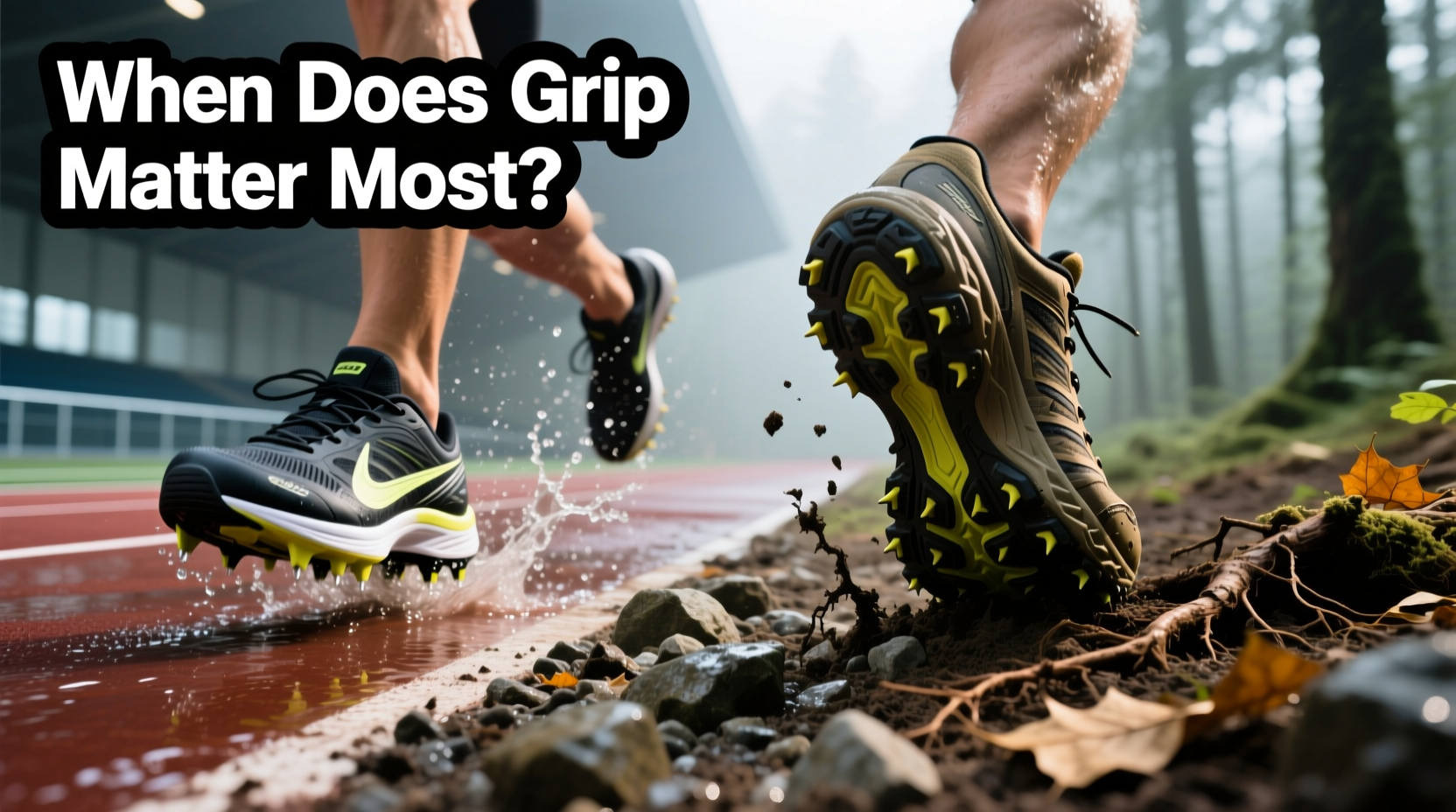
At first glance, running spikes and trail shoes may seem like variations of the same concept: lightweight footwear built for speed and grip. However, their construction, materials, and purpose reveal fundamental contrasts.
- Running spikes are designed for predictable, flat surfaces—typically synthetic tracks or short grass fields. They feature aggressive spike plates with small, replaceable metal or ceramic pins that dig into firm ground for explosive propulsion.
- Trail shoes, on the other hand, are built for unpredictability. Their lugs are deep, multidirectional rubber outsoles meant to handle mud, gravel, roots, and wet rocks. Flexibility, protection, and durability take precedence over minimalism.
The key distinction is surface consistency. Spikes thrive where the ground is uniform and compact; trail shoes excel where terrain changes every stride.
When Grip Matters Most: Critical Scenarios
Grip becomes critical not only when the surface is slippery but also when precision and power output are paramount. Here are the situations where traction determines success:
- Explosive Starts (Track Sprints): In 100m or 200m races, the initial push off the blocks demands maximum grip. Even a millimeter of slippage reduces acceleration. Spikes provide the concentrated traction needed under the ball of the foot.
- Wet or Dew-Covered Grass (Cross Country): Early morning races often mean damp turf. While spikes work here, deeper penetration from longer pins helps maintain footing on soft, saturated soil.
- Loose Gravel or Rocky Descent (Mountain Running): On downhill sections with shifting substrates, lateral grip and sole rigidity prevent ankle rolls. Trail shoes dominate here with wide, sticky rubber compounds.
- Muddy Conditions (Obstacle or Trail Races): Mud defeats shallow treads quickly. Deep lugs in trail shoes shed muck and maintain contact with solid ground beneath.
- Banked Curves (Indoor Track Events): Tight turns at high speed require edge grip. Spikes with offset pins help runners lean into curves without sliding outward.
Comparative Breakdown: Spikes vs Trail Shoes
| Feature | Running Spikes | Trail Shoes |
|---|---|---|
| Primary Surface | Track, firm grass, synthetic turf | Dirt trails, mud, rocks, roots |
| Traction Mechanism | Metal/ceramic pins on rigid plate | Deep rubber lugs with multi-directional pattern |
| Weight | Ultra-light (3–7 oz per shoe) | Moderate to heavy (9–14 oz per shoe) |
| Cushioning | Minimal; focused on responsiveness | High; protects from uneven terrain |
| Durability | Low; spikes wear down fast on hard surfaces | High; abrasion-resistant rubber and reinforced uppers |
| Lifespan | ~150–200 miles (track-focused) | ~300–500 miles (trail-focused) |
| Best For | Racing, time trials, sprints, cross country (firm ground) | Endurance trail runs, technical descents, variable weather |
Real-World Scenario: A Cross Country Dilemma
Consider Sarah, a collegiate runner preparing for a regional cross country meet. The course includes a mix of packed dirt paths, a steep grassy hill, and a creek crossing that tends to become muddy after rain. Forecast shows light showers the night before.
She has two choices: her 6-pin cross country spikes or a pair of lightweight trail racers. Her coach recommends spikes for speed, but Sarah recalls last year’s race, where several athletes slipped on the descent near the water. She tests both pairs on a similar local trail. The spikes struggle in wet clay, while the trail shoes grip confidently despite less spring in the forefoot.
She opts for the trail shoes—and finishes third overall, citing control on the back half as her competitive edge. This illustrates a growing trend: even in traditional spike domains like cross country, conditions often favor hybrid or trail-inspired designs.
“Grip isn’t just about holding on—it’s about confidence in movement. When runners trust their footing, they unlock better form and faster splits.” — Dr. Lena Torres, Sports Biomechanist, University of Colorado
How to Choose Based on Your Race or Run
Selecting the right shoe isn’t just about preference—it’s about matching technology to environment. Follow this step-by-step guide to make the optimal decision:
- Assess the Surface: Is it man-made and consistent (track), or natural and variable (trail)? If it’s the former, spikes are likely ideal. If the latter, trail shoes win.
- Check the Weather: Rain, dew, or recent irrigation increases slip risk. Wet grass favors longer pins or trail lugs. Avoid shallow spike plates on saturated ground.
- Evaluate Distance and Intensity: Short races (under 5K) prioritize response and weight—spikes shine. Longer efforts demand cushioning and protection—choose trail shoes.
- Consider Foot Strike and Form: Forefoot strikers gain more from spike propulsion. Heel strikers on uneven ground need the heel crash pad and torsional stability of trail models.
- Test Before You Race: Always trial your chosen shoe on similar terrain. Nothing reveals poor grip like a slippery turn during a tempo run.
Actionable Checklist: Picking the Right Shoe for Traction Needs
- ☐ Identify primary surface type (track, trail, grass, mixed)
- ☐ Review weather forecast for race day
- ☐ Match spike length or lug depth to expected conditions
- ☐ Prioritize stiffness for speed, flexibility for comfort
- ☐ Test shoes on comparable terrain at least once before race day
- ☐ Replace worn spikes or degraded lugs before competition
Frequently Asked Questions
Can I use trail shoes on a track?
Yes, but not optimally. Trail shoes are heavier and less responsive than spikes. While safe for practice, they hinder top-end speed and are not recommended for time trials or races where milliseconds count.
Are there hybrid shoes that combine spike and trail features?
Yes. Some manufacturers offer “cross” spikes with deeper lugs and flexible plates suitable for grass and light trail sections. Similarly, lightweight trail racers mimic spike-like responsiveness while retaining grip. These hybrids work well for cross country or mixed-surface events.
How often should I replace my spikes or trail shoes?
Spikes typically last 150–200 miles, depending on surface use. Inspect the spike plate for cracks and replace pins regularly. Trail shoes last longer—300 to 500 miles—but monitor lug wear, especially on rocky terrain. Worn lugs lose grip dramatically on wet surfaces.
Final Thoughts: Let Terrain Guide Your Traction
The debate between running spikes and trail shoes isn’t about which is better overall—it’s about context. Grip matters most when the stakes are high: during a sprint finish, on a slick descent, or in unpredictable weather. In those moments, the right shoe doesn’t just improve performance—it prevents injury and builds confidence.
Respect the surface. Analyze the conditions. And never underestimate the value of secure footing. Whether you’re pinning into a cinder track or charging through forest mud, your shoes are the only point of contact between intent and motion. Make sure they’re up to the task.




 浙公网安备
33010002000092号
浙公网安备
33010002000092号 浙B2-20120091-4
Comments
No comments yet. Why don't you start the discussion?