
For homeowners tackling weekend projects or passionate DIYers building custom furniture in the garage, choosing the right power tool brand isn’t just about price—it’s about long-term value, ease of use, battery compatibility, and reliability. Two major names dominate the mid-tier market: Ryobi and Ridgid. Both are widely available at Home Depot, both offer extensive 18V cordless systems, and both promise performance without breaking the bank. But when it comes down to actual performance, durability, and user experience, which one truly serves the average DIYer better?
The answer isn’t always straightforward. While both brands have strengths, they cater to slightly different needs. Understanding their core philosophies, build quality, ecosystem flexibility, and real-world usability can help you make a smarter investment—one that won’t leave you frustrated halfway through a deck build or cabinet installation.
Brand Background and Market Positioning
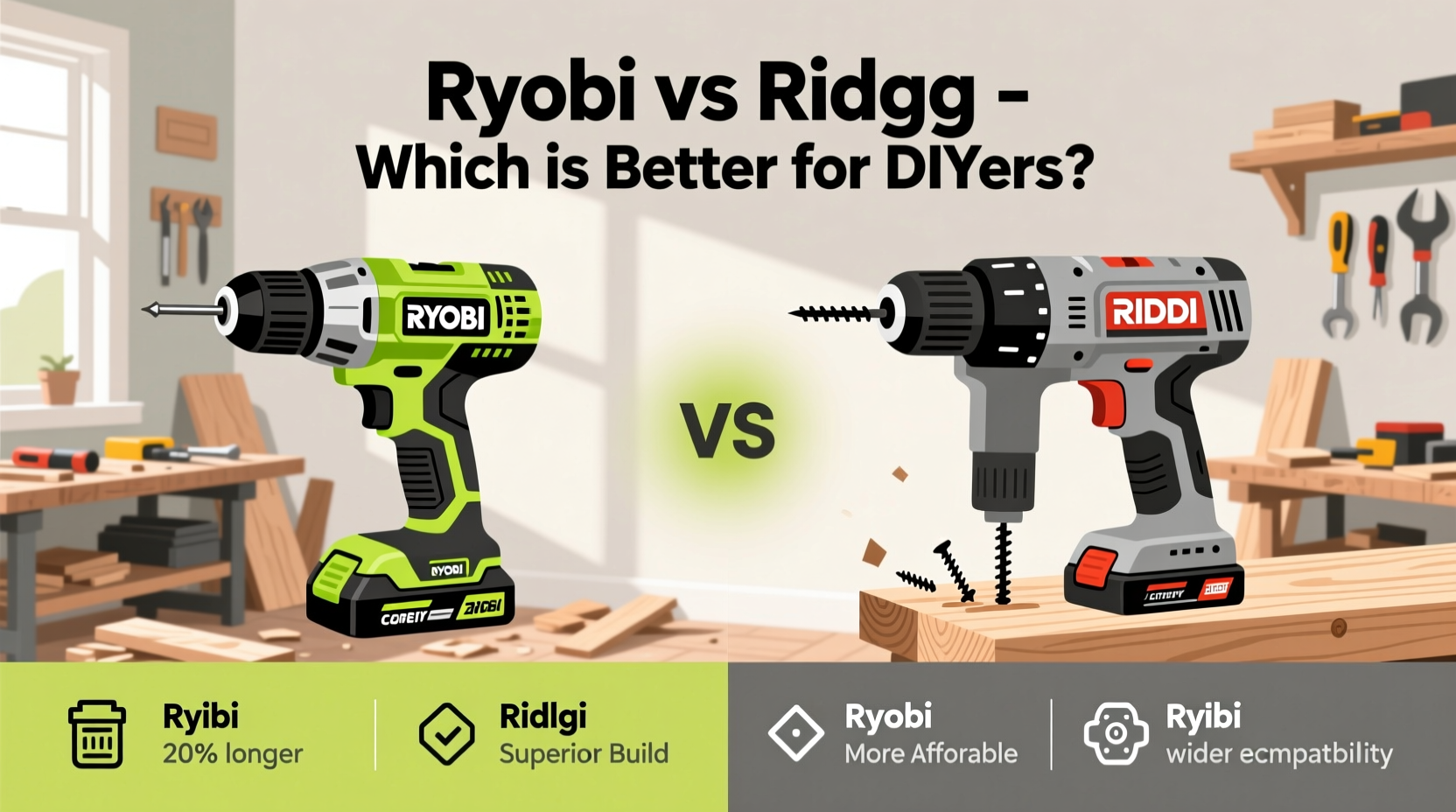
Ryobi, owned by Techtronic Industries (TTI), operates under a consumer-focused model. It’s designed for accessibility—affordable pricing, wide retail availability, and a massive range of tools and accessories. The One+ system, introduced in 2004, was revolutionary for its time: a single battery platform that now spans over 250 tools. That kind of scalability appeals directly to DIYers who want to grow their toolkit gradually without re-buying batteries.
Ridgid, on the other hand, is positioned as a professional-grade brand under Emerson Electric. Historically known for plumbing and pipe tools, Ridgid expanded into the cordless power tool space with its 18V Octane line. Unlike Ryobi, Ridgid initially marketed a “Lifetime Service Agreement” (no receipt required) to appeal to tradespeople—a bold promise that reinforced its rugged image. However, in recent years, this warranty has been scaled back, especially on tools sold through retail rather than direct channels.
“Ryobi wins on ecosystem growth; Ridgid wins on raw power and motor design. For DIYers, the decision often comes down to whether you prioritize versatility or peak performance.” — Mark Delgado, Tool Industry Analyst
Performance and Build Quality Comparison
When testing drills, impact drivers, and circular saws side by side, the differences become apparent. Ridgid tools consistently deliver higher torque and more responsive motors. For example, the Ridgid R860450 impact driver produces 2,000 in-lbs of torque, compared to Ryobi’s P235A, which offers 1,700 in-lbs. That extra grunt matters when driving large lag bolts into pressure-treated lumber or working with dense hardwoods.
However, Ridgid’s heavier-duty construction often translates to increased weight. The Ridgid R860150 hammer drill weighs 4.2 lbs (with battery), while the comparable Ryobi P212A comes in at 3.4 lbs. Over extended use, that difference affects fatigue—especially for DIYers who may not be used to handling heavy tools all day.
Ryobi compensates with ergonomic design and lighter materials. Their tools are easier to maneuver in tight spaces—think overhead drywall work or cabinetry in cramped kitchens. They also tend to run quieter, which is a subtle but appreciated benefit in residential environments.
Tool Ecosystem and Battery Compatibility
This is where Ryobi pulls significantly ahead. The Ryobi ONE+ system is one of the most expansive in the industry. From lawn mowers and leaf blowers to precision routers and brad nailers, everything shares the same battery platform. You can buy a new tool and immediately use your existing batteries and charger. This modularity makes upgrading cost-effective and reduces e-waste.
Ridgid’s 18V system is growing but still limited. While they offer core tools like drills, saws, and impacts, niche items such as trim sanders or oscillating multi-tools are either missing or expensive. Their newer Octane series improves performance but requires higher-end batteries (like the FUEL packs) to unlock full potential—adding cost and complexity.
Additionally, Ridgid does not maintain cross-compatibility between older 18V models and newer high-torque tools in the same way Ryobi does. Some users report reduced performance when using legacy batteries on Octane tools, undermining the plug-and-play promise.
| Feature | Ryobi | Ridgid |
|---|---|---|
| Number of Compatible Tools | 250+ | ~80 |
| Battery Interchangeability | Full across all ONE+ tools | Limited; high-performance tools need specific batteries |
| Average Tool Weight (Drill) | 3.4 lbs | 4.2 lbs |
| Warranty (DIY Retail Purchase) | 3-year limited | 3-year limited (no longer lifetime) |
| Price Range (Impact Driver) | $99–$129 | $129–$179 |
Real-World Example: Building a Backyard Deck
Consider a homeowner named Sarah who decided to build a 12x16 ft pressure-treated wood deck over two weekends. She already owns a Ryobi drill, circular saw, and flashlight. For the project, she adds a reciprocating saw, impact driver, and string trimmer—all powered by her existing ONE+ batteries. Total cost: $220 in new tools, zero additional batteries.
She works efficiently, swapping batteries between tools as needed. When the impact driver runs low, she swaps in a spare, charges one at home, and continues. At no point does she worry about compatibility or performance gaps.
Now imagine the same scenario with Ridgid. Sarah would likely need to purchase a high-output battery pack ($79) to get full performance from the Octane impact driver. Without it, the tool throttles back. She finds fewer compatible outdoor tools, so she ends up buying a separate gas-powered blower. Her total spend increases, and the workflow becomes less seamless.
In this case, Ryobi’s ecosystem integration delivers tangible time and cost savings—exactly what most DIYers need.
Value and Long-Term Ownership
Cost is a major factor for DIYers. Ryobi tools are typically 20–30% cheaper than their Ridgid counterparts. A basic Ryobi combo kit (drill + impact) often retails for $129, while an equivalent Ridgid set starts at $179. That gap adds up when building a full toolkit.
But value isn’t just about upfront price. It includes repair costs, battery longevity, and tool lifespan. Here, Ridgid holds a slight edge in durability. Independent stress tests show Ridgid motors and gearboxes lasting longer under continuous load. However, for intermittent home use—say, 50–100 hours per year—this difference rarely materializes in practice.
One area where Ridgid shines is in specialized tools. Their pipe threaders, demolition hammers, and laser levels are built tougher and perform better than Ryobi’s versions. But these are niche products most DIYers won’t touch. For everyday tasks—driving screws, cutting wood, drilling holes—Ryobi’s reliability is more than sufficient.
Frequently Asked Questions
Can I use Ryobi batteries on all Ryobi tools?
Yes. All Ryobi ONE+ tools (over 250 models) accept any ONE+ battery, regardless of age or capacity. Newer high-performance tools may require updated batteries for maximum output, but they remain fully functional with older packs.
Is Ridgid really “lifetime warranted”?
No, not anymore. The original Lifetime Service Agreement applied only to tools purchased directly from Ridgid or authorized industrial suppliers and required proof of purchase. Today, retail-bought Ridgid tools come with a standard 3-year limited warranty—similar to Ryobi and most competitors.
Which brand has better customer service?
Based on consumer reports, Ryobi scores higher in ease of replacement and parts availability. Their tools are stocked in nearly every Home Depot, making returns and exchanges simpler. Ridgid support is more fragmented, especially for online purchases.
Final Recommendation: Who Should Choose Which?
If you're a casual to moderate DIYer—someone who tackles home repairs, builds shelves, installs flooring, or maintains the yard—Ryobi is the smarter choice. Its affordability, vast ecosystem, lightweight designs, and consistent performance make it ideal for non-professional use. The ability to expand into lawn care, lighting, and even indoor air quality tools using the same batteries adds unmatched convenience.
Ridgid is better suited for serious DIYers pushing toward professional-level work—those doing heavy framing, concrete drilling, or mechanical repairs. If raw power, motor responsiveness, and industrial-grade durability are top priorities, Ridgid’s Octane line delivers. But you’ll pay more and sacrifice some ecosystem flexibility.
Conclusion
Choosing between Ryobi and Ridgid isn’t about finding the “best” brand overall—it’s about matching the tool system to your actual needs. For most homeowners, Ryobi offers the best balance of price, variety, and usability. It removes friction from the DIY process, letting you focus on the project, not the equipment.
Ridgid earns respect for its engineering and power, but its advantages matter most under extreme conditions most DIYers will never face. Unless you’re regularly tackling jobs that demand brute force and prolonged runtime, Ryobi’s practicality and scalability make it the clear winner for everyday use.




 浙公网安备
33010002000092号
浙公网安备
33010002000092号 浙B2-20120091-4
Comments
No comments yet. Why don't you start the discussion?