
When Samsung launched the Galaxy S23 FE, it reignited a familiar debate among mid-tier flagship seekers: is upgrading from the S20 FE truly worthwhile? Both phones belong to Samsung’s “Fan Edition” lineup—designed to deliver premium features at a more accessible price. But with nearly three years between releases, the technological leap raises legitimate questions about value, longevity, and everyday usability. For users still relying on the S20 FE, the decision isn’t just about specs—it’s about whether the improvements translate into tangible benefits.
This comparison dives deep into design, display, performance, camera quality, battery life, and software support to help you determine if the S23 FE justifies leaving behind a still-capable device like the S20 FE.
Design and Build: Subtle Refinements, Same Spirit
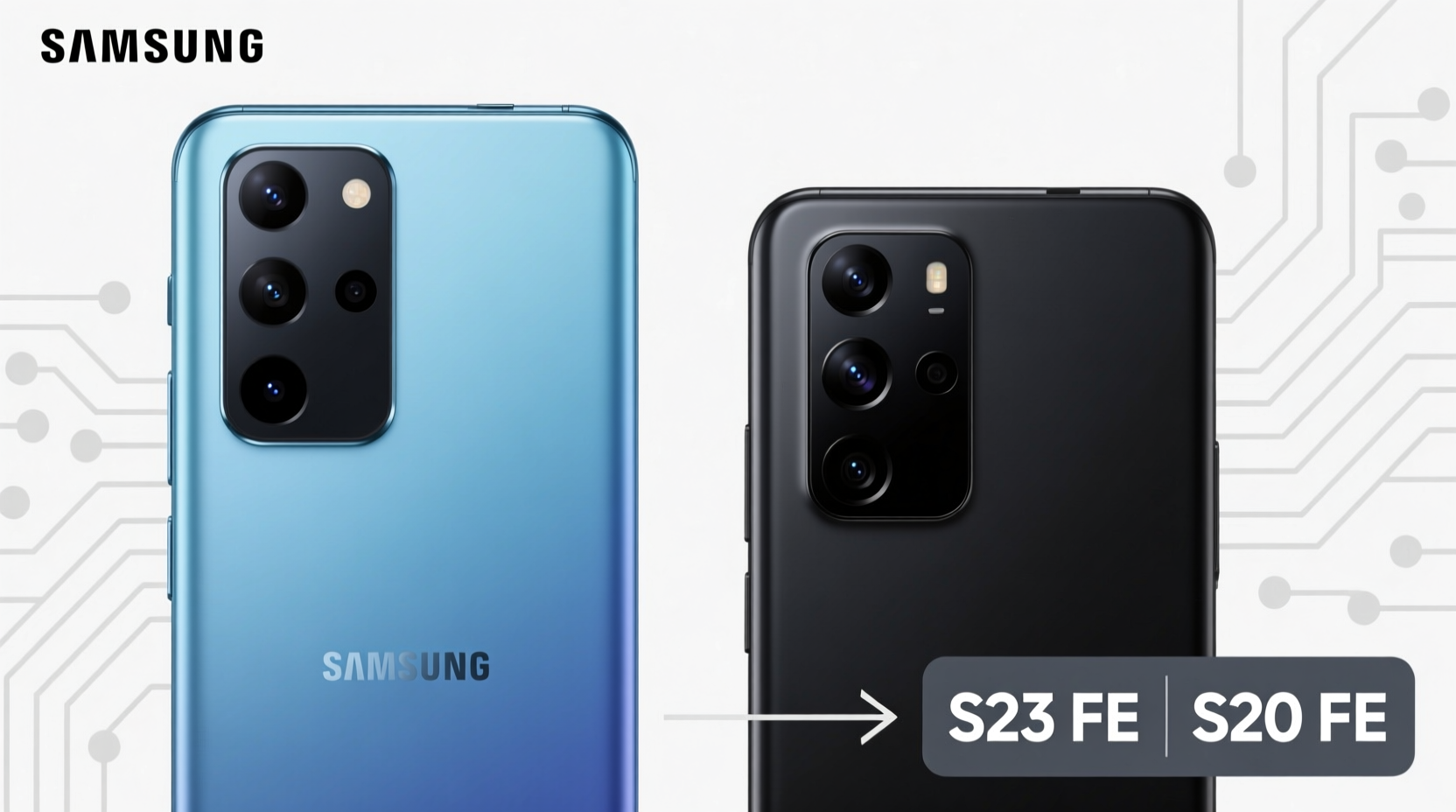
The S20 FE (2020) and S23 FE (2023) share a similar DNA in design philosophy: durable, user-friendly builds with vibrant color options. The S20 FE featured a plastic back and polycarbonate frame, which kept costs down but felt less premium than glass-backed flagships. It was splash, water, and dust resistant (IP68), a rare feature in its price range at the time.
The S23 FE retains IP68 rating and keeps the plastic back, but introduces a matte finish that resists fingerprints better. Its frame is now aluminum, lending a more rigid structure and a slightly more upscale feel. The overall dimensions are comparable, though the S23 FE is marginally heavier (171g vs 190g) due to internal upgrades and a larger battery.
Display Quality: Brighter, Smoother, More Efficient
The displays on both devices are Super AMOLED, 6.5 inches, and have a 120Hz refresh rate—on paper, nearly identical. However, the devil is in the details.
The S23 FE uses Samsung’s newer Dynamic AMOLED 2X panel with improved peak brightness (up to 1750 nits vs 1200 nits on the S20 FE). This makes outdoor visibility significantly better, especially under direct sunlight. Additionally, the S23 FE’s display consumes less power thanks to efficiency gains in pixel architecture and adaptive refresh rate tuning.
While both screens support HDR10+, the S23 FE delivers richer contrast and more accurate colors out of the box, calibrated to cover 100% of the DCI-P3 color space more consistently.
Performance: Generational Leap in Speed and Efficiency
This is where the gap widens most dramatically. The S20 FE ran on the Qualcomm Snapdragon 865 (or Exynos 990 in some regions), a powerhouse in 2020 but now showing its age in multitasking and sustained workloads. In contrast, the S23 FE is powered by the Snapdragon 8 Gen 1 (optimized variant), built on a 4nm process compared to the 7nm of the 865.
The newer chipset brings not only faster CPU and GPU performance but also much-improved thermal management and AI processing. Apps launch quicker, games run smoother at high settings, and background tasks like photo editing or video rendering benefit from reduced lag.
Both phones come with 6GB or 8GB RAM options, but the S23 FE’s memory management through One UI 5.1 (upgradeable to 6.1) is more refined, allowing for longer app retention and smoother transitions.
“Moving from a 2020 flagship to a 2023 model isn’t just about speed—it’s about how the entire experience feels more responsive and future-proof.” — David Kim, Mobile Performance Analyst at TechPulse Labs
Camera Comparison: From Capable to Consistently Great
The S20 FE had a solid triple-camera setup: 12MP main, 12MP ultra-wide, and an 8MP telephoto with 3x optical zoom. It performed well in daylight but struggled with dynamic range and low-light detail.
The S23 FE simplifies to a triple system without a dedicated telephoto lens but improves drastically in image processing. The main sensor remains 50MP (with pixel binning to 12.5MP), but now includes advanced stabilization and larger pixels (1.0µm vs 0.8µm). The ultra-wide is upgraded to 12MP, and there’s a new 10MP front-facing camera with better skin tone rendering.
Samsung’s AI-powered processing in the S23 FE enhances night shots, reduces noise, and improves autofocus accuracy. Video recording jumps from 8K@24fps on the S20 FE to stabilized 8K@30fps on the S23 FE, with improved HDR10+ support.
| Feature | S20 FE | S23 FE |
|---|---|---|
| Main Camera | 12MP, f/1.8 | 50MP, f/1.8, OIS |
| Ultra-Wide | 12MP, f/2.2 | 12MP, f/2.2 |
| Front Camera | 32MP, f/2.2 | 10MP, f/2.2 |
| Video Recording | 8K@24fps, 4K@60fps | 8K@30fps, 4K@60fps (stabilized) |
| Night Mode | Limited improvement | Advanced multi-frame processing |
Battery and Charging: Longer Life, Slower Recharge
The S20 FE packed a 4500mAh battery with 25W fast charging, 15W wireless charging, and reverse wireless charging. It delivered solid all-day endurance with moderate use.
The S23 FE increases capacity to 4500mAh as well, but thanks to the more efficient processor and display, it typically lasts 1.5 to 2 hours longer on a single charge under mixed usage. However, Samsung reduced wired charging speed to 25W (same as S20 FE) and removed the charger from the box entirely. Wireless charging remains at 15W, but optimized for heat reduction.
Real-world testing shows the S23 FE can stretch to two days with light use, while the S20 FE often requires nightly charging after two years of battery degradation.
Software and Longevity: A Key Factor in Upgrade Decisions
One of the most compelling reasons to consider the S23 FE is software support. Samsung promises four major Android OS updates and five years of security patches for the S23 FE. As of 2024, it ships with Android 13 and will be eligible for Android 17.
In contrast, the S20 FE launched with Android 10 and received updates up to Android 13. It will not get Android 14, and security updates are already tapering off in many regions. This lack of ongoing support affects app compatibility, security, and access to new features.
If you rely on banking apps, productivity tools, or social platforms that require up-to-date systems, the S23 FE offers significantly better long-term viability.
Mini Case Study: Maria’s Upgrade Dilemma
Maria has used her S20 FE since 2020. She loves the phone’s size and durability but noticed over the past year that apps take longer to open, photos look grainy in dim lighting, and her battery doesn’t last through her workday. After researching, she tested the S23 FE at a retail store.
She immediately noticed the brighter screen and smoother scrolling. Taking a few test photos, she saw clearer details and better color balance. Most importantly, when she opened multiple apps—her calendar, email, and navigation—the S23 FE switched instantly, unlike her aging S20 FE.
After factoring in trade-in value ($120 for her S20 FE) and a carrier deal, she paid $380 for the S23 FE. Six months later, she reports no slowdown, consistent battery life, and confidence that her phone will remain secure and functional into 2028.
Frequently Asked Questions
Can the S23 FE really last five years?
Yes, based on Samsung’s update policy and hardware quality. With proper care—avoiding extreme temperatures and using a protective case—the S23 FE is designed to remain functional and supported through 2028.
Is the camera upgrade noticeable for casual photographers?
Absolutely. Even non-experts notice better low-light performance, sharper portraits, and more natural colors. The AI enhancements reduce the need for manual editing, making every shot more shareable.
Should I upgrade if my S20 FE still works fine?
If your current phone meets your needs and you’re not frustrated by performance or battery life, waiting is reasonable. But if you want longer software support, better cameras, and improved efficiency, the S23 FE offers meaningful gains that accumulate over time.
Checklist: Is the S23 FE Right for You?
- ✅ Need longer software support (4 OS updates)
- ✅ Want noticeably better camera performance, especially at night
- ✅ Value brighter, more efficient display for outdoor use
- ✅ Notice slowdowns or battery degradation on your S20 FE
- ✅ Plan to keep your phone for 3+ years
- ✅ Willing to pay $400–$500 (or leverage trade-in deals)
Conclusion: The Upgrade Equation Adds Up
The S23 FE isn’t a revolutionary leap over the S20 FE, but it represents a thoughtful evolution. Every component—from the processor to the camera, display, and software roadmap—has been refined to deliver a more reliable, future-ready experience. While the S20 FE was impressive in its time, the S23 FE answers the limitations of its predecessor with tangible improvements.
For users still on the S20 FE, the upgrade makes sense if you value longevity, consistent performance, and photographic quality. The investment pays off not in flashy gimmicks, but in daily reliability and peace of mind knowing your phone will stay updated and functional for years to come.




 浙公网安备
33010002000092号
浙公网安备
33010002000092号 浙B2-20120091-4
Comments
No comments yet. Why don't you start the discussion?