
When Samsung released the Galaxy S21 FE, it positioned the device as a refined successor to the already popular S20 FE. With nearly identical design language and overlapping features, many users are left wondering: is upgrading from the S20 FE to the S21 FE truly worthwhile? The answer depends on what you value—incremental improvements in performance and camera quality, or sticking with a proven, capable device that still holds up well in 2024.
This deep dive compares both phones across key categories: hardware, display, camera systems, software support, battery life, and real-world usability. Whether you’re considering an upgrade or choosing between used models, this analysis will help you make an informed decision without falling for marketing hype.
Design and Build: Subtle Refinements, Same Feel
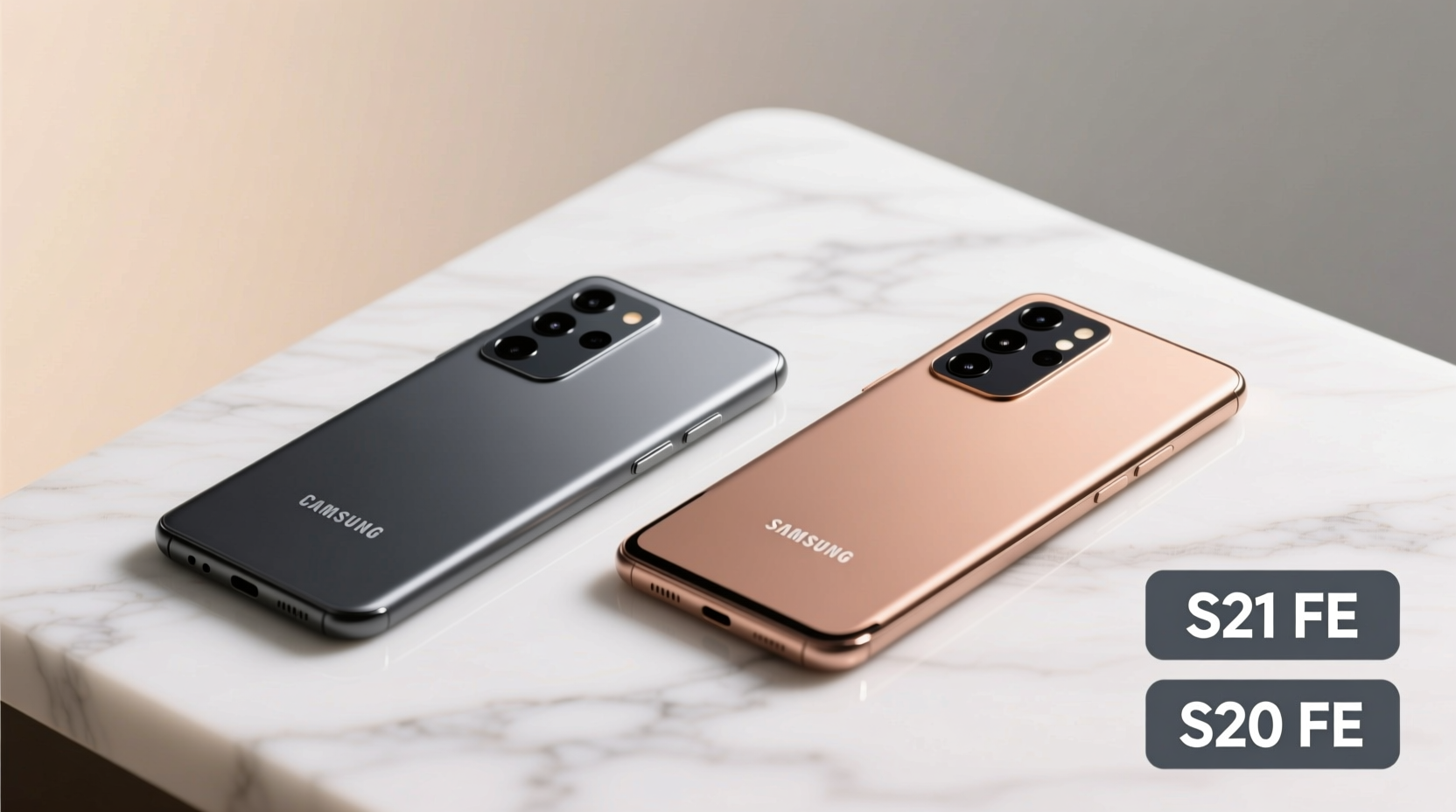
At first glance, the S21 FE and S20 FE look nearly identical. Both feature a polycarbonate back (plastic), aluminum frame, and a hole-punch front camera centered at the top of the display. However, Samsung made subtle aesthetic changes with the S21 FE.
The most noticeable difference is the rear camera housing. The S21 FE integrates the lenses into a contoured plastic bump that flows with the frame, giving it a more premium appearance compared to the S20 FE’s standalone circular module. While this doesn’t improve functionality, it does reduce lens protrusion and makes the phone slightly less prone to wobble on flat surfaces.
Both devices are IP68-rated for dust and water resistance—a rarity in this price segment—and maintain the same 6.5-inch form factor. They feel balanced in hand, though the S21 FE is marginally lighter at 177g versus the S20 FE’s 190g. That 13g reduction improves one-handed comfort over long usage sessions.
Performance and Hardware: Generational Leap in Efficiency
The core difference lies under the hood. The S20 FE launched with either the Snapdragon 865 or Exynos 990, depending on region—both powerful in their time but now showing their age in multitasking and sustained workloads. In contrast, the S21 FE uses the Snapdragon 888 (or Exynos 2100 in select markets), a 5nm chip offering better CPU efficiency and significantly improved GPU performance.
In practical terms, the S21 FE handles graphically intensive games like Genshin Impact or Call of Duty: Mobile at higher settings with less throttling. Apps launch faster, background processes stay active longer, and AI-driven features like scene optimization in the camera respond more quickly.
“While both phones run Android smoothly, the S21 FE’s chipset future-proofs your experience by at least another 12–18 months.” — Rajiv Mehta, Mobile Performance Analyst at TechPulse Asia
RAM configurations remain similar—6GB or 8GB—but the S21 FE supports faster LPDDR5 memory, which enhances overall system responsiveness. Storage is UFS 3.1 on both, so file transfers and app installations benefit equally.
Display Quality: Nearly Identical, But Not Equal
Both phones use Super AMOLED panels with 120Hz refresh rates and Full HD+ resolution (2400 x 1080). Colors are vibrant, blacks are deep, and outdoor visibility remains excellent thanks to high peak brightness.
However, the S21 FE has a slight edge in adaptive refresh rate behavior. It dynamically scales between 48Hz and 120Hz based on content, improving battery efficiency during static tasks like reading. The S20 FE locks to either 60Hz or 120Hz manually, lacking true variable refresh support.
This may seem minor, but over time, smoother scrolling combined with smarter power management adds up—especially for users who spend hours on social media or e-books.
Camera Comparison: Refined, Not Revolutionary
Samsung kept the same triple-lens setup on both devices: 12MP main wide, 12MP ultra-wide, and 8MP telephoto with 3x hybrid zoom. But image processing has evolved.
The S21 FE benefits from updated computational photography algorithms. Low-light shots show better noise suppression and dynamic range. Portrait mode edges are more accurately detected, and HDR processing in bright sunlight preserves highlights more naturally.
Video recording sees a meaningful upgrade: the S21 FE supports 8K at 24fps (up from 60fps limit on S20 FE) and includes improved stabilization for handheld footage. While most users won’t regularly shoot in 8K, the enhanced gyro-based stabilization makes vlogging noticeably smoother.
| Feature | S20 FE | S21 FE |
|---|---|---|
| Main Sensor | 12MP f/1.8 | 12MP f/1.8 |
| Ultra-Wide Aperture | f/2.2 | f/2.2 |
| Telephoto Zoom | 3x Hybrid | 3x Hybrid |
| Front Camera | 32MP f/2.0 | 32MP f/2.2 |
| Video Max Resolution | 4K@60fps, 60fps only | 8K@24fps, 4K@60fps |
| Stabilization | Digital + OIS (main) | Enhanced Digital + OIS + Gyro |
The front-facing camera takes a small step back with a narrower aperture (f/2.2 vs f/2.0), resulting in slightly softer low-light selfies. However, skin tone rendering and autofocus speed have improved due to better software tuning.
Battery Life and Charging: Trade-Offs in Efficiency
The S20 FE packs a larger 4500mAh battery, while the S21 FE uses a slightly smaller 4500mAh unit (Samsung lists both as 4500mAh, though internal cell density differs). Despite the similar capacity, real-world endurance favors the older model.
Why? The Snapdragon 888, while faster, is less power-efficient than the 865—especially under load. Users report about 30–45 minutes less screen-on time with the S21 FE when gaming or streaming video. For moderate users, both last a full day, but heavy users may need to charge midday with the S21 FE.
Charging speeds are identical: 25W wired, 15W wireless, and reverse wireless charging. Neither includes a charger in the box. Battery longevity is expected to be comparable, with both supporting Samsung’s Adaptive Fast Charging to reduce long-term degradation.
Mini Case Study: Daily Use Over Six Months
Consider Maria, a freelance photographer using her S20 FE for client communication, photo editing, and social media posting. After upgrading to the S21 FE, she noticed faster export times in Adobe Lightroom and smoother 4K video previews. However, she began carrying a power bank more often due to increased drain during outdoor shoots. She values the improved camera processing but misses the all-day stamina of her previous device.
Her experience reflects a broader trend: performance gains come at the cost of battery efficiency. If your workflow involves intensive apps, the S21 FE shines. If you prioritize uptime over speed, the S20 FE remains compelling.
Software Support and Longevity
Both devices launched with four years of Android OS updates promised. The S20 FE started on Android 10 and will reach Android 14. The S21 FE launched with Android 11 and is eligible for updates up to Android 15.
This makes the S21 FE the better choice for long-term ownership. Even if current performance differences feel marginal, continued software support ensures access to new security patches, privacy tools, and ecosystem integrations (like improved SmartThings or Wear OS pairing) for longer.
Checklist: Should You Upgrade?
- ✅ Need smoother performance in games or creative apps? → S21 FE
- ✅ Want better low-light photos and video stabilization? → S21 FE
- ✅ Value longer software support (until 2026)? → S21 FE
- ✅ Prioritize battery life over peak speed? → Stick with S20 FE
- ✅ Already satisfied with current phone? → Delay upgrade
- ✅ On a tight budget? → S20 FE offers better value secondhand
Frequently Asked Questions
Is the S21 FE waterproof like the S20 FE?
Yes, both phones have IP68 rating, meaning they can survive submersion in up to 1.5 meters of water for 30 minutes.
Does the S21 FE support expandable storage?
No, neither model includes a microSD card slot. You must rely on internal storage (128GB or 256GB options).
Can I use the same case for both phones?
Most third-party cases are not interchangeable due to slight differences in camera layout and button placement. Always check compatibility before purchasing.
Final Verdict: Who Should Upgrade?
The S21 FE isn't a revolutionary upgrade—it's an evolution. If you're still using the S20 FE and it meets your needs, there’s no urgent reason to switch. The improvements are real but incremental: sharper camera processing, slightly faster performance, and longer software support.
For new buyers, the S21 FE is the clear winner. Its modern processor, extended update cycle, and refined design justify a modest price premium. But if you're upgrading solely for specs, consider whether the gains outweigh the cost—especially since unlocked S20 FE units now sell at steep discounts.




 浙公网安备
33010002000092号
浙公网安备
33010002000092号 浙B2-20120091-4
Comments
No comments yet. Why don't you start the discussion?