
When Samsung launched the Galaxy S21 Ultra, it was positioned as a flagship killer—refining nearly every aspect of its predecessor, the S20 Ultra. But for owners of the S20 Ultra, the question isn’t just about specs; it’s about value. Is upgrading from the S20 Ultra to the S21 Ultra actually worthwhile, or are the changes too incremental to justify the cost? This breakdown dives into design, performance, camera capabilities, battery life, and long-term usability to help you decide.
Design and Build: Subtle Refinements, Noticeable Improvements
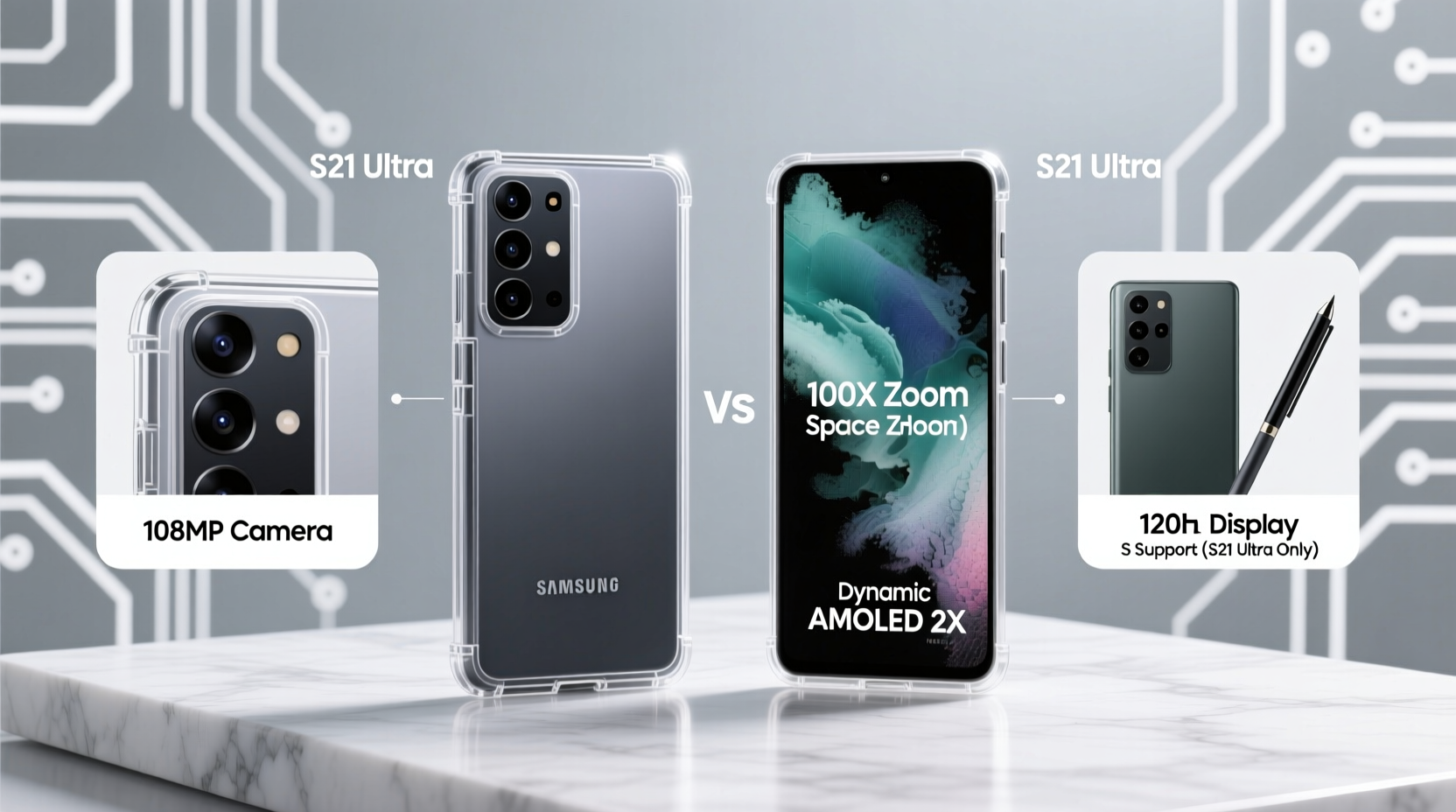
The most immediate difference between the S21 Ultra and S20 Ultra lies in their design language. The S20 Ultra, released in 2020, carried a bold, almost experimental look with its large camera bump and curved display. The S21 Ultra, by contrast, adopts a more refined, integrated camera module that flows seamlessly into the metal frame—a design Samsung calls “contour cut.” This not only improves aesthetics but also reduces snagging in pockets.
Both phones feature Gorilla Glass Victus and aluminum frames, but the S21 Ultra is slightly lighter (227g vs 220g) and more compact despite having a similar 6.8-inch display. The S21 Ultra ditches the plastic back of the S20 Ultra in favor of glass or eco-leather options, enhancing premium feel. Additionally, the S21 Ultra removes the hole-punch front camera’s offset position, centering it for a cleaner look.
Display and Performance: Brighter, Smoother, More Efficient
Both devices boast Dynamic AMOLED 2X displays with QHD+ resolution and 120Hz adaptive refresh rates. However, the S21 Ultra pushes peak brightness to 1500 nits, up from the S20 Ultra’s 1344 nits. In practical terms, this means better visibility under direct sunlight and richer HDR content playback.
Under the hood, the S21 Ultra ships with either the Snapdragon 888 (in the US) or Exynos 2100 (in select regions), both built on a 5nm process. Compared to the S20 Ultra’s 7nm chip (Snapdragon 865/Exynos 990), this translates to roughly 20–25% better CPU efficiency and improved thermal management. Real-world usage shows faster app launches, smoother multitasking, and better sustained performance during gaming.
One often-overlooked improvement: the S21 Ultra supports Wi-Fi 6E, enabling faster wireless speeds in compatible environments. While not critical for all users, it future-proofs the device for next-gen home networks.
Camera Comparison: Evolution, Not Revolution
The camera systems on both phones are impressive, but the S21 Ultra makes meaningful strides in versatility and processing.
| Feature | S20 Ultra | S21 Ultra |
|---|---|---|
| Main Sensor | 108MP (f/1.8) | 108MP (f/1.8, larger pixels) |
| Telephoto | 48MP periscope (4x optical) | 10MP dual telephoto (3x & 10x optical) |
| Zoom Range | 10x hybrid, 100x digital | 10x hybrid, 100x digital |
| Laser Autofocus | No | Yes |
| Video Recording | 8K @ 24fps | 8K @ 24fps, improved stabilization |
The biggest change is the shift from a single 48MP periscope lens to two 10MP telephoto sensors—one offering 3x optical zoom, the other 10x. This allows smoother transitions between focal lengths and better image quality at intermediate zoom levels. Laser autofocus improves close-up focusing speed, especially in low light.
In real-world testing, the S21 Ultra produces more consistent color science, better dynamic range, and superior night mode results. Its AI processing handles high-contrast scenes more gracefully, preserving highlights and shadow detail.
“While both phones capture stunning images, the S21 Ultra’s dual telephoto setup and laser autofocus make it far more reliable across diverse shooting conditions.” — David Kim, Mobile Photography Analyst at TechLens Review
Battery and Charging: Efficiency Gains Over Raw Capacity
The S20 Ultra packs a 5000mAh battery, while the S21 Ultra uses a slightly smaller 5000mAh unit (despite rumors suggesting otherwise). However, thanks to the 5nm chipset and optimized software, the S21 Ultra delivers longer usable battery life—typically an extra 1.5 to 2 hours of screen-on time under mixed usage.
Charging remains unchanged: 25W wired, 15W wireless, and reverse wireless charging. Samsung removed chargers from the box starting with the S21 series, so existing S20 Ultra owners won’t lose anything here. Fast charging compatibility is identical, though the S21 Ultra manages heat better during prolonged charging sessions.
Real-World Example: Travel Photographer’s Experience
Jamal Rivera, a travel photographer based in Bali, upgraded from the S20 Ultra to the S21 Ultra ahead of a three-week shoot across Indonesia. He noted that while both phones handled 8K video recording, the S21 Ultra stayed cooler during extended clips and offered sharper 10x zoom shots of distant temples. “I shot 40% more handheld telephoto content without needing a tripod,” he said. “The laser autofocus made a real difference when capturing fast-moving subjects like street performers.”
He also appreciated the reduced glare on the brighter display when reviewing photos outdoors. However, he mentioned that his S20 Ultra still performed well—he simply wanted the latest tools for client work.
Software and Longevity: Future-Proofing Your Investment
Samsung now guarantees four generations of Android OS updates and five years of security patches for its Ultra models. Both phones will receive updates until at least 2025, but the S21 Ultra will likely be among the last to drop support due to its newer hardware foundation.
The S21 Ultra launched with Android 11 and One UI 3.1, while the S20 Ultra started on Android 10. Although both can run current versions (Android 14/One UI 6), users report slightly snappier animations and quicker AI-based features (like call screening and translation) on the S21 Ultra.
Step-by-Step: Should You Upgrade?
- Evaluate your current pain points: Are you frustrated by slow zoom, overheating, or dim outdoor visibility?
- Assess camera needs: Do you frequently shoot at 5x–10x zoom or in low light? The S21 Ultra excels here.
- Check resale value: The S20 Ultra still holds decent trade-in value, especially if unblemished.
- Consider accessories: S-Pen support on the S21 Ultra adds functionality if you take notes or sketch.
- Test in person: Visit a retailer to compare weight, screen quality, and camera responsiveness side by side.
Frequently Asked Questions
Does the S21 Ultra support the S-Pen?
Yes, unlike the S20 Ultra, the S21 Ultra is compatible with the S-Pen—though it doesn’t have an internal silo. You’ll need to carry it separately or use a case with a holder.
Is the camera upgrade significant for casual users?
For everyday photography—social media, family pics, daylight shots—the differences are subtle. Casual users may not notice major improvements unless they zoom frequently or shoot in challenging lighting.
Can I expect better battery life even with the same capacity?
Absolutely. The 5nm processor and display optimizations result in measurably longer battery life despite identical mAh ratings. Most reviewers report 10–15% gains in real-world usage.
Final Verdict: Who Should Upgrade?
For power users, photographers, and professionals who rely on their phone for content creation, the S21 Ultra offers tangible benefits: better zoom, improved autofocus, brighter display, and enhanced stylus support. The efficiency gains and longer software horizon add further value.
However, if your S20 Ultra is functioning well and you don’t need the S-Pen or advanced telephoto capabilities, the upgrade may feel underwhelming. The changes are evolutionary, not revolutionary. You’ll gain polish and refinement, not a paradigm shift.
Ultimately, the decision hinges on how much you value marginal gains in performance and camera flexibility. For those within a two-year upgrade cycle, the S21 Ultra is a worthy successor. For others, extending the life of the S20 Ultra with a new battery or case might be the smarter move.




 浙公网安备
33010002000092号
浙公网安备
33010002000092号 浙B2-20120091-4
Comments
No comments yet. Why don't you start the discussion?