
When choosing between Samsung’s flagship Galaxy S23 and its more affordable sibling, the Galaxy S23 Fan Edition (FE), one of the most common concerns isn’t just price or camera specs—it’s size. Specifically, many users wonder: Does the S23 FE feel too big compared to the standard S23? With smartphones trending toward larger displays, comfort in hand has become a deciding factor for daily use. This article breaks down the physical differences, ergonomic implications, and real-world handling to help you determine which device fits your lifestyle—and your palms—best.
Dimensions and Physical Design Compared
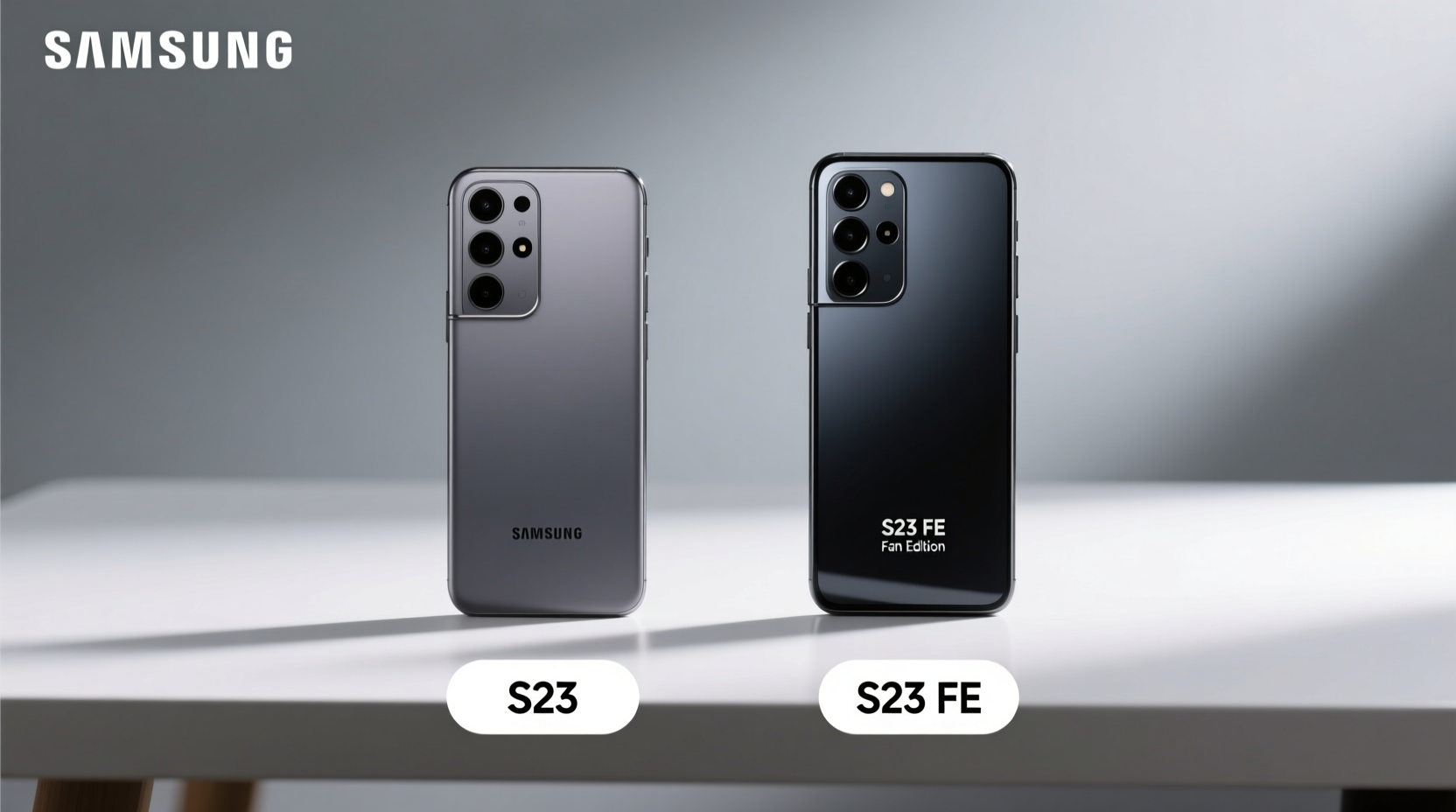
The Galaxy S23 and S23 FE may share similar naming conventions, but they are built on different design philosophies. The S23 is part of Samsung’s premium flagship lineup, designed with compact efficiency in mind. The S23 FE, while also high-performing, leans into the trend of larger screens and batteries that cater to media consumption and multitasking.
Here's a direct comparison of their key physical specifications:
| Specification | Galaxy S23 | Galaxy S23 FE |
|---|---|---|
| Height | 146.3 mm (5.76 in) | 158.0 mm (6.22 in) |
| Width | 70.9 mm (2.79 in) | 76.7 mm (3.02 in) |
| Thickness | 7.6 mm (0.30 in) | 7.9 mm (0.31 in) |
| Weight | 168 g (5.93 oz) | 208 g (7.34 oz) |
| Display Size | 6.1 inches | 6.4 inches |
The S23 FE is noticeably taller, wider, and heavier. That extra 1.7 cm in height and nearly 6 mm in width might not sound like much on paper, but in hand, it changes how naturally the phone fits within your grip. The weight difference—40 grams—is also significant, especially during prolonged one-handed use.
Ergonomics: How They Feel in Daily Use
Size isn’t just about measurements—it’s about usability. The Galaxy S23’s 6.1-inch display strikes a balance between screen real estate and manageability. Most users can comfortably reach the top corners with their thumb, making navigation intuitive without constant re-gripping.
In contrast, the S23 FE’s 6.4-inch screen pushes the limits of one-handed operation. While the curved edges help slightly with edge-swiping gestures, users with average or smaller hands often need to shift their grip when interacting with apps at the top of the screen. This becomes particularly noticeable when typing, scrolling social feeds, or dismissing notifications.
The added weight of the S23 FE also contributes to hand fatigue during extended use. Holding it upright for video calls, reading, or watching content for 30+ minutes can feel tiring compared to the lighter S23.
“Smartphone ergonomics are highly personal. For users prioritizing pocketability and single-hand control, even a half-inch increase in screen size can disrupt the experience.” — Dr. Lena Torres, Human-Device Interaction Researcher, MIT Media Lab
Real-World Example: Commuter vs. Home User
Consider two users: Maya, a city commuter who walks 45 minutes daily and uses her phone on public transit, and Jordan, who works from home and primarily watches videos and browses on the couch.
Maya values a phone that slips easily into a jacket pocket and doesn’t require two hands to operate while standing on a moving train. She finds the S23 ideal—compact, light, and responsive. When she tried the S23 FE, she noticed it bulged from her pocket and required frequent two-handed adjustments while checking messages.
Jordan, however, enjoys the immersive 6.4-inch screen for YouTube and multitasking with split-screen apps. The extra weight doesn’t bother him since he mostly uses the phone while seated. For him, the S23 FE’s size is an upgrade, not a burden.
This contrast illustrates that “too big” is subjective—it depends on your environment, habits, and physical context.
Key Differences Impacting Perceived Size
- Bezel and Curvature: The S23 features slightly tighter bezels and a flatter screen edge, contributing to a more compact feel. The S27 FE has gently curved edges, which look premium but can make accidental touches more likely and reduce perceived stability in hand.
- Frame Material: The S23 uses Armor Aluminum, which allows for a slimmer frame. The S23 FE uses plastic in parts of the chassis, adding slight bulk despite similar internal engineering.
- Battery Size: The S23 FE packs a 4,500 mAh battery versus the S23’s 3,900 mAh. This larger cell necessitates a thicker internal layout, subtly affecting thickness and balance.
Checklist: Is the S23 FE Too Big for You?
Answer these questions to assess fit before buying:
- Do you regularly use your phone one-handed? → If yes, the S23 may suit you better.
- Do you wear tight-fitting clothing or small pockets? → The S23 FE may not sit flush.
- Do you prioritize long gaming or video sessions? → The larger screen could be a benefit.
- Are you upgrading from a phone smaller than 6 inches? → The jump to 6.4” may feel drastic.
- Do you use a case? → Most cases add bulk, amplifying the size difference.
Frequently Asked Questions
Is the S23 FE harder to use one-handed than the S23?
Yes, for most users. The increased width and screen size make reaching the top of the display difficult without shifting your grip. Samsung’s Edge Panels and Reachability mode can help, but they don’t fully compensate for the physical gap.
Does the S23 FE feel bulky in the hand?
It depends on hand size. Users with larger hands often report it feels balanced and secure. Those with smaller hands may find it stretches their grip and causes early fatigue. The 208g weight also contributes to a denser, less agile feel compared to the 168g S23.
Can a case make the size difference worse?
Absolutely. Adding a protective case increases both dimensions and weight. A rugged case on the S23 FE can push it beyond the footprint of some mini tablets. If size is a concern, consider using minimal bumpers or going case-free with screen protection only.
Step-by-Step: Choosing Based on Size Preferences
- Assess Your Usage Patterns: Track how you use your phone daily. Are you mostly texting and commuting, or consuming media at home?
- Measure Your Hand Span: From the base of your palm to the tip of your index finger. If it’s under 18 cm, the S23 FE may be challenging for one-handed use.
- Compare to Your Current Phone: Lay your current device next to images or specs of both models. Visualize the increase in size.
- Test in Person: Visit a retailer. Hold both phones. Open your favorite apps and simulate real tasks.
- Decide on Priorities: If battery life and screen size matter more than portability, the S23 FE wins. If comfort and compactness are key, go with the S23.
Conclusion: It’s Not Just Size—It’s Fit
The Galaxy S23 FE isn’t objectively “too big”—it’s designed for a different user profile. It offers a larger canvas for entertainment, productivity, and longer battery life, all at a competitive price point. But if you value sleekness, agility, and effortless handling, the standard S23 remains the superior choice in terms of ergonomics.
Ultimately, the decision comes down to how you interact with your device. Smartphones are personal tools, worn and used like accessories. What feels natural to one person might feel cumbersome to another. Don’t let marketing or benchmarks decide for you—let your hands and habits lead the way.




 浙公网安备
33010002000092号
浙公网安备
33010002000092号 浙B2-20120091-4
Comments
No comments yet. Why don't you start the discussion?