
Choosing between a saddle bag and a bucket bag often comes down to a single question: which one lets you carry more while still looking polished? Both styles have surged in popularity thanks to their retro-chic appeal and modern updates, but they serve different needs. While saddle bags offer structured elegance with asymmetrical lines, bucket bags bring vertical depth and open accessibility. The real test is how much they hold—and whether that capacity comes at the cost of bulkiness.
This isn’t just about fashion—it’s about function. Whether you’re commuting, traveling, or navigating a packed day, carrying essentials like a phone, wallet, keys, makeup, notebook, and even a small water bottle should be effortless. The best bag doesn’t sacrifice silhouette for space. Let’s break down both options with honest comparisons, real-world usability, and expert-backed insights to determine which truly wins in the balance of storage and sleekness.
Capacity vs. Silhouette: The Core Trade-Off
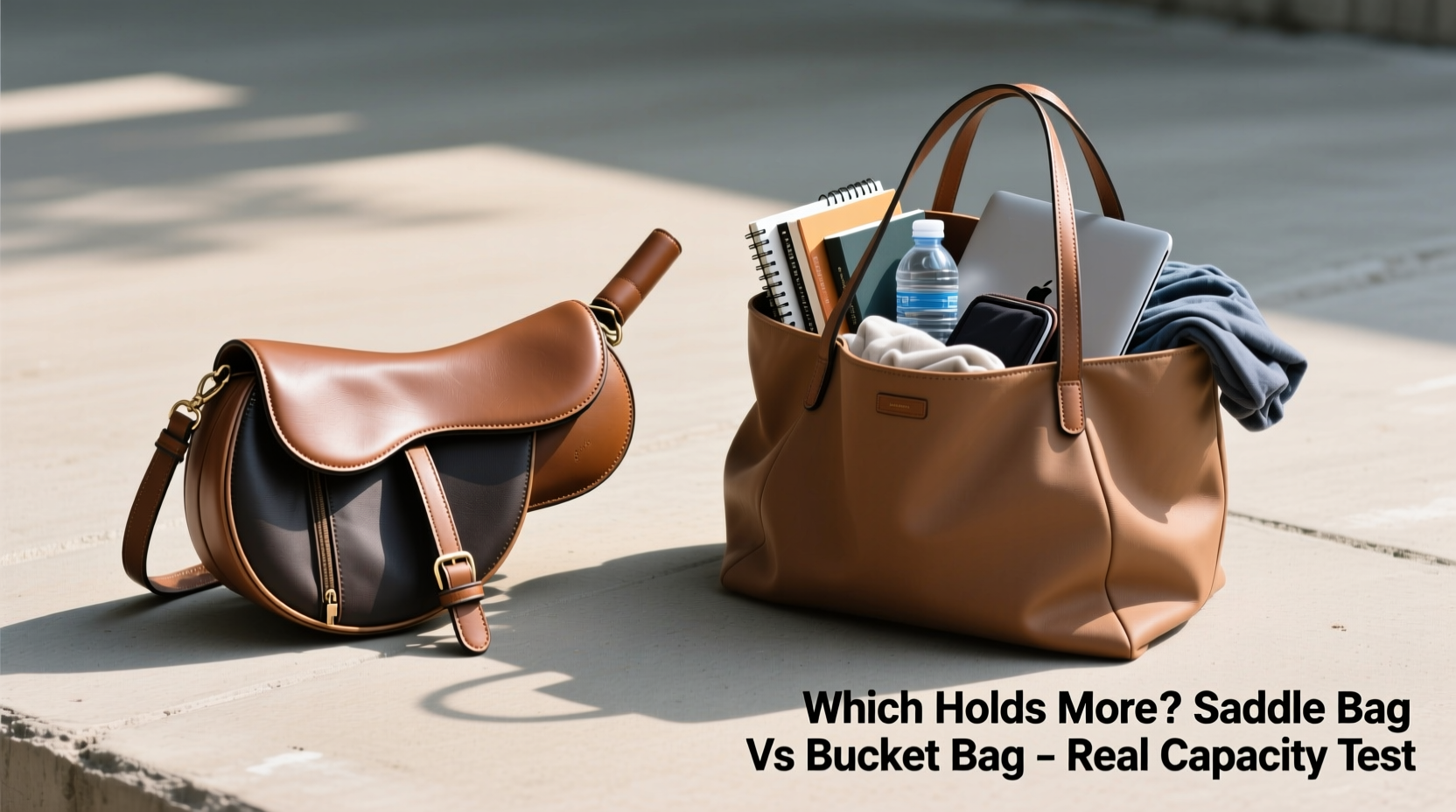
The illusion of space matters as much as actual volume. A bag might technically hold more, but if it distorts your posture or overwhelms your frame, it defeats the purpose. Saddle bags typically follow a curved, flattened shape that hugs the body. Their design mimics a horse saddle—hence the name—with a narrower base and wider top. This creates visual interest but limits depth. Most standard saddle bags range from 3 to 5 liters in volume, depending on materials and construction.
Bucket bags, by contrast, are cylindrical or conical with vertical walls. They open wide at the top and taper slightly toward the base. Because of their upright structure, they maximize internal height. A medium-sized bucket bag can easily reach 6–8 liters, offering significantly more room for layered items. Despite this, many maintain a streamlined look when worn crossbody or on the shoulder, especially when made from soft leather or canvas that conforms to the body.
Here’s where perception plays a role: saddle bags draw attention to their shape, making them appear larger than they are. Bucket bags, though deeper, often look slimmer due to their uniform profile. When filled, a saddle bag may bulge awkwardly at the sides; a well-designed bucket bag expands upward, keeping its footprint compact.
Design Features That Impact Storage Efficiency
Not all bags use space equally. Internal organization, closure type, and strap placement affect how much you can carry—and how easily you can access it.
- Saddle Bags: Often feature divided compartments due to their curved interior. Some include a central zipper partition, which helps separate items but reduces usable space. Magnetic flaps or snap closures keep contents secure but limit vertical expansion.
- Bucket Bags: Typically have a single open cavity with a drawstring or twist-lock closure. This allows loose stacking of items. Many include an internal zip pocket or slip sleeve for essentials, preserving open volume. Drawstrings let you compress the bag when lightly packed, maintaining a tidy appearance.
Strap design also influences wearability. Saddle bags usually have a single shoulder strap or crossbody band positioned off-center, which can cause uneven weight distribution when heavily loaded. Bucket bags tend to have centered double straps or a single longer strap, promoting balanced carry—even when full.
“Volume isn’t just about cubic inches—it’s about how the bag wears on the body. A well-proportioned bucket bag disappears into your outfit, even when fully packed.” — Lena Torres, Accessories Designer at Atelier Nine
Side-by-Side Comparison: Key Metrics
| Feature | Saddle Bag | Bucket Bag |
|---|---|---|
| Average Capacity | 3–5 liters | 6–8 liters |
| Shape Profile | Curved, asymmetrical | Vertical, cylindrical |
| Bulk Perception | Higher (due to width) | Lower (tapers slightly) |
| Access Type | Flap or magnetic closure | Drawstring or twist lock |
| Internal Organization | Moderate (often divided) | Minimal (open space) |
| Weight Distribution | Uneven (off-center strap) | Balanced (centered carry) |
| Best For | Light daily carry, style focus | Errands, work commute, travel |
Real-World Test: A Day in the Life
Consider Maya, a freelance designer who commutes across the city. Her essentials include a large smartphone, wallet, AirPods, compact mirror, lip balm, hand sanitizer, a foldable tote, and a small notebook. She tested two bags—a classic saddle bag (9” x 7” x 3”) and a medium bucket bag (7” diameter x 10” height)—over five days.
With the saddle bag, she could fit everything only by stuffing the outer flap pocket and leaving the notebook half-exposed. The bag tilted forward when worn crossbody, and the flap wouldn’t close properly when full. On rainy days, retrieving her umbrella meant unloading half the bag.
The bucket bag handled the same load effortlessly. Items stacked vertically: umbrella at the back, notebook beside it, pouches on top. The drawstring kept everything contained, and the top could be cinched when she carried fewer items. Despite holding more, it looked neater—its height aligned with her torso, avoiding the “wide load” effect of the saddle bag.
“I assumed the saddle bag was more stylish,” Maya said, “but I ended up switching to the bucket every time I had a busy day. It just works better.”
How to Maximize Space Without Adding Bulk
Whichever style you prefer, smart packing makes a difference. Follow these steps to optimize capacity while preserving aesthetics:
- Use slim organizers: A flat cardholder beats a thick wallet. Slide pens and styluses into silicone sleeves instead of loose pockets.
- Layer strategically: Place heavier, flat items (notebook, tablet) against your back. Lighter, irregular shapes go on top.
- Limit fabric bulk: Avoid overpacking scarves or sweaters unless necessary. If needed, roll them tightly and place vertically.
- Choose soft materials: Full-grain leather or waxed canvas molds to contents, reducing rigid outlines.
- Adjust strap length: A shorter drop (18–20”) keeps the bag closer to your body, minimizing swing and perceived size.
FAQ: Common Questions Answered
Can a bucket bag be too big for a petite frame?
Yes, if it exceeds 11” in height or hangs below the hip. Opt for mini or midi sizes (7–9” height) with a narrow base. Shorter straps ensure the bag sits higher on the torso, balancing proportions.
Do saddle bags work for professional settings?
Some structured leather saddle bags transition well into office environments, especially in neutral tones. However, their casual origins mean they may clash with formal attire. Always consider workplace culture before choosing.
Which bag type is more secure?
Bucket bags with twist locks or magnetic snap closures offer better security than open-top drawstrings. Saddle bags with flap closures protect against rain and casual theft but are less accessible. For high-theft areas, choose either style with an anti-slip strap and internal zipped compartment.
Final Verdict: Function Meets Form
If raw capacity and efficient packing are priorities, the bucket bag wins. Its vertical design leverages unused airspace, allowing more items to fit without widening the silhouette. Modern versions come in compact proportions that flatter smaller frames, and thoughtful details like adjustable straps and internal pockets enhance daily usability.
Saddle bags remain strong contenders for style-focused outfits. Their distinctive shape adds personality to minimalist ensembles, and high-end versions from luxury brands offer excellent craftsmanship. But when it comes to carrying a full load discreetly, they fall short—especially for taller or slimmer wearers who want to avoid disproportionate volume.
The key is matching the bag to your lifestyle. For errands, transit, or long days out, the bucket bag delivers superior utility without visual clutter. For brunch dates or gallery visits where you carry only the basics, a saddle bag offers charm and character.




 浙公网安备
33010002000092号
浙公网安备
33010002000092号 浙B2-20120091-4
Comments
No comments yet. Why don't you start the discussion?