
When a dog suffers a broken leg, every movement matters. Improper handling during transport or daily care can worsen the injury, delay healing, and cause unnecessary pain. Whether you're moving your pet from one room to another or taking them to the vet, using safe and comfortable carrying techniques is essential. This guide provides practical, veterinarian-backed methods to support your dog without risking further harm.
Understanding the Risks of Improper Handling
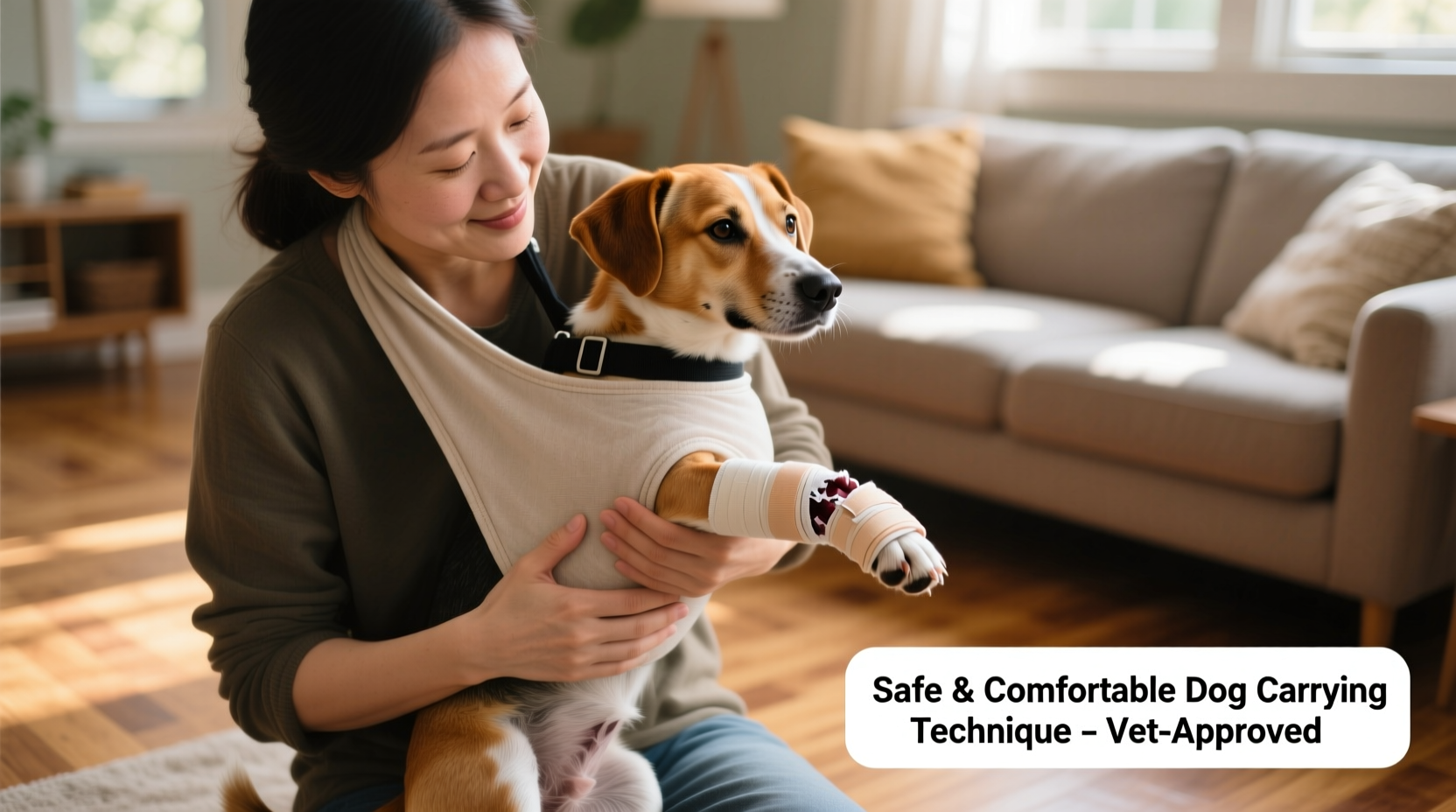
A fractured or severely injured leg is unstable. The surrounding muscles, ligaments, and bones are under stress, and sudden shifts in weight or posture can displace bone fragments or damage soft tissues. Dogs instinctively try to avoid putting weight on the injured limb, which changes their center of gravity. Lifting them incorrectly—such as by the front legs or under the armpits—can place undue pressure on the spine or uninjured limbs.
Additionally, pain and fear may make dogs reactive. Even a normally calm pet might snap or struggle when touched in the wrong way. That’s why technique, timing, and preparation are critical.
“Improper lifting is one of the most common causes of secondary injury in dogs with fractures. Support the entire body, not just one area.” — Dr. Lena Patel, DVM, Small Animal Orthopedic Specialist
Step-by-Step Guide to Safely Carry a Dog with a Broken Leg
Follow this sequence to move your dog securely while minimizing discomfort and risk:
- Stay Calm and Reassure Your Dog: Speak in a low, soothing voice. Sudden movements or anxious energy can increase your dog’s stress.
- Prepare a Sturdy Support Surface: If possible, use a firm board, pet stretcher, or tightly rolled blanket as a makeshift sling or carrier base.
- Position Yourself Correctly: Kneel beside your dog rather than standing over them, which can appear threatening.
- Support the Entire Body: Place one arm under the dog’s chest (behind the front legs) and the other under the hindquarters (just in front of the back legs).
- Lift Smoothly and Close to Your Body: Keep your back straight, engage your legs, and lift in one fluid motion. Hold the dog close to your chest to reduce wobbling.
- Keep the Injured Leg Neutral: Avoid twisting or bending the affected limb. Let it rest naturally without pressure.
- Move Slowly and Place Gently: Set the dog down with equal care, ensuring all four limbs touch the surface at the same time.
Using a Sling or Towel Support for Added Stability
For medium to large dogs—or when longer-distance carrying is necessary—a sling made from a strong towel or commercial support wrap can distribute weight more evenly and reduce strain on both dog and handler.
To create a DIY sling:
- Select a sturdy bath towel or non-stretch fabric measuring at least 30x60 inches.
- Place the towel under your dog’s abdomen, just behind the front legs and under the hips.
- Gather the ends and hold them securely on each side, creating a hammock-like support.
- Lift gently, allowing the towel to bear most of the weight while you stabilize the dog’s head and neck.
This method keeps the spine aligned and reduces direct pressure on the injured leg. It's especially useful for dogs recovering at home who need help accessing elevated spaces like beds or cars.
Do’s and Don’ts When Carrying an Injured Dog
| Do’s | Don’ts |
|---|---|
| Support both the chest and hindquarters simultaneously | Never lift by the front legs alone |
| Use a towel or sling for extra stability | Avoid letting the dog dangle or twist |
| Keep movements slow and smooth | Don’t rush or jerk during lifting |
| Keep the injured leg in a neutral, relaxed position | Never apply pressure directly to the fracture site |
| Have someone assist with larger dogs | Don’t attempt to carry a large dog solo if unsafe |
Mini Case Study: Helping Max Recover After a Tibia Fracture
Max, a 45-pound Australian Shepherd, broke his right hind leg after jumping off a deck. His owner, Sarah, initially tried to carry him by looping her arms under his chest and belly, but Max yelped and refused to be lifted afterward. Concerned, she consulted her vet, who demonstrated the two-handed support method combined with a rolled fleece blanket as a sling.
Over the next six weeks, Sarah used the sling to help Max go outside and get into the car for checkups. She reported significantly less resistance and no signs of increased pain. “Once I started supporting his whole body instead of pulling under his arms, he relaxed,” she said. “It made recovery much smoother for both of us.”
Checklist: Emergency Preparation for Injured Dogs
Be ready before an accident occurs. Keep these items and actions on hand:
- ✔ A sturdy pet carrier or flat board (like a cutting board) for immobilization
- ✔ Non-slip towels or blankets for traction and sling use
- ✔ Leash and muzzle (even friendly dogs may bite when in pain)
- ✔ First aid kit with gauze, vet wrap, and cold pack
- ✔ List of emergency vet clinics with phone numbers
- ✔ Practice safe lifting techniques with a healthy pet
Frequently Asked Questions
Can I carry my small dog like a baby if they have a broken leg?
No. Holding a dog upright against your chest places unnatural strain on the spine and pelvis. Even small dogs should be carried horizontally with full-body support to keep the injured leg stable and reduce pain.
How do I get my dog into the car safely?
Use a ramp or tailgate-level entry if possible. If lifting is required, use a towel sling and have two people assist—one supporting the front, the other the rear. Never let the dog jump or climb unaided.
What if my dog won’t let me touch them?
Pain and fear can cause aggression. Approach slowly, speak softly, and consider using a muzzle for safety. If the dog resists all contact, cover them with a blanket and slide them onto a rigid surface for transport to the vet.
Conclusion: Prioritize Safety, Comfort, and Healing
Carrying a dog with a broken leg isn’t just about physical strength—it’s about technique, empathy, and preparation. Every decision you make during handling affects your pet’s comfort and recovery timeline. By supporting the entire body, using slings when needed, and avoiding common mistakes, you protect your dog from additional trauma and foster a safer healing process.




 浙公网安备
33010002000092号
浙公网安备
33010002000092号 浙B2-20120091-4
Comments
No comments yet. Why don't you start the discussion?