
A dead car battery is one of the most common automotive setbacks, but it doesn’t have to leave you stranded. With the right knowledge and tools, charging your car battery safely and effectively is something every driver can do at home. Modern battery chargers are designed for ease of use, but improper handling can lead to damage, reduced battery life, or even safety hazards like sparks or explosions. This guide walks through the correct procedures, essential precautions, and best practices to ensure a successful charge while preserving your battery’s longevity.
Understanding Your Car Battery and Charger Types
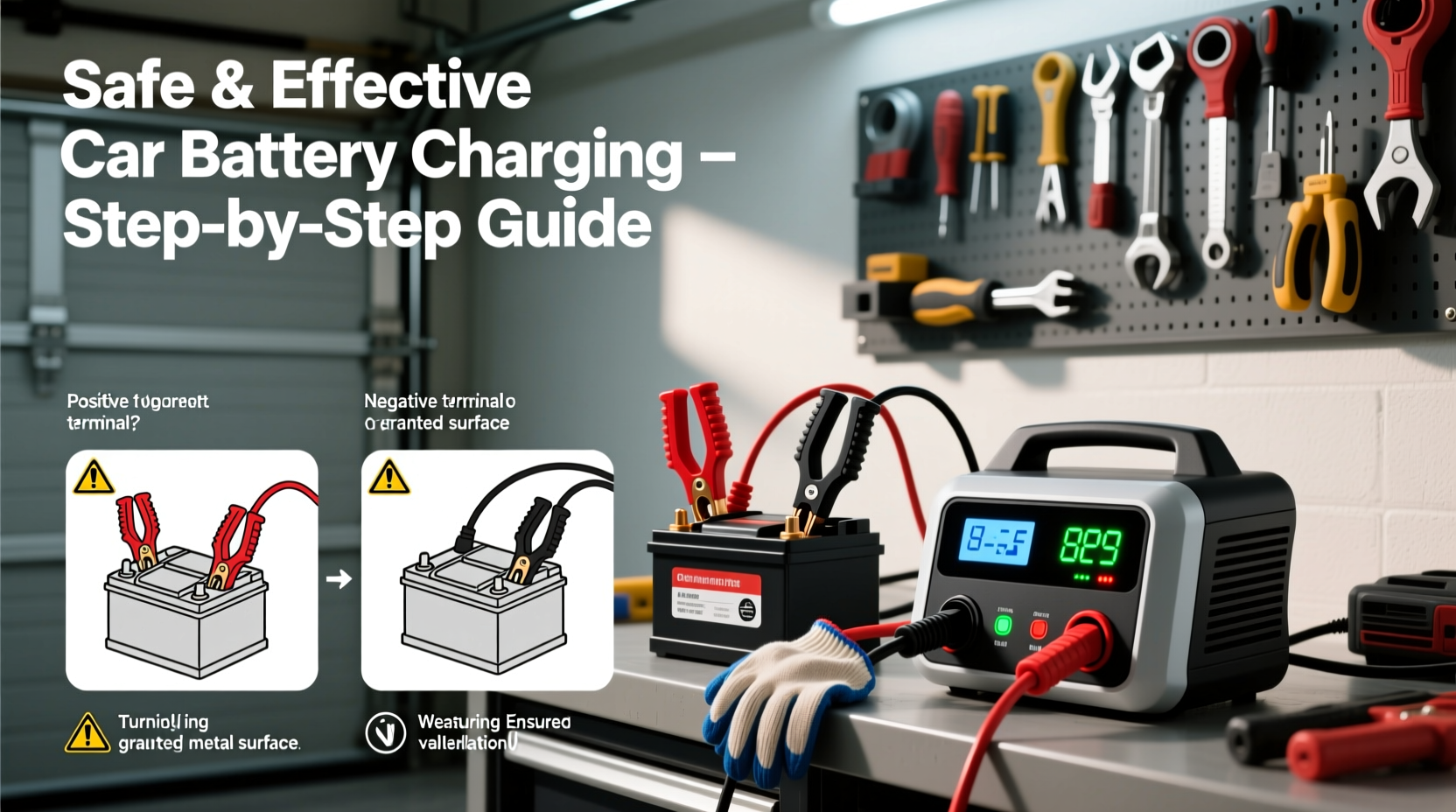
Before connecting any charger, it's crucial to understand the components involved. Most vehicles use a 12-volt lead-acid battery, though some newer models may feature AGM (Absorbent Glass Mat) or lithium-ion variants. Each type responds differently to charging, so identifying your battery chemistry matters.
Battery chargers come in several forms:
- Trickle Chargers: Deliver a low, steady current (usually 1–2 amps). Ideal for maintaining charge over time but slow for reviving a dead battery.
- Standard Chargers: Offer higher amperage (5–10 amps), suitable for full recharges within a few hours.
- Smart Chargers: Automatically adjust voltage and current based on the battery’s condition. These detect when charging is complete and switch to maintenance mode, reducing overcharge risk.
- Jump Starters with Charging Function: Portable units that can both jump-start and slowly recharge batteries—convenient for emergencies.
For most users, a smart charger is the safest and most efficient option. It minimizes human error and protects against overcharging, which is a leading cause of premature battery failure.
Step-by-Step Guide to Safely Charge a Car Battery
Charging a car battery isn't just about connecting cables—it requires preparation, attention to detail, and adherence to safety protocols. Follow this sequence for optimal results:
- Turn off the vehicle and remove the keys. Ensure the engine is completely off and no electrical systems are drawing power.
- Open the hood and locate the battery. Identify the positive (+) and negative (–) terminals. Clean any corrosion using a wire brush if necessary.
- Disconnect the battery (optional but recommended). For added safety, disconnect the negative terminal first, then the positive. This prevents accidental short circuits during connection.
- Connect the charger:
- Attach the red clamp to the positive terminal.
- Attach the black clamp to the negative terminal—or better yet, to an unpainted metal surface away from the battery (like a bolt on the engine block) to ground it safely.
- Set the charger mode. Choose the appropriate voltage (12V), amperage (start with low setting if unsure), and battery type (e.g., lead-acid, AGM).
- Plug in and start charging. Turn on the charger and let it run. Smart chargers will display progress; manual ones require monitoring.
- Wait for completion. Depending on discharge level and charger output, this can take 2 to 12 hours. Avoid fast charging unless absolutely necessary.
- Disconnect safely. Unplug the charger first, then remove the clamps—black first, then red—to prevent sparking near the battery.
- Reconnect the battery (if disconnected). Reattach the positive terminal, then the negative.
- Test the system. Start the car and verify that the battery holds voltage. Use a multimeter to check readings between 12.6V (fully charged) and 14.4V (while running).
Why Grounding the Negative Clamp Matters
Connecting the negative clamp to a grounded metal point rather than directly to the battery terminal reduces the risk of igniting hydrogen gas emitted by the battery. Even small sparks near the battery can cause dangerous reactions, especially in poorly ventilated areas.
Do’s and Don’ts When Charging a Car Battery
| Do’s | Don’ts |
|---|---|
| Work in a well-ventilated area | Smoke or use open flames near the battery |
| Wear safety goggles and gloves | Touch both terminals with tools simultaneously |
| Use a charger with automatic shut-off | Leave the charger unattended for extended periods (especially non-smart models) |
| Check electrolyte levels (for non-sealed batteries) | Charge a cracked or leaking battery |
| Inspect cables for wear before use | Attempt to charge a frozen battery |
Real Example: Recovering from Winter Battery Failure
Consider Mark, a homeowner in Minnesota who found his SUV wouldn’t start after a cold snap. The battery read only 10.2 volts on his multimeter—well below the functional threshold. Instead of calling roadside assistance, he brought out his 6-amp smart charger. He cleared snow from under the hood, cleaned minor corrosion from the terminals, and connected the charger following the correct polarity. After four hours, the charger indicated a full charge. Mark started the engine successfully and drove for 30 minutes to allow the alternator to stabilize the charge. By taking preventive action and using proper technique, he avoided a costly tow and extended the life of a battery that still had usable capacity.
“Many drivers replace batteries too soon because they assume a failure to start means a dead unit. In reality, a proper charge cycle can restore up to 70% of seemingly dead lead-acid batteries.” — David Lin, Automotive Electrical Systems Technician
Essential Checklist Before Charging
Use this checklist to prepare for a safe and effective charging session:
- ☐ Confirm the battery is 12V and compatible with your charger
- ☐ Inspect for cracks, leaks, or bulging—do not charge damaged batteries
- ☐ Ensure the area is dry and ventilated
- ☐ Wear protective eyewear and gloves
- ☐ Verify charger settings match battery type and voltage
- ☐ Disconnect any parasitic loads (e.g., aftermarket alarms, dashcams)
- ☐ Clean terminals for solid electrical contact
- ☐ Have a fire extinguisher nearby (preferably Class C for electrical fires)
Frequently Asked Questions
How long does it take to charge a car battery?
Charging time depends on the battery’s state of charge and the charger’s output. A 12V battery at 50% discharge (12.2V) may take 4–6 hours with a 4-amp charger. Trickle chargers can take 12–24 hours. Smart chargers optimize timing and often complete the process efficiently without user intervention.
Can I charge my car battery without disconnecting it?
Yes, modern vehicles can typically be charged without disconnecting the battery. However, disconnecting reduces the risk of voltage spikes affecting sensitive electronics. If leaving the battery connected, ensure the charger is regulated and free of surges.
What should a fully charged car battery read?
A fully charged 12V battery should measure approximately 12.6 to 12.8 volts at rest (engine off). When the engine is running, the voltage should rise to 13.7–14.7 volts due to alternator output.
Final Thoughts and Action Steps
Charging your car battery correctly is a fundamental skill that saves time, money, and stress. Whether facing a sudden morning failure or performing seasonal maintenance, knowing how to use a charger safely ensures reliability and extends your battery’s service life. Invest in a quality smart charger, follow proper procedures, and never rush the process. Over time, consistent care translates into fewer breakdowns and greater confidence behind the wheel.




 浙公网安备
33010002000092号
浙公网安备
33010002000092号 浙B2-20120091-4
Comments
No comments yet. Why don't you start the discussion?