
Bamboo bracelets have grown in popularity not only for their natural aesthetic but also for their eco-friendly appeal and cultural significance. Lightweight, renewable, and often handcrafted, they make meaningful accessories. However, like all organic materials, bamboo is sensitive to moisture, heat, and harsh chemicals. Over time, exposure to sweat, oils, and dust can dull its surface or encourage cracking. Cleaning your bamboo bracelet properly isn’t just about appearance—it’s essential for preserving its structural integrity and extending its lifespan.
The key to maintaining a bamboo bracelet lies in gentle, consistent care. Unlike metal or plastic, bamboo cannot withstand aggressive scrubbing or immersion in water. A misstep in cleaning can lead to warping, splitting, or permanent discoloration. This guide outlines scientifically sound and practical methods to keep your bamboo bracelet looking fresh while avoiding irreversible harm.
Understanding Bamboo as a Natural Material
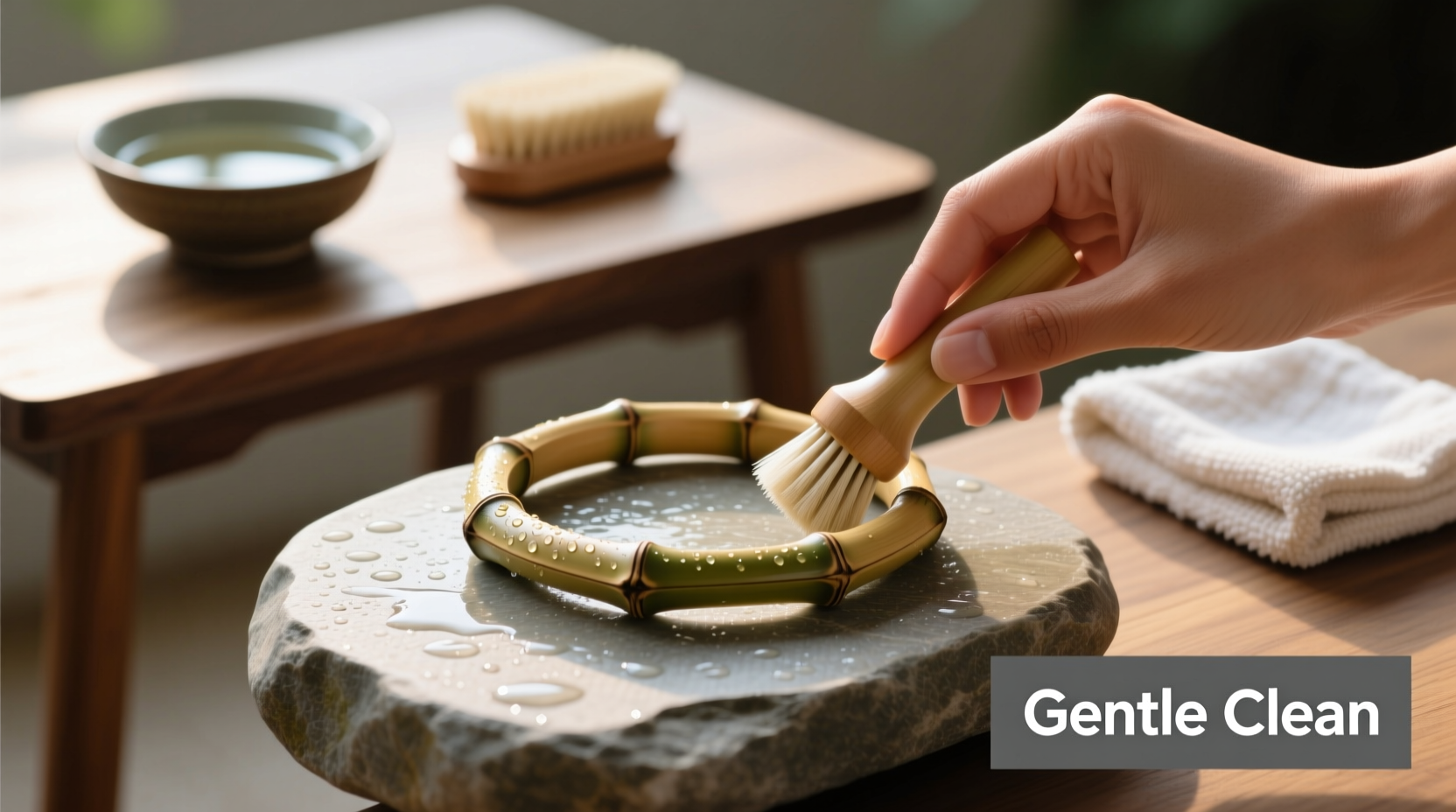
Bamboo is a grass, not wood, and its cellular structure makes it both strong and porous. While this allows for flexibility and lightness, it also means the material readily absorbs moisture and is vulnerable to environmental stressors. Most bamboo bracelets are treated with a sealant—often plant-based oil or food-safe lacquer—to protect against daily wear. However, even sealed bamboo requires careful handling.
Exposure to ultraviolet (UV) light, chlorinated water, perfumes, lotions, and perspiration accelerates degradation. The natural oils from your skin can penetrate microscopic pores, leading to staining or mildew if left uncleaned. Understanding these vulnerabilities is the first step toward effective maintenance.
“Bamboo is resilient when cared for correctly, but unforgiving when exposed to extremes. Treat it like fine wood furniture—gentle, dry, and conditioned.” — Dr. Lin Mei, Sustainable Materials Researcher, Kyoto Institute of Technology
Step-by-Step Guide: How to Clean Your Bamboo Bracelet Safely
Cleaning a bamboo bracelet should be a quick, routine process—not a deep restoration unless absolutely necessary. Follow this five-step method regularly to maintain its luster and prevent buildup.
- Remove the bracelet before showering, swimming, or applying skincare products. This prevents unnecessary exposure to moisture and chemicals.
- Wipe gently with a dry microfiber cloth after each wear. Use light pressure to remove surface oils and dust. Microfiber is non-abrasive and traps particles without scratching.
- Dampen a corner of the cloth slightly with distilled water only—never tap water, which may contain minerals that leave deposits. Wring it thoroughly so it's barely damp.
- Wipe the bracelet in one direction, following the grain of the bamboo. Avoid circular motions, which can disturb the finish over time.
- Dry immediately with a second clean, dry cloth. Allow it to air-dry for 5–10 minutes away from direct sunlight or heat sources before storing.
Do’s and Don’ts of Bamboo Bracelet Care
| Do | Don't |
|---|---|
| Clean weekly with a dry or slightly damp cloth | Use soap, detergent, or household cleaners |
| Condition every 4–6 weeks with food-grade mineral oil | Expose to hot water, steam, or dishwashers |
| Store in a breathable fabric pouch away from sunlight | Leave it on bathroom counters near sinks |
| Inspect monthly for cracks or finish wear | Use alcohol wipes or sanitizers directly on the surface |
| Rotate use if you own multiple bracelets | Wear during intense physical activity or sports |
Reviving a Dull or Dry Bamboo Bracelet
If your bracelet has lost its sheen or feels rough, it may need conditioning. Over time, even sealed bamboo loses natural oils. Reconditioning restores smoothness and enhances grain visibility. Use only pure, food-grade mineral oil or beeswax polish—never vegetable oils like olive or coconut, which can turn rancid and attract mold.
- Ensure the bracelet is completely dry and free of dust.
- Apply 1–2 drops of mineral oil to a soft cotton cloth—not directly onto the bracelet.
- Gently rub the oil into the surface using linear strokes.
- Let it absorb for 15–30 minutes.
- Buff lightly with a dry section of the cloth to remove excess.
This process should be done no more than once every month and a half. Over-oiling can weaken the bamboo fibers or create a sticky residue that attracts dirt.
Real Example: Preventing Damage Through Routine Care
Sophie, a yoga instructor from Portland, wore her bamboo bracelet daily during classes. After three months, she noticed fine cracks forming along the inner curve. She brought it to a local artisan who explained that repeated exposure to sweat and floor mats had degraded the sealant. With proper wiping after each session and bi-monthly oiling, the bracelet recovered within weeks. Now, she keeps a small care kit in her gym bag—a microfiber cloth, a travel-sized oil dropper, and a linen pouch. Her bracelet has lasted over two years, outlasting several synthetic alternatives.
Care Checklist: Monthly Maintenance Routine
- ☐ Wipe down with a dry microfiber cloth after every use
- ☐ Inspect for cracks, splinters, or finish peeling
- ☐ Deep clean with a barely damp cloth (once per week)
- ☐ Condition with mineral oil every 4–6 weeks
- ☐ Store in a ventilated, dark place when not worn
- ☐ Remove before swimming, bathing, or applying lotions
Frequently Asked Questions
Can I use vinegar or lemon juice to clean my bamboo bracelet?
No. Although natural, acidic substances like vinegar and lemon juice degrade bamboo fibers and strip protective finishes. They may initially brighten the surface but lead to long-term brittleness and discoloration.
What should I do if my bamboo bracelet gets wet accidentally?
Act quickly. Pat it dry with a clean towel, then leave it in a well-ventilated area—away from heaters or fans—for at least 12 hours. Do not use a hairdryer. If swelling occurs, discontinue use and consult the manufacturer.
Is it safe to wear a bamboo bracelet every day?
Yes, but with precautions. Daily wear is acceptable if you follow a cleaning routine, avoid high-moisture environments, and condition periodically. For maximum longevity, alternate with other accessories.
Conclusion: Preserve Nature’s Beauty with Mindful Habits
A bamboo bracelet is more than an accessory—it’s a connection to nature, craftsmanship, and sustainability. With mindful care, it can remain a cherished part of your wardrobe for years. The habits you build today—wiping after wear, storing properly, and conditioning gently—compound into lasting preservation. Damage is rarely sudden; it accumulates silently through small oversights. By treating your bamboo bracelet with the same attention you’d give a wooden instrument or heirloom, you honor both its material and meaning.




 浙公网安备
33010002000092号
浙公网安备
33010002000092号 浙B2-20120091-4
Comments
No comments yet. Why don't you start the discussion?