
Sequined platform shoes are a bold fashion statement—perfect for parties, performances, or nights out. But their dazzling appeal comes with delicate care needs. The combination of elevated soles, fabric or synthetic uppers, and hundreds of tiny, attached sequins makes cleaning them a high-stakes task. A single misstep—like soaking the shoe or using harsh scrubbing—can loosen glue, warp materials, or dull the shine. Yet neglecting cleaning leads to buildup of dirt, oils, and odors that degrade both appearance and longevity.
The good news is that with the right approach, you can keep your sequined platforms looking radiant without risking structural harm. This guide outlines gentle, effective techniques backed by footwear care professionals, tested on real-world wearers, and designed for home execution with minimal tools.
Understanding Your Shoe’s Structure
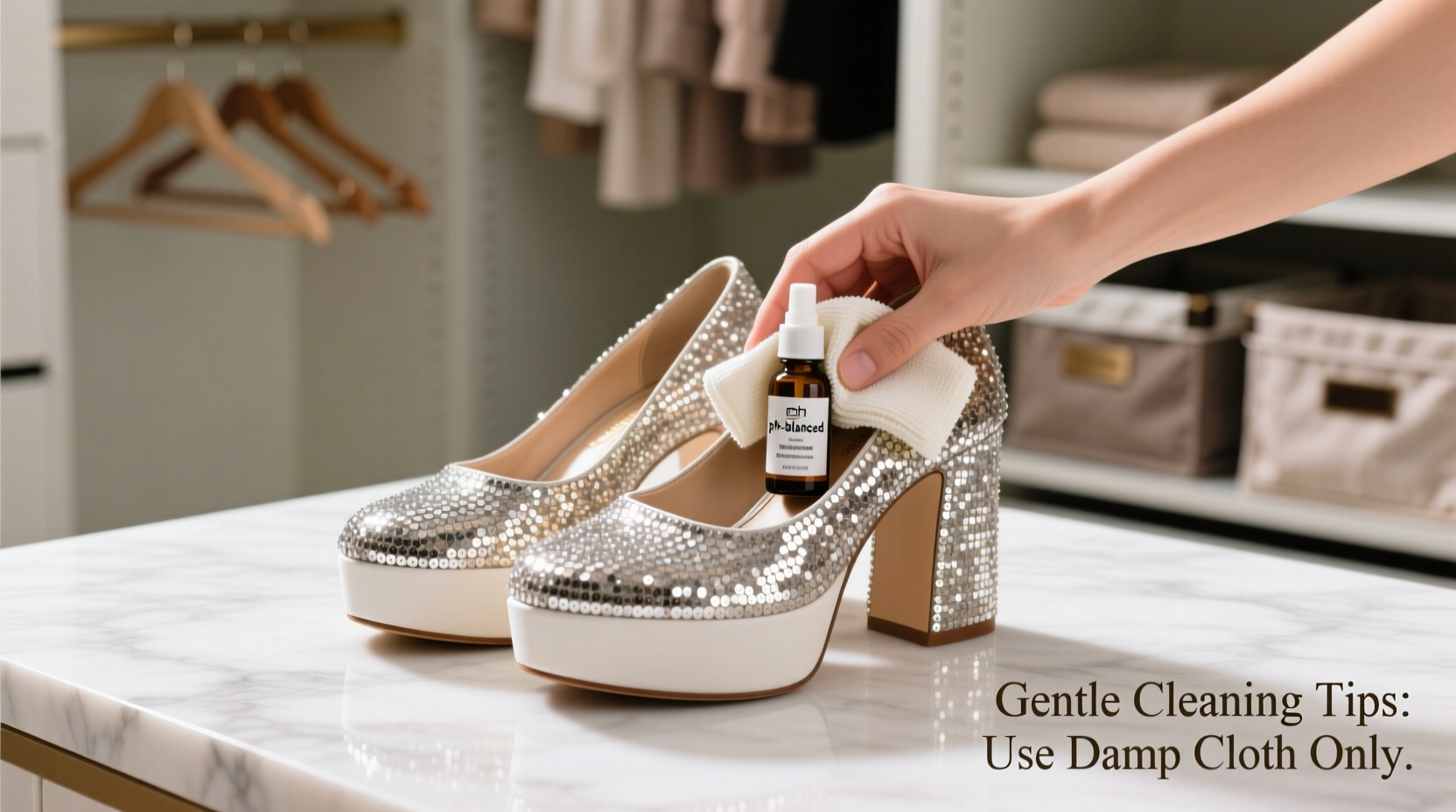
Before any cleaning begins, it's essential to understand what you're working with. Sequined platform shoes typically consist of three main components:
- Upper material: Often synthetic fabric, mesh, or leather, covered in sewn-on or glued sequins.
- Platform sole: Usually made from EVA foam, rubber, or wood composite—materials sensitive to moisture and abrasion.
- Sequins: Plastic or metallic discs, often heat-sensitive and prone to flaking if mishandled.
Cleaning must address surface grime without saturating the shoe, damaging adhesive bonds, or warping the sole. Aggressive brushing or immersion washing may seem efficient but often causes irreversible damage—especially when glue weakens under water exposure.
“Many people ruin their favorite embellished shoes by treating them like sneakers. Delicate materials demand delicate methods.” — Lena Torres, Footwear Restoration Specialist
Step-by-Step Guide: Safe Cleaning Process
Cleaning sequined platforms isn’t complicated, but it requires patience and precision. Follow this timeline-tested method to preserve both sparkle and support.
- Pre-Clean Inspection (5 minutes): Check for loose sequins, cracked glue spots, or sole separation. Address minor repairs before cleaning.
- Dry Debris Removal (10 minutes): Use a soft-bristled brush (like a clean makeup or toothbrush) to gently flick away dust and dry dirt. Work in the direction of the sequin alignment to avoid snagging.
- Spot Test (5 minutes): Dampen a cotton swab with distilled water or mild soap solution and test on a small, hidden area (e.g., inside heel). Wait 10 minutes. Look for color bleed, warping, or lifting.
- Targeted Wipe-Down (15 minutes): Dip a microfiber cloth in a mix of lukewarm water and a drop of pH-neutral soap (like baby shampoo). Wring thoroughly—cloth should be damp, not wet. Gently wipe sequined areas in smooth motions. Avoid circular scrubbing.
- Sole & Edge Cleaning (10 minutes): Use a separate cloth with slightly more pressure on non-sequined parts—edges, toe cap, and platform sides. Never soak the sole.
- Drying (6–12 hours): Stuff shoes with acid-free tissue paper to maintain shape. Place in a well-ventilated area away from direct sunlight or heat sources. Do not use hairdryers or radiators.
Do’s and Don’ts: Quick Reference Table
| Do’s | Don’ts |
|---|---|
| Use a microfiber cloth with minimal moisture | Never submerge the shoes in water |
| Brush gently in the direction of sequin lay | Avoid abrasive sponges or stiff brushes |
| Spot clean immediately after wear if stained | Don’t use bleach, acetone, or alcohol-based cleaners |
| Store upright with tissue support | Avoid stacking or crushing in tight spaces |
| Allow full air drying at room temperature | Never expose to direct heat or sunlight while drying |
Real Example: Preserving Heirloom Dance Shoes
Maria R., a professional dancer in Chicago, inherited her mother’s vintage sequined platforms used in 1980s stage performances. Despite sentimental value, years of storage had left them dusty and slightly sticky from degraded adhesives. She attempted a quick wipe with a wet towel—only to notice several sequins peeling off.
She consulted a conservator who recommended switching to a dry-brush method followed by a barely-damp microfiber touch-up. Over three sessions, she restored the shoes without further loss. Today, they’re displayed in a climate-controlled case and only worn for ceremonial appearances. Her experience underscores how even minor cleaning errors can escalate—but also how careful attention can rescue cherished items.
Essential Care Checklist
To ensure consistent maintenance, follow this monthly checklist:
- ✅ Inspect for loose sequins or sole wear
- ✅ Remove surface dust with soft brush
- ✅ Spot clean stains with damp microfiber cloth
- ✅ Air-dry completely before storing
- ✅ Store in breathable cotton bag, away from humidity
- ✅ Rotate wear to prevent prolonged stress on glue points
Frequently Asked Questions
Can I use vinegar or baking soda to remove odors?
Vinegar is acidic and can corrode sequin coatings or fabric backing. Baking soda is safer for odor absorption—sprinkle a tablespoon inside each shoe, let sit overnight, then shake out. Never mix with water inside the shoe.
What if a sequin falls off during cleaning?
It’s common for older shoes to lose a few pieces. Save any fallen sequins and reattach with fabric-safe, clear-drying glue (like E6000) using a toothpick for precision. Apply sparingly to avoid seepage.
How often should I clean my sequined platforms?
After every 2–3 wears if used frequently. For occasional wear, a thorough check and light cleaning every 6–8 weeks is sufficient. Immediate spot cleaning is advised for spills or outdoor exposure.
Long-Term Preservation Tips
Preserving sequined platforms goes beyond cleaning. Environmental factors play a major role in degradation. Humidity encourages mold growth between layers; dryness can make glues brittle. Ideal storage includes:
- A cool, dark closet with stable temperature
- Shoes stored upright or on their side—never flat under weight
- Use of acid-free tissue to absorb moisture and maintain shape
- Placement in breathable fabric bags, not plastic
If you live in a humid climate, consider adding silica gel packets near—but not touching—the shoes to regulate moisture. Avoid cedar balls, as their natural oils may stain fabrics or react with sequin coatings.
“Luxury details like sequins aren’t just decoration—they’re craftsmanship. Treat them with the same respect as fine jewelry.” — Julian Park, Vintage Footwear Curator
Conclusion: Shine Without Sacrifice
Your sequined platform shoes deserve care that honors both their aesthetic impact and structural complexity. With mindful cleaning, proper drying, and attentive storage, you can enjoy their brilliance season after season. Damage isn’t inevitable—it’s usually the result of rushed methods or misinformation. By adopting these safe, simple practices, you protect your investment and extend the life of a standout piece.




 浙公网安备
33010002000092号
浙公网安备
33010002000092号 浙B2-20120091-4
Comments
No comments yet. Why don't you start the discussion?