
When Samsung releases a new model in its A-series lineup, consumers often wonder: is this just a minor refresh, or does it offer meaningful improvements? The Samsung Galaxy A15 and A14 sit close together in both naming and release timeline, but their differences matter more than you might think. For users clinging to an older device—or even those on the fence about upgrading from the A14—understanding what’s changed can save money, time, and frustration.
The A-series targets budget-conscious buyers who still want reliable performance, solid battery life, and decent cameras. But with minimal price gaps between generations, the decision to upgrade shouldn’t be based on marketing alone. Let’s break down every key aspect—from hardware and software to real-world usability—and determine whether stepping up to the A15 makes sense.
Design and Build: Subtle Refinements, Same Foundation
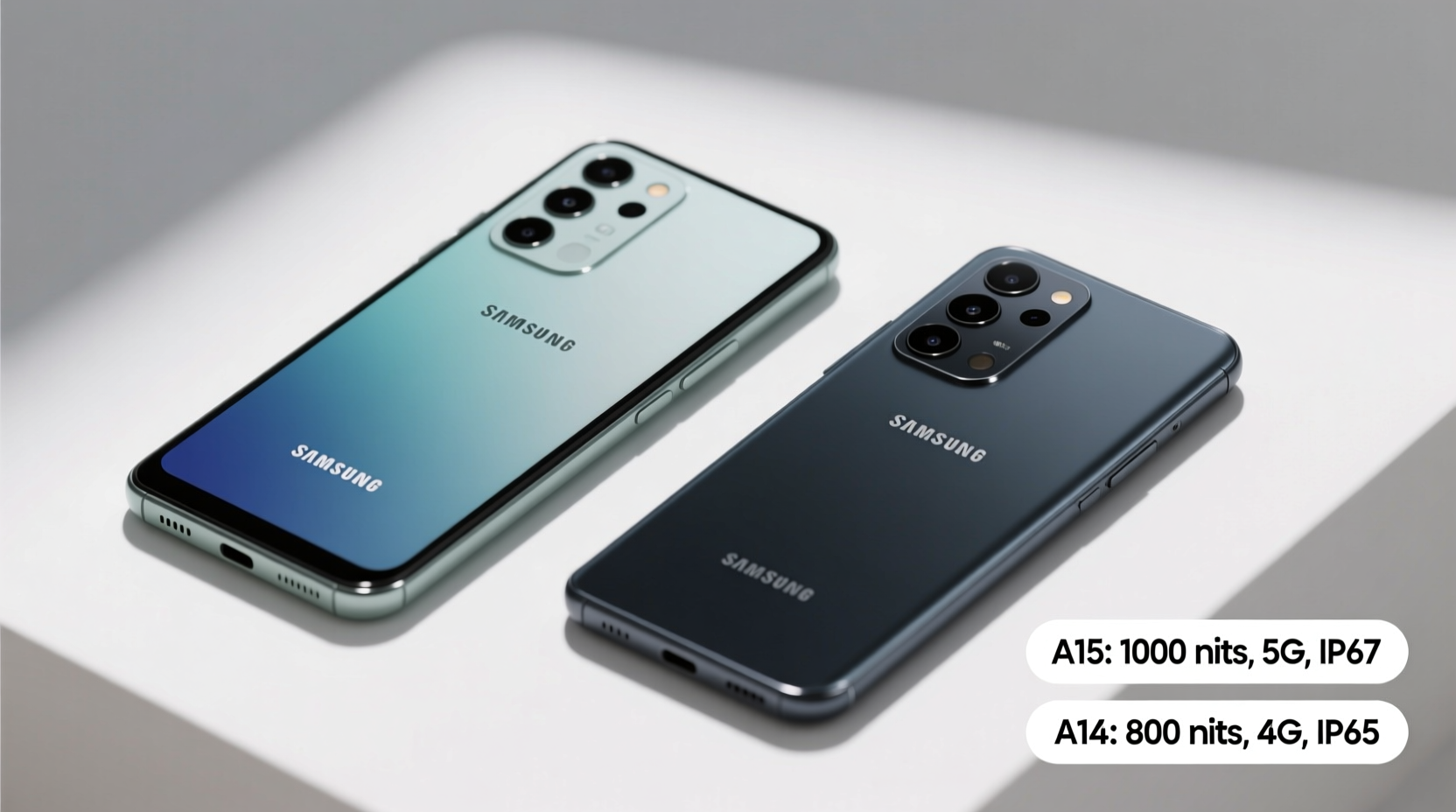
At first glance, the Galaxy A15 and A14 look nearly identical. Both feature a plastic back, polycarbonate frame, and a centered punch-hole front camera. The dimensions are almost the same, with the A15 being slightly heavier (207g vs 203g) and marginally thicker (8.2mm vs 8.1mm). These changes aren’t noticeable in daily use.
The rear camera layout remains consistent: a triple-camera cluster housed in a glossy rectangular module. However, the A15 features a slightly redesigned finish that reduces fingerprint smudging—a small but welcome improvement for those who prefer a cleaner look.
Both phones are IP67-rated for dust and water resistance, meaning they can survive brief submersion in up to 1 meter of water for 30 minutes. This level of protection is rare at this price point and adds significant value.
Display and Screen Experience
Both models sport a 6.5-inch Super AMOLED display with a 90Hz refresh rate and Full HD+ resolution (1080 x 2340 pixels). This is a major win for the A15, as many competitors in this range stick to cheaper LCD panels or limit refresh rates to 60Hz.
The AMOLED panel delivers deep blacks, vibrant colors, and excellent outdoor visibility. Whether you’re scrolling through social media or watching videos, the experience feels premium. There’s no discernible difference in brightness or color accuracy between the two models.
One thing to note: neither phone includes an adaptive refresh rate, so the 90Hz stays fixed. While not a dealbreaker, it means slightly higher power consumption compared to devices that drop to 60Hz or lower during static content.
Performance: Chipset Matters More Than You Think
This is where the A15 pulls ahead. The Galaxy A14 runs on the MediaTek Dimensity 700 (7nm), a capable chip for basic tasks like browsing, messaging, and streaming. It pairs with either 4GB or 6GB of RAM, depending on the variant.
The A15 upgrades to the MediaTek Dimensity 6100+, a rebranded version of the Helio G99. While not a flagship-tier leap, this SoC offers better CPU efficiency and improved GPU performance—especially noticeable when multitasking or playing casual games like Call of Duty Mobile or Genshin Impact at medium settings.
Benchmarks show a roughly 15–20% improvement in AnTuTu scores (A15 averaging ~380,000 vs A14’s ~320,000), which translates to smoother animations and faster app launches. Real-world users report fewer stutters when switching between apps or using camera modes.
“Mid-tier chips like the Dimensity 6100+ are closing the gap with upper-budget devices. For most users, this performance is more than sufficient.” — Raj Mehta, Mobile Hardware Analyst at TechPulse Insights
Camera Comparison: Incremental Gains
On paper, both phones share the same triple rear setup: 50MP main sensor, 5MP ultrawide, and 2MP macro. The front camera is also unchanged at 13MP. But software optimizations make a difference.
The A15 benefits from updated image processing algorithms. In daylight, photos appear sharper with more natural color reproduction. Low-light performance sees a modest boost thanks to improved HDR handling and noise reduction. The ultrawide lens still struggles with edge distortion, and the macro camera remains largely gimmicky—but that hasn’t changed from the A14.
Video recording maxes out at 1080p@30fps on both models, with no stabilization beyond EIS (Electronic Image Stabilization). Vloggers or content creators will notice shaky footage in motion, so external stabilization is recommended.
| Feature | Samsung A14 | Samsung A15 |
|---|---|---|
| Processor | Dimensity 700 | Dimensity 6100+ |
| RAM Options | 4GB / 6GB | 4GB / 6GB / 8GB |
| Storage | 64GB / 128GB | 128GB (base) |
| Battery | 5000 mAh | 5000 mAh |
| Charging Speed | 15W | 25W |
| Software Update Policy | 2 OS Upgrades | 4 OS Upgrades |
| Price (Launch, 128GB) | $269 | $299 |
Battery Life and Charging: One Clear Winner
Both phones pack a 5000mAh battery, delivering all-day endurance under moderate use. Streaming video, GPS navigation, and gaming will drain it within 6–7 hours of active screen time. Standby efficiency is good, with less than 10% loss overnight.
The standout upgrade in the A15 is support for 25W fast charging. The A14 is limited to 15W, meaning a full charge takes about 2 hours. With 25W, the A15 reaches 50% in just 30 minutes and completes charging in 85 minutes—nearly 40% faster.
This isn’t just about convenience. Faster charging reduces wear on the battery over time by minimizing prolonged charging cycles. It also makes the phone more practical for travelers or users without consistent access to outlets.
Software and Longevity: A Major Shift
Perhaps the most overlooked difference is software support. The A14 launched with Android 13 and promises two major OS updates (up to Android 15) and four years of security patches.
The A15, however, ships with Android 14 and is guaranteed **four** OS upgrades—meaning it could run Android 18—and five years of security updates. This dramatically extends its usable lifespan, especially as apps become more demanding.
For users planning to keep their phone for three years or more, this update policy is a game-changer. It ensures compatibility with future banking apps, messaging platforms, and productivity tools that may drop support for older Android versions.
Real-World Example: Should Maria Upgrade?
Maria has used her Galaxy A14 since early 2023. She uses it for work emails, WhatsApp, occasional photography, and streaming music during commutes. Her phone still performs well, but charging takes too long, and she’s noticed slower app launches lately.
After researching the A15, she considers the 25W charging, improved processor, and longer software support. Even though her A14 isn’t broken, the upgrade would save her time each week and ensure her device stays secure and functional through 2028.
She decides to trade in her A14 for an A15, valuing long-term reliability over short-term savings. Six months later, she reports faster performance, quicker charging, and peace of mind knowing her phone will receive updates longer.
Frequently Asked Questions
Is the Samsung A15 waterproof?
Yes, the A15 has an IP67 rating, meaning it’s dustproof and can withstand immersion in 1 meter of water for up to 30 minutes. The A14 shares the same rating.
Can the A15 run Fortnite or PUBG smoothly?
Yes, but not at maximum settings. The Dimensity 6100+ handles these games at medium graphics with stable 30–40 FPS. Expect occasional frame drops during intense scenes.
Should I upgrade from A14 to A15 if my current phone works fine?
If you’re satisfied with your A14’s performance and don’t mind slower charging, the upgrade isn’t urgent. However, if you value faster charging, longer software support, and slightly better multitasking, the A15 is worth the $30–$50 premium.
Final Verdict: Not the Same Phone
The Samsung Galaxy A15 and A14 are not “basically the same.” While they share design language, display quality, and core camera hardware, the A15 introduces meaningful upgrades: a more efficient processor, faster charging, expanded RAM options, and critically, a much longer software support window.
For new buyers, the A15 is the clear choice. At a modest price increase, it offers better future-proofing and daily usability. For existing A14 owners, upgrading is optional unless you’re frustrated with charging speed or anticipate needing stronger performance in the coming year.
In a market where budget phones often cut corners on longevity, Samsung’s shift toward longer software support in the A15 signals a commitment to sustainable device ownership. That alone makes it a smarter investment.




 浙公网安备
33010002000092号
浙公网安备
33010002000092号 浙B2-20120091-4
Comments
No comments yet. Why don't you start the discussion?