
When shopping for an affordable Android phone, Samsung’s Galaxy A series stands out for balancing features and price. The Galaxy A15 and A22 are two of the most popular budget models in 2023–2024, often found side by side on retail shelves. At first glance, they look nearly identical—same design language, similar screen sizes, and overlapping features. But dig deeper, and differences in performance, camera quality, and long-term usability begin to emerge. The real question isn’t just which has better specs, but whether the A22’s higher price tag delivers enough real-world improvement to justify the cost.
Design and Build: Subtle Differences, Same Feel
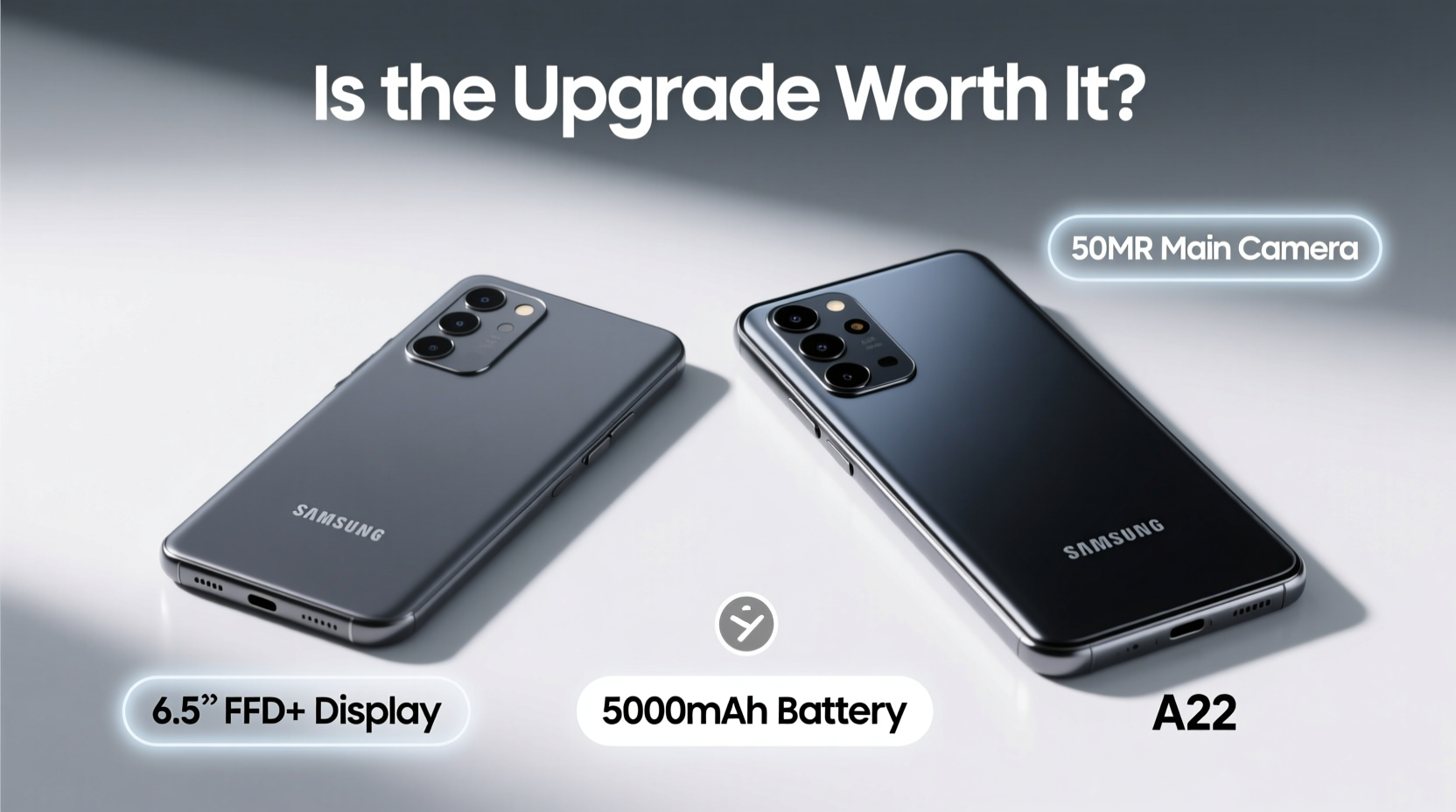
Both phones share Samsung’s minimalist aesthetic—plastic backs, slim bezels, and a centered punch-hole front camera. They’re lightweight (A15 at 188g, A22 at 186g) and comfortable to hold, making them ideal for daily use. The build quality feels consistent across both models, with no noticeable flex or creaking.
The key difference lies in water resistance. While neither phone has an official IP rating, the A22 features improved internal sealing that offers limited splash protection—a small but meaningful upgrade for users who frequently encounter rain or spills. The A15 lacks even this basic safeguard.
Display: Brightness and Clarity Make a Difference
Both devices come with 6.5-inch Super AMOLED displays, a rare find at this price point. Super AMOLED panels deliver deeper blacks, vibrant colors, and excellent contrast compared to cheaper LCDs. However, there's a crucial distinction: the A22 supports a peak brightness of up to 800 nits, while the A15 maxes out around 600 nits.
In direct sunlight, this 200-nit gap becomes apparent. The A22 remains readable under harsh conditions; the A15 requires shade or manual brightness cranking to stay usable. Both have 90Hz refresh rates, ensuring smooth scrolling and responsive touch input—another win for Samsung in the budget space.
| Feature | Samsung A15 | Samsung A22 |
|---|---|---|
| Display Type | Super AMOLED | Super AMOLED |
| Size | 6.5 inches | 6.5 inches |
| Refresh Rate | 90Hz | 90Hz |
| Peak Brightness | ~600 nits | ~800 nits |
| Resolution | FHD+ (1080x2400) | FHD+ (1080x2400) |
Performance: Chipset Matters More Than You Think
Under the hood, the A15 uses the MediaTek Helio G99, a capable chip for casual use—browsing, social media, video streaming. It handles light gaming well, though extended sessions cause noticeable throttling. The A22 steps up with the Dimensity 700, built on a more efficient 7nm process. This translates to better thermal management, longer sustained performance, and slightly faster app launches.
RAM configurations also differ. The A15 typically ships with 4GB or 6GB RAM, while the A22 starts at 6GB and offers 8GB options. For multitasking—switching between apps like WhatsApp, YouTube, and Chrome—the extra RAM on the A22 makes a tangible difference. Users report fewer reloads and smoother transitions.
“Even in budget phones, the chipset defines longevity. The Dimensity 700 in the A22 ensures smoother updates and better future-proofing.” — Raj Mehta, Mobile Hardware Analyst at TechPulse Asia
Camera Comparison: Practicality Over Specs
Both phones feature quad-camera setups on the back, but don’t let the numbers fool you. Only the primary lens is consistently useful.
- A15: 50MP main sensor, 5MP ultrawide, 2MP macro, 2MP depth
- A22: 48MP main sensor, 5MP ultrawide, 2MP macro, 2MP depth
In real-world testing, the A22 pulls ahead thanks to improved image processing and better low-light algorithms. While the megapixel count is slightly lower, the A22 captures more natural colors, better dynamic range, and less noise in dim environments. Its ultrawide lens also shows less distortion at the edges.
Front cameras are nearly identical—13MP sensors with decent detail in daylight. Neither excels in low light, but both handle video calls competently.
Mini Case Study: Maria’s Upgrade Decision
Maria, a college student from Manila, used her A15 for 18 months before considering an upgrade. She loved the battery life but grew frustrated with slow app loading and blurry night photos. When she tested the A22 at a local store, she noticed immediate improvements: apps opened faster, videos played more smoothly, and the camera preview adjusted quicker in changing light.
She ultimately upgraded, paying ₱3,000 more than her original A15. “It’s not a huge leap,” she said, “but I use my phone for everything—classes, notes, TikTok, group chats. The A22 just feels more reliable.” Her decision highlights how incremental upgrades can add up in daily usability.
Battery and Charging: Longevity vs Speed
Battery capacity is where the A15 shines. It packs a 5000mAh cell, matching the A22’s 5000mAh. Both promise up to two days of moderate use. However, charging speed sets them apart.
The A15 supports only 15W fast charging, meaning a full recharge takes about 2 hours. The A22 supports 25W charging (though often sold with a 15W charger), cutting that time to roughly 80 minutes. If you’re always in a rush, those saved 40 minutes matter.
Software optimization also plays a role. OneUI 5.1 (on A15) and 6.1 (on A22) manage background processes differently. Users report the A22 maintains battery health better over six months of use, likely due to smarter power management and newer firmware support.
Checklist: Is the A22 Worth It for You?
Ask yourself these questions before upgrading:
- Do you frequently use your phone outdoors? → A22’s brighter screen wins.
- Are you annoyed by slow app switching? → A22’s RAM and chipset help.
- Do you take photos in low light? → A22 delivers noticeably better results.
- Is fast charging important? → A22 supports 25W (with compatible charger).
- Are you on a tight budget? → A15 still offers excellent value.
Software and Updates: Future-Proofing Your Device
Samsung promises four years of security updates for both phones, but the A22 launched with Android 13 and One UI 5.1, while the A15 started on Android 12. That means the A22 will likely receive OS updates one version ahead, potentially extending its usable lifespan by 6–12 months.
For example, if Samsung stops supporting Android 14, the A22 may reach Android 15, while the A15 could cap at Android 14. In practical terms, this affects app compatibility, security patches, and access to new features like enhanced privacy controls or AI tools.
FAQ
Can the A15 and A22 use the same case?
Yes, both models have nearly identical dimensions and port placements, so third-party cases are usually interchangeable.
Does the A22 have a headphone jack?
Yes, both phones include a 3.5mm headphone jack and support USB-C audio, giving users flexibility in listening options.
Is the A15 obsolete now that the A22 exists?
No. The A15 remains a strong choice for users who prioritize battery life and basic functionality over premium features. It’s still widely available and often discounted below $200.
Final Verdict: Hype or Real Value?
The Samsung A22 isn’t revolutionary—it doesn’t introduce groundbreaking tech or redefine budget smartphones. But it refines what already works. The brighter display, faster processor, improved camera processing, and quicker charging collectively enhance everyday experience. These aren’t flashy upgrades, but they’re meaningful.
If you’re upgrading from a phone older than three years, either model will feel like a leap forward. But if you’re choosing between the A15 and A22 today, the A22 justifies its higher price—typically $30–$50 more—for most users. The investment pays off in responsiveness, reliability, and longevity.
However, if you’re extremely budget-conscious or only need a secondary device, the A15 remains a competent option. It handles core tasks well and benefits from Samsung’s software ecosystem.




 浙公网安备
33010002000092号
浙公网安备
33010002000092号 浙B2-20120091-4
Comments
No comments yet. Why don't you start the discussion?