
Choosing between Samsung’s A15 and A54 isn’t just about picking a phone—it’s about balancing budget with long-term satisfaction. The A15 sits at the entry-level end of Samsung’s Galaxy A series, while the A54 occupies the mid-tier with noticeably better hardware and features. But does that justify its significantly higher price? For many buyers, especially those on a tight budget, this decision comes down to whether premium features translate into meaningful daily improvements.
This comparison cuts through marketing hype and focuses on real-world usability—battery life, camera quality, software longevity, and overall user experience—to determine if spending extra on the A54 actually pays off.
Design and Build Quality: Plastic vs Premium Feel
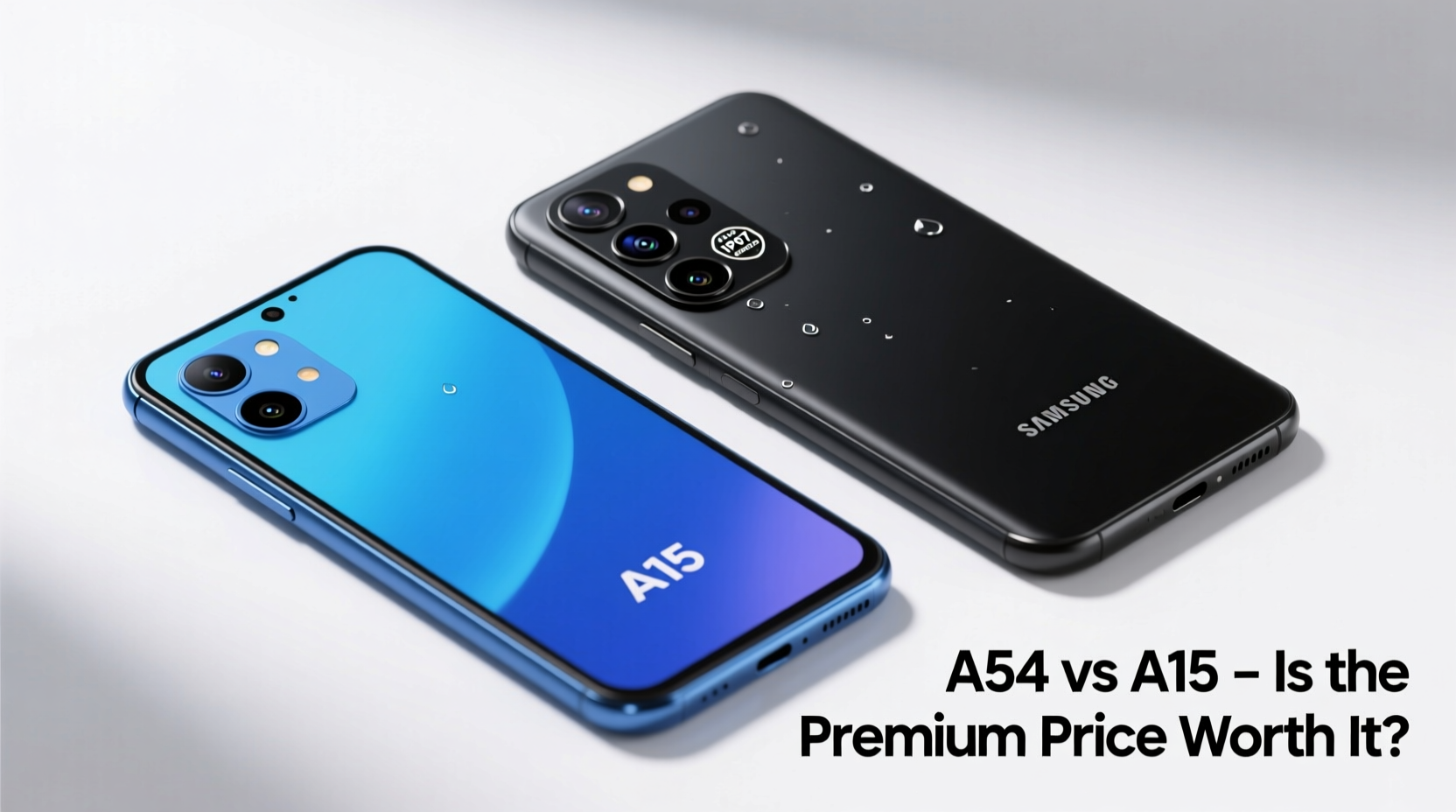
The first noticeable difference between the A15 and A54 lies in how they feel in hand. The A15 uses a glossy plastic back and frame, which makes it lightweight but prone to smudges and scratches. It’s functional for basic use, but lacks durability and sophistication. In contrast, the A54 features a matte-finish polycarbonate back with an aluminum frame, giving it a more refined look and better grip. It also carries an IP67 rating for dust and water resistance—a feature absent on the A15.
The A54’s sturdier build inspires confidence during everyday use, especially for users who don’t rely on cases. While both phones are similarly sized, the A54 feels more substantial—not heavier, but more deliberate in design.
Display and Performance: Entry-Level vs Mid-Range Experience
One area where the gap becomes obvious is the display. The A15 sports a 6.5-inch HD+ (720p) PLS TFT screen with a 60Hz refresh rate. Colors appear washed out compared to modern standards, and scrolling feels less fluid. For casual browsing and calls, it’s acceptable—but prolonged media consumption highlights its limitations.
The A54, however, delivers a 6.4-inch FHD+ (1080p) Super AMOLED panel with a 120Hz adaptive refresh rate. This means smoother animations, deeper blacks, and significantly better outdoor visibility. The jump in clarity and responsiveness is immediately noticeable when switching between apps or watching videos.
| Feature | Samsung A15 | Samsung A54 |
|---|---|---|
| Display Type | PLS TFT | Super AMOLED |
| Resolution | HD+ (720 x 1600) | FHD+ (1080 x 2340) |
| Refresh Rate | 60Hz | 120Hz (adaptive) |
| Processor | Exynos 850 | Exynos 1380 |
| Ram Options | 4GB / 6GB | 6GB / 8GB |
| Storage | 64GB / 128GB (expandable) | 128GB / 256GB (expandable) |
Performance-wise, the Exynos 850 in the A15 struggles with multitasking and newer games. Apps load slower, and background processes often get terminated. The A54’s Exynos 1380, paired with up to 8GB RAM, handles modern Android workloads with ease. It supports smoother transitions, faster app launches, and better gaming performance—even at medium settings.
“Display quality and processor efficiency directly impact perceived speed and enjoyment. A 120Hz AMOLED screen doesn’t just look better—it makes the entire phone feel faster.” — David Lin, Mobile UX Analyst
Camera Comparison: Point-and-Shoot vs Creative Control
Both phones have triple rear cameras, but their capabilities differ drastically. The A15 includes a 50MP main sensor, 2MP macro, and 2MP depth camera. In good lighting, the main camera captures usable shots, but low-light images are noisy and lack detail. The ultrawide and macro lenses are largely underutilized due to poor edge detection and focus issues.
The A54 steps up with a 50MP main sensor (with OIS), a 12MP ultrawide, and a 5MP macro lens. Optical Image Stabilization alone makes a huge difference—it reduces blur in handheld shots and improves video stability. The ultrawide lens is sharp across the frame, and the software processing enhances dynamic range and color accuracy.
In practical terms, the A54 allows for greater creative flexibility. Night mode produces brighter, cleaner results, and portrait mode edges are more accurately detected. Video recording tops out at 4K@30fps on the A54, versus 1080p@30fps on the A15—important for anyone interested in content creation.
Real-World Example: Weekend Hiking Trip
Jamie, a college student and casual photographer, took both phones on a weekend hike. On the trail, she used each device to capture landscapes and group photos. The A15 struggled with backlighting—skies were overexposed, and shadows lost detail. When reviewing photos later, she noticed blurriness in action shots due to lack of stabilization. Meanwhile, the A54 preserved highlights, captured wider scenes clearly, and produced sharper close-ups. Even without editing, the A54’s photos looked social-media ready.
Battery Life and Software Support
The A15 packs a larger 5000mAh battery, which translates to solid endurance—up to two days with light use. However, its inefficient processor and lower-resolution screen mask some of that advantage. Realistically, most users get one full day of moderate usage.
The A54 has a slightly smaller 5000mAh battery too, but thanks to its more efficient Exynos 1380 and adaptive brightness, it achieves similar longevity despite the superior display. More importantly, Samsung promises **four generations of Android OS updates** and **five years of security patches** for the A54—double what the A15 receives.
This extended support means the A54 will stay secure and compatible with new apps longer. For users planning to keep their phone beyond two years, this is a major factor. The A15 likely won’t receive Android 15 or future security fixes past 2025, making it obsolete sooner.
Is the A54’s Price Tag Worth It?
The Samsung A15 starts around $170, while the A54 retails closer to $350—nearly double the price. That’s a significant gap, especially for budget-conscious buyers. But value isn’t just about upfront cost; it’s about cost per year of reliable use.
- Daily Experience: The A54 offers a visibly better screen, faster performance, and superior photo quality—features you interact with constantly.
- Durability: With IP67 rating and better materials, it withstands wear and tear more effectively.
- Longevity: Four Android updates mean it stays relevant until at least 2027.
- Resale Value: Well-maintained A54 units retain more value than A15s after 18 months.
If your priority is minimizing initial expense and using the phone strictly for calls, texts, and light social media, the A15 suffices. But if you want a device that performs well, lasts longer, and adapts to evolving app demands, the A54 justifies its premium.
Checklist: Choosing Between A15 and A54
- Assess your primary phone usage: basic tasks vs multimedia, gaming, photography.
- Consider how long you plan to keep the phone (1–2 years vs 3+).
- Evaluate your environment: do you need water resistance?
- Test the display in person—if possible—comparing brightness and smoothness.
- Factor in long-term costs: replacement frequency, data loss from outdated software.
Frequently Asked Questions
Can the A15 handle TikTok and Instagram Reels smoothly?
Yes, but with caveats. Scrolling through feeds works fine, but high-resolution video playback may stutter. The 60Hz screen makes motion feel less fluid than on higher-end devices.
Does the A54 support wireless charging?
No, neither model supports wireless charging. Both use USB-C for wired charging only, with the A54 supporting 25W fast charging (charger sold separately).
Is the A54 worth upgrading from an older flagship like the S20?
Not necessarily. If you’re coming from a recent flagship, the A54 may feel like a downgrade in raw power and camera versatility. However, as a secondary or backup phone, it offers excellent balance.
Final Verdict: Invest in Experience, Not Just Specs
The Samsung A15 is a capable entry-level phone that fulfills bare-minimum expectations. But the A54 isn't merely an upgrade—it's a different class of device. From its vibrant 120Hz display to durable build and long-term software commitment, it delivers a near-flagship experience at a mid-range price.
Spending more on the A54 isn’t about luxury; it’s about avoiding frustration. Fewer lags, clearer photos, better outdoor visibility, and longer update support add up to a more enjoyable, sustainable ownership experience. For most users, especially those planning to keep their phone for three years or more, the extra cost pays for itself in reliability and usability.




 浙公网安备
33010002000092号
浙公网安备
33010002000092号 浙B2-20120091-4
Comments
No comments yet. Why don't you start the discussion?