
Choosing between Samsung’s budget smartphones can be tricky, especially when model names are so close and price differences minimal. The Samsung Galaxy A16 and A06 are both positioned as entry-level devices targeting cost-conscious users. At first glance, they look nearly identical—same design language, similar screen size, and comparable branding. But beneath the surface, there are meaningful differences that could influence whether an upgrade from the A06 to the A16 makes sense—or if you're better off sticking with what you have.
This breakdown dives into key areas like performance, camera quality, battery life, software support, and long-term usability to determine whether the A16 offers enough improvement over the A06 to justify switching.
Design and Build: More Than Just Looks?
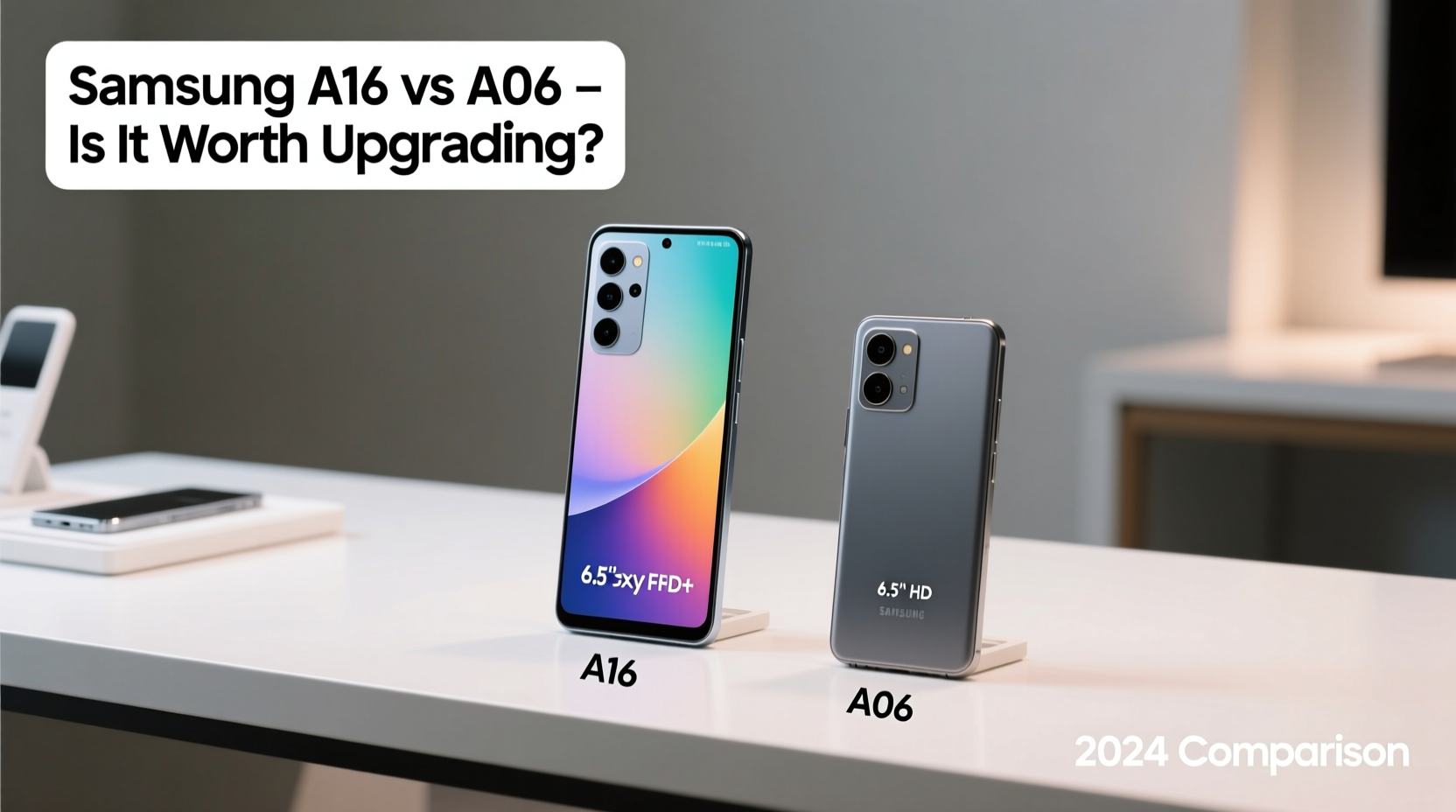
Both phones feature Samsung’s familiar plastic unibody design with glossy finishes and vertically stacked cameras in the top-left corner. They’re lightweight (A16: ~195g, A06: ~193g) and easy to handle, making them ideal for one-handed use. The physical dimensions are almost identical—both measuring around 167mm tall—so grip and pocketability are on par.
The main difference lies in durability. The A16 includes Corning Gorilla Glass 5 protection on the display, whereas the A06 only has basic glass shielding. This might not seem critical at first, but in real-world usage, the A16 resists scratches and minor drops significantly better. For users without consistent access to cases or screen protectors, this small upgrade adds tangible value.
Performance Comparison: Chipset, RAM, and Real-World Speed
Under the hood, the gap widens. The Galaxy A16 runs on the MediaTek Helio G99, a capable octa-core processor built on a 6nm process. It supports smoother multitasking, faster app launches, and handles light gaming (like Candy Crush or Among Us) without lag. Paired with up to 6GB of RAM and expandable storage via microSD, it delivers a noticeably more responsive experience than its predecessor.
In contrast, the A06 uses the older Exynos 850—a 8nm chip with less processing power and weaker GPU performance. With only 4GB of RAM standard, background app retention suffers, and switching between apps often triggers reloads. Users report stuttering during video playback and delays when opening social media apps.
“On entry-level devices, the chipset defines the user experience more than any other component.” — Rajiv Mehta, Mobile Hardware Analyst at TechPulse Asia
If your daily routine includes browsing, messaging, YouTube, and occasional photo editing, the A16 will feel snappier and more reliable. The A06 isn’t unusable, but it shows its age quickly under even moderate load.
Display and Battery Life: Practical Differences That Matter
Both models come with 6.7-inch PLS LCD displays and HD+ resolution (720 x 1612), which means pixel density is relatively low (~264 PPI). Colors appear washed out compared to OLED screens, and outdoor visibility is mediocre due to lower peak brightness.
However, the A16 benefits from a higher refresh rate: 90Hz versus the A06’s fixed 60Hz. While not transformative, scrolling through feeds, swiping home screens, and navigating menus feels smoother. It's a subtle but cumulative improvement in day-to-day comfort.
Battery capacity is identical at 5000mAh, but efficiency varies. Thanks to the more modern Helio G99 and optimized software, the A16 typically lasts a full day and a half with mixed use. The A06, burdened by the less efficient Exynos 850, tends to drain faster—especially with screen-on time exceeding three hours.
| Feature | Samsung Galaxy A16 | Samsung Galaxy A06 |
|---|---|---|
| Processor | MediaTek Helio G99 | Exynos 850 |
| RAM Options | 4GB / 6GB | 4GB |
| Display Refresh Rate | 90Hz | 60Hz |
| Screen Protection | Gorilla Glass 5 | Basic Glass |
| Rear Camera Setup | 50MP main + 5MP ultrawide + 2MP macro | 50MP main + 2MP depth + 2MP macro |
| Software Update Policy | 2 major OS + 3 years security | 1 major OS + 2 years security |
| Battery | 5000mAh | 5000mAh |
| Charging Speed | 25W fast charging supported | 15W maximum |
Camera and Software Experience
On paper, both phones list a 50MP main sensor, but implementation differs. The A16’s larger sensor and improved image processing produce sharper daylight photos, better dynamic range, and usable low-light shots thanks to Night Mode. The addition of an ultrawide lens (absent on the A06) expands creative flexibility—ideal for landscapes or group selfies.
The A06 relies solely on digital zoom and cropping for wider angles, resulting in noticeable quality loss. Its dual auxiliary 2MP sensors (depth and macro) add little practical value and often degrade image consistency.
Software-wise, the A16 ships with Android 14 and One UI 6, while the A06 launched with Android 13 and One UI 5.1. More importantly, Samsung promises longer update support for the A16: two major OS upgrades and three years of security patches. The A06 gets only one OS bump and two years of updates. In today’s environment where security threats evolve rapidly, extended support is a significant advantage.
Mini Case Study: Maria’s Upgrade Decision
Maria, a schoolteacher in Cebu, used her Galaxy A06 for 18 months. She noticed increasing slowdowns—messages took seconds to open, WhatsApp videos stalled, and the phone overheated during Zoom calls. After researching options under $200, she upgraded to the A16. “It’s not a flagship,” she said, “but everything just works now. My gallery loads instantly, and I can record parent meetings without freezing.”
For Maria, the combination of better performance, longer software support, and smoother display made the $40 price jump worthwhile. Her productivity improved, and she expects the device to last another two years without issues.
Is Upgrading Worth It? A Step-by-Step Evaluation
Before deciding, assess your current needs and usage patterns. Follow this timeline to determine if the switch makes sense:
- Week 1 – Monitor Your Current Device: Note how often apps crash, how long battery lasts, and whether tasks like拍照 or web browsing feel sluggish.
- Week 2 – Test Alternatives: Visit a store and try the A16 hands-on. Compare scrolling smoothness, camera focus speed, and menu responsiveness.
- Week 3 – Evaluate Cost vs. Longevity: If you plan to keep a phone for 2+ years, prioritize software updates and build quality—the A16 wins here.
- Final Decision: If your A06 still performs adequately and you don’t mind slower speeds, staying put saves money. But if you rely on your phone daily for work or communication, the A16’s improvements justify the upgrade.
Frequently Asked Questions
Can the A06 be upgraded to match the A16’s performance?
No. Firmware updates cannot compensate for hardware limitations like the Exynos 850’s outdated architecture or lack of RAM. Performance gains are capped by the original design.
Does the A16 support expandable storage?
Yes. Like the A06, the A16 includes a dedicated microSD card slot supporting up to 1TB, allowing you to store thousands of photos, videos, or apps externally.
Is the camera difference noticeable in everyday use?
Yes—especially in variety. The A16’s ultrawide lens lets you capture more in tight spaces, and its superior processing reduces blur in moving subjects. Low-light photos also show less noise.
Final Verdict: Are They Basically the Same?
No, they are not. While Samsung markets these phones within the same ecosystem and price tier, the Galaxy A16 represents a meaningful step forward. It’s not just about raw specs—it’s about sustained usability, future-proofing, and daily convenience. The smoother 90Hz display, faster processor, better build protection, and longer software support collectively enhance the user experience in ways that accumulate over time.
The A06 remains a functional device for ultra-budget buyers or secondary users, but it lacks the refinement and longevity expected in 2024. If you’re currently using an older model like the A06 and find yourself frustrated by lag or short battery life, upgrading to the A16 is a smart investment.




 浙公网安备
33010002000092号
浙公网安备
33010002000092号 浙B2-20120091-4
Comments
No comments yet. Why don't you start the discussion?