
Every year, Samsung refreshes its A-series lineup with promises of better performance, improved cameras, and longer battery life. The Samsung Galaxy A16 follows the A15 as the latest budget-friendly mid-range contender. But is the upgrade genuinely meaningful, or is it mostly marketing noise? For users already on the A15—or considering either model—it’s crucial to know where the A16 delivers real benefits and where the changes are superficial.
This comparison dives into hardware, software, user experience, and long-term value to help you decide whether upgrading makes sense or if holding onto your A15 (or opting for it over the A16) is the smarter move.
Design and Build: Subtle Refinements, Not Revolution
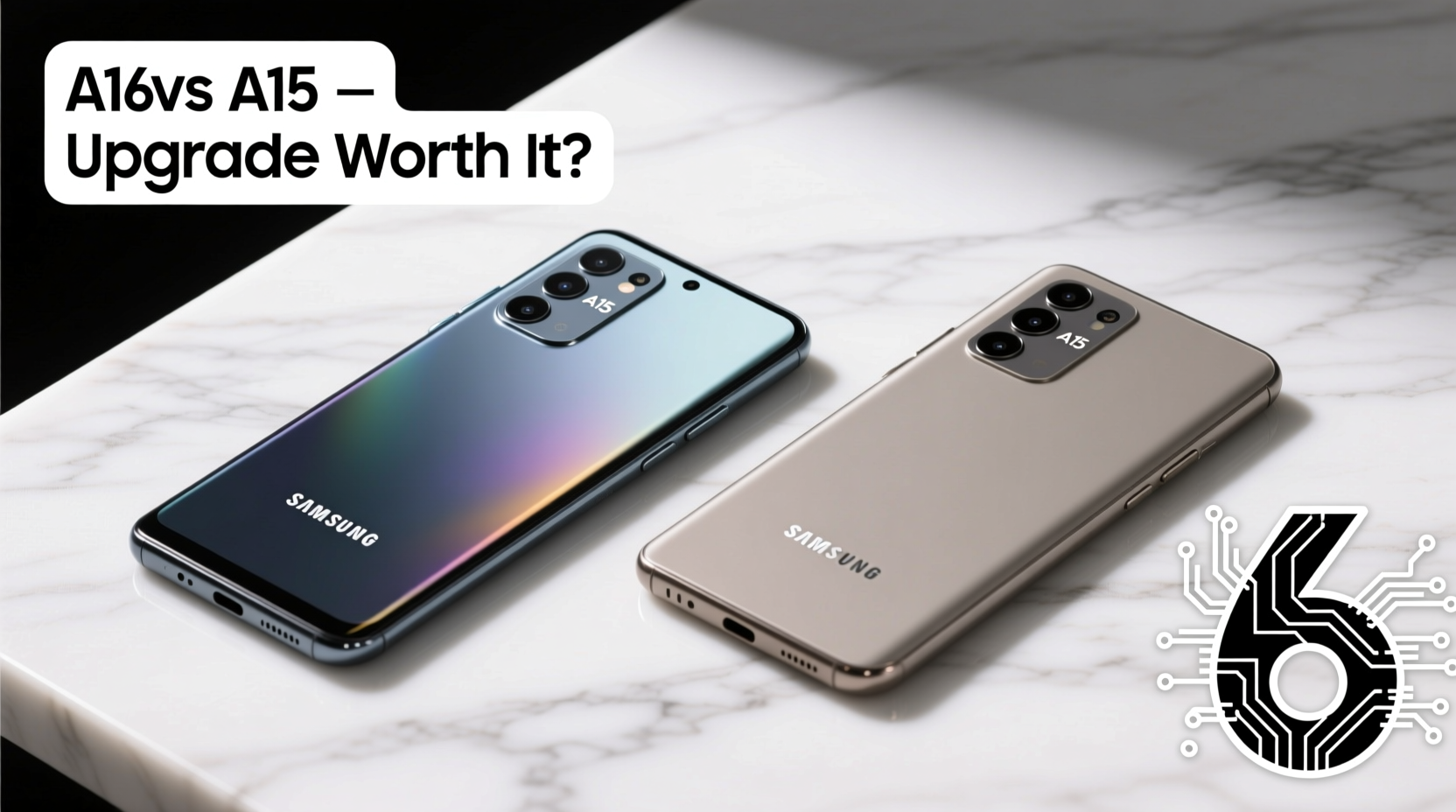
The Galaxy A16 and A15 share nearly identical design philosophies. Both feature plastic backs, glossy finishes, and slim bezels with centered punch-hole front cameras. At first glance, they’re hard to tell apart. However, the A16 introduces minor refinements: slightly sharper edges, a more matte finish option, and marginally better grip thanks to improved texture.
The build quality remains consistent across both models—lightweight, durable enough for daily use, but not premium-feeling. Drop protection still requires a case, especially since neither phone has official IP certification for water resistance.
Display and Brightness: A Noticeable Step Up
One of the most tangible upgrades in the A16 is its display. While both phones feature 6.5-inch Super AMOLED panels with Full HD+ resolution, the A16 boasts higher peak brightness (up to 800 nits compared to the A15’s 600 nits). This difference becomes apparent in direct sunlight, where the A16 maintains visibility much better.
Additionally, the A16 includes an adaptive refresh rate of up to 90Hz (switching dynamically between 60Hz and 90Hz), whereas the A15 is locked at 60Hz. The smoother scrolling and animations on the A16 make the interface feel more responsive, even if the jump isn’t revolutionary.
“Even small display improvements like brightness and refresh rate can significantly impact day-to-day usability, especially in outdoor environments.” — Lena Park, Mobile UX Analyst at TechPulse Insights
Performance Comparison: Same Core, Better Efficiency
Under the hood, both phones rely on MediaTek chipsets—the A15 uses the Helio G85, while the A16 steps up to the newer Dimensity 700. Though not a massive leap in raw power, the Dimensity 700 brings noticeable advantages: better energy efficiency, improved 5G support, and enhanced multitasking capabilities.
In real-world usage, the A16 handles app switching, social media browsing, and light gaming with less stutter. Users report fewer background app reloads and faster cold boot times. However, heavy gamers or those running intensive apps may still hit performance ceilings on both devices due to limited RAM options (4GB/6GB).
| Feature | Samsung A15 | Samsung A16 |
|---|---|---|
| Processor | MediaTek Helio G85 | MediaTek Dimensity 700 |
| RAM Options | 4GB / 6GB | 4GB / 6GB |
| Storage | 64GB / 128GB (expandable) | 128GB (expandable) |
| Refresh Rate | 60Hz | Up to 90Hz (adaptive) |
| Battery | 5000mAh | 5000mAh |
| Charging Speed | 15W | 25W fast charging supported |
| Rear Cameras | 50MP main + 5MP ultrawide + 2MP macro | 50MP main + 8MP ultrawide + 2MP depth |
| Front Camera | 13MP | 13MP |
| OS Out of Box | Android 13 (One UI 5.1) | Android 14 (One UI 6.1) |
| Security Updates | Until 2026 | Until 2027 |
Camera Improvements: More Than Just Megapixels
On paper, the camera specs look similar—both have a 50MP main sensor—but the A16’s secondary lens sees a meaningful upgrade. The A15’s 5MP ultrawide is replaced by an 8MP unit on the A16, offering wider framing and better edge clarity. Additionally, the A16 swaps the macro lens for a depth sensor, enabling more accurate portrait mode effects.
In daylight, both phones produce vibrant, well-saturated images. The A16 pulls ahead in low-light conditions thanks to improved noise processing and HDR tuning. Video recording remains capped at 1080p@30fps, so neither device suits content creators needing 4K footage.
The front camera is unchanged, delivering reliable selfies and video calls. However, the A16 includes AI-powered beautification modes that adapt based on lighting—useful for social media users who prioritize polished self-portraits.
Real-World Example: Daily User Experience
Consider Maria, a college student using her A15 for classes, social media, and occasional photography. After upgrading to the A16, she noticed three key differences: her screen was easier to read during outdoor lectures, her phone charged noticeably faster (cutting morning prep time), and group photos taken with friends looked sharper thanks to the wider ultrawide lens. While none of these were game-changing, together they made her daily interactions with the phone feel smoother and more enjoyable.
Battery Life and Charging: Same Capacity, Smarter Delivery
Both phones pack a 5000mAh battery, but the A16’s efficiency gains translate to slightly longer endurance—about 10–15% more screen-on time under mixed usage. More importantly, the A16 supports 25W fast charging (though the charger is sold separately), reducing full charge time from ~2 hours (on 15W) to just 70 minutes.
For users who frequently run low on power during the day, this faster charging capability adds real convenience. Combined with the more efficient processor, the A16 offers better long-term battery health and reduced strain during heavy use periods.
Checklist: Should You Upgrade?
- ✅ You spend time outdoors and need a brighter, more readable screen
- ✅ You value faster charging and future-proof 5G connectivity
- ✅ You take frequent group or landscape photos requiring a better ultrawide lens
- ✅ You want one extra year of security updates (A16 supported until 2027)
- ❌ You're satisfied with your A15’s performance and don’t notice lag
- ❌ You don’t use 5G or plan to keep the phone beyond 2026
- ❌ Budget is tight and the price gap exceeds $50
Software and Longevity: Future-Proofing Matters
The A16 ships with Android 14 and One UI 6.1, while the A15 launched with Android 13. This means the A16 will receive OS updates for longer—potentially up to Android 16—compared to the A15, which may cap out at Android 15.
Longer software support affects app compatibility, security, and feature access. As Google phases out older APIs, apps may stop functioning properly on outdated systems. If you plan to keep your phone for three years or more, the A16’s extended update cycle offers peace of mind.
Frequently Asked Questions
Is the Samsung A16 waterproof?
No, the A16 does not have an official IP rating for water or dust resistance. While it can handle light splashes, it should not be submerged or used in heavy rain without protection.
Can the A15 support 5G networks?
Only select regional variants of the A15 include 5G support. Most models use LTE-only modems. In contrast, all A16 versions support 5G, making it a safer choice for future network compatibility.
Does the A16 camera really beat the A15?
Yes, particularly in two areas: the upgraded 8MP ultrawide captures wider, clearer shots, and low-light processing is visibly improved. However, the main sensor performs similarly in good lighting.
Final Verdict: Worth It for Some, Overkill for Others
The Samsung Galaxy A16 isn’t a radical evolution over the A15, but it’s far from meaningless. The combination of a brighter display, adaptive refresh rate, faster charging, better ultrawide camera, and longer software support adds up to a more refined daily driver.
If you’re still on an older device like the A12 or A13, jumping to either the A15 or A16 is worthwhile. But for current A15 owners, the upgrade makes sense only if you prioritize outdoor visibility, faster charging, or future-proofing your device past 2026.
For new buyers on a tight budget, the A15 remains an excellent value. However, if the price difference is under $40 and you plan to keep the phone for three years or more, the A16 delivers measurable improvements that justify the slight premium.




 浙公网安备
33010002000092号
浙公网安备
33010002000092号 浙B2-20120091-4
Comments
No comments yet. Why don't you start the discussion?