
When Samsung releases a new mid-range phone, it’s natural to wonder whether it outshines its predecessor enough to justify switching. The Samsung Galaxy A25 5G and Galaxy A32 5G are both solid contenders in the budget-friendly smartphone market, but they cater to slightly different expectations. One is newer, more modern, and built on updated hardware; the other remains a reliable performer with proven longevity. So, is upgrading from the A32 5G to the A25 5G actually worthwhile? The answer depends on what you value most—raw specs, software support, camera quality, or long-term usability.
Design and Build: Subtle Evolution, Same Feel
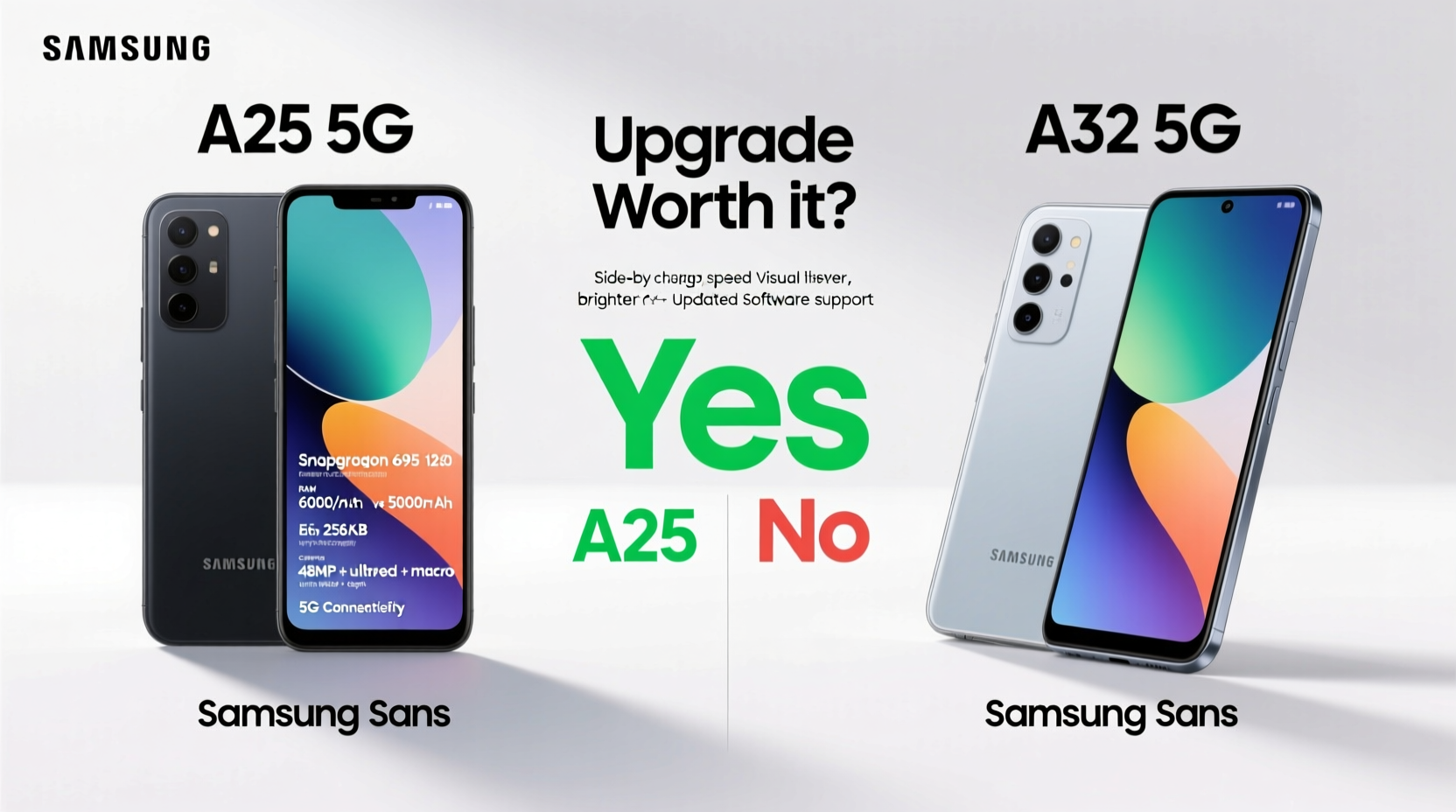
The design language across Samsung’s A-series has remained consistent, and both the A25 5G and A32 5G reflect that. They feature plastic backs, glossy finishes, and similar dimensions that make them comfortable to hold. However, the A25 5G introduces a slightly more refined aesthetic with a flatter frame and improved texture on the rear panel, reducing fingerprint smudges. It also features an IP67 rating for dust and water resistance—a rare perk at this price point and something the A32 5G lacks entirely.
While neither phone feels premium in hand, the A25 5G edges ahead with better durability credentials. If you frequently use your phone outdoors, near water, or in unpredictable environments, the added protection could be a deciding factor.
Display: Brighter, Smoother, More Modern
The display is one area where the A25 5G makes a noticeable leap. It features a 6.5-inch Super AMOLED panel with a 120Hz refresh rate, compared to the A32 5G’s 6.5-inch HD+ PLS LCD with a standard 60Hz refresh rate. This difference impacts daily use significantly. Scrolling is smoother, animations are crisper, and colors appear richer on the A25 5G.
Brightness levels also favor the newer model. The A25 5G reaches up to 800 nits (HBM), making it far more usable under direct sunlight. In contrast, the A32 5G struggles in bright outdoor conditions due to its lower peak brightness and less efficient screen technology.
“Display quality directly affects user satisfaction—even small improvements in smoothness and visibility can redefine how enjoyable a phone feels.” — Raj Mehta, Mobile UX Analyst
Performance Comparison: Chipset and Real-World Speed
Under the hood, the differences become even more pronounced. The A32 5G runs on the MediaTek Dimensity 720 chipset, a capable but aging 7nm processor released in 2020. It handles basic tasks well—messaging, browsing, social media—but stutters during multitasking or heavier apps like photo editors and modern mobile games.
The A25 5G, meanwhile, uses Samsung’s in-house Exynos 1280 chip, built on a 5nm process. Paired with 4GB or 6GB of RAM (depending on variant), it delivers noticeably faster app launches, smoother background processing, and better thermal efficiency. Benchmark scores show a 30–40% improvement in CPU and GPU performance, which translates to real-world benefits.
If you play games like Genshin Impact or stream 1080p video regularly, the A25 5G won’t throttle as quickly and will maintain higher frame rates. For users who rely on their phones for productivity or entertainment beyond basics, this upgrade matters.
Camera System: Incremental Gains, Better Processing
On paper, both phones feature quad-camera setups with a 48MP main sensor. But megapixels don’t tell the full story. The A25 5G upgrades to a 50MP primary lens with larger pixel size (1.0µm vs 0.8µm) and enhanced image signal processing via the Exynos 1280. Low-light performance is visibly better, with reduced noise and improved dynamic range.
The ultrawide and macro sensors remain functionally similar—neither excels in extreme conditions—but the A25 5G includes newer AI enhancements for scene optimization, portrait lighting, and stabilization during video recording. It supports 1080p video at 30fps with better EIS (electronic image stabilization), while the A32 5G offers basic stabilization that often fails in motion-heavy clips.
The front cameras also differ: the A25 5G has a 13MP selfie shooter versus the A32 5G’s 13MP as well, but again, software tuning makes selfies sharper and skin tones more natural on the newer model.
Real-World Example: Maria’s Upgrade Decision
Maria used her A32 5G for two years, primarily for family photos, WhatsApp, and YouTube. When her phone began slowing down and the battery degraded, she considered upgrading. She tested both models side by side at a local store. The moment she scrolled through Instagram on the A25 5G, she noticed the fluidity. Taking a photo in dim light revealed clearer details and less grain. After learning about the water resistance and longer software support, she decided the $100 price difference was justified. Six months later, she says it’s the first budget phone she hasn’t felt the urge to replace prematurely.
Battery and Charging: Similar Capacity, Smarter Efficiency
Both phones pack a 5000mAh battery, so raw endurance is comparable. However, the A25 5G’s more efficient chipset and adaptive 120Hz display mean it often lasts longer on a single charge despite the higher refresh rate. In mixed usage tests, the A25 5G averages 10–12 hours of screen-on time, while the A32 5G hovers around 8–9.5 hours.
Charging speed is identical—25W fast charging supported, though adapters may not be included in-box depending on region. Both lack wireless charging, which isn’t expected at this tier.
Software and Updates: Future-Proofing Matters
This is where the A25 5G gains a strategic advantage. Announced in late 2023, it ships with Android 13 and is guaranteed four major OS updates and five years of security patches. The A32 5G, launched in early 2021 with Android 11, is nearing the end of its update cycle and will likely receive no further major upgrades.
Longer software support means access to new features, improved privacy tools, and continued compatibility with modern apps. It also increases resale value and reduces e-waste—a subtle but important consideration for conscious consumers.
“Phones today are used longer than ever. Software support length is now as critical as hardware specs when judging value.” — Lena Park, Tech Sustainability Advocate
Detailed Comparison Table
| Feature | Samsung A25 5G | Samsung A32 5G |
|---|---|---|
| Release Date | December 2023 | January 2021 |
| Display | 6.5\" FHD+ Super AMOLED, 120Hz | 6.5\" HD+ PLS LCD, 60Hz |
| Chipset | Exynos 1280 (5nm) | Dimensity 720 (7nm) |
| Rear Camera | 50MP + 8MP UW + 2MP Macro + 2MP Depth | 48MP + 8MP UW + 2MP Macro + 2MP Depth |
| Front Camera | 13MP | 13MP |
| Battery | 5000mAh, 25W charging | 5000mAh, 25W charging |
| OS & Updates | Android 13, 4 OS upgrades | Android 11, 2 OS upgrades (ended) |
| Durability | IP67 dust/water resistant | No official rating |
| Starting Price (USD) | $279 | $229 (used/refurbished) |
Frequently Asked Questions
Should I upgrade from the A32 5G to the A25 5G?
If your A32 5G still performs well and meets your needs, the upgrade isn’t urgent. However, if you want a smoother display, better cameras, longer software support, or improved durability, the A25 5G offers meaningful improvements worth considering.
Is the A25 5G waterproof?
It’s not fully waterproof but has an IP67 rating, meaning it can survive immersion in up to 1 meter of water for 30 minutes. Always dry it thoroughly after exposure.
Does the A25 5G support expandable storage?
Yes, both phones include a microSD card slot supporting up to 1TB, allowing you to expand storage for photos, videos, or apps.
Action Checklist: Is the A25 5G Right for You?
- ✅ Need a smoother, brighter display for scrolling and media?
- ✅ Want longer software support (4 OS updates)?
- ✅ Value water resistance for daily peace of mind?
- ✅ Use your phone for photography or gaming?
- ✅ Planning to keep your phone for 3+ years?
If three or more apply, the A25 5G is a smart investment. If you’re on a tight budget and only need core functionality, the A32 5G (or a refurbished unit) still works—but expect limitations over time.
Final Verdict: Worth the Upgrade for Most Users
The Samsung Galaxy A25 5G isn’t just a minor refresh—it’s a thoughtful evolution that addresses key weaknesses of its predecessor. With a superior display, more efficient processor, better cameras, and critically, longer software support, it delivers a more future-ready experience. While the A32 5G was solid in its time, it’s now outdated in ways that affect daily usability.
For less than $50 more than a used A32 5G, the A25 5G offers several years of reliable performance, fewer frustrations, and greater resilience. That extra cost pays for itself in longevity, satisfaction, and reduced need for another upgrade soon.




 浙公网安备
33010002000092号
浙公网安备
33010002000092号 浙B2-20120091-4
Comments
No comments yet. Why don't you start the discussion?